Breast cancer at 33: I worried I wouldn't see my children grow up
When Aisling Voakes was diagnosed with breast cancer in January, she was terrified for her three young children. Despite undergoing a double mastectomy, chemotherapy and hormone treatment, which will bring on early menopause, she is determined to enjoy every minute of life 
Breast cancer at 33: I worried I wouldn't see my children grow up

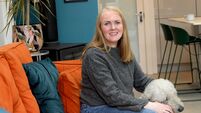
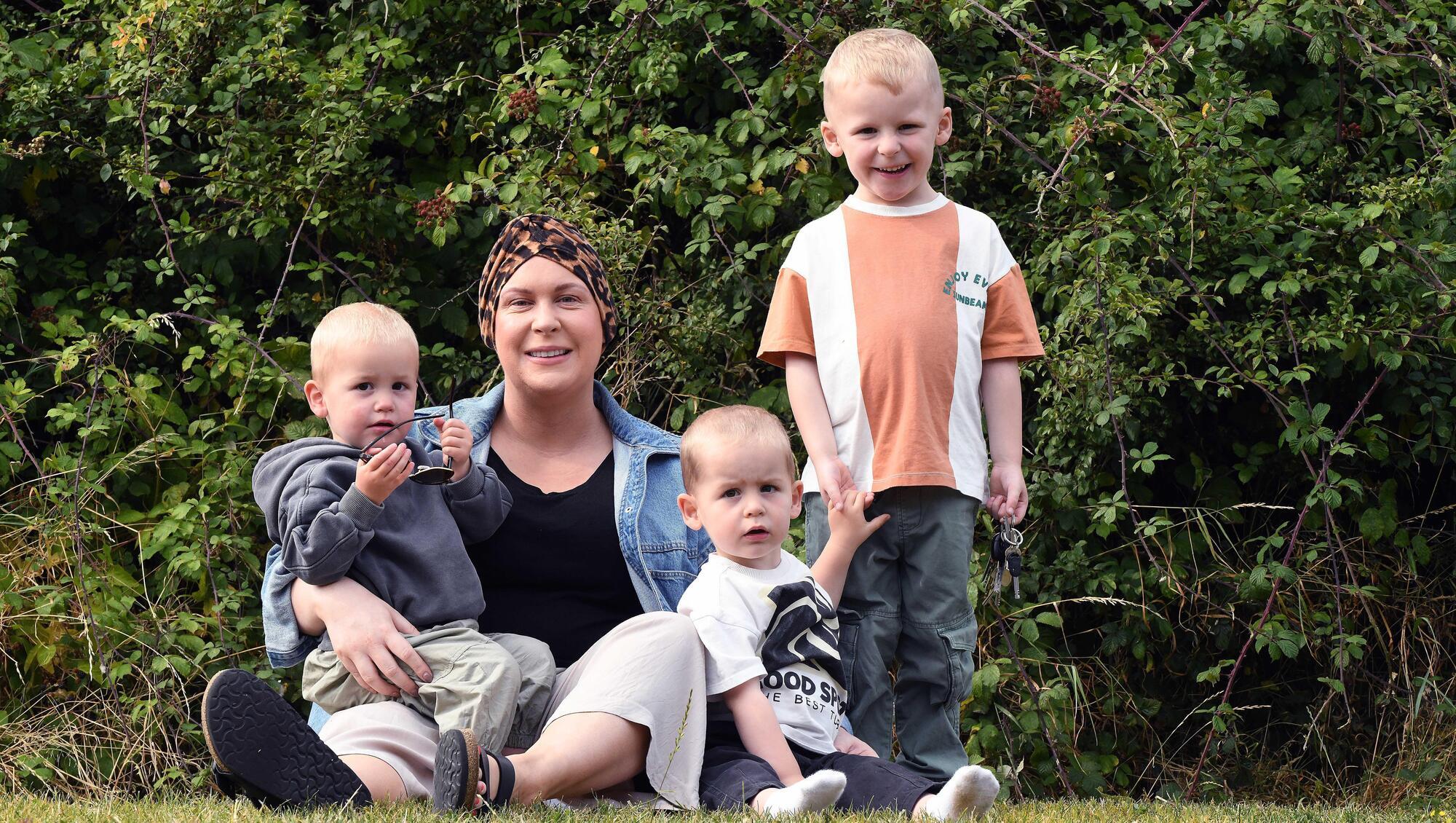
Aisling Voakes, who was diagnosed with breast cancer in January with her children, twins Sam, left, Flynn, 2, and Leo, 4. near their home in Lucan. Photograph Moya Nolan
AISLING VOAKES is an ambassador for this year’s Very Pink Run, a fundraising event for Breast Cancer Ireland taking place over the coming weeks.

The 33-year-old mum-of-three, from Lucan in Dublin, got involved because her life got turned upside down by a breast cancer diagnosis in early January.

“This time last year, my life was busy,” she says. “I got married in 2023. My twin boys, who are now two, started attending creche alongside their older brother, who’s four. That gave me more time to help my husband Ronan with his plumbing business. Things were good.”

On October 7, 2023, when she was getting ready to go to a friend’s wedding, she noticed a hardening on her left breast. “It wasn’t a lump but a line of hard skin that ran horizontally under my left nipple,” she says.

Having been pregnant only a year-and-a-half before, she initially put it down to hormones. “I had no other warning signs and thought it had to be something like a blocked milk duct,” she says. “But my husband kept pushing me to get it checked, so I did.”

Her GP referred her to a specialist, who recommended an ultrasound and biopsy. “Long story short, I found myself in the specialist’s office on January 15 this year being told I had breast cancer in my left breast,” says Voakes. “Thankfully, it hadn’t spread to any other part of my body.”

This news didn’t make the diagnosis any less devastating.

“I was so upset, terrified really,” says Voakes. “My children were so young. I worried that I wouldn’t see them grow up.”

The specialist recommended a mastectomy of her left breast, but Voakes decided to have both breasts removed. “When I talked it through with my husband, we thought a double mastectomy was best,” she says. “My dad’s sister had breast cancer, and she had to have both breasts removed on two separate occasions. I thought there was a chance this cancer could come back, just like hers did, and I didn’t want us all to have to go through this experience again.”

On the first day in March, she underwent more than nine hours of surgery to remove and then reconstruct her breasts.

That surgery found she had an early form of breast cancer known as ductal carcinoma in situ and two tumours that had been undetected until then. Those tumours were HER2 positive. (HER2 stands for human epidermal growth receptor two, a protein that promotes the growth of cancer cells.) It was distressing news for Voakes. “I thought that surgery would be the end of my cancer journey, but the fact that my cancer was one of the 20% of breast cancers that are HER2 positive meant I also had to have chemotherapy,” she says.

It was her lowest point. “It’s when I came close to breaking,” she says. “I’d thought that surgery would be enough, but it wasn’t. And chemo is such a scary word.”

She started her scheduled 12 sessions of chemotherapy in mid-April and was immediately overcome by exhaustion.

“I’d have chemo on Wednesday, and I’d have to go to bed until Saturday,” she says. “I ended up being hospitalised with pneumonia because I caught chest infections from the kids. And I lost my long blonde hair, which had always been such a part of my identity.”

But Voakes pulled through and completed her last chemotherapy session a month ago. “My scans now show that I’m free of cancer, so I won’t need radiation,” she says. “I have no residual pain from my surgery. I’m regaining my energy and can walk and do more every day. I seem to have come out the other side of my journey.”

Despite all she has endured since January, she feels lucky. “From being in and out of hospital over the past few months, I know many people aren’t so fortunate,” she says.

Her traumatic experience, from diagnosis to surgery and chemotherapy, has changed her in many ways. “I feel differently about my body now,” she says. “I’ve put on a lot of weight and don’t feel good about it, but at the same time my body has got me through so much and I have to love it for that.”

There are more physical changes to come. Because Voakes’s cancer was oestrogen receptive, she has to take medication to reduce her oestrogen levels, which will bring on early menopause.

“That’s something I’ll have to learn to live with,” she says. “But if I want to see my kids grow up, I have no choice but to get on with it.”

She has surprised herself by how pragmatic she has been throughout her ordeal. “I’ve stayed strong and have had no major breakdowns yet,” she says. “I’m waiting for it to hit me.”

Yet she admits that her mental outlook has altered. “In a good way, though,” she says. “I try to enjoy every minute and not stress about things so much any more. Even if the kids are having a tantrum, I’ll still try to correct them, but I’ll see the funny side of it too.”

She doesn’t think her cancer impacted her children too much. “The twins were too young to know any different and, as far as the eldest knew, the only change was that I lost my hair, which I was able to explain to him thanks to a fabulous resource offered by the Irish Cancer Society, a book called Mummy’s Lump, which explains everything about breast cancer in a way that children can understand,” she says.

She wants to share her biggest lesson with all women: “If you feel something isn’t right with your body, see your doctor. Check your breasts regularly and be an advocate for your own health.”

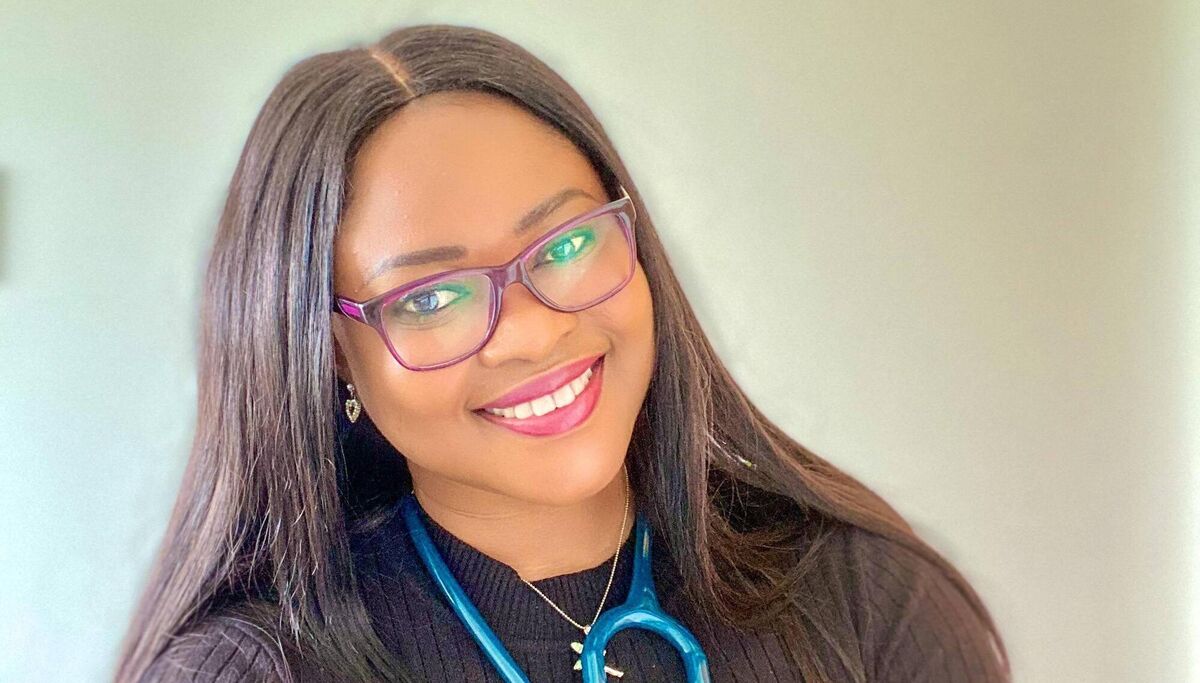
Dr Monica Peres Oikeh

GP Monica Peres Oikeh outlines how to check our breasts: “Look at and feel your breasts once every month, starting just under the collarbone and extending into the armpits,” she says. “Look for skin changes like rashes, dimpling of the skin, or an orange peel appearance. It’s cause for concern if nipples change shape or become inverted or if breasts seem to change size. Any lumps or unusual pain are also reason to visit your doctor.”

Voakes says: “It’s so important that we all check ourselves, and if I can get more women to do so, it will be a positive end to my journey.”

  • The Very Pink Run is taking place in three locations and online. People of all ages are invited to wear pink while walking, jogging, running or wheeling along a 5K or 10K distance in Dublin’s Leopardstown Racecourse on August 31, in the Watershed in Kilkenny on September 1, and in MTU in Cork on September 8.
  • Participants can also take part virtually. Registration is at www.verypinkrun.ie and all proceeds will go towards Breast Cancer Ireland’s research and awareness-raising programmes.

x

More in this section

Lifestyle

Newsletter

The best food, health, entertainment and lifestyle content from the Irish Examiner, direct to your inbox.

Cookie Policy Privacy Policy Brand Safety FAQ Help Contact Us Terms and Conditions

© Examiner Echo Group Limited