The reel deal: Netting some quality time while fishing
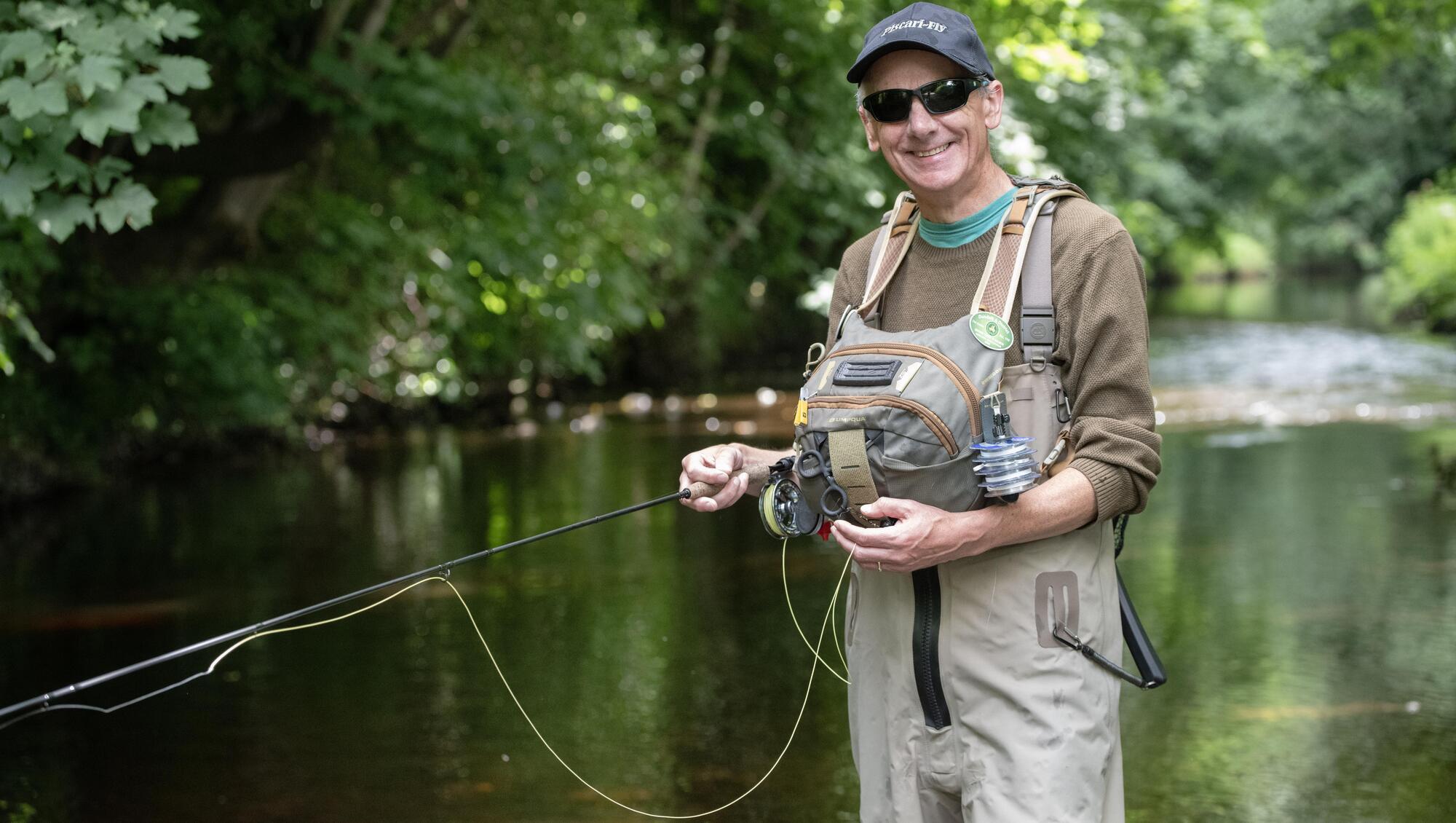
Colm O'Gaora, fly fishing on the Dodder. Photograph: Moya Nolan
When he was eight years old, Colm O’Gaora’s grandfather handed him his first fishing rod.
“I started fishing when we first started going on holidays to Ballyconneelly in Connemara,” recalls the Dubliner.
“There was a beach right in front of the house that my grandad had built and there was no better way to spend a few hours than with a rod and a net. I was infamous for stalking every pool and cove with the rod and a little wooden fishing box that I had made for myself.”
At the end of every summer, the rod was packed away until the following year. As he got older, and teenage independence saw those trips west become less frequent, Colm got out of the habit. Like so many of his generation, he moved to London, where writing, romance and work took precedence. Though he didn’t know it, a flame for fishing still flickered within him. He just needed to be reminded.
“I came back to that same house in Connemara with some friends for a week in 1989,” recalls the 58-year-old.
“The weather was glorious. The rod was in the same closet it always had been. So I dusted it off, took it down to the beach and caught a dozen pollock in half an hour, which of course had never happened before.”
As soon as he returned to London, he joined a local fishing club and since then he has fished continuously, rarely taking a break of more than a few months. He and his wife Alison came home to raise their family more than 20 years ago. Today they live in Harold’s Cross in Dublin so Colm spends much of his fishing time on the nearby Dodder and Liffey — though he takes every opportunity to go further afield.
“I’ve fished every county on the island of Ireland and probably half of the counties in Britain,” says Colm.
“So it gets you around. I love it. My day job [as a creative director] and my career in writing has always been quite regimented. Fishing is completely different. It gets me out of the workplace mindset. You’re in 'do not disturb mode'. That said, I don’t sit in a deck chair, throw a float and bait in and wait for something to happen. I’m quite competitive in my own way. I always want to catch more fish or bigger fish so there's a challenge to it.”
“So you do have to concentrate and that helps you to focus. It’s also about being out in nature. I’ll go out in snow as much as I’ll go out in a heatwave. If you want to escape the hub-bub of everyday life, the screens, the deadlines, the commute, fly fishing is great.”
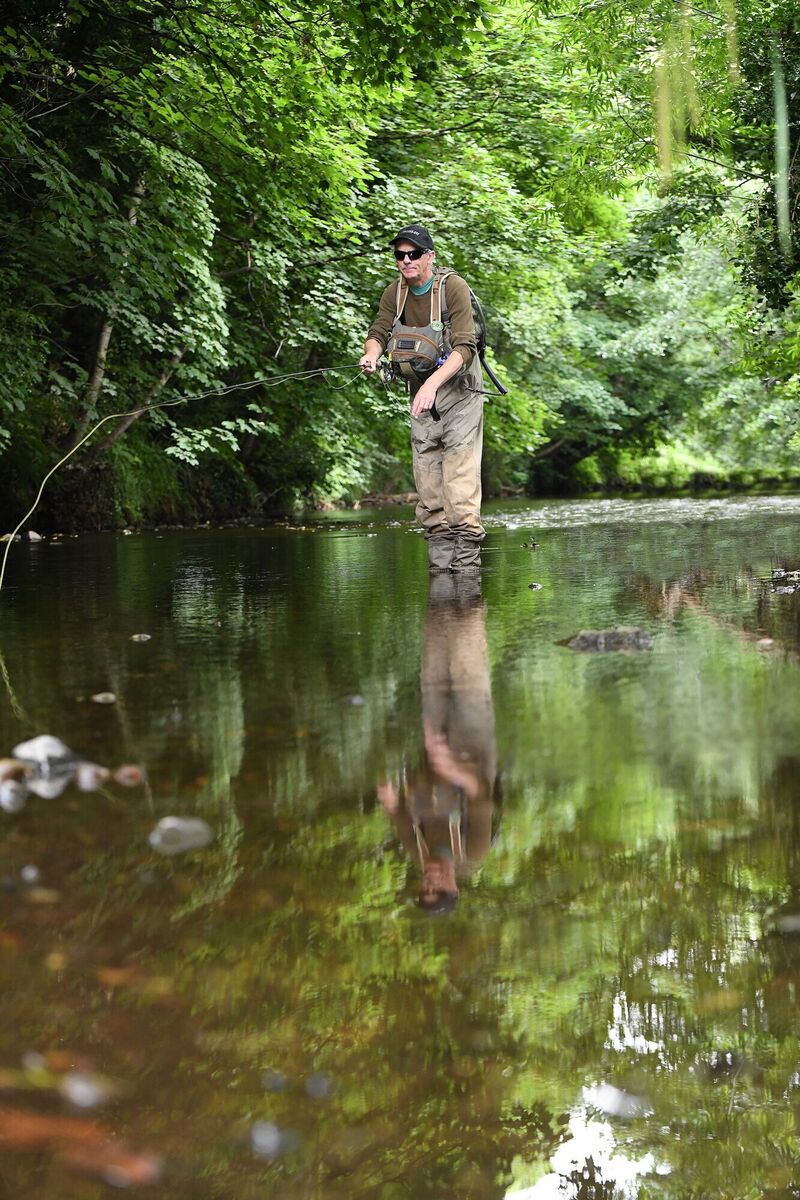
Anglers like Colm have long espoused the benefits of fishing, particularly when it comes to mental health. A recent study conducted by Ulster University and Queen’s University, Belfast and Anglia Ruskin University in Cambridge, looked at 1,752 male anglers who were asked a range of questions about their participation in recreational angling, physical activity levels, diagnosis of psychiatric disorders, and mental health and well-being.
The results found that those who took part in angling more regularly were almost 17% less likely to report being diagnosed with mental health conditions compared to those who take part in the hobby less regularly.
“If we are to break it down, the benefits of fishing include being outside and being in nature, both of which are good for body and mind,” says Brendan Kelly, Professor of Psychiatry, Trinity College Dublin.
“It is known that exposure to blue spaces, in other words aquatic environments, is associated with well-being and better mental health. Fishing is goal-directed, although, as one of my friends says, 'fishing is the wrong term'. He says he spends most of the time, 'not catching fish'. In other words, fishing is goal-directed, but it also teaches that sometimes the goal is not the goal. What matters is the fishing, not the catching of the fish. From a psychological perspective, fishing fosters patience, teaches us about delayed gratification, and makes us tolerate uncertainty for long periods of time. These are important skills.”
In a world that Brendan describes as “over-determined” and “hypercognitive” we could do with tapping into activities that allow us to decompress. But are the next generation still interested in such a leisurely pursuit?
“There was a time when after communions and confirmations you would have a queue of youngsters outside the door eagerly waiting to purchase their first fishing rod,” says George O’Connell, owner of TW Murray’s in Cork.
“These days more kids seem happier to play a fishing game on their console. That said, there does seem to be a little increase in youngsters coming into fishing again and this is probably due to social media. We have seen multiple generations of the same families through our doors and long may it continue.”
“We work with a few organisations that look after young people who have had difficult upbringings and they find those in their care respond very favourably to care programmes where fishing is involved. Fishing brings a great sense of peace and relaxation as you can get away from it all and be one with nature. Catching a fish should be taken as a bonus. The sensation of hooking a trout on a fly rod cannot be matched.”
Colm still has the rod his grandfather gave him all those years ago. Though he doesn’t use it as much, it has come to represent one of the greatest gifts he was ever given.
“As a sport or a pastime, fishing lends itself to self-improvement because once you start, you’ll want to get better,” says Colm.
“It’s a great escape. You can’t be on your phone when you’re up to your waist in water in the Liffey.”
CONNECT WITH US TODAY



Be the first to know the latest news and updates