Skin cancer: 'Using sunbeds or going out in the sun isn’t worth the risk'
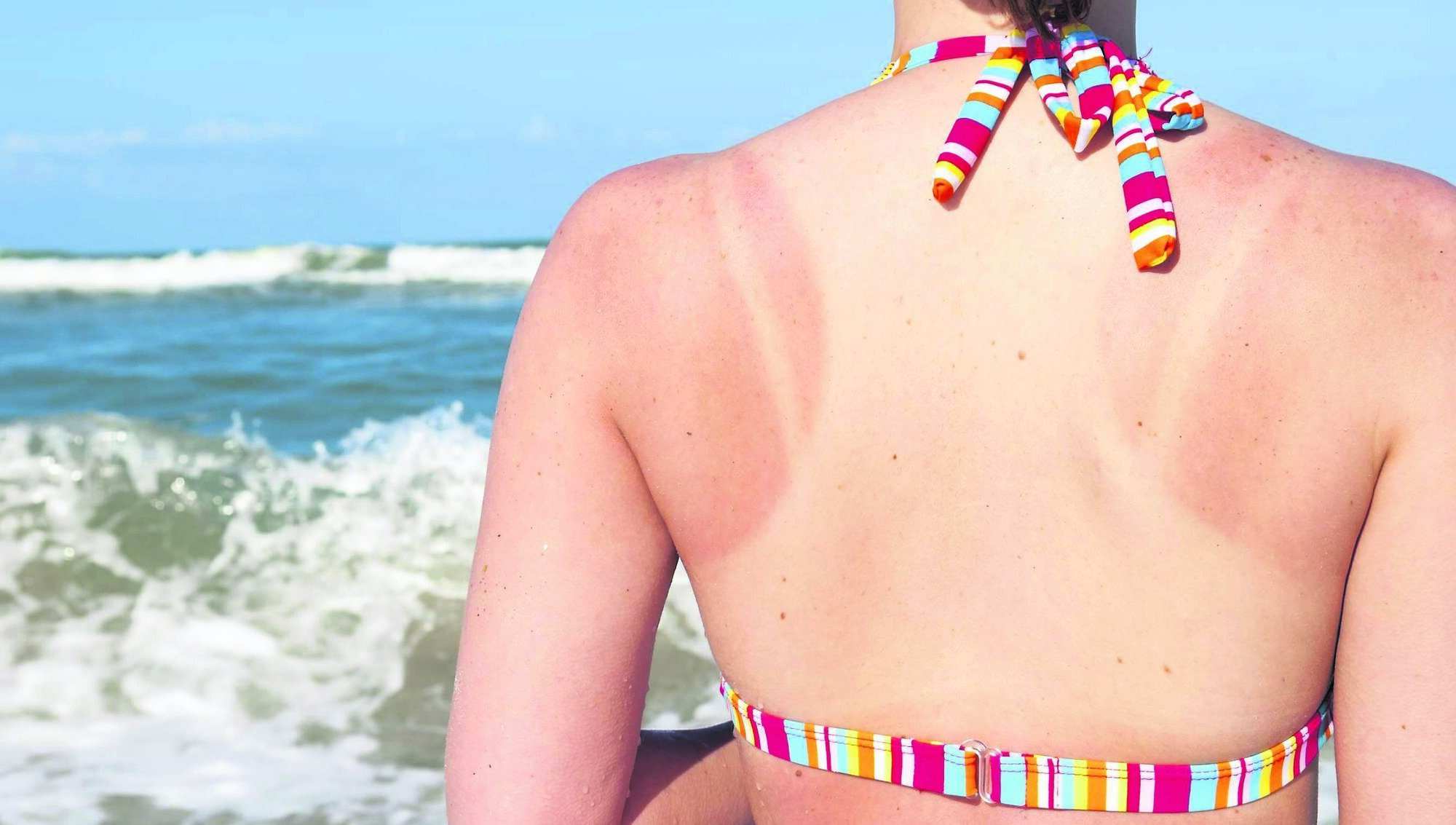
A 2020 study by the University of Galway found that 90% of 10- to 17-year-olds had experienced sunburn in their lifetimes.

It's peak festival season and young people all over Ireland are planning to attend events such as Longitude, All Together Now, and Electric Picnic. The question is: When they’re packing their festival essentials, will they remember to include sun protection? The Irish Cancer Society fears not.
Sarah Egan, an awareness nurse with the Irish Cancer Society, thinks Gen Z are blasé about the dangers of sun exposure.
“The young men and women I meet around the country have heard about the risks of skin cancer but don’t seem to understand how the dangers relate to them,” she says. “They still aim for a tan. Some even use sunbeds. They’re convinced that skin cancer only happens to older people, not young people like them.”
This phenomenon isn’t limited to Ireland. Assistant professor of paediatrics at the Yale School of Medicine Dr Meredithe McNamara also sees it in the US.
“Young people have always been disconnected from thinking about sun exposure,” she says. “When you’re young, it’s hard to think about the long-term consequences of your actions. That skill only develops with time.”

Vanessa Clarke, a 41-year-old teacher and mother of two from Ennis in Clare, remembers how carefree she was about being in the sun.
“When I was a teenager, everyone wanted a tan,” she says. “Because my skin doesn’t burn but tans straightaway, it made me happy to see my skin turning brown.”
Growing up, her mother had taught her about the importance of warning sunscreen. “As a result, I did wear it on holidays and when I spent time outside on sunny days but looking back, I was wearing too low a factor,” says Clarke. “I’d never even have gone near anything as high as factor 25.”
She also used sunbeds on occasion. “Not often, but I had bad eczema when I was younger and felt that a sunbed session helped my skin’s appearance before special events or before going on holiday,” she says. “But now I’d say they were a contributing factor in what happened next.”

In 2009, when Clarke was 26, she found a small mole behind her right knee.
“It was a colourless blister about half the size of my baby fingernail,” she says. “It was itchy for a few days but I’d probably have forgotten all about it were it not that a good friend of my parents had just passed away from melanoma.”
Clarke booked a GP appointment and was immediately referred to a dermatologist who arranged to remove the mole. “It was a stage-three nodular melanoma, one of the most aggressive forms of skin cancer,” she says.
Statistics show that young people’s attitude to sun safety may not have changed much since Clarke’s younger days. A 2020 study by the University of Galway found that 90% of 10- to 17-year-olds had experienced sunburn in their lifetimes, with 74% reporting being sunburnt at least once in the previous year. Some 5% had also used sunbeds.
These findings worry Dr Bláithín Moriarty, a Dublin-based consultant dermatologist with a special interest in skin cancer. “Getting sunburnt before the age of 18 doubles your risk of melanoma,” she says. “And sunbeds are a known carcinogen. I see patients who have a history of using sunbeds presenting with skin cancer at a much earlier age than the general population.”
Online misinformation further complicates Gen Z’s understanding of sun protection. According to a survey by the American Academy of Dermatology in May, 28% of 18 to 26-year-olds don’t believe that tanning causes skin cancer.
Another poll by the Orlando Health Institute found that 14% of under-35s thought that sunscreen itself was more likely to cause cancer than direct exposure to the sun.
“There’s so much misinformation like this out there spreading all over the likes of TikTok,” says McNamara.
Moriarty wants to bust these myths. “TikTok might tell you that you’re safe as long as your skin doesn’t turn red, hot or sore following exposure to the sun, but that’s not true,” she says. “UV exposure gives you freckles and a tan as well as sunburn, and all of these are signs of sun-damaged skin.”
When UV light from the sun hits our skin, “our melanocyte cells spread melanin to give you protection but in doing so, they cause mutations in the skin cells,” she says. “Some of these mutations are repaired but some remain and it’s the ones that remain that can lead to abnormal cancerous cells.”

Tans fade, damage stays
Egan is keen to emphasise that tanning today can cause cancer in some distant tomorrow. “When your tan fades, the damage is still there, skin deep,” she says. “That damage can build up year after year and in the years to come, a cancerous skin lesion can develop.”
Irish skin is particularly susceptible to damage. “Approximately three-quarters of us have a genetic makeup that makes our skin prone to sustaining UV damage and generating skin cancer,” says Moriarty.
This susceptibility could explain why skin cancer is the most commonly diagnosed cancer in Ireland. “With approximately 13,000 new cases each year, it’s more common than the next five cancers put together,” says Moriarty.
Skin cancer isn’t a generic disease but consists of 100 or so different types. “Melanoma is the most high-profile because it’s the most deadly,” says Moriarty. “It’s characterised by moles or lesions that are usually brown or black in colour but can be other colours too. A mole that’s new or has changed in some way should always be looked at by a doctor.”
Keratinocyte cancers such as basal cell carcinomas are the most frequently occurring forms of skin cancers and typically manifest as a lump, a crusted area of skin that doesn’t heal, or a red scaly patch.

Globally, the rate of all skin cancers is increasing. “It could be because we expose ourselves to the sun more and have more access to travel and sunny places,” says Moriarty. “We’re living for longer and as lots of skin cancers tend to present in older age, that’s a factor.”
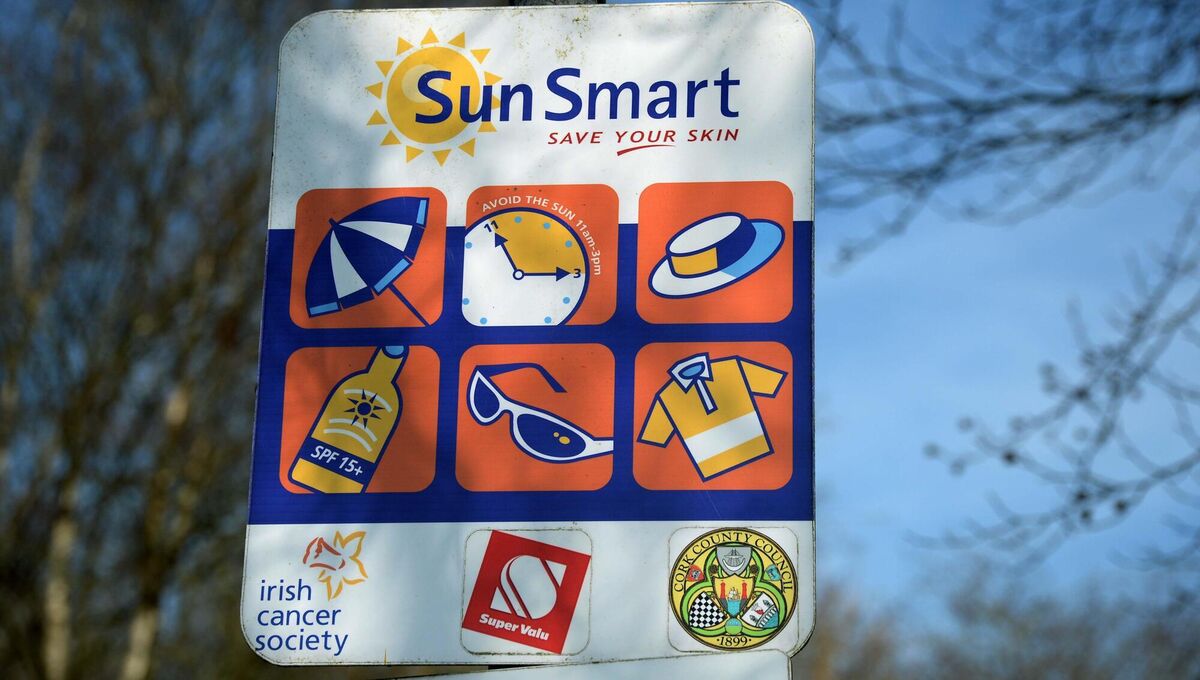
The Irish Cancer Society started its SunSmart campaign in 2019, so our awareness of the damage that can be caused by the sun is very recent, says Moriarty. By contrast, Australia’s SunSmart campaign started in 1988 and is now regarded as the world’s most successful skin cancer prevention programme. “The adults who were children then have lower rates of skin cancer than previous generations,” she says. “Awareness makes a big difference.”
Along with taking steps to prevent sun damage, we need to know the symptoms to look out for and check our skin regularly.
“A new freckle or mole, a freckle or mole that has changed in appearance or feels different, a cut that doesn’t heal, a new lump or bump or anything that’s pink or painful or not going away as you might expect should be seen by a doctor,” says Egan.
Particular attention should be paid to places that are often exposed to the sun, says Moriarty. These include the face, ears, balding scalp, neck, and the back of the hands and forearms.
“Melanoma in women is often found on the legs while men tend to get it on their backs,” she says. “But keep an eye on the trickier-to-see parts of the body too.”
The Irish Cancer Society’s website cancer.ie has photos to help with checking, while the Boots pharmacy chain offers to scan worrying moles or lesions.
“Act fast if you have cause for concern,” says Egan. “Skin cancer is easily treatable when caught at an early stage.” It’s also one of the most preventable cancers. “Apart from wearing sunscreen, there’s so much you can do to stay protected while enjoying time outdoors,” says McNamara.

Carrying the effects
Clarke wishes she had taken more care in the sun. Her melanoma treatment involved removing the cancerous lesion and further surgery to cut lymph nodes from her groin, where the cancer had also travelled. She then had to travel to London for immunotherapy.
“It worked and I’ve been all clear ever since,” she says.
However, the removal of her lymph nodes caused lymphedema in one of her legs.
“This means it swells in the heat and can react to what I eat or drink,” she says. “It limits my ability to run and exercise and I have to wear compression garments all the time.
“Even though I overcame my cancer diagnosis, lymphedema is a serious side effect that will affect the rest of my life.
“I’d love young people to know that using sunbeds or going out in the sun simply isn’t worth it.”
McNamara has decided that the best approach is to educate young people on social media about the impact the sun can have on their appearance.
“Gen Z is very aesthetically motivated and we can use this as an asset to counsel them on skin protection,” she says.
“Skin cancer is too far in the future but telling them how sun-damaged skin ages quickly could be more compelling in convincing them to take action when it comes to sun protection. That action could prevent them from getting wrinkles and sunspots and also skin cancer in later life.”
If they still want a tan, they can always fake it. “They’ll achieve the same aesthetic goals with none of the harm,” says McNamara.
Before heading outdoors, Clarke wants young people to think twice.
“They are always going to want to have fun in the sun with their friends but it’s so important that they cover up or wear sunscreen,” she says.
“It’s not worth the alternative. I’m proof positive that a skin cancer diagnosis can affect you for life.”
CONNECT WITH US TODAY
Be the first to know the latest news and updates

Celebrating 25 years of health and wellbeing