Yoga instructor Diana Skalkos: 'There’s an assumption that if you’re fat, you’re lazy or greedy'
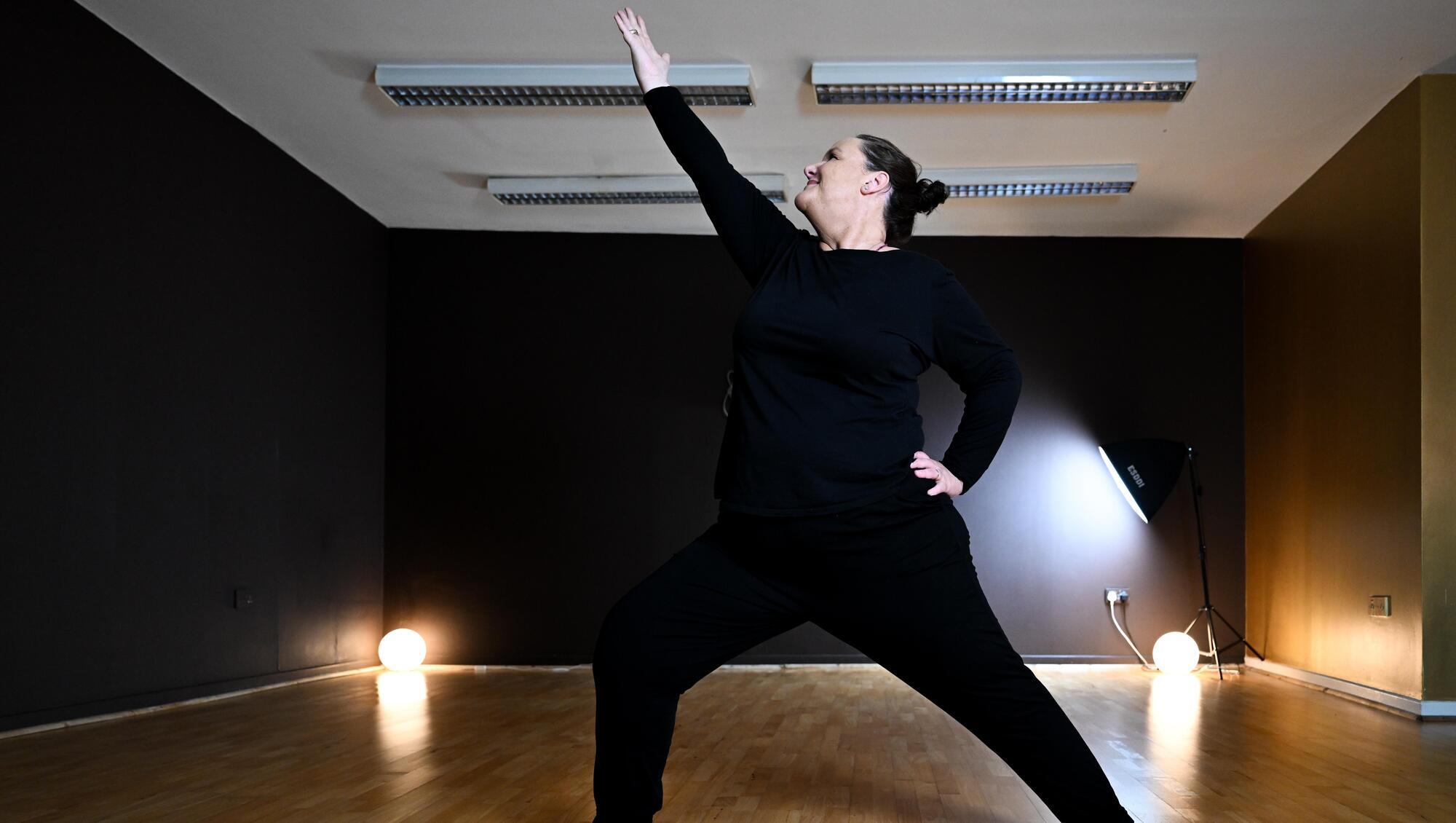
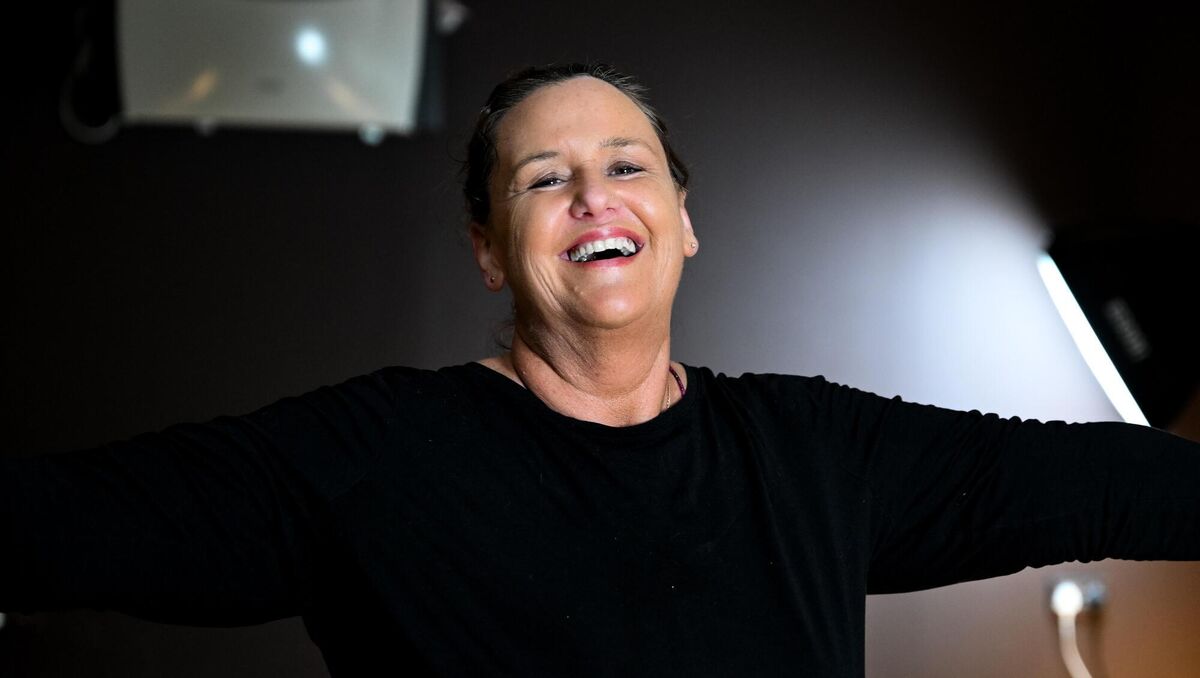
Yoga Instructor Diana Skalkos: "Coming from a very middle-class family, the rules were ‘you must look gorgeous and not be touched’. I found that hard to navigate." Pictures: Chani Anderson
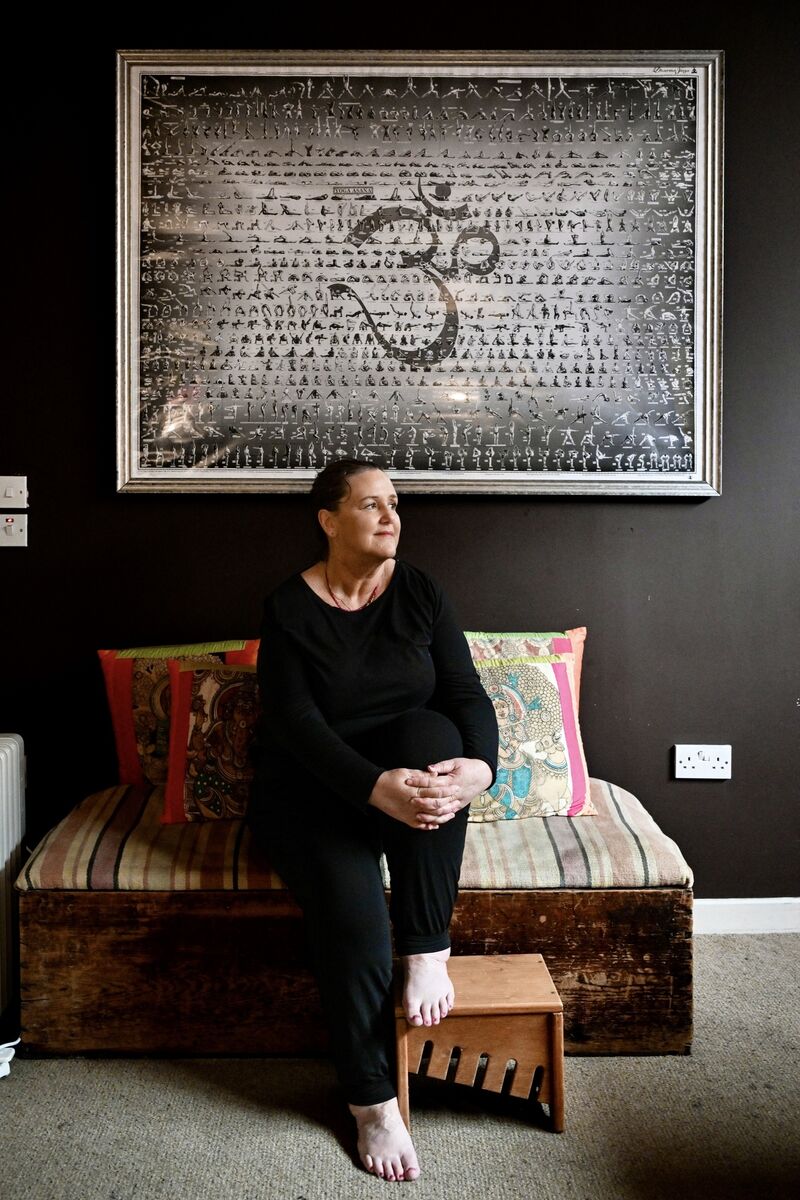
DIANA SKALKOS was the curvy one in her family, with bigger hips and breasts than her five sisters.
“I don’t think I was fat, but I always felt fat,” says Diana, now in her 50s, who grew up in Glanmire, Cork.
She recalls her grandaunts as “exceptionally glamorous women”, while her grandmother lived on soup and Complan. Her mother too was concerned about her weight. “She lived on boiled eggs and salad. Fitting into my 15-year-old sister’s jeans after she’d had her seventh child was her proudest moment.”
We meet in the foyer of Cork’s Metropole Hotel, mid-morning on a Monday. Diana is engaged and generous, happy to let the conversation take us where it will.
She remembers visiting a favourite aunt, and being given a meal of potatoes and scrambled eggs. “She said, ‘I thought it’d be better than bread’. And I thought oh, for God’s sake, go out and buy a sliced pan.”
She knows the women of her family “ate for health and not for love” of food. “You were almost blamed for looking a bit curvy. I’m not saying it’s their fault — I am a big girl — but it was the culture we all grew up in. There was such huge pressure — if I lost weight, it was ‘you’re looking so lovely’, and if I didn’t there was disappointment.
“And coming from a very middle-class family, the rules were ‘you must look gorgeous and not be touched’. I found that hard to navigate.”
Dealing with stigma
At 18, Diana had her first boyfriend, went on the pill and put on three stone. In her early 20s, she got really tired and sick and lost the weight again. It turned out she had Crohn’s disease. “I had the usual symptoms: constantly upset tummy, needing to be near a toilet, red sores on my legs, exhausted all the time.
“I was pumped full of steroids. It changes your ability to control what you want to eat — you crave fat. I put on six stone because of the steroids.” After weaning herself off them, Diana spent a period in India where she found the heat, plus a “really healthy” vegetarian diet with herbs and spices, greatly helped the Crohn’s inflammation. She lost her steroid-induced weight.

She and her Greek husband, Sackies, eventually returned to Ireland — the couple have a son, Senan, 20 this year — and Diana endured the horrific experience of being stalked. “I was afraid to leave the house. I was diagnosed with depression — it was a very difficult time in my life. With that, I put on weight again. Psychologically, it was comfort-eating — trying to keep body and soul together, my family safe. Fat became a layer of protection — ‘if I’m unattractive I might not get this attention’.”
As a child, Diana had struggled with social anxiety. It followed her into her 20s and she used alcohol to cope. “As I got bigger, quite often I didn’t go to events. It took me out of the pressure of having to be attractive, of finding something acceptable to wear.”
For Diana, the very visibility of carrying excess weight becomes a magnet for all sorts of unkind, intrusive and judgmental commentary. “It’s like every sin you ever committed is tattooed on your body. If you’ve eaten too much cheesecake, or you’ve a diet others may not approve of, it’s there for everybody to see — and they [feel] they’ve the right to judge.
“If you’re a big size in this country, it’s like you’ve committed the worse sin ever — ‘you’ve let yourself go, you have to cop yourself on’. There’s an assumption that if you’re fat, you’re lazy or greedy. I don’t think I’ve ever met a lazy, greedy fat person.
“I’m a good mom, a reasonable businesswoman, I’ve a reasonably clean house, I’m a good neighbour, a kind friend — none of this matters if I’m walking down the street. I’d challenge anyone who says ‘this isn’t true’ to put on a fat suit and walk down the street.”
![Diana Skalkos: "I did it for my own pleasure and joy [rather than] for health." Diana Skalkos: "I did it for my own pleasure and joy [rather than] for health."](/cms_media/module_img/8342/4171219_8_articleinline_53737132384_c069abc2d2_o.jpeg)
Core values
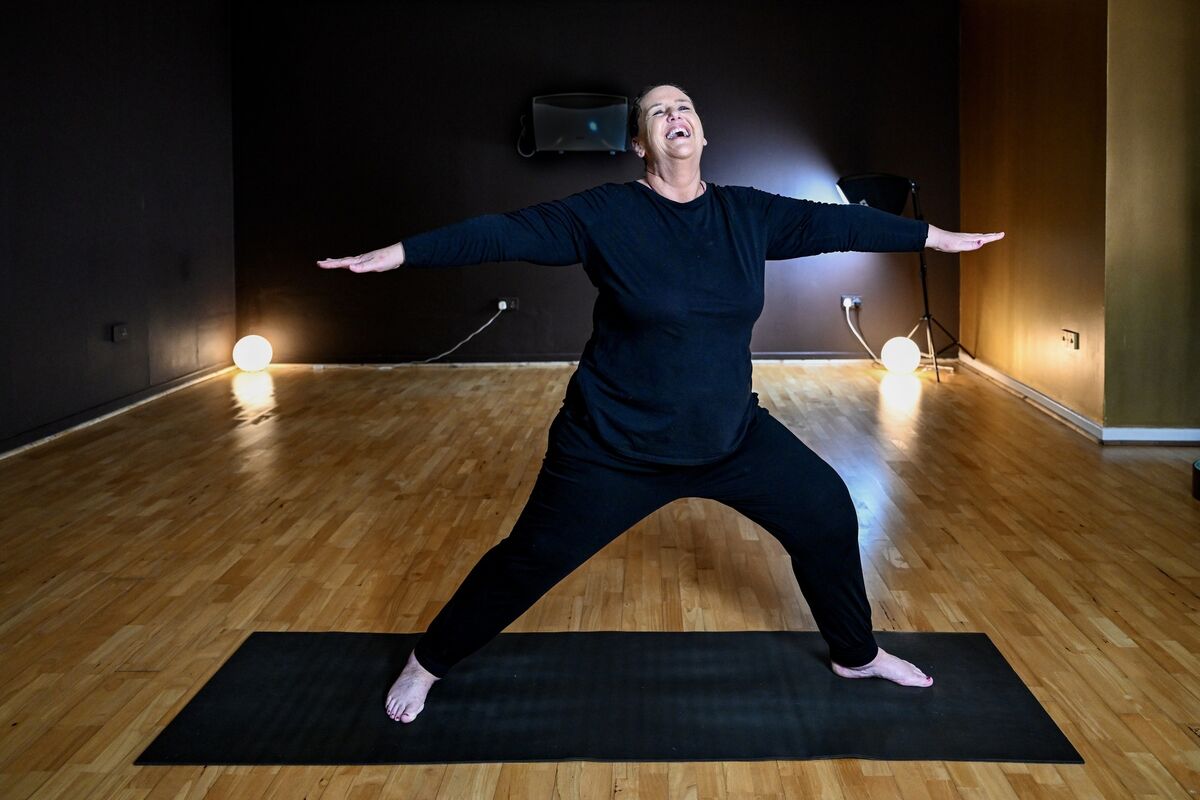
A ceramic artist, Diana also trained in yoga. “I did it for my own pleasure and joy [rather than] for health. Initially I learned it from my mother, yoga poses she’d picked up in a book. In my early 20s, I went back to it, and in India, I became even more into it.”
Diana met sports scientist Sackies — a professional swimmer during his youth in Greece — through mutual friends at Notting Hill Carnival in London. “It was an absolute blast,” she recalls. “He became interested in yoga — I taught him.”
Sackies runs the Cork-based Yoga Republic and has taught there for 20 years. Attending events with him over the years, Diana has navigated as best she could the common expectation “that I’d be this slight, perfect yoga person with all the yoga attire”. She recalls being told by someone of ‘a very good pose for your core’ followed swiftly by the question ‘do you know where your core is?’ “The idea being that I wouldn’t know where my core was because I was so fat.”
She describes how supported she felt by Sackies through all of this. “He’d say ‘You’re 10 times more flexible than that person, you’re the embodiment of yoga — you have to stop feeling intimidated’.
“I would share information with women in bigger bodies, say ‘yoga made me feel better, try this pose, or go learn from that person’.” And Sackies would point out that while she was sending people for help elsewhere, she, in fact, had “all the answers”. She knew this was true. “But I didn’t want to put myself in front of a class.”

Meanwhile — attending various yoga or gym classes — she found little understanding among teachers of what it is like to be in a bigger body. “They couldn’t understand that, physically, no matter how well they could do it, I couldn’t keep my legs together and touch my toes — my belly would be in the way.”
Finally, she took the plunge, qualifying as a yoga teacher. For years she has also valued mindfulness but came to it more deeply after she trained to teach it to children. She did so after her son was bullied. “I didn’t want him growing up believing stuff other children said that they’d heard from older people. And as I taught him ‘this is not your problem, it’s the other person’s shortcomings and not your burden to carry’, as I taught him to forgive because he deserved to let go of what had happened to him, I started going back to my own breath.
“Because the most important thing about mindfulness isn’t ‘living in the moment’ but being kind to yourself so that when you walk in as a fat person, you can take your mind out of the self-talk — ‘I’m fat, I wish I wasn’t here, who’s judging me because I’m fat’. You can take yourself out of that constant self-berating and say ‘I’m going to come to my breath. And no-one in this moment is being unkind to me, I don’t feel judged by anyone except myself’.
“So with mindfulness, I can look and say ‘my fear is irrational’, and that happens in a split second.”
Diana now teaches yoga to larger-bodied women. She says doing so requires intrinsic understanding of the yoga pose — and of the desired outcome of that particular pose. And a larger-bodied woman can still achieve the same outcome from doing regular yoga classes, but she has to do it differently than a thin person. “Because her breasts and belly aren’t the same size as the thin person’s. It’s about making small variations in the poses that acknowledge your challenges as a bigger person.”

Diana says to achieve this, you have to experience first-hand what it is like to “live in a fat body, to carry extra weight, to be a bigger person”.
Teaching bigger-bodied women, she gives three or four different possibilities for a pose. “It’s a general invitation to the room, not to ‘the fat person in the corner’. And I’m also lifting my own belly, pulling my breasts out of the way.”
Her inclusive classes are about finding joyful movement in your body — with a teacher who understands your limitations, who isn’t going to humiliate you or laugh because your belly’s in the way, or there’s fat on your back, or breasts are too big.
“And if you want to laugh about it, I can laugh with you, sympathetically. It’s a safe place where it’s fine to be a fat person in yoga pants.
“It’s none of my business if you leave the yoga class and buy a packet of Maltesers or an apple — I’m not going to weigh you.”

Subscribe to access all of the Irish Examiner.
Try unlimited access from only €1.50 a week
Already a subscriber? Sign in
CONNECT WITH US TODAY
Be the first to know the latest news and updates
Celebrating 25 years of health and wellbeing