Don't keep it under your hard-hat: mental health in the construction sector
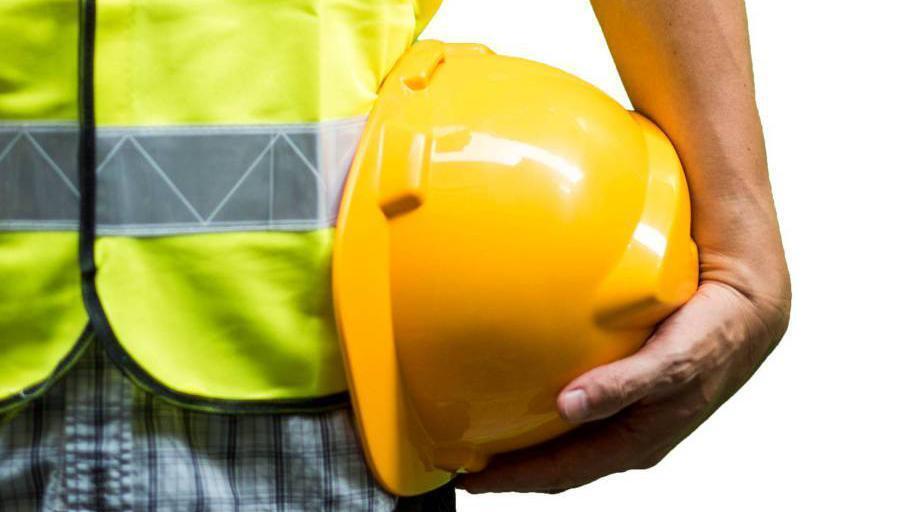
During Men’s Health Week 2024, workers in the high-pressure construction industry are being encouraged not to keep their mental health under their hard hats and to reach out for help
Don't keep it under your hard-hat: mental health in the construction sector

Some 81% of employers said employee mental health was a very sensitive issue and difficult to address, and 68% said they would find it much easier to manage an employee who is physically sick than one with a mental health difficulty.

IT seems hard hats can also be hard on the head. While employee support scaffolding has improved and attitudes appear to be shifting, the roof isn’t on yet. New data indicates that the unique pressures of the job may contribute to mental health struggles.

A report conducted by the Construction Industry Federation (CIF) titled Mental Health in the Construction Sector found that 60% of companies reported considering the mental health of employees in the last 12 months. The data in the report was compiled on the eve of the covid-19 pandemic in 2020 and based mainly on a survey of 301 construction companies.

Some 81% of employers said employee mental health was a very sensitive issue and difficult to address, and 68% said they would find it much easier to manage an employee who is physically sick than one with a mental health difficulty. The same percentage of respondents believed the construction sector had a serious issue with staff under-reporting issues with their mental health in the workplace.

As for the causes of mental health issues, they could be non-work related, although 70% of companies believed the job was at least a factor, with the primary work-related reasons listed as general work stress (44%), unrealistic work targets (29%), long working hours (22%), a macho work culture where employees are uncomfortable seeking help (16%), a bullying culture (15%), and poor communication between management and staff (9%).

It’s a concerning finding, even as the CIF and others believe the sector has made huge strides in addressing mental health concerns.

Yet more recently, Dr Shane O’Donnell of South East Technical University (Setu) and colleagues conducted a large-scale study on the prevalence and associated risk factors for suicidal ideation, non-suicidal self-injury and suicide attempt among male construction workers in Ireland. Based on a large sample of 1,585 male construction workers, it found that more than one in five (22%) had suicidal ideation at some point in their lifetime, while 6% had non-suicidal self-injury and 6% had made a suicide attempt.

Younger age was associated with suicidal ideation and non-suicidal self-injury, not being in a relationship was more of a factor for those involved in a suicide attempt, and working a 35- to 44-hour week, impacting family and recreational time.

The researchers estimated that, at the time of data collection, approximately 151,800 males were employed in the Irish construction industry.

“We thought that the lifetime prevalence rates for suicidal behaviour might have been higher among male construction workers compared to the general population in Ireland, but the rates were slightly lower,” O’Donnell says.

However, the rates of suicidal behaviour his team observed in Ireland were higher than those previously observed among male construction workers in the US and Australia, so “suicide prevention training that is specific to the Irish construction industry is needed”.

“Indeed, what was surprising to me was how many participants had lost someone close to them through suicide (46%),” he says. “Findings highlight a need to support younger male construction workers and those bereaved by suicide. They also highlight the need for the early detection and treatment of generalised anxiety disorder and depression in order to intervene in, and potentially prevent, suicidality among male construction workers.

“A ‘macho’ workplace culture and conformity to masculine norms — particularly self-reliance and emotional control — have been implicated in the relationship between construction workers and suicide. Interventions that are most acceptable among men tend to be those that work with and not against cultural ideals of masculinities.

“However, the training we have developed is just one small step — wider initiatives are needed to create cultural change across to industry that reduces mental health/suicide stigma, and encourages help-seeking and help-offering. Moreover, if or when construction workers seek help, it is important the help is available to them [this is a wider issue on the availability of mental health services].”

Sarah Faughnan, an Occupational health and wellbeing nurse working with Arcadis at the Intel plant extension in Leixlip, photographed with contractors working on site from Sisk, PM Group, Jacobs , Arcadis, Jones, Mercury, Ross, Kirby, Suir, Actavo, Duffys PJ Hegarty and JLL. Photograph: Moya Nolan

‘Man up’ mentality

Sarah Faughnan is the occupational health nurse at the Intel site in Leixlip, where around 4,000 construction workers are currently working.

“Usually, I have around 10-15 mental health conversations a month,” she says. “These can range from people simply chatting about something going on at home to those who know they need to speak to someone but don’t know where to start.

“My main goal in these conversations isn’t to provide all the answers but to offer a point of reference through the health and wellbeing clinics, guiding them to the help they need. The confidentiality of the service means it removes the worry that some may have.”

The impact of mental health on physical health, and vice versa, means sometimes one issue raised at one of the two health and wellbeing clinics onsite can lead to admissions about another. “As our mental health can impact our physical health, it usually brings about a conversation where they discuss things that could be playing on their mind,” Faughnan says. “I would be a big believer in the holistic approach to healthcare, and it has shown itself to be a good way to start a conversation and allows people to open up more and have a confidential chat about things that may be worrying them.

“When people come to me with mental health concerns, it’s rarely just one isolated issue. It’s often an accumulation of events and stressors impacting their mental wellbeing. Many of these concerns originate outside of work but can also be common industry-related worries, such as job security and financial pressures, especially as projects near completion.”

Faughnan says being at work can be a beneficial distraction for some, but others may need time off to focus on their wellbeing. More broadly, the sector-wide focus on health and safety fosters more open discussions among staff, but she believes that old stigma can linger.

“There is still a societal mentality about ‘man up’ for men, which can be detrimental to people seeking support, not only in construction. Thankfully, this is changing slowly, with male leaders advocating for mental health supports and encouraging the younger workers to reach out if they need help.”

Intel runs mental health awareness events, a mental health first aider programme and senior leader figures support mental health awareness.

“However, I still think everyone finds the initial admission that they are struggling hard — we all can be in denial about how well we are coping. That is why we need to ask people [how they are doing] as by asking it gives them an opportunity to pause and think,” says Faughnan.

As for the contributory factors, they range from cost of living and housing, to work-orientated issues. “It is as simple as asking are they OK,” she says of ways other people can help.

Unique challenges

The Lighthouse Construction Industry Charity offers mental health immediate support, wellbeing programmes, education and financial support if needed.

Increasingly visible on sites around the country, the organisation covers Britain and Ireland. Last year, saw 281 calls from Ireland to its helpline, out of a total received of 4,435. As a percentage of population, this is slightly lower than the British figure, prompting CEO Sarah Bolton to say Lighthouse would like to see more people reaching out for support.

“Of the 281 calls received by our Irish helpline, 154 of these were responded to by our frontline helpline team, who were able to offer immediate assistance and support,” she says. “The remaining 127 calls were managed by our caseworkers who can support people with complex and multiple needs including a variety of emotional, physical and financial difficulties. Seventy-six per cent of these cases involved emotional wellbeing, and we were able to deliver 205 counselling sessions to provide fast and easy access to specialist support to those that needed it.”

Bolton believes Lighthouse is “uniquely positioned” to help those in construction deal with what could be described as unique challenges.

“The stigma of talking about emotional wellbeing is lessening, especially in the younger members of the workforce but it is a challenge that we need to continue to overcome. Our #MakeItVisible onsite initiative is directly reaching some of the industry’s most vulnerable workers. Since the initiative was launched in Ireland last March, we have visited 94 locations across Ireland and engaged with over 8,000 site workers.

“Our team deliver an engaging and down-to-earth talk where they share their own lived experiences. This helps to reduce the stigma of opening a conversation and site workers also have the opportunity to talk one-on-one with our team and share any concerns. This is an ongoing journey, but we are definitely moving in the right direction of encouraging open and frank conversations and ultimately improving the wellbeing culture in our industry.”

Other encouraging developments are in the works. The Men’s Health Forum in Ireland was commissioned by the HSE’s National Office for Suicide Prevention to investigate this issue in the Republic of Ireland and to develop CAIRDE (Construction Alliance to Reduce Suicide). This initiative aims to reduce suicide stigma, enhance knowledge of suicide and mental health issues, and increase help-seeking and help-offering in the construction industry.

“We had a very positive experience going onto construction sites. Many construction companies volunteered to take part in the research and passed our details onto other companies to participate,” O’Donnell says of the research conducted by his team in association with the CAIRDE project.

“When we arrived on site, the construction workers were very willing to be involved and to help us recruit others to take part. This highlights that male construction workers do care about their mental health. Many of the companies that we worked with had already trained-up their staff in mental health awareness training. So there is an appetite and willingness there which we all need to build upon.”

  • Samaritans: Call 116123 or see samaritans.org
  • Lighthouseclub.org/Text hardhat to 50808 or call 1800 939 122
  • The Lighthouse Club Ireland summer lunch takes place in the Mansion House on June 14.
  • Men’s Health Week runs from June 10 to June 16 — mhfi.org for more information.
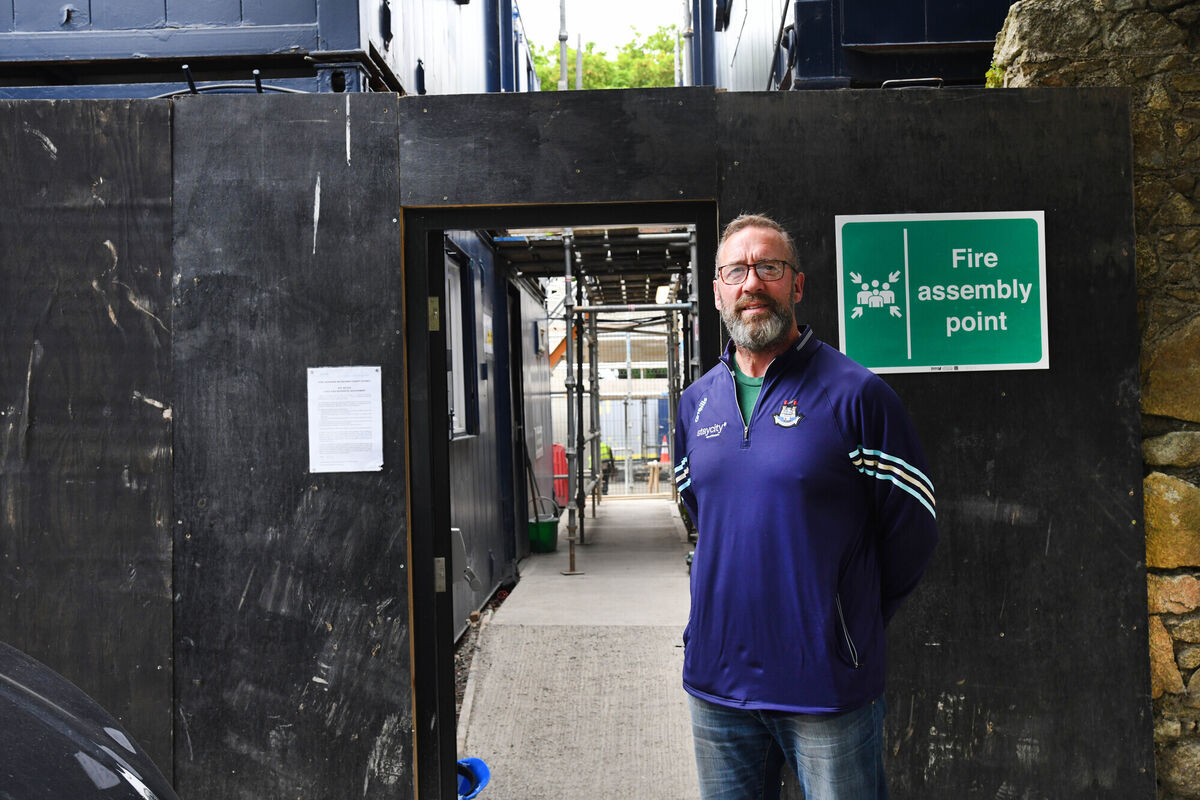
John Boland, a mental health and wellbeing ambassador for men in the building sector. Photograph: Moya Nolan

Work hard, play hard

For John Boland and many of his colleagues in the early noughties boomtime, the mantra was simple: work hard, play hard.

“There was definitely a play-hard theme and that was alcohol and cocaine,” he says of his time, almost two decades ago, working on some of the biggest sites in the country.

“That was my experience with several other people. I am an addict, I am clean and sober years but I use it as a present tense.”

Now 54 and employed in a different sector, Boland spent eight years working on huge projects in the early part of the millennium in Dublin.

He says he worked “very hard” as a ganger man, with long hours and good pay. They were “the most enjoyable years ever”, he says, but also “tough” —“the constant pressures, the work was never-ending”.

The 12-hour shifts were one thing, but the culture at the time was another. “The ego, the age profile — it was not a place to express vulnerabilities, that would be seen as a weakness, that would be seen as less manly.”

As well as the hard hats, he characterises it then as a “mask-wearing industry”.

Boland says he had some difficulties in his childhood and more relationship issues in his adult years, but he began drinking too much and that caused him problems.

He recalls that he and his workmates would never want to be seen to bring any problems onto the site.

Now a wellbeing ambassador with his company, he tells his story to help others as a mental health advocate, including through Lighthouse on sites. He can see a shift in attitudes.

“I have been at the last three Lighthouse [annual] charity events in Croke Park, and what I can see now compared to when I worked, it’s night and day,” he says.

“There is a huge culture change, and it is for the better.”

x

More in this section

Lifestyle

Newsletter

Eat better, live well and stay inspired with the Irish Examiner’s food, health, entertainment, travel and lifestyle coverage. Delivered to your inbox every Friday morning.

Cookie Policy Privacy Policy Brand Safety FAQ Help Contact Us Terms and Conditions

© Examiner Echo Group Limited