Expert tips to deal with hay fever as pollen counts rise
With changes in seasonal temperatures driving up pollen counts, hay fever sufferers face greater risks of developing symptoms. Here’s our expert guide to medical and practical steps to keep the condition under control
Expert tips to deal with hay fever as pollen counts rise

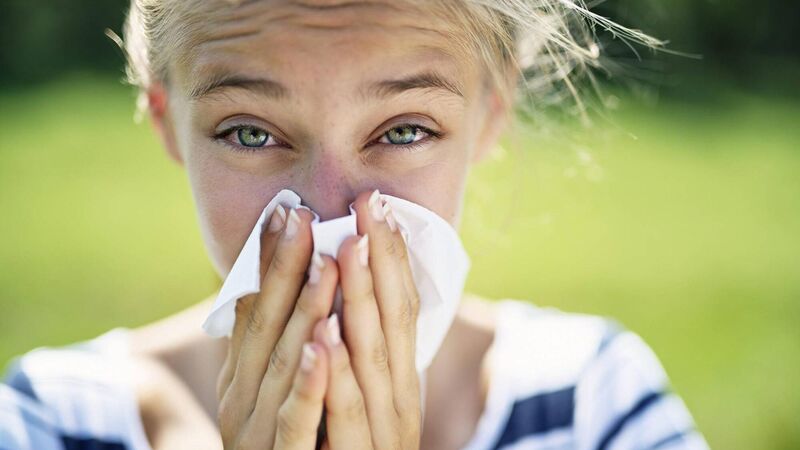
The majority of those with hay fever are allergic to grass pollen. Picture: iStock


WHILE many of us celebrate the arrival of summer, hay fever sufferers around the country close their windows and prepare for the soaring pollen count and the symptoms that follow.

Hay fever, or allergic rhinitis, affects one in four Irish people, and about 400m people around the world. It is caused by an allergy to pollen, specifically grass or tree pollen.

“Hay fever happens when the immune system misinterprets pollen as a threat and triggers an inflammatory response,” says Dr Iseult Sheehan, clinical director at Allergy Ireland.

“This response [leads to] the symptoms we associate with hay fever: runny nose, sneezing, nasal congestion, and itchy eyes. These symptoms can also then cause a flare-up of other conditions such as asthma and eczema in people who suffer from them.”

As with so many other aspects of our lives, climate change is having an impact on the hay fever season. In short, it’s prolonging it.

“We’re seeing that the different seasons are starting earlier and lasting longer. With our milder winters we’re seeing pollen counts rising earlier in the year,” explains Sheehan.

Climate change is not only prolonging the pollen season, studies show that higher temperatures are also driving up CO2 levels, which in turn causes plants to ramp up their pollen production.

“CO2 is used readily by plants during photosynthesis — it is essentially food for plants,” says Dr Emma Markey, senior meteorological officer at Met Éireann. “The increasing CO2 levels seen in modern times have been shown to promote plant growth and stimulate the production of pollen.”

Recent studies found that rising CO2 levels cause hay-fever-inducing plants to not only produce more pollen but more potent pollen, says Markey, adding: “This ‘stronger’ pollen triggers allergies at lower concentrations than normal.”

While pollen counts are higher in rural areas due to land use, researchers see growing levels in urban areas due to air pollution.

“Exposure to air pollution alone can have detrimental effects on your respiratory health, but it can also interact with the plants and pollen in the area, introducing changes to the pollen grain’s structure and composition, making it more capable of triggering allergies,” says Markey.

“Exposure to air pollution can also have a ‘priming effect’ on our respiratory system, making us more susceptible to the effects of pollen.”

Symtoms and treatment

The majority of hay fever sufferers are allergic to grass pollen, but 25% are also allergic to tree pollen. Some may only be allergic to tree pollen.

In all cases, the general symptoms are the same.

“The severity of people’s symptoms can vary,” says Sheehan. Some will experience mild symptoms like itchy eyes for a couple of days, while others will have moderate to severe symptoms, which can be very debilitating.”

The standard treatment for hay fever is over-the-counter antihistamine tablets, but treatment will depend on the severity of a person’s symptoms, says Dr Juan Trujillo, consultant paediatric allergist at CUH. “Antihistamines provide relief from the daily symptoms and are often sufficient for those who experience mild symptoms. In the case of moderate symptoms, or ‘not controlled symptoms’, treatment is typically a steroid nasal spray combined with antihistamines.”

Additionally, saline nasal irrigation, where salty water is used to clean out the allergen from the nose, is effective to a certain degree, says Sheehan. “It can be administered using a spray for kids and can relieve nasal symptoms.”

The key, it would seem, is for those with hay fever to be prepared. “Keep an eye on the pollen count and plan ahead. Speak to your doctor before the hay fever season, whether that’s spring or summer, and map out your treatment plan. We know that grass pollen allergy is more common, so people would want to get their plan set up before the summer hits,” she says.

What does a treatment plan look like? Depending on symptoms, it can include antihistamine tablets, nasal sprays and eye drops. There is no cure for hay fever, but these over-the-counter treatments offer some relief from the topline symptoms we associate with the condition.

Immunotherapy

Immunotherapy is a more forward-thinking treatment. It’s been available in Ireland for over 10 years and is a tablet that dissolves under the tongue (sublingual).

“Immunotherapy has proven successful for people who have pollen allergies. It works by exposing a person to minute quantities of the allergen in the form of a tablet,” says Sheehan. “The person takes this tablet every day for a period of between three to five years. In this way we are encouraging the immune system to build up a tolerance to the allergen.”

Children tend to respond quickly to this treatment. “A child’s immune system is less stubborn than an adult’s,” says Trujillo. “The younger you are, the faster the immune system responds. Some children may see an improvement within six months of taking the tablet.”

While being treated with immunotherapy, patients should also continue taking their standard medication, advises Sheehan, who says that people will usually start to notice a general improvement in their symptoms.

Hay fever typically presents in children around the age of four. Like adults, they can experience a runny nose, sneezing, nasal congestion, and itchy eyes. Trujillo says it’s important not to let hay fever affect a child’s quality of life.

“Try to work around the pollen count. Plan activities for the morning, instead of the afternoon when the pollen is at its peak. Going out after it’s been raining is also good, as the pollen drops. Work with your doctor or allergy specialist to create a treatment plan that will help you to control your child’s symptoms before they become problematic.”

It can be difficult to figure out if your child, particularly a young child, has hay fever, as symptoms appear similar to a cold. According to Trujillo, if parents notice that their child’s symptoms start in mid-March each year, this is a good indication that they may have hay fever. “Generally, we start to see the pollen count increase after St Patrick’s Day, although this is getting earlier now as a result of climate change.”

Diagnosing hay fever

A GP or an allergy specialist can diagnose hay fever either with a blood test or a skin prick test.

“With skin-prick testing, we apply a little droplet containing a minute amount of the allergen, whether that’s grass or tree pollen. We make a little scratch on the skin to let the allergen penetrate, and then we wait to see if there’s a reaction. If there is an allergy, a hive will form on the skin, usually within 15 minutes,” explains Trujillo.

Skin prick testing is the “gold standard” of allergy tests, and is a straightforward, virtually painless test, says Sheehan. “It’s a particularly easy way of testing children,” she adds.

Hay fever is far more than a mere annoyance. The symptoms themselves can be debilitating and lead to feelings of fatigue and exhaustion. A proactive treatment plan can help lessen the impact of the condition.

“It’s generally easier for people to avoid tree pollen,” says Sheehan. “Those affected by tree pollen should stay away from woods and forests when the tree pollen count is high. If you happen to live close to trees, you should keep your windows shut during this time.

“Of course, it’s harder to limit your exposure to grass, but generally we advise people to keep their windows shut and avoid hanging their clothes out to dry when the pollen count is high. If you have been out, you should shower and wash your hair when you come back in and change your clothes.”

Dos and don'ts

DO

  • Check the pollen forecast count daily
  • Rub Vaseline around your nostrils to trap pollen
  • Wear wraparound sunglasses to protect your eyes from pollen
  • Shower and change your clothes after being outside
  • Stay indoors
  • Organise indoor children’s activities during high pollen count days
  • Keep windows and doors closed when the pollen count is high
  • Dust furniture with a damp cloth
  • Vacuum regularly
  • Remember pets can carry pollen into your house

DON’T

  • Do not cut grass or walk on it
  • Do not keep fresh flowers in the house
  • Do not smoke or be around smoke - it worsens symptoms
  • Do not dry clothes outside as they can trap pollen

Source: HSE

More in this section

Lifestyle

Newsletter

The best food, health, entertainment and lifestyle content from the Irish Examiner, direct to your inbox.

Cookie Policy Privacy Policy Brand Safety FAQ Help Contact Us Terms and Conditions

© Examiner Echo Group Limited