Anna Geary's game plan for a positive mindset

In an exclusive extract from her new book, former Cork camogie captain Anna Geary explores the psychology of negative thinking and suggests strategies to stop the downward spin
Anna Geary's game plan for a positive mindset

Anna Geary at home in Co. Kildare. Photograph Moya Nolan

A negative thought loop occurs when our mind latches on to something and keeps mulling it over and over without any real benefit. It could be something as simple as a comment online or an offhand response from a friend, and it starts to play on a loop in your head, and each time it loops, the reaction of stress kicks in again.

You spend the day in turmoil, only to go online later and see that the person has replied and apologised for being crabby, explaining it had nothing to do with you, or your friend has texted to see if you want to meet for a drink because she’s had a bad day. So, you’ve wasted the entire day analysing your friendship, or thinking terrible things about yourself for no reason. You catastrophised.

The issue is that your brain can’t tell what’s real and what’s just you being irrational, so it acts as though the situation is actually happening and responds accordingly. Over and over again, all day. Negative thought loops love company too, so your thoughts could spiral and suddenly you begin to tell yourself that not only will everyone hate you but you will probably never amount to anything and you’re a failure and that’s just how it is, so you may as well never leave the house again.

Tied in with the concept of the negative thought loop is negativity bias. Negativity bias can cause our emotional response to negative situations or experiences to feel amplified compared with similar positive experiences. For example, 10 people can pay you a nice compliment about your outfit, but if one person remarks in a negative way, that’s the one you tend to dwell on. The reason being is that we are naturally inclined to internalise negative experiences or comments more deeply due to evolution.

Anna Geary. Pic: Barry McCall

Negativity bias has been built into our brains over millions of years, as people had to pay attention to dangerous and negative threats in the world because it was literally a matter of life or death. It makes sense when you think of people having to survive in the wild millions of years ago, having to detect and avoid danger, but it’s a bit harder to understand when it comes to hearing or seeing negative or demeaning comments about yourself.

The brain doesn’t know the difference between actual threats and perceived threats, so although our environments have changed and we are no longer hiding from predators, our brains are still hard-wired with preservation and safety in mind. When our brain perceives a threat, it responds in the same way. We can’t do anything about that process — it is there to help us stay alive, after all — but we can know it, recognise it and figure out pathways around it.

When you are plagued with negative thoughts, just think of the following scenario. Remember when we were children and we used to enjoy lying on the grass and watching the clouds? We would observe that they all came in different sizes. Some hung around longer than others, some morphed into different shapes, but inevitably they all moved on. Thoughts are like clouds; it’s okay to acknowledge them because they are there, but it’s also okay to let them float on by. Thoughts are not always based on fact. At the end of the day, a thought is just a thought, it’s the power you give it that makes it affect you.

Tips to break a negative thought loop:

Write it down

By writing down what you are thinking it engages the logical side of your brain rather than the imaginative part of your brain, which can blow things out of proportion or dramatise a situation. Now examine the thought objectively. Fact-check it. Is this actually what is happening right now?

Distraction

This can be a way to take your focus off the negative thinking, therefore breaking the cycle, even temporarily, to give reprieve. Engage in an activity your brain needs to focus on. Something as simple as a word search, crossword or a jigsaw all need concentration. I often do a weights session because when I lift weights I have to bring my sole attention to that so I don’t injure myself.

Talking yourself out of the spin

Try telling yourself the reality of the situation. For example, that the person you messaged who hasn’t responded yet isn’t ignoring you, it’s because they’re busy, or the phone rang as they were going to reply, or they haven’t had time to look properly yet. If you insist on that being the actual story, rather than the negative one, it takes back your power and sense of control.

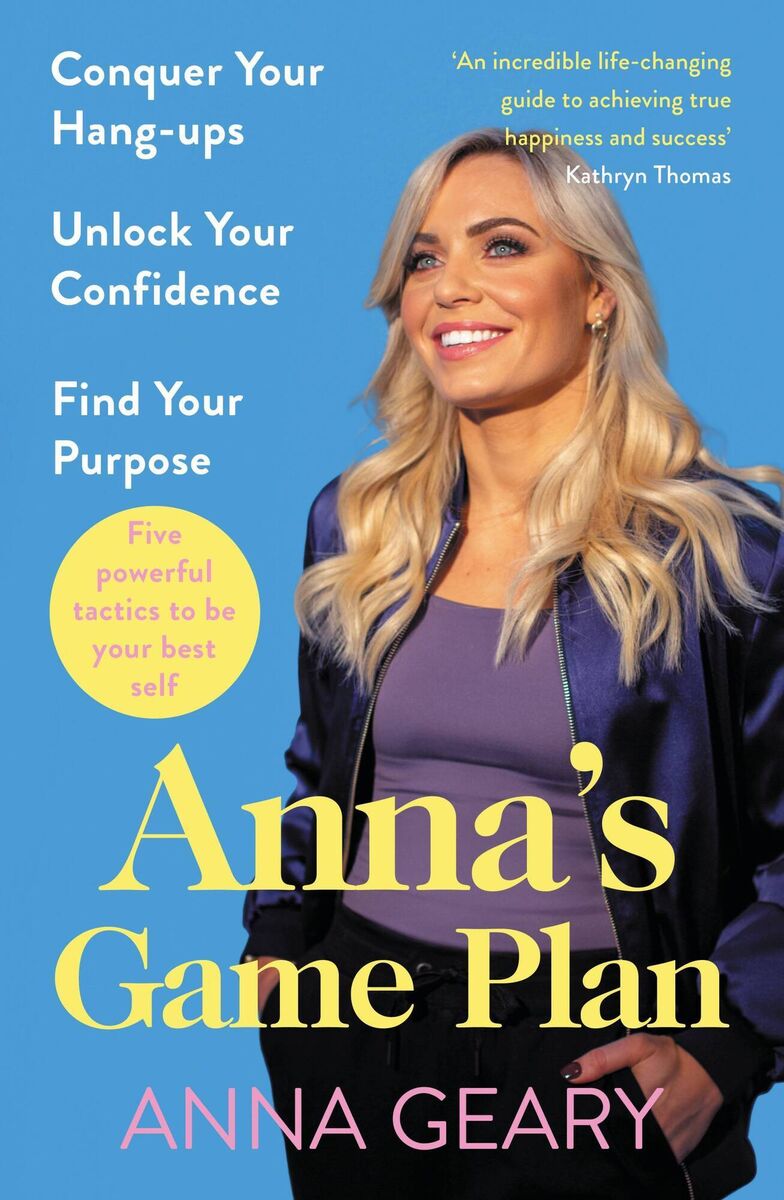
Anna's Game Plan
Anna's Game Plan

  • Meet Anna Geary at Dubray Books in Cork tomorrow, Saturday, March 23, from 12pm for a book signing of ‘Anna’s Game Plan’

More in this section

Lifestyle

Newsletter

The best food, health, entertainment and lifestyle content from the Irish Examiner, direct to your inbox.

Cookie Policy Privacy Policy Brand Safety FAQ Help Contact Us Terms and Conditions

© Examiner Echo Group Limited