Can you hack your circadian rhythm to become an early riser?
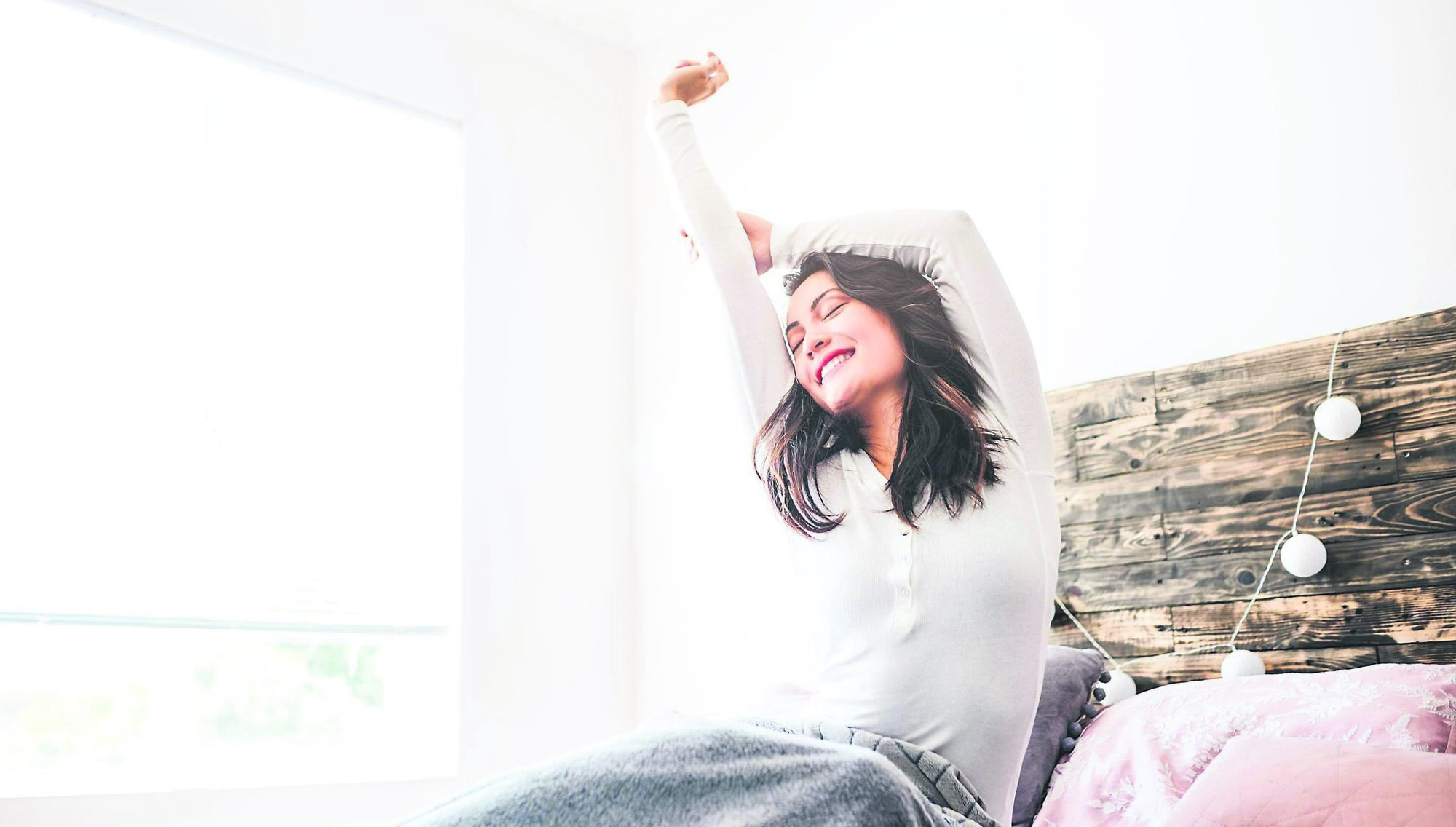
Knowing your chronotype is useful to improve your sleeping pattern
We are diurnal creatures — it’s baked into our DNA. Our early ancestors rose with the sun and went to bed when it set. Over the millions of years since, light’s impact on our daily lives hasn’t changed.
There is a natural rhythm to our daily lives. This is preset by what’s called our chronotype — our genetic tendency to eat, exercise, and sleep at certain times of the day. By understanding and working with your chronotype, you can make the most of your day, identifying when you’re most productive and the best time to sleep.
“Your chronotype is your hardwiring, it’s part of your genetic makeup. While you can’t change your chronotype, you can get to know it, and with that information, you can map your activities to certain times of the day,” says Anne Marie Boyhan, a sleep science coach based in Dublin.
“You’ll know when to schedule tasks that require more concentration, when you should be exercising, when to have that cup of coffee, and when to go to bed.”
In his 2016 book The Power of When, world-renowned sleep expert and clinical psychologist Dr Michael Breus reimagined the chronotypes as four distinct mammals: lion, wolf, bear, and dolphin. The lion is an early riser; the wolf is at its best in the evening; the bear combines both, and the dolphin struggles to get to sleep.
Techniques like cognitive behavioural therapy for insomnia (CBTi) are helpful for those dolphins among us. According to Boyhan, it works by changing your behaviour around sleep and helping you manage those hours in the middle of the night when sleep feels elusive. Sometimes though sleep issues are related to physical and health issues. She says the nutritional tests she offers her clients often reveal hormonal imbalances or gut issues, which can impact sleep.
“Sometimes, for example, your cortisol (the stress hormone) levels can ramp up in the middle of the night and cause you to wake up with a jolt. This can happen if your blood sugar dips, which can occur if you’ve exercised too close to bedtime or missed an evening meal,” she says.
For those without sleep issues, knowing your chronotype is still useful. Most of us will have a general idea of whether we’re better in the morning or evening — plenty of online quizzes can help you pin down your chronotype. The majority of us (55%) are so-called bears, in-between chronotype that follow the sun and perform well during the standard nine-to-five school or work day. Lions and wolves are evenly split at about 15% of the global population each.
Boyhan says that while your chronotype can shift slightly as you age, retraining it is next to impossible. It’s who you are.
Feel the (circadian) rhythm
While your chronotype is hardwired, if you have to be more alert during certain times of the day, you can make subtle changes to your circadian rhythm. We’re seeing a growing movement among the Gen Z cohort who are going to bed early — apparently 9pm is the on-trend bed time — so that they can prioritise sleep and get more done in the morning.
“If you need to be more productive earlier in the morning, start by shifting your bedtime earlier. You can work out your ideal bedtime by counting back from when you want your alarm to wake you. Your bedtime should be between seven and nine hours earlier. Take your time with this process,” advises Boyhan.

“If you’re used to going to sleep after midnight, suddenly forcing yourself to fall asleep at 10pm is not going to work. Instead, aim to go to bed 15 minutes earlier than usual for a couple of days. Then, push it back another 15 minutes for several more days. The process can take up to a couple of weeks to work. Getting light first thing in the morning will help you to adjust to your new waking time.”
Everyone has a master clock deep in their brain. It’s a series of nerve cells grouped together called the suprachiasmatic nucleus (SCN), which controls the various clocks in our bodies, including our circadian rhythm. Our circadian rhythm is an internal clock that repeats every 24 hours or so. At a basic level, it regulates when we feel tired or alert. It is heavily influenced by our exposure to light.
Countless scientific studies link natural light with sleep. In sleep scientist Christine Blume and colleagues’ 2019 study — ‘Effects of light on human circadian rhythms, sleep and mood’ — published in the journal Somnologie, they call light the zeitgeber in the circadian systems. Zeitgeber means time cue. Natural light gives our master clock the cue it needs to kickstart our circadian rhythm.
That’s why getting a blast of light when we wake in the morning is so important, explains Dublin-based health scientist and sleep coach Tom Coleman. That blast of light — preferably natural light when possible or a lamp that mimics natural light during dark winter mornings — performs three functions. It tells your brain to quit producing the sleep hormone melatonin; it starts a timer that means your body will begin producing melatonin again in about 14 hours; and it encourages your body to start producing cortisol, which will get your brain going.
“Even with a good night’s sleep, many of us can feel groggy at first when we wake up in the morning; it takes a while to wake up fully,” says Coleman. “Most people will reach for a cup of coffee to get themselves going but that will only disrupt your sleep later on. You should delay that first coffee by 90 minutes and instead get out into the light for 10 or 15 minutes.”
Shaping your sleep routine
While daylight helps us regulate our sleep and wakefulness patterns, the other light we’ve introduced into our lives — artificial lights and the blue light from our electronic devices — has the opposite effect. According to Coleman, blue light disrupts the production of melatonin, which is essential for a good night’s sleep.
“In the evenings you need to start winding down, preparing for sleep. Have a good meal between 6pm and 7pm, dim the lights and try to focus on relaxing activities, “ he says.
“With devices, don’t mistake comfort for relaxation. While it might feel like you’re relaxing, endlessly scrolling on your mobile phone actually stimulates your nervous system, and can disrupt your ability to get a good night’s sleep.”
So what does a good night’s sleep look like? There are three different stages of sleep: deep sleep, light sleep and REM sleep. We cycle through deep, light and REM sleep throughout the night.
Generally, most adults will spend 50% of their night’s sleep in a light sleep, with the remaining 50% split between deep sleep and REM sleep. All stages are essential.
“The average person needs between seven and eight hours of sleep. Each sleep cycle is typically 90 minutes, which breaks down to about five sleep cycles per night,” says Coleman.
Sleep is a good barometer of a person’s life; it’s the ultimate act of self-care. Poor-quality sleep suggests things we’re doing during the day that are disrupting our ability to sleep.”
Although your genetics predetermine your chronotypes, tweaks to your circadian rhythm can help you be more alert at certain times, which is good news for night owls who want to become productive morning larks.
Central to all of this is a good night’s sleep. It sets you up for the day and even lines you up for the next night’s sleep.
Six things to avoid late at night
Good quality sleep is the key to our energy levels, productivity, and mood. With so much at stake, how can we ensure we get a good night’s sleep?
1. Heat is the enemy of sleep. Your core temperature rises during the day, peaking about two hours before bed. Once your core temperature starts to drop, you begin to feel sleepy (all part of your circadian rhythm). Keep your bedroom cool, not cold, at nighttime.
2. You might find alcohol makes you sleepy, but it also affects your sleep quality. It limits your deep sleep and REM sleep, vital to your body and brain functions.
3. Caffeine seriously disrupts sleep. It does so by blocking your natural sleep signals (adenosine receptors). Drinking caffeine, even as long as six hours before bedtime, can affect your sleep.
4. Eating a big meal close to bedtime means your digestive system is hard at work breaking down your food and calories while you are trying to sleep. Late-night digestion can also keep your core temperature higher for longer, affecting sleep.
5. Exercising too close to bedtime kickstarts your nervous system and increases your heart rate. Physical activity also produces the stress hormones adrenaline and cortisol, raising your core temperature and making it harder to fall asleep.
6. Electronic devices emit blue light, which inhibits your production of melatonin (sleep hormone). Using your phone or other devices at night also stimulates your nervous system and can raise stress hormones, depending on what you are watching.

Cancel anytime
CONNECT WITH US TODAY
Be the first to know the latest news and updates