Take our seven-day happiness challenge over Twixmas and prioritise yourself in 2024
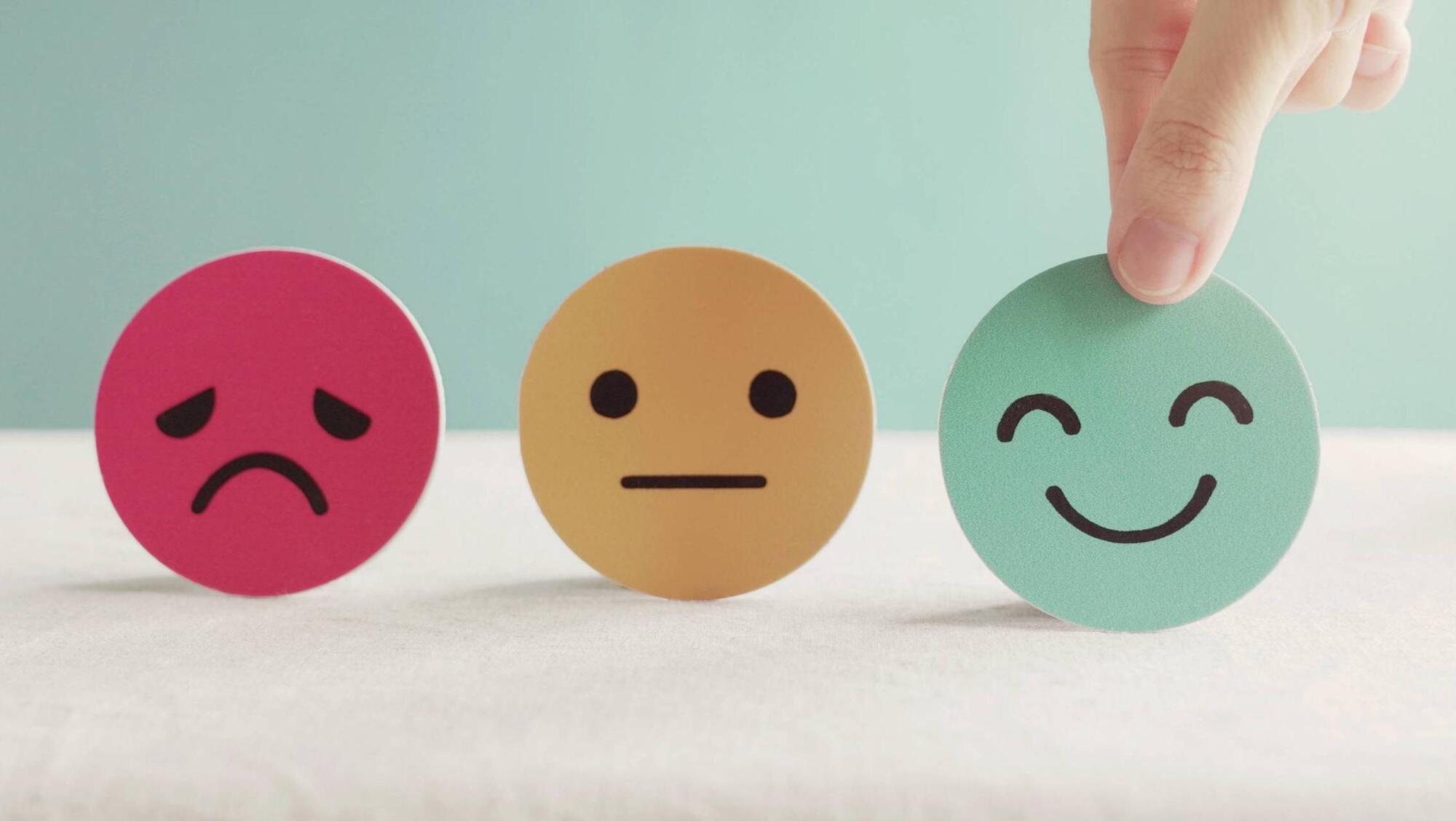

You probably put family and friends first over Christmas. But with Twixmas comes the opportunity to prioritise yourself. Here’s our seven-day happiness challenge — possibly the best gift you could give yourself
Picture: iStock 

Picture: iStock 

Now that Christmas is over for another year, isn’t it about time you gave yourself a great gift — one that will keep giving right into the new year? Why not challenge yourself to be happier by compassionately making simple but profound changes?

First, it’s important to think about what happiness is — and what it isn’t, says Dr Tony Bates, psychologist and author of the recently published Breaking the Heart Open: The Shaping of a Psychologist.

“We imagine happiness is about feeling good, being trouble-free. I don’t think it always is. It can be, and that’s wonderful. But if you’re in the middle of watching an FAI cup final, you’re happy to be there, but it can be a very difficult place to be.”

Bates’s contention is that when we feel anything that suggests we have troubles, we push it away, and try to get rid of it.

“We distract ourselves, reach for the glass of wine, the TV remote.”

But pain and heartbreak are important, he says, because it’s the door we walk through to grow. “Sometimes being happy comes from stepping right into the fire and allowing ourselves to be with what’s troubling us. It’s the deep acceptance of whatever is happening in our lives at any given moment.”

As we “get up close and personal” with our difficulty, we’re more able to listen to what it’s trying to tell us. “Emotions are messengers, saying something’s not quite right in our life. When we get to this point we’re able to listen and ask, ‘What do I need?’”

Professor Brendan Kelly, TCD

Brendan Kelly, professor of Psychiatry at Trinity College Dublin and author of The Science of Happiness believes small, simple changes are the way forward — changing existing behaviours, modifying routines, and stacking new habits on current habits.

“The big message is to be compassionate towards yourself as you take new steps. We change slowly, but we change powerfully. Initially, try to focus on starting positive behaviours, rather than stopping current [unhelpful] behaviours. Despite our often negative outlooks, we’re optimistic people at heart, and we like positive change.”

So what might a seven-day happiness challenge look like — one that encompasses small, meaningful steps each day that we can take with us into the new year?

Day one

Be with whatever you are experiencing, rather than trying to change it, Bates recommends.

“If you can breathe with it, you can be with it. Take three steadying breaths. Allow yourself to be exactly how you feel — awful, terrified, confused, whatever. It’s OK for you to be with it. Pass no judgment.

“It all becomes more workable then. Stress is a form of intelligence, trying to teach us something about what’s not working in our lives.”

Tip: Surrender to what you are feeling, even for the space of one breath, two or three.

Day two

Once you’ve discovered what you’re feeling, you may now be ready to ask “What do I need to do?” says Bates.

“And it’s not, ‘I need to cop on’. If a relationship breaks up, or you put your pet down, you feel deeply sad. The problem is we say to ourselves, ‘I should be over this, the pet was better off’. Asking ‘what do I need to do?’ gives insight: ‘I need to allow myself to grieve’.”

The answer to the question, “What do I need to do” may sometimes be a walk — and sometimes a talk with a trusted other, says Bates.

Tip: Make friends with yourself. Watch how you talk to yourself. Relate to yourself in a kinder way.

Day three

Think about some routine activities as you do them, recommends Kelly.

“Around half of what we do every day is based on habit — we do it without thinking. So, do what you always do, but think about what you are doing. Without trying in any other way, you’ll likely change some of your behaviour. For example, if you think about brushing your teeth while you’re doing it, you’ll probably brush your teeth for longer. Small shifts in existing habits are the key,” he says.

Tip: Slow down, take a deep breath and savour the process of what you’re doing, whether drinking a glass of water, or cleaning out your kitchen cupboard.

Day four

Stand or sit outside for five minutes, suggests Kelly. “If you’re already outside for some of the day, stand or sit outside for an extra five minutes. Spending time in nature boosts wellbeing. It isn’t necessary to do anything: Just stand or sit there, maybe with a cup of tea or coffee. Or, in Buddhist terms: ‘Don’t just do something: Sit there’.”

You don’t need to go anywhere in particular to do this, he says — even if you live in an urban area. “Nature isn’t a place to go to — nature is where we live.”

He also points to an established consensus among researchers that “c ontact with nature improves mental health, wellbeing, and quality of life in urbanised environments”.

Tip: In an urban space, identify the elements of nature we haven’t covered with concrete: Sky, wind, birds, plants.

Professor Ian Robertson, Professor of Psychology at Trinity College Dublin.

Day five

Give yourself small buffer breaks between tasks, recommends Prof Ian Robertson of Trinity College Dublin and author of How Confidence Works: The New Science of Self-Belief.

He advises taking 30 seconds to slow your breathing after finishing one task and before changing to another. “Breathe in for four and out for six — for example between filling the dishwasher and making that phone call. It’s almost like pressing a reset button for your brain, it changes its chemistry — it clarifies your state of mind, making you more mindful.”

Tip: Reward yourself — consciously pat yourself on the back — after finishing any task. Sometimes this might mean having a stretch, sometimes a cup of tea.

Mary McHugh, founder of counsellingonline.ie

Day six

Avoid multitasking, Robertson urges. “Avoid reading the newspaper while eating breakfast. Don’t scroll through your phone while half-listening to someone talking. Be aware of what you’re doing in any moment, whether cleaning the toilet or talking to a colleague.”

This, he says, is because we can really only do one thing at a time — and our brains like it this way. “When we’re multi-tasking, we’re actually doing rapid switches of our attention. This is hugely metabolically expensive for our brain, and a great source of tiredness and fatigue — tiredness and fatigue pull our mood down.”

Tip: Set a 15-minute timer, says Mary McHugh, founder of counsellingonline.ie. “Have a task in mind that you have to do in the 15 minutes, whether sorting your sock drawer or stripping a bed. We can sit all day looking at the cup in the sink. Choose the task that’s doing your head in and eliminate it, so your energy isn’t drained by it.”

Day seven

Most studies on gratitude find an association with wellbeing. For example, two American-based psychologists found people, who over 10 weeks wrote about things they were grateful for — that had occurred during their week — were more optimistic and felt better about their lives.

Researchers also found that gratitude boosts the neurotransmitters serotonin and dopamine, known as the ‘happy hormones’. By practicing gratitude daily, we can help strengthen these neural pathways.

Tip: At the end of your day, say what it is you are thankful for. Bates does it nightly. “I say thank you for the couple of things that worked, for what was nourishing and life-giving. It’s how I close off the day, it only takes a minute. I find there’s always something to be thankful for.”


TIPS FOR 2024

  • Eat an extra piece of fruit. Kelly says we sometimes focus on stopping doing certain things, for example, quitting sugary foods. “This can be helpful [but] it’s better to focus initially on starting new things — for example, introduce a new healthy food.” And it helps with happiness. “One 2016 study looked at wellbeing and happiness after increases in consumption of fruit and vegetables by examining the food diaries of 12,385 randomly selected Australian adults. This study found increased consumption of fruit and vegetables was associated with enhanced happiness, life satisfaction, and wellbeing over the following two years.”
  • Go to the movies, urges Kelly. “Quite specific — but what I really mean is find an activity that removes you from the routines of day-to-day life. Go to the movies, run, knit, garden. Try to get into that state of ‘flow’ when you lose track of time and you’re completely absorbed in the activity.”
  • If you already do this, do more. If you swim for 30 minutes, try to swim for 35 minutes. If you read in the evening for 20 minutes, try to read for 25 minutes.”
  • Robertson points out that the greatest source of happiness is relationships with others. “Nurture and be grateful for the relationships you have,” he says.
  • And take steps to get out of yourself and to do small acts of kindness. According to the World Happiness Report, a wealth of research now shows that altruism is “often positively correlated with subjective wellbeing, which comprises high life satisfaction and experiencing more positive emotions and fewer negative emotions in daily life”.Robertson suggests: “We know that altruism makes us happier. Make a small donation to charity. Make a phone call to someone you feel will be cheered by it.”
  • x

    More in this section

    Lifestyle

    Newsletter

    Eat better, live well and stay inspired with the Irish Examiner’s food, health, entertainment, travel and lifestyle coverage. Delivered to your inbox every Friday morning.

    Cookie Policy Privacy Policy Brand Safety FAQ Help Contact Us Terms and Conditions

    © Examiner Echo Group Limited