'It’s like smart chemo': New breast cancer treatment a 'game changer'
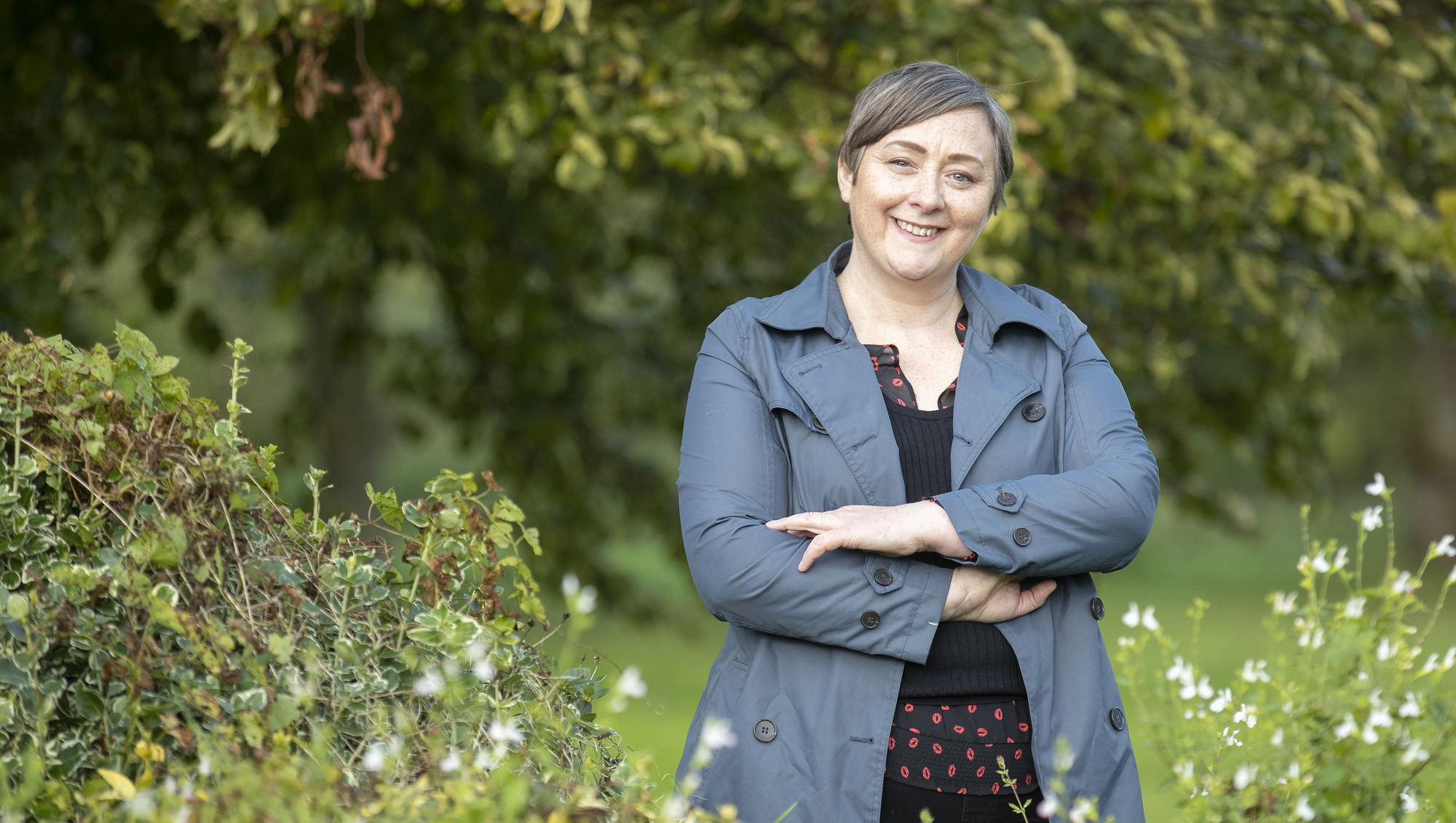
Avril Tierney is one of many women benefitting from breakthrough personalised treatments for advanced breast cancer which has led to a dramatic increase in survival rates 
'It’s like smart chemo': New breast cancer treatment a 'game changer'

Avril Tierney from Portarlington Co Laois says new cancer treatment has been a game changer. Picture: Finbarr O’Rourke

In early 2021, Avril Tierney received the news she had been dreading. At 43, she had been diagnosed with stage four metastatic breast cancer, which had spread to her lungs.

Having first been diagnosed with triple-negative breast cancer in 2019, a form of the disease which affects one in every eight breast cancer patients in Ireland, Tierney had already spent two years undergoing intensive chemotherapy and invasive surgery. Now she was confronted with her worst fears.


“When you’re told you have stage four treatable but incurable cancer, in the back of your mind, it’s like, ‘the only drug available for me is chemo and I’ve tried a lot of those and they haven’t worked,’” she says. “So you’re faced with the thought that you don’t have long.”

But her oncologist informed her that she was eligible for a new treatment, which had just emerged, a form of targeted immunotherapy known as atezolizumab. 

'I have made a conscious decision to live my life as normally as possible,' says Tierney. Picture: Finbarr O’Rourke

An injectable antibody, which binds to a protein called PD-L1 found on the surface of some cancer cells, it prevents the tumours from suppressing the immune system.

Lab tests revealed that biopsy samples taken from Tierney’s tumours showed the presence of PD-L1, making her eligible for the treatment as an addition to conventional chemotherapy.

“It’s been a game changer,” the married mother of two who lives in Portarlington says. “It halved the tumours initially and it’s now at the point where more than two years later, they’re completely stable.”

Such has been the improvement that she has even been able to return to her previous job as a counsellor three times a week.

On October 8, she will participate in the Very Pink Run in Cork as a Breast Cancer Ireland ambassador. 

“I have made a conscious decision to live my life as normally as possible, to adjust to the new change but with forward motion,” she says.

Biggest killer of middle-aged women

 Aisling Hurley CEO of Breast Cancer Ireland. Picture: Moya Nolan
Aisling Hurley CEO of Breast Cancer Ireland. Picture: Moya Nolan

Every year, 3,700 women in Ireland are diagnosed with breast cancer with 690 deaths due to the disease. 

“It’s the biggest killer of middle-aged women in this country,” director of Saolta-NUI Galway Cancer Network, Prof Michael Kerin says.

But over the last decade, survival rates have advanced dramatically to the point where more than 80% of women with the disease will live for at least five years following diagnosis.

The major reason for this is the success of scientists in stratifying breast cancer into a whole array of subtypes, enabling oncologists to tailor the treatments that patients receive with increasing degrees of precision.

In many cases, this now means that women with breast cancer do not need to receive chemotherapy.

“Go back ten years and the standard of care was chemotherapy,” CEO of Breast Cancer Ireland, Aisling Hurley says. 

Every patient received it, they would go through the harrowing side effects, and for 90% of those women, it wouldn’t work.”

According to Hurley, the number of breast cancer patients receiving chemotherapy has dropped by 50% compared to 2013.

It is now well known among oncologists that the drugs tend to be particularly ineffective in postmenopausal women, and scientists have developed a diagnostic test used routinely to assess whether newly diagnosed patients will benefit from chemotherapy.

“It’s a molecular test using a 21-gene signature, which allows us to identify the women who would need chemotherapy,” Kerin says.

“But the majority don’t, particularly if they’re post-menopausal.”

‘Smart chemo’

Prof Roisin Connolly, consultant in medical oncology at CUH, says CUH is leading research into how women can best be supported to deal with difficult side-effects arising from their cancer treatment.

The increasing personalisation of breast cancer has been particularly effective in either curing or prolonging survival in patients with rarer forms of the disease.

The majority of breast cancers are hormone sensitive, which means they grow in response to the hormones estrogen and progesterone, but there are some breast tumours which are controlled by very different processes.

In approximately 20% of breast cancers, the cancerous cells produce too much of a protein called HER2, which makes them particularly aggressive and likely to spread.

Director of cancer research at University College Cork, Prof Roisin Connolly says these patients appear to benefit from a more targeted form of chemotherapy, which uses a technology known as antibody-drug conjugates (ADCs).

This treatment class consists of an antibody that detects the excessive amount of HER2 in the cancer cells and uses that to direct the chemotherapy toxin specifically to those cells without harming the surrounding healthy tissue.

“It’s like smart chemo,” Prof Connolly says. “These treatments are available to Irish patients through participation in clinical trials in Cork.”

The focus is on treating primary cancer and secondary cases where the cancer has later returned. 

Breast Cancer Ireland has recently invested in a clinical trial known as the Shamrock study, in partnership with Japanese pharmaceutical company Daiichi Sankyo, to try and treat the 3% of HER2-positive breast cancer patients who relapse.

“We’re looking at a new drug called deruxtecan and we’re combining that with an initial chemotherapy dose for one month only, then de-escalating the chemotherapy and solely using this drug to treat those patients,” Hurley says. 

“Being able to cure these particular patients would be fantastic.”

From metastatic cancer to chronic illness

For those like Tierney with advanced breast cancer, a wide array of options are becoming available with the aim of suppressing the tumours for as long as possible and perhaps even indefinitely.

Prof Kerin says it is now standard for breast cancer patients in Ireland to have their genomes sequenced to identify the particular DNA mutations contributing towards their disease.

Molecular tumour boards, organised by Cancer Trials Ireland, then discuss the identified genetic aberrations and provide insight into which drugs might be most suitable and whether that patient could be eligible for an upcoming clinical trial.

One of the new treatments which has emerged for a subgroup of patients with late-stage breast cancer is capivasertib.

This is a small molecule aimed at patients where tumours are being driven by an overactive protein known as AKT, which signals to other proteins, triggering the out-of-control cell growth that represents cancer. 

Capivasertib works by locking into the AKT protein and effectively shutting it down. A phase III trial last year showed encouraging results, significantly lengthening disease progression time, with 23% of patients seeing their tumours shrink.

According to Prof Nicholas Turner at the Institute of Cancer Research, London, who led the trial, the results were particularly encouraging as these were patients for whom all other treatments had failed.

“It’s hugely exciting to see a potential new class of drug show such remarkable benefits for patients in a phase III clinical trial,” he said.

“Capivasertib works in a new way to the current treatment options — opening a new line of attack on cancers.”

In the coming years, it seems almost certain we will discover new subtypes of breast cancer, not just through genome sequencing but other forms of personalisation like advanced image analysis.

In Sweden, Johan Hartman, a professor of breast cancer pathology at the Karolinska Institute in Stockholm, has created a company called Stratipath, which uses machine learning to identify patterns in scans of breast tumours and use them to predict treatments.

“We’ve moved into very much a personalised approach,” Prof Kerin says.

“We’re now trying to do smaller trials for specific cancer subtypes. For example, in Galway, we have an institute specifically set up to deliver different immunotherapy trials for patients with triple-negative breast cancer.”

Stop the spread

Hurley hopes that in the coming years, more progress can be made to prevent breast cancer from metastasising and spreading to the brain, the one form of advanced cancer where life expectancies are still very limited.

Breast Cancer Ireland has recently launched a new collaboration with the Royal College of Surgeons in Ireland, the University of Pittsburgh Medical Centre, and the University of Chicago to solve this problem.

“When we talk to metastatic patients, we’re able to say to them, there are drugs which weren’t on the market five years ago which work and can keep you living well with cancer,” Hurley says. 

“Brain metastases are still the challenging one. But this collaboration is looking to see whether we can identify proteins or other barriers which can block the tumours in some way from progressing to the brain.”

For Tierney, the rapid pace of advancements in breast cancer is providing her with greater hope for the future.

“I’ve been on this drug for nearly three years and it just keeps improving,” she says. “And I’ll be on it for as long as my body can sustain taking it. The great thing is that as more time goes on, there will be more developments and more targeted therapies that will be available for me.”

- If you are affected by any of the issues raised in this article, please click here for a list of support services.

More in this section

Lifestyle

Newsletter

The best food, health, entertainment and lifestyle content from the Irish Examiner, direct to your inbox.

Cookie Policy Privacy Policy Brand Safety FAQ Help Contact Us Terms and Conditions

© Examiner Echo Group Limited