The GPs who are going green: “Human health is simply not possible without a healthy planet”

Pic: iStock
IRELAND’S GPs are going green. The Irish College of General Practitioners (ICGP) is launching GLAS today, a new toolkit that provides GPs with recommendations for reducing the carbon footprint of their clinics.
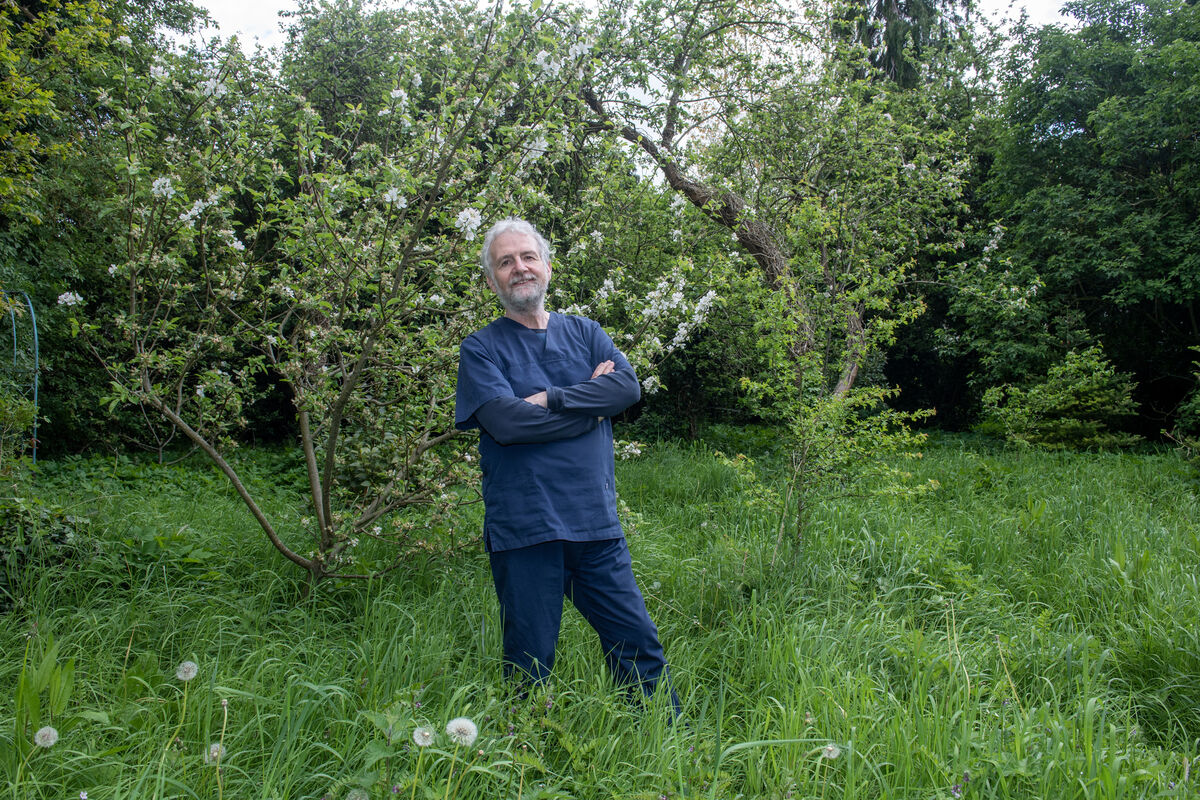
Co Louth GP Dr Seán Owens is the ICGP Sustainability Working Group chair that produced the toolkit. “Our group was formed in 2020 to raise awareness among GPs, practice nurses, and staff of the need to consider the environment and the future sustainability of healthcare delivery to patients,” he says. “GPs and nurses can’t green Ireland on their own, but we can be part of the solution. We believe this toolkit allows us to lead the way to a healthy and more sustainable future.”
The World Health Organization (WHO) says climate change is the greatest global health threat of the 21st century. This is one of several reasons Owens and his colleagues believe health professionals should play a role in responding to the problem.
“Human health is simply not possible without a healthy planet,” says Owens. “We need to eat food, drink water, and breathe air, all of which have to be clean and healthy if we want to maintain our own health.”
Environmental Protection Agency data shows this to be true. It has linked air pollution with 1,300 premature deaths every year in Ireland [exa.mn/EPA-air-report].
CLIMATE & SUSTAINABILITY HUB
Another reason is the environmental impact of healthcare itself. A report carried out by Healthcare Without Harm in 2019 [exa.mn/healthcare-climate-footprint] found its carbon footprint was 4.4% of the global total. If it were a country, healthcare would be the fifth largest emitter on the planet.

A third reason why GPs should take the lead in tackling climate change is because of their influence on patients. “Doctors and healthcare practitioners are trusted members of their communities,” says Owens. “For the most part, patients listen to what they have to say.”
One of the main things Owens has done in his clinic is overhauling his team’s prescribing patterns, particularly concerning respiratory inhalers.
“All medicines use raw materials from around the world,” says Owens. “They are water-intensive to make and require lots of packaging.
“They are so carbon intensive that they account for up to 90% of general practice’s carbon footprint.”
Sometimes, doctors can choose between different forms of medication, one of which may have a lower carbon footprint than the other. This is true of inhalers.
Owens was involved in a 2022 study [exa.mn/inhalers-carbon-footprint] that found that inhalers accounted for 3% of Irish healthcare’s total carbon footprint.“This is because spray inhalers use up to 3,000 times more potent greenhouse gases than CO2,” says Owens.
Yet there is a more environmentally friendly alternative.
“Dry powder inhalers provide the same drug using a different delivery system, with the patient breathing in a fine powder rather than a puff of medicine,” says Owens. “But they only account for 40% of the inhalers prescribed.
“If doctors prescribed more dry powder inhalers and fewer spray inhalers, that one small change could have a big impact.”
Positive lifestyle changes
Co Wexford GP Dr Andrée Rochfort is also an ICGP’s Sustainability Working Group member trying to cut down on prescribing medication in her clinic.
“We have to start moving away from the model of diagnosing a problem and prescribing medication, especially in relation to managing chronic diseases like diabetes and arthritis,” she says. “Instead, we should use our relationship with our patients to encourage them to make positive lifestyle changes. These can have an impact on their health and on that of the planet.”
This process starts by reviewing a patient’s medication. “I ask them if there’s any medication they no longer need on their prescription like painkillers or antacids, for example,” she says. “A surprising amount of medication is prescribed and purchased but never used. Better to save on the carbon used in manufacturing, packaging, and transporting by not prescribing it in the first place.”
Research by the World Bank [exa.mn/disease-control] has shown that addressing lifestyle factors can prevent up to 80% of chronic diseases. So Rochfort’s next step is educating her patients about how lifestyle changes can remove the need for them to take some medications entirely.
“I talk to patients about exercise and how it doesn’t have to mean spending hours at the gym,” she says. “Lifting bottles of water at home, stretching while watching the news and running up the stairs — every movement counts. Relaxation techniques, cutting back on salt, and opting for active travel by walking or cycling instead of always getting in the car can boost health too.”

Nenagh-based Dr Pat Harrold has been promoting environmentally friendly medicine for over 30 years. “I was involved in the first Irish Doctors for the Environment group about 25 years ago when there were just five of us,” he says. “I was a fringe environmental weirdo back then but now, thanks to the likes of the GLAS toolkit, I’m in the mainstream.”
Over the years, the modifications Harrold has made to his clinic include switching to renewable energy providers, insulating his office, and minimising the amount of waste he generates.
“There’s a lot of waste in the medical world, with many items that simply cannot be renewed or reused again,” he says. “It was especially bad when covid was at its worst. But I do what I can, keeping medical waste to a minimum and recycling and composting when possible.”
He has educated his team about prioritising the environment and does his utmost to be a role model for his local community. “People take notice of what doctors say and do,” he says. “That’s why I talk about the importance of clean air, water, and soil that is free from pesticides and pollution. It’s why I cycle and drive an electric car and why I let the garden at the clinic grow wild for pollinators and wildlife. I even wear a refillable biro on a cord around my neck, so I’m not constantly using disposable pens. These are small things, but they’d have a big knock-on effect if everyone did them. I fly the flag for the planet every chance I get.”
Social prescribing
All three doctors are proponents of social prescribing. “About 20% of medical consultations are about non-medical needs,” says Owens. “There’s a danger those needs will be medicalised with a pill given for every ill. Instead, a social prescriber tackles these problems from a holistic perspective.”
Harrold describes what this might entail: “Say someone is lonely — the social prescriber might suggest they join a group. They decide together what group is best and the social prescriber will introduce them, helping them take that first step. I’ve seen examples like this have a massive effect on people’s lives, changing the way they see and engage with the world.”
These measures are outlined in the GLAS toolkit, along with many other suggestions for a more environmentally friendly way to practice medicine.
“It’s not a manual you have to follow, but more of a menu you can pick and choose from to suit your needs,” says Rochfort. “You could start by looking at things like energy consumption in the practice or packaging issues or ways to promote breastfeeding. No matter what you’re doing, there’s always room for improvement.”
Owens hopes this is just the beginning of the Irish healthcare system going green. “Ireland is lagging behind other countries,” he says. “The NHS plans to reach net zero by 2040 and Portugal has just published its plan. We need to catch up.”
Doing so is in all our interests, says Rochfort. “We believe in one health, that of humans, animals, and the planet,” she says. “Our health is linked to that of our planet, and there is so much we can all do to safeguard human health and the health of the ecosystems upon which it depends.”
- Download the GLAS toolkit at: exa.mn/ICGP-toolkit

Subscribe to access all of the Irish Examiner.
Try unlimited access from only €1.50 a week
Already a subscriber? Sign in
CONNECT WITH US TODAY
Be the first to know the latest news and updates

Celebrating 25 years of health and wellbeing