Noticing leakage? What you need to know about doing 'yoga' for your pelvic floor
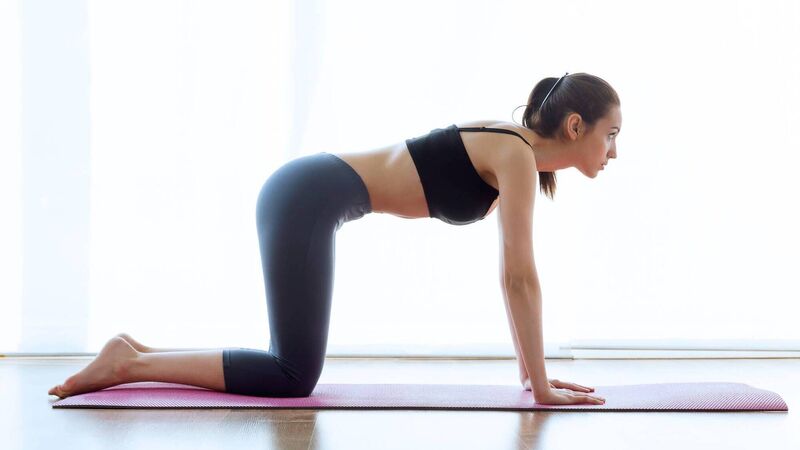
AND HOLD: The hypopressive breathing technique generates a noticeable abdominal draw-in of the entire abdominal wall and expansion of the rib cage. Picture: iStock
Building stronger glutes and biceps, quads and core are what we think about when we hit the gym. But what about the muscles of the pelvic floor? Essential for our wellbeing, these undervalued muscles stretch from the pubic bone at the front to the tailbone at the back and act as part of a 'hammock' comprising ligaments and fascia that support the bladder and bowel within the pelvis and the spine.
Women are more likely to experience pelvic floor issues due to the stresses and strains of pregnancy and childbirth, while menopause means they are prone to noticing tell-tale signs of weakness. That leakage when you cough or jump? It’s often a sign your pelvic muscles need some work.
Studies have shown that pelvic floor dysfunction can significantly impact women’s lives, resulting not just in incontinence, pain and prolapse, but eroding self-confidence exercise and sex life are affected. Thankfully, just like any other muscles in the body, the pelvic floor becomes stronger with specific exercises - a 2018 Cochrane review concluded that doing pelvic floor workouts on a regular basis is among the most effective treatment method for incontinence.
So, what is the best way to work this internal muscle group? Sian Marshall, an expert in pelvic floor health and founder of the U Pilates app used by celebrities including Louise Redknapp and Frankie Bridge, says Kegels (simple exercises that squeeze and hold the pelvic floor muscles) can help as can Pilates. “The pelvic floor muscles work in conjunction with the transversus abdominis, a deep core muscle that is utilised a lot in Pilates, to provide support for the uterus and spine,” Marshall says.
But a set of exercises called hypopressives are attracting attention because of the game-changing effect they have on pelvic-floor strength.
A flowing routine comprising a selection from more than 30 different exercises, hypopressives are performed in routines lasting anything from minutes to an hour, often likened to a form of yoga for the pelvic floor.
Intimate health expert Stephanie Taylor says hypopressives first came to prominence in the 1980s and work differently to Kegels, which focus solely on your pelvic area.
“The abdominal hypopressive technique (AHT), to give the practice its full name, started to be used in Europe 40 years ago as an alternative to Kegel exercises within a clinical setting for women's postpartum recovery, as well as pelvic organ prolapse and incontinence,” Taylor says.
Nikki Scott, a hypopressives instructor, says the exercises aim to reduce internal pressure in the body's thoracic, abdominal, and pelvic areas. Unlike regular gym exercise techniques that rely on conscious muscle contraction, they focus on increasing internal pressure for strength. “They re-programme the core muscles and they increase their resting tone and involuntary function,” Scott says. “In other words, the pelvic floor starts to work again as it was designed to – without you having to think about it.”
There’s a caveat - hypopressives are not easy to master, but as research provides more proof that they work, their popularity is rising. In 2020, Spanish researchers reported that when practised regularly, hypopressives help to reduce pelvic floor dysfunction and a Brazilian paper in 2018 showed they effectively activate the pelvic floor and abdominal muscles.
Want to have a go? Here’s what you need to know:
Taylor says you can practice the basics at home. “Start by taking a full, deep breath and then exhaling completely,” she says. “Without inhaling, hold your breath, open your rib cage and pretend to take a breath. Hold for a few seconds before releasing and breathing in.”
Try to do this for three sets, five to 10 times daily a week, to begin forming a habit.
In a paper for the , Dr Tamara Rial, the author of several books on hypopressive fitness, says the fundamentals for the approach include spine elongation with neutral pelvis, ankle and knee mobility, girdle muscle activation, breathing cycles and breath-holding following rib-cage expansion and lift which involves the activation of the inspiratory muscles.
“This breathing technique leads to a noticeable abdominal draw-in of the entire abdominal wall and expansion of the rib-cage,” Rial says, adding that these complex steps will be taught by a trained instructor.
Instructors teaching hypopressive techniques and classes incorporating the approach are creeping into the gym world. Hypopressives are included in core and pelvic floor restoration classes at Viva Body Health studio in Dublin ( vivabody.ie), and Anna Poznanska, a physiotherapist and expert in low pressure ‘hypopressive’ fitness, holds specialist classes at her studio in Bray, Co Wicklow as well as online classes. Nikki Scott runs online classes at ukhypopressives.com.
CONNECT WITH US TODAY



Be the first to know the latest news and updates