Daddy's home: how fatherhood changes a man
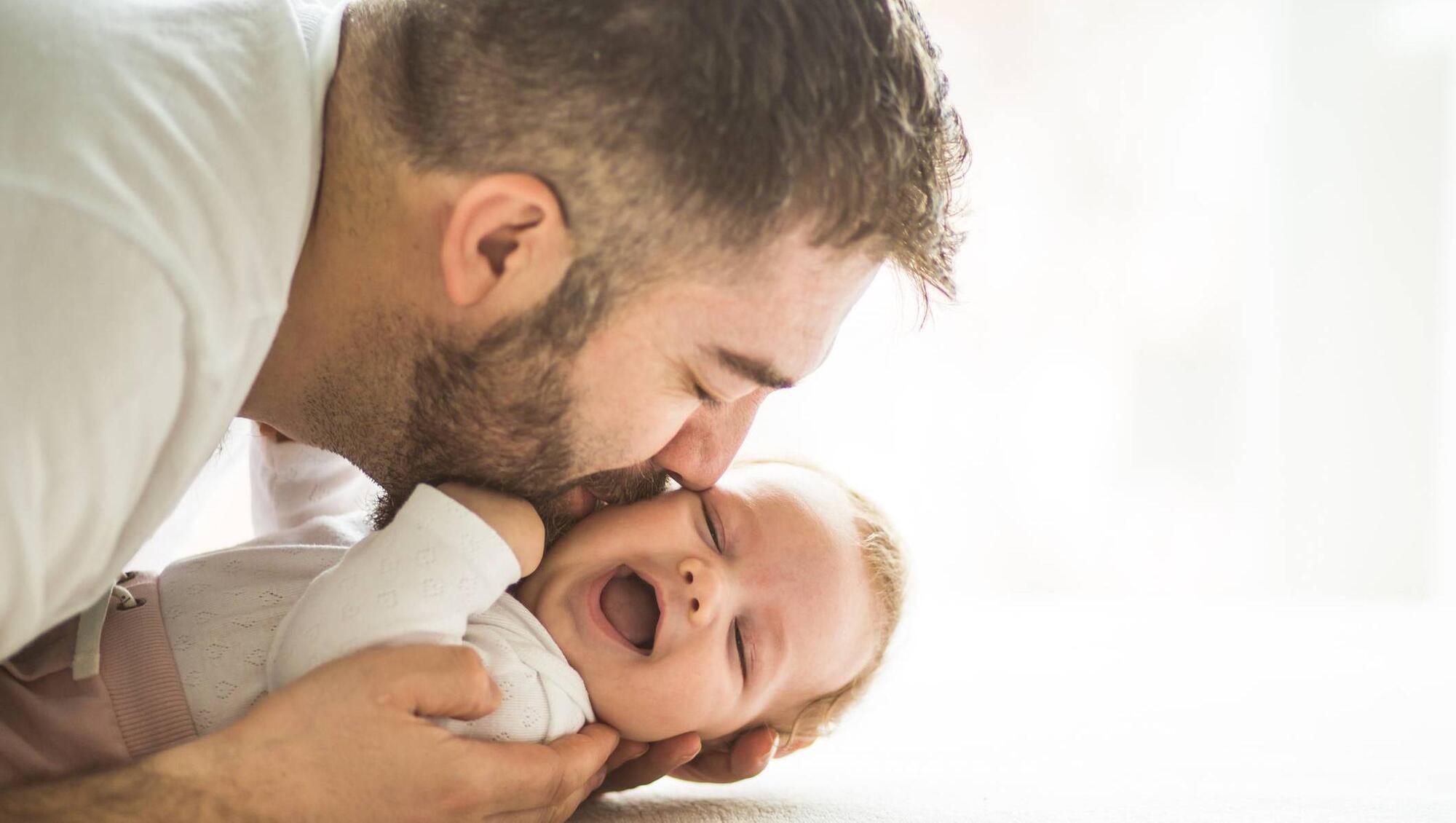
Picture: iStock
Hagai Tzarfati and his wife Rosie Smallwood have had their lives upended. Since their son Elliot was born a month ago, this Dublin-based couple has been sleep-deprived and are now wondering how they will manage when Hagai goes back to work in a few days.
“I’m dreading it,” he says. “I’ve spent the past month helping Rosie and basically being another pair of hands as we learn how to parent our son. I’ve also had time to bond with him. When I’m back at work, I know I’ll worry about how they’re getting on at home and I’ll be sad to miss out on what Elliot is doing.”
Tzarfati isn’t the only father subverting traditional gender stereotypes by eagerly caring for his child. Justice Minister Helen McEntee’s husband Paul Hickey has taken leave to care for their son now that his wife has returned to work. Fine Gael’s Simon Harris was excited to take paternity leave when his son was born in September. Further afield in New Zealand, prime minister Jacinda Arden’s partner Clarke Gayford has chosen to be the primary caregiver for their daughter.
What these men may not realise is how fatherhood is changing them. Emerging research shows that the time fathers spend with their children has an impact on their bodies and brains.
Dr Darby Saxbe is a professor of psychology at the University of Southern California and a pioneering researcher in this field.
“Studies now show that men’s hormones levels change as a result of looking after their infant and that there are brain changes,” she says. “The transition to parenting and bonding with their child is literally imprinted on men’s bodies.”
A 2017 University of Michigan study found that men’s testosterone levels decline when they become fathers. This is associated with behavioural change - mothers whose partners showed the largest testosterone declines reported receiving more support and help with household tasks and caring for the baby.
In 2020, a study by the Instituto Sanitaria Gregorio Marañón in Madrid analysed men’s brains from pre-conception to postpartum and found that the brains of first-time fathers experienced significant remodelling in part of the brain linked to social cognition.
This seemed to correspond to the strength of their bond with their child. The men whose brains had changed the most showed the strongest brain response when presented with images of their infants.
The amount of time a father spends with his child appears to determine the extent to which parenthood makes its mark on his body. A 2021 Kyoto University study showed expectant fathers videos of infants mid-pregnancy, in late pregnancy, and postpartum. All showed stronger brain responses postpartum, but men who worked longer hours showed less change in brain response. The authors suggest this might be because they spent less time with their infants.
Saxbe is fascinated by the implications of these studies. “Spending time with their infants leads to hormonal shifts and brain changes that might make fathers more responsive and sensitive as caregivers,” she says. “Historically, we have assumed that women have the biological imperative to parent. Now, it appears that men have that same potential ability.”
While this research is new, the importance of a father forming a strong attachment with his child has long been understood.
Dr Damien Lowry, a chartered counselling psychologist with the Psychological Society of Ireland, explains why. “Secure attachment is believed to be of critical importance in facilitating normal social and emotional development,” he says. “That attachment is most heightened in the first six months of life.”
He refers to a 2020 ESRI report to highlight his point: “It showed that children who reported close relationships with their fathers tended to be happier, less anxious, and more engaged with healthy physical activity”.
A 2006 paper by the US Department of Health highlighted even more benefits. It found that children with involved, caring fathers tended to have better educational outcomes, higher IQs, and better linguistic and cognitive abilities.
Paternity leave is vital in helping men to forge this bond with their children. According to a 2019 national study carried out at the Ball State University of Indiana, when fathers took paternity leave, especially two weeks or more, their children were more likely to report closer relationships with them nine years later than fathers who didn’t.

Fathers themselves benefit from taking this time to bond. Daniel Todd, who lives in Galway with his wife Leanne and 16-month-old son Alec, testifies to that.
“I took eight weeks leave when Alec was born and can’t overstate how fortunate I felt to have that time,” he says. “Those first weeks are so intense that they go by in an exhausting blur. Having time is good for sanity and also for giving you the chance to enjoy it. I was able to be with them and help my wife, especially as it was lockdown, and we had no family around. Being a tight little pod helped us all.”
Mothers also gain from having fathers around in the immediate postpartum period. Saxbe and her team at the University of Southern California have found that women’s sleep, stress levels, and rates of depression are better when partners take paternity leave.
Paternity leave may even impact positively on couples’ relationships. A 2019 Ball State University study looked at 6,000 couples and found that when a father took even a week or two of paternity leave the couple was 20% more likely to stay together than couples where fathers took no leave at all.
“The family as a whole benefits socially and emotionally if the father plays a more involved role,” says Saxbe.
Yet paid paternity leave is relatively new in Ireland. Introduced in 2016, it entitles fathers to two weeks’ leave in the 26 weeks following birth or adoption, paid by the State at a rate of €245 per week.
Initially, the Department of Social Protection expected approximately 40,000 men to avail of this leave every year. But this hasn’t happened. In 2020, 24,726 men took paternity leave, compared to 40,275 women who took maternity leave.
Why are so many fathers opting out? Mary Connaughton, director of CIPD Ireland, which represents human resources professionals, believes several reasons are at play.
“Some men are reluctant to apply as they don’t want to demonstrate a lack of commitment to their company, which might lead to them missing out on pay rises or promotions,” she says. “Some workplaces don’t encourage paternity leave either.”
There are finances to consider too. “I took two weeks’ paternity leave and two weeks’ parental leave (see side panel) and would have taken more time if I could,” says Tzarfati, who works as a gardener.
“But living in Dublin, I simply couldn’t afford to at a compensation level of €245 a week.”
International statistics show that fathers would take more paternity leave if there weren’t such financial drawbacks. In Scandinavia, fathers receive all or most of their pay while on paternity leave and approximately 80% take extended leave.
In Ireland, this is only an option if you work for the civil service or the large multinationals, some of whom offer generous packages. For example, Diageo offers dads 26 weeks of fully-paid leave, Vodafone Ireland offers four months, and eBay (Daniel Todd’s employers) offer 12 weeks.
More recently, working from home has made many families reassess their approach to childcare.
“It’s opened the eyes of many fathers,” says Connaughton. “Playing more of a role in the day-to-day care of their children has made some decide to seek a better balance between family and work.”
That’s what Ian Kerrigan, a father of two from Wexford, experienced. “I had to work overtime when my eldest was a baby and barely saw her,” he says. “But my youngest was a baby during lockdown, which meant I was there for everything and able to help out a whole lot more.”
So, what needs to be done so that more men have time to bond with their children? “The recent children’s assembly recommended that paid leave for parents should cover the first year of a child’s life, be non-transferable, provide lone parents with the same total leave as a couple, and be incentivised by increasing payment levels,” says Lowry. “I’m interpreting that as six months’ paid leave for fathers.”
He recognises that this would probably require major increases in taxation. “That’s how our Scandinavian counterparts achieve it,” he says.
For now, Connaughton would like all companies to encourage their employees to avail of the leave that is available. “Bigger companies and the public sector have policies in place to promote paternity leave,” she says. “Smaller employers need to follow suit.”
Government has its role to play too. “They should make the State payment more proportional to income,” says Connaughton.
Studies now prove that if more men took paternity leave, it would benefit both them and their families. Yet in Ireland and in most parts of the world, society is lagging behind this science.
Saxbe is one of a growing number of people campaigning for change. “We should be creating opportunities for men to be more caring parents in order to create a healthier society for us all,” she says. “That means giving them proper paid paternity leave".
In Ireland, fathers are entitled to two weeks’ paid paternity leave that they must take within six months of the birth or adoption of their child. The State pays them €245 a week and it’s at the discretion of their employer if that is topped up to match their usual rate of pay.
Parents’ Leave was introduced in 2020 in response to an EU directive on work-life balance. It allows for mothers and fathers to take up to five weeks’ paid leave during the first two years of their child’s life. It also pays €245 a week. From summer 2022, parents will be allowed to take a further two weeks’ paid leave, bringing it up to seven weeks in total.
Parental Leave is also available. This entitles parents to take unpaid leave from work for up to 26 weeks for each eligible child before their 12th birthday.
So, how do we compare with other countries across the world?
Fathers in Britain are entitled to two weeks' leave which is paid at a rate of £151 (approximately €180) a week. Up to 18 weeks’ parental leave is available to both parents up to their child’s 18th birthday, but it is unpaid.
Japan has one of the most generous paternity leave entitlements in the world, with fathers allowed to take up to a year of paid leave. They receive 67% of earnings for the first 180 days and 50% afterwards. However, less than 10% of Japanese fathers take up this leave for fear of being negatively impacted at work.
Sweden was one of the first countries to introduce paid paternity leave in 1974. Currently, all parents are able to take up to 480 days of parental leave between them, with 90 days reserved for each parent. Providing they meet the criteria, 390 of these days are paid at 80% of earnings. Approximately 80% of Swedish fathers take paternity leave.
In the US, neither mothers nor fathers are covered by a national paid leave policy. However, the states of California, New Jersey, Rhode Island, New York, Washington, Massachusetts, Connecticut, and Oregon as well as the District of Columbia have introduced their own paid family leave policies which include parental leave at a percentage of the employee’s salary.
CONNECT WITH US TODAY



Be the first to know the latest news and updates