Mind your mouth: Dental health has taken a backseat during Covid
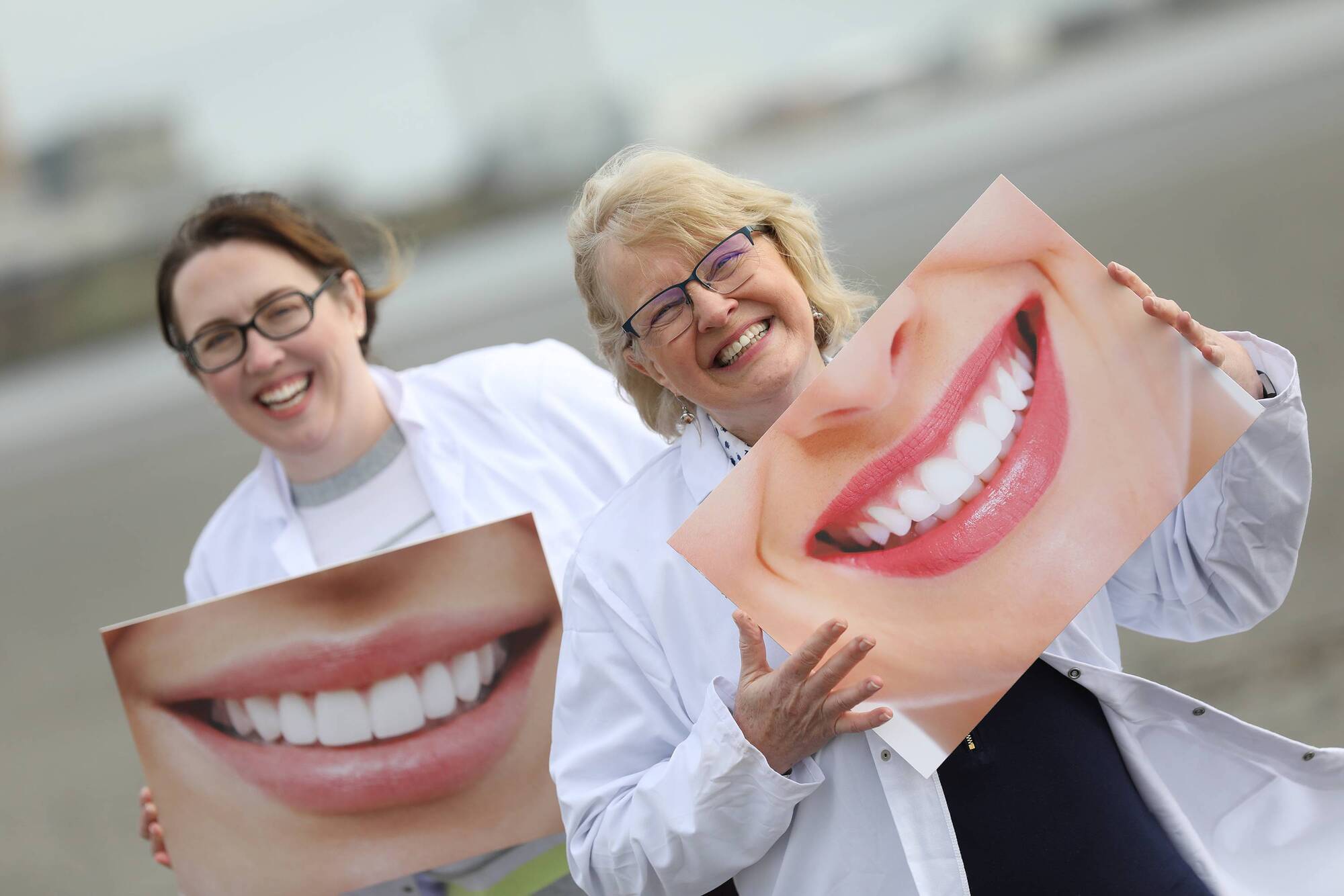
Linda Phelan with Dr Catherine Waldron ahead of World Oral Health Day.
That old saying so beloved of all our mothers never goes out of style: “You don’t have to brush your teeth, just the ones you want to keep.”Â
With the arrival of World Oral Health Day on Saturday, this advice is as wise as it’s ever been.Â
Linda Phelan, president, Irish Dental Hygienists Association (IDHA), says: “This year’s World Oral Health Day is especially relevant due to Covid-19.
"The pandemic is impacting our health and wellbeing in so many ways and it should remind the public of the importance of maintaining a good oral health routine."
Research by the IDHA partnered with the Wrigley Oral Healthcare Programme revealed that 20% were spending less time brushing and flossing due to stress associated with Covid.Â
With a background in cell and molecular biology, Linda graduated from the DDUH at Trinity College Dublin in 2012, and gained experience working in hospital, specialist practice, and general practice.Â
Currently working in two general practices in Dublin, she joined the Irish Dental Hygienists’ Association committee in 2015, and began her two-year term as president in November 2020.Â
“After qualifying, dental hygienists typically work in general dental practices or in the public health service.Â
There is also the option to teach or to focus on research as well as the opportunity to work abroad — depending on the country there may be a requirement to sit local exams — so it is a career that offers a range of great opportunities at home as well as chance to work and live abroad.”Â

Trinity College Dublin and University College Cork both offer a two-year, full-time diploma in dental hygiene. The course covers a wide range, including microbiology, anatomy, pharmacology, infection control, and paediatric dentistry.Â
“I did the diploma in Trinity as a mature student, and my science background was helpful for some of the early modules like microbiology.
"As the course progressed to dental-based modules and practical skills, we were all on a level playing field.”Â
Apart from working as a dental hygienist, the diploma also qualifies graduates to work as an oral health promoter or with a dental brand in sales or promotions.Â
“It also lays a very solid foundation to do further education which is necessary if you plan to pursue teaching or research,” she adds.
“It is rare for a dental hygienist to own their own practice. Patients can only attend a dental hygienist after they have been examined by a dentist, and the IDHA is advocating for change so that we can practise independently and have direct access to patients.
"This would widen the scope for dental hygienists to work in the community and allow us to put a focus on delivering services in hospitals and in nursing homes.”Â
The Wrigley-IDHA research shows that 55% of people have delayed appointments with their dental hygienist due to the pandemic, with 62% citing concerns about contracting Covid-19.Â
“While these concerns are understandable, particularly among older age groups, dental hygiene practices operate to the highest Covid safety standards. Regular cleaning by a dental hygienist helps inflammation of the gums and bone loss.
"People who attend their dental hygienist regularly and who have a good oral hygiene routine tend to need the least amount of work carried out because their mouths remain in a healthy state and problems are picked up early.”
With the Wrigley-IDHA research showing that 37% of people are experiencing oral health problems during the pandemic — mainly teeth clenching and grinding due to stress — Linda advises it is especially important to maintain a comprehensive daily oral health routine for those who can’t make it to the hygienist.Â
“The key elements of that routine include brushing your teeth twice a day with a fluoride toothpaste, flossing teeth daily to remove plaque, chewing sugar-free gum between meals, and eating a healthy diet with plenty of fruit, vegetables, and dairy.
"It is understandable that Covid has increased consumption levels of sugary treats and snacks, but where possible it's important to avoid these and of course, not to smoke," she adds.
In the world of 2021 where celebrity fashions and appearances are closely followed by fans, the urge to look and feel better has helped raise consciousness of maintaining good dental health.Â
“Good oral hygiene complements your appearance and general health, and we still have some work to do to educate people about its importance,” she says.Â
"We need to educate children and their parents, so that good oral hygiene becomes second nature.
"Instead, I recommend that people visit their dental hygienist to develop an efficient cleaning regime. Hygienists are excellent at removing stains from teeth, which may brighten your smile without the need for teeth whitening.”Â
With the prospect of a return to normal life after Covid slowly becoming a reality across all sectors, Linda looks forward to 2022 and the major event in the IDHA calendar — hosting the 13th International Symposium on Dental Hygiene in Dublin.Â
It is the 13th symposium of the International Federation of Dental Hygienists and a return to Europe from its last destination in Australia in 2019.Â
The ISDH is firmly established as the world leading international conference for dental hygienists.Â
“With over 1,500 delegates, international speakers and leaders in research and education expected to visit Dublin, the symposium is a ringing endorsement for the sector here in Ireland," says Linda.Â
"It shines a light on the work of the IDHA and our members — we are a voluntary organisation and we are really proud to receive this recognition from our peers across the globe.”
Celebrating 25 years of health and wellbeing