Forget Hygge, we've had a better version of Danish cosy all along: get ready for Abhaile
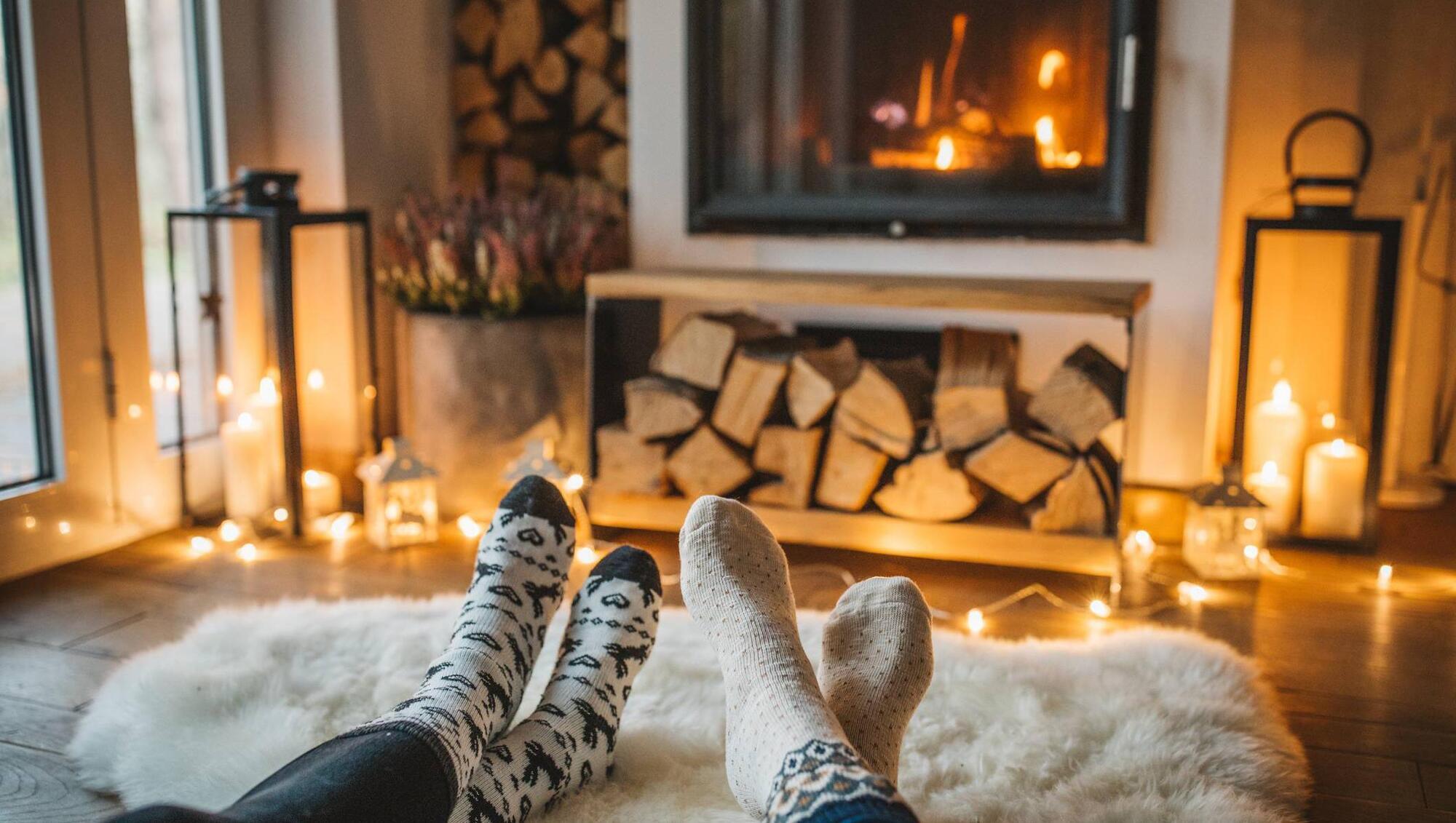
For the best crackling flame it is essential that the wood is dry but not overly dry so it does not burn too quickly.
You might remember a couple of years ago, when Hygge took over the world. The Danish word describes a way of life that the Scandinavian country have perfected.
It’s a cosy, charming, slow paced kind of living that involves candles, cuddles and roaring fires. You know something has hit the mainstream when Penney’s have a collection dedicated to it, and as we were all racing through life with barely time breath between camogie drop-offs and work commutes, we were desperate for a little Danish stress-free living.

To really do Hygge well, you should dedicate a special cosy nook in your home, spend quality time with friends and family, wear comfortable clothes, leave work at a reasonable time, light a fire and a candle and relax.
But hang on, lots of that sounds really familiar, right? We’ve been missing a trick all these years yearning to be more Scandinavian when really, we had our own version of Hygge all along.
Ladies and Gentlemen, I give you Abhaile.
Since time immemorial, Irish people have had the concept of cosy down pat. Life has always revolved around family, turf fires and tea.
It has grown over the years to include such special cosy practices as clean pyjamas on the radiator and dinners left out covered in cling film for when you come in from training. One of the first etchings found in Newgrange was of a mammy turning on the electric blanket while her son was in the pub.
Although the last months have been unbelievably stressful and worrying, one of the best parts of the pandemic has been reconnecting with home and family in a way there wasn’t time for previously.
And, as we’re facing into a winter of reduced social contact and uncertainty a cosy home will be the perfect refuge to wait out the virus.
There are two cosy nooks in an Irish house. One is beside the fire and the other is the Hot Press.
Have you ever tried to describe a hot press to an English person? The look of sheer confusion on their face while they try and get their head around a warm cupboard that does everything from keeping towels cosy to drying jeans in a hurry is beyond them. Just another reason to feel sorry for them really, along with their substandard crisps, strange pubs with games machines and Boris Johnson.
But the hot press is as essential to a lovely Irish home as constant cups of tea, friends that only use the back door, and a reverence for Dermot Bannon that can only be shaken when he refuses a lovely woman the utility room of her dreams because he wants a single pour concrete island in the kitchen!
The hot press is a tiny room of comfort in an uncertain world, made even better if someone pulled off a bit of lagging jacket so you could place the going-out top you forgot was still wet directly onto the tank to dry.
The hot press is home to all the family bedding, all the odd socks, old shirts of your dad’s that your mam is in the first step of hiding before they’re given away, and the towels. Like Monica in your mum has a complex grading system for towels that would baffle a WWII codebreaker.
- There’s everyday, which are slightly bald, very scratchy and there’s only one bath sheet that you all fight over.
- Everyday fancy, which come out at Christmas or when a sibling that lives abroad comes home to stay and the whole family gets slightly elevated. Only an abroad sibling mind you, one that lives in Dublin doesn’t count.
- Guest towels which are for esteemed visitors only and get left on the bed in the room they’re staying in with one corner folded down in the style of an old-fashioned hotel. Esteemed guests include aunts and uncles, people you’re putting up for a wedding and a boyfriend staying for the first time that has to sleep in a single bed in the box room.
- Downstairs loo. These are very plush towels that you’re not to use because the downstairs loo isn’t for you.
- And finally, the holiday towels. These are enormous but almost completely bald towels with maps of Lanzarote or camels on them that were bought with great fanfare on a two-week package holiday in the late 80s.
There are also Francis Brennan towels that have been washed and dried carefully, refolded and placed on their very own shelf, possibly with a tiny bag of dried lavender placed upon them. These will only ever be used if Francis himself comes to stay. His brother John won’t even get them. He seems like a nice man but he’ll have to make do with guest towels.

The second key to Abhaile is the fire. Once the fire is lit it is absolutely essential that it is not let go out. If you are the eejit that lets that happen you will never be allowed to have control of anything ever again. When the fire is lit there is a protocol of where you can sit and who gets full benefit of the heat. Parents first, unless there’s a grandparent there, then their chair will be placed so close to the flames that they may as well climb into the thing. If children want to get close they may sit on the floor but not within distance of the embers spitting out and there needs to be at least one child old enough to add a log whenever an adult deems it necessary.
If the fire is lit and you must leave that room, you need to open the door only a crack and fold yourself so thin to slink through so as not to let any of the heat out. Letting the heat out is a sin worthy of first confession.
- 1. Start with old newspapers, dry kindling and the most important item, our six months cured logs from the estate which are hand-cut by our wonderful estate team. We try to limit the amount of coal we use for environmental reasons and there is an abundance of beautiful turf on our doorstep in Connemara.
- 2. For the best crackling flame it is essential that the wood is dry but not overly dry so it does not burn too quickly. We like to use various woods but oak is great as it burns a warm amber flame with a good crackle and usually lasts the longest.
- 3. There is a lot of work in keeping a fire going all day and the initial building of the fire is essential and finding the balance of a blazing fire and smouldering fire is difficult to achieve. Keeping your chimneys clean all year is very important for good draft. After that, a balanced mixture of fuel is essential.
- 4. My favourite fire is the one at my parents' home but nowadays my favourite fire is the closest one to me – there is a great sense of company when a fireplace is lit in any room. It adds to the relaxation.
Courtships have been won and lost over the quality of a cup of tea. People that pay no heed to how a cup is made have no business calling themselves Irish.
There are two brands of tea in the country; Barry's and the wrong one.
Irish people are the second biggest tea drinkers in the world consuming a massive 4.8 pounds of the stuff per head, per year.
We drink a full half-pound more per person than the English and come runners up to Turkey, who at 7 pounds per head must be caffeinated out of their minds. Having to say English Breakfast Tea in a hotel abroad brings Irish people out in hives.
The kettle should be flicked on even before the door is answered and you know you might be out with someone by the length of time it takes them to offer you a cup.
Denis Daly, the tea expert in Barry's Tea has a clear set of guidelines for making the perfect cuppa, and he doesn’t mind if you serve it in a giant mug or a china cup.
- 1. Buy quality tea
- 2. Use freshly boiled water
- 3. Buy a quality pack of tea.
- 4. Use freshly boiled water.
- 5. Leave the tea to infuse for 3-5mins. The longer you leave the tea to infuse, the stronger it will taste.
- 6. Give the tea a stir to release all the flavours from the tea leaves.
- 7. I always add the water first so the tea leaves will open up all their flavours and qualities.
As we batten down the hatches for a difficult winter, food is going to become so important to our sense of wellbeing.
We’re so lucky in this country to have amazing produce to choose from and quality brands like Clonakilty pudding, Gubbeen cheese and Ballymaloe relish, which could make cardboard taste good. But now that we have Europe’s only Rose of Tralee winning MEP, surely we need to get one thing sorted.
It’s time our national dish had the recognition it deserves, and so if Maria Walsh can do one thing in Brussels, it’s to make sure that lasagne, chips, garlic bread and coleslaw becomes not only protected, but added to every tourism Ireland campaign.
Sure there are runners up to the favourite dinner; a Sunday carvery is hard to beat, a chicken fillet roll when you’re hungover, a crisp sandwich when you’re in a pinc,h and a good old fashioned mammy stew when you’re cold and tired and in from the rain.

Serves 4
- 4 Lamb Shanks
- 2 carrots, cut into chunks
- 2 onions, cut up rough
- 3 stalks celery, peeled and cut into chunks
- 2 cloves of garlic
- 5 sprigs of thyme, stripped and chopped
- 2 x 400g tins of chopped tomatoes
- 2tbspn tomato puree
- 300ml red wine water to cover salt and pepper
- 1 clove garlic chopped
- zest of half a lemon
- handful chopped parsley
- Mix all together
Heat an oven-ready casserole dish with a little oil Season the shanks all over and sear until dark brown all over Add the garlic and vegetable chunks as well as the thyme and sweat.
De-glaze with the wine, bring to the boil and reduce by half.
Now add in the chopped tomatoes and bring the water level up the that of the meat Put the lid on the casserole dish and place in a pre-heated over at 150C and braise for approximately 3 hours or until the meat starts to come away from the bone easily.
Lift out the shanks then bring the stock to the boil and whisk in the tomato puree to thicken. If you feel it needs more, just add it in a bit until you’ve the consistency you desire.
Add a big spoonful of buttery mash to a deep serving bowl, top with a shank followed by a big ladle of sauce making sure you’ve plenty vegetable per serving. Now sprinkle over some gremolata just before serving.
Celebrating 25 years of health and wellbeing