When the big screen beats the good book
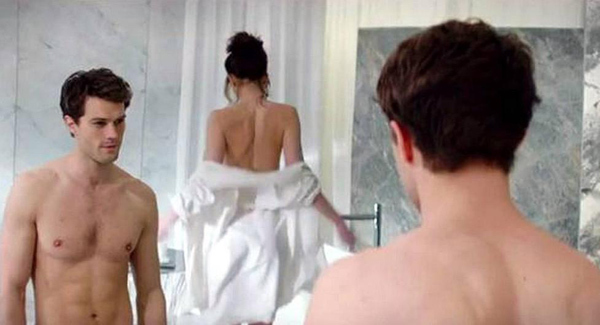
IS IT REALLY only three years since we first heard about Fifty Shades of Grey?
EL James’s self-published bonkbuster about virginal Anastasia Steel and her passionate affair with the rich and powerful Christian Grey seems to have been with us for decades, simultaneously dominating the bestseller lists and ‘Worst Book Ever’ debates like no novel before.
We won’t know for a while yet if the Fifty Shades of Grey movie, directed by Sam Taylor-Johnson and starring Jamie Dornan and Dakota Johnson, will perform as well as the book (early indications of pre-booked tickets suggest that it will open huge), but one thing we know already is that Fifty Shades puts to bed the old canard that the book is always superior to the film.
We’ve all met them, those culture bores who insist that a movie simply can’t match the sensory experience provided by the depth and breadth of a novel.
There’s too much left out, you see: all the nuance is stripped away, the context is lost, the verbal pyrotechnics of the artist’s fabulous language is hammered flat by the film industry’s commercial imperative, yadda-ad-nauseam-yadda.
Not all of that is nonsense, of course. Most of us have sat through enough misguided, misinterpreted and wrongheaded adaptations of classic novels to know that the marriage of Hollywood and literature doesn’t always end in happily ever after – although it’s worth saying that you’re far more likely to be disappointed if what you’re hoping for from an adaptation of a book is a literal translation of a beloved novel onto the big screen, with every last scrap of interior dialogue and descriptive bon mot intact.
Adaptations of films do tend to leave out certain aspects of books, and it’s not necessarily always for commercial reasons, or to squeeze 600 pages of dense prose into a 90-minute flick, but because books and films offer two very different ways of interpreting story.
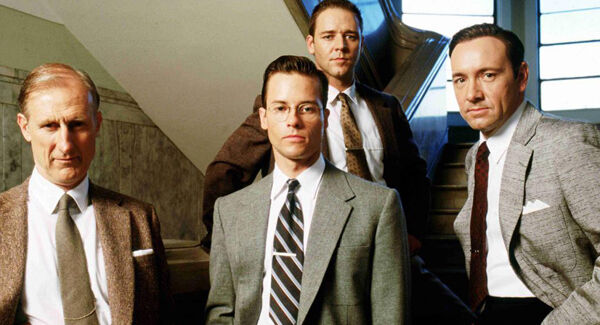
In fact, when it comes to adapting books for film, less is often considerably more. James Ellroy’s LA Confidential (1990), the third novel in his ‘LA Quartet’, was a veritable brick of a book, almost 500 pages of corruption, brutality and deceit that offered, due to Ellroy’s trademark truncated ‘telegraphic’, even more story than even 500 pages generally allows for. It’s a superb piece of work, but fans of Curtis Hanson’s adaptation, released in 1997 and starring Russell Crowe, can argue that the movie is the superior work of art, not least because Hanson stripped out roughly half of labyrinthine, multi-plot storyline and boiled the story down to the essence of Ellroy’s tale.
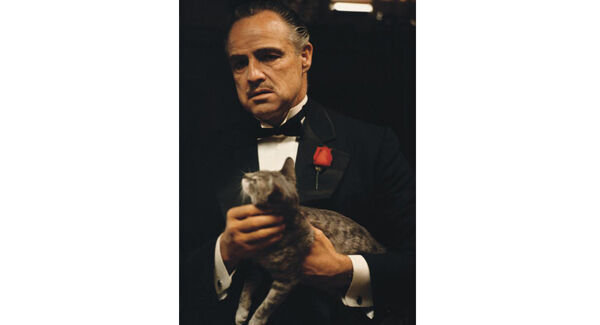
Equally, Mario Puzo’s The Godfather was a smash-hit bestseller when first published in 1969, but even Puzo might have conceded that Francis Ford Coppola’s movie of The Godfather (1972) represents the higher artistic achievement (the fact that Puzo adapted his own novel for the screenplay, and won an Oscar for his troubles, might further persuade him).
While the novel The Godfather very rarely shows up in lists of best books, crime /thriller or otherwise, Coppola’s film (and its sequel, which Puzo also adapted) is invariably mentioned in dispatches when the pub conversation turns to the vexed topic of the greatest movies ever made.
Sometimes it’s the case that a writer is simply ahead of his time. Philip K Dick is rightly regarded as one of the most visionary of science fiction authors, and adaptations of his books and stories include Total Recall (1990), Minority Report (2002) and The Adjustment Bureau (2011).
Dick won prestigious awards during his lifetime, although even his most ardent admirers would hesitate to describe his prose as flawless.
Do Androids Dream of Electric Sheep? (1968) is a haunting, hallucinatory novel of ideas that blossomed into one of the great sci-fi movies of all time when Ridley Scott directed Blade Runner (1982), starring Harrison Ford, a film that had, and continues to have, a profound effect on the sci-fi genre.
Willi Heinrich’s The Willing Flesh (1955) remains in print to this day, largely to the verisimilitude Heinrich (who fought on the Eastern Front during WWII) brings to his story of war and redemption.
It’s a powerful and unsentimental novel of men at their worst and best, but its adaptation for film, Cross of Iron (1977), will likely outlive its source material, largely because of the perfect casting of Lee Marvin, James Mason and Maximilian Schell, and the fact that the trio were marshalled by one of the greatest directors of poetic violence, Sam Peckinpah.
The result is an unusual one, a film that triumphs both as a poignant anti-war elegy and a viscerally engaging war movie.
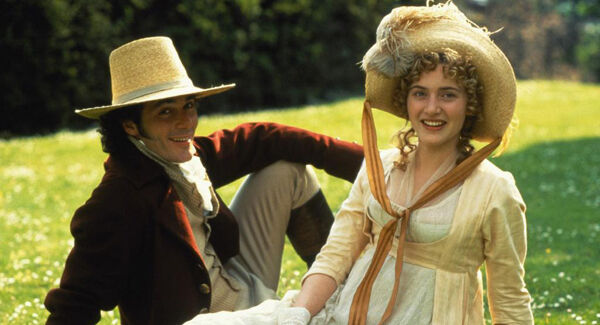
Cries of dismay might greet the (possibly heretical) idea that Jane Austen’s novels can be improved upon, but there’s no doubt that Ang Lee’s adaptation of Sense and Sensibility (1995) – then the first cinematic adaptation of Austen’s work in almost 50 years – brought the author’s work to the attention of a whole new generation of readers.
Tellingly, perhaps, the screenwriter Emma Thompson received two Oscar nominations that year, for Best Actress and Best Adapted Screenplay, and won for the latter – and it would take a particularly puritanical view of Jane Austen’s oeuvre to suggest that Lee’s film wasn’t at least as funny, poignant and beautifully constructed as the original novel.
Similarly, Harper Lee’s To Kill a Mockingbird (1960) is one of the most beloved novels of the 20th century, yet Robert Mulligan’s film adaptation released 1963 (starring the perfectly cast Gregory Peck) managed to distil the essence of Atticus Finch’s improbable fight for justice in the face of racist hatred while also incorporating the book’s delicate nuances.
Again, the movie may not be superior to the original novel, but it’s fully entitled to consider itself an equal artistic achievement. Nominated for a host of Oscars, it won three, including Best Actor for Peck and Best Adapted Screenplay for Horton Foote.
It’s also true that a movie, rather than trying to replicate its source material, can transform the bare bones of an original story into something much more epic.
‘Rita Hayworth and the Shawshank Redemption’ was just one of a collection of stories published by Stephen King as Different Seasons (1982) (the other stories were Apt Pupil, The Breathing Method and The Body, which was adapted for film as Stand by Me (1986)).
Director Frank Darabont truncated the title to The Shawshank Redemption (1994), but expanded the story of how convicted killer Andy Dufresne (Tim Robbins) bonds with prison lifer Red Redding (Morgan Freeman) and ultimately finds, well, redemption.
A box office flop on its original release, the movie has since become one of the most loved films of the past few decades – indeed, a BBC1 radio poll in 2011 declared The Shawshank Redemption its listeners’ favourite movie of all time.
It’s entirely possible, of course, that the movie of Fifty Shades of Grey will be also wind up featuring in Best Of polls in two decades time – but in this case at least, there’s likely to be very few complaints about the fact that the film didn’t do justice to the novel.
The Wizard of Oz (1939)
Gone With the Wind (1939)
Out of the Past (1947)
Psycho (1960)
The Godfather (1972)
Jaws (1975)
The Shining (1980)
Blade Runner (1982)
Fight Club (1999)
The Shawshank Redemption (1994)
CONNECT WITH US TODAY



Be the first to know the latest news and updates









