Are you worried about looking older? Here are six ways to ease your appearance anxiety

Ageing is not a skin disease.
A new wrinkle or patch of pigmentation may once have been something we never even noticed.
But now, as we’re exposed to seemingly poreless faces every time we open social media, alongside increasingly accessible cosmetic treatments, visible ageing feel like something we’re expected to prevent.
The pressure has even spawned the term ‘cosmeticorexia’ – used to describe an unhealthy preoccupation with achieving “flawless” skin from a young age, leading to an obsessive use of cosmetic products.
It was coined by Italian dermatologist Giovanni Damiani and psychologist Alberto Stefana from the University of Milan, Italy. Damiani was so perturbed by what he saw as the compulsion of some of his younger clients he began to investigate what was happening.
“I think there are a few concerning factors here,” says psychotherapist and author Eloise Skinner.
“Firstly, the normalisation of cosmetic surgery and tweakments can start to give young people the impression that this kind of activity is normal, and that they should also be participating in order to fit in.”
“If [skincare] starts to take up a high amount of time in someone’s thoughts,” she continues, “if they find themselves ruminating or obsessing over it [and] if it results in significant behavioural change – for example, spending way longer on morning or evening routines, or if it impacts other activities that the person enjoys – all of these factors could be a cause for concern.”
So, to mark World Mental Health Day on October 10, how can we develop a healthier relationship with visible ageing, while still looking after our skin?
It can be difficult to know what normal skin looks like when we’re constantly presented with well-lit and potentially cosmetically enhanced faces.
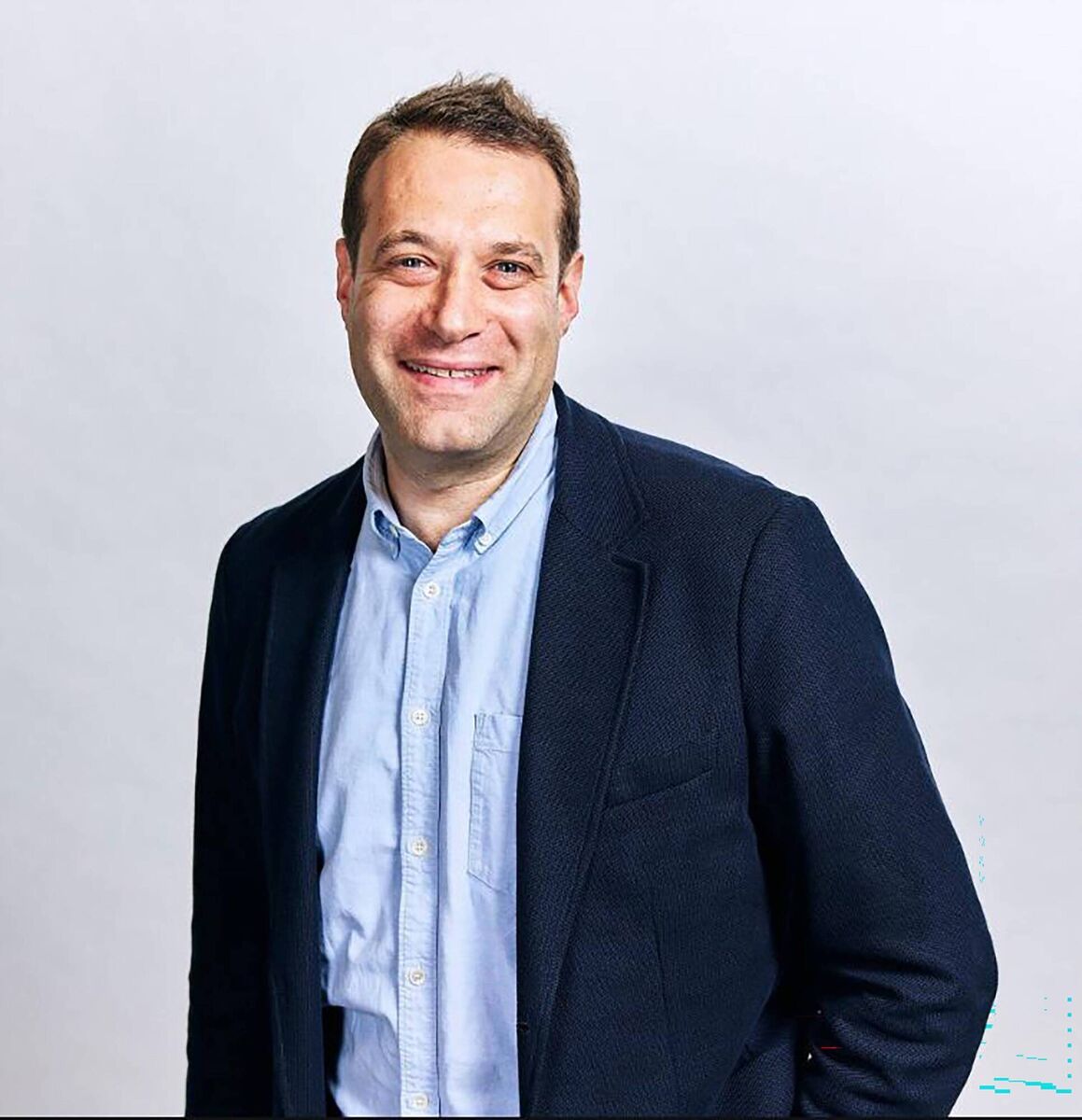
“We are constantly looking at highly curated images of faces that may have been filtered, professionally lit, carefully posed or enhanced with cosmetic treatments,” explains consultant dermatologist Dr Tim Churchill at Cadogan Clinic.
“The problem is that we can start comparing our real face, in real life and ordinary lighting, with an edited, or altered, version of somebody else’s face.”
Fine lines are among the first changes people notice, particularly around the eyes and forehead, alongside dryness, changes in texture, pigmentation and some loss of firmness.
But this doesn’t mean something is wrong, as Churchill says, “healthy skin does not mean flawless skin.
“Some of the things people are trying hardest to eliminate are actually perfectly normal features of a face that has lived.”
If your skin is becoming drier, a hydrating serum and moisturiser may be more useful than immediately reaching for an aggressive ‘anti-ageing’ treatment.
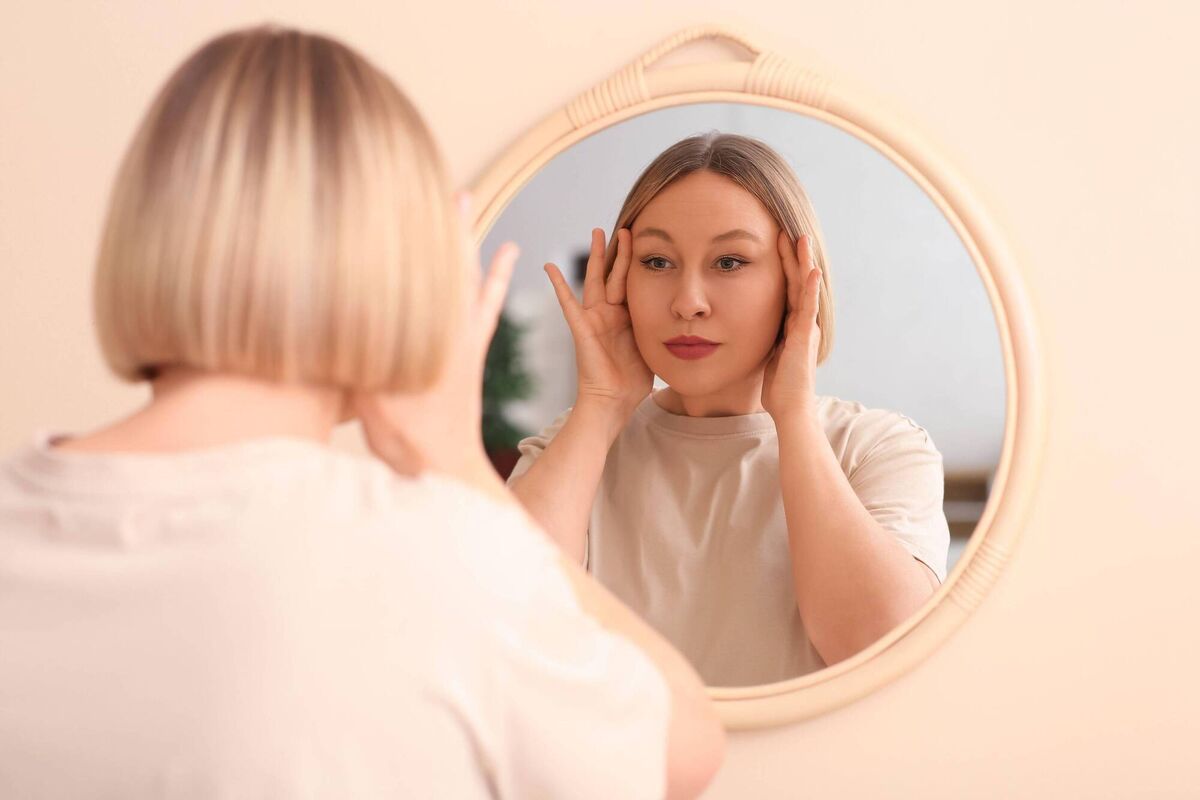
Checking a wrinkle from different angles, taking photographs to compare your face or analysing your skin under a magnifying mirror may feel reassuring while you’re doing it, but repeated checking can fuel appearance anxiety.
Skinner says compulsively looking in mirrors or comparing pictures of yourself can be harmful.
“Over time, we can start to lose a good perspective of what we actually look like, and can result in more harmful [or] obsessive behaviours in some cases.”
If you spot something new, Churchill recommends resisting the temptation to immediately find a product or treatment to fix it.
“First, do not panic and do not immediately buy another product. Take a step back.
“Look at your skin in normal daylight rather than scrutinising it under a bright bathroom light or magnifying mirror. Give yourself some perspective.
If your skin itself is feeling irritated or uncomfortable, stripping things back can also help. A gentle cleanser can remove dirt and sunscreen without adding another corrective active into the mix.
Skinner believes concerns about visible ageing are increasingly affecting younger generations because of our access to other people’s faces via social media.
“Even though ageing has always been suggested by the media as something to avoid or conceal, it’s definitely impacting younger and younger generations – especially with the spread of content over social media,” she says.
“The proliferation of edited [and now] AI-generated beauty content online can start to shift our ideas of beauty, making us think that flawless, symmetrical faces are attainable and typical.”
There are also increasingly sophisticated skincare products marketed towards younger consumers, potentially introducing concerns about preventing ageing years before they would previously have thought about them.
And so taking stock of how your feed makes you feel can be useful. Unfollowing accounts that routinely leave you examining your own appearance, and seeking out a wider range of ages and less heavily edited faces, may help put normal skin texture back into perspective.
Looking after your skin and accepting that it will age aren’t mutually exclusive.
“The biggest thing is sun protection,” notes Churchill, “daily broad-spectrum, high-factor SPF, particularly if you spend a lot of time outdoors, is one of the most effective things you can do to reduce premature skin ageing.”
So rather than building a complicated routine promising to erase wrinkles, daily SPF is one of the simplest preventative steps.
A sensible routine may also include a gentle cleanser and moisturiser, while ingredients such as retinoids can improve fine lines, pigmentation and texture over time.
But Churchill stresses that they aren’t magic: “What skincare cannot do is stop the biological ageing process. You can influence how your skin ages, but you cannot negotiate with biology. The aim is to preserve the quality and health of your skin rather than trying to make it look 25 forever.”
If you do want to introduce a retinoid, a lower-strength formulation can provide a more cautious starting point than immediately opting for a high concentration.
And if uneven tone or pigmentation is a concern, a vitamin C product can offer antioxidant support without necessitating a shelf full of exfoliating acids.
Anxiety about ageing can paradoxically make your skin look and feel worse if it leads you to continually add more actives.
“I see people who are using five, six or even more active ingredients because they are frightened of ageing, and they end up damaging their skin barrier in the process,” says Churchill.
“Retinoids, acids and exfoliating products can be extremely useful when used correctly, but more is not necessarily better.”
Many dermatologists say they should be used three times a week, maximum. Redness, peeling, burning and persistent stinging aren’t indications that a product is working particularly effectively.
“If your skin is constantly stinging, peeling, burning or becoming red and irritated, that is not a sign that your skincare is working harder,” says Churchill. “It is a sign that your skin is unhappy.”
Rather than adding another strong product, switching temporarily to a simple barrier-supporting moisturiser may be more beneficial.
Perhaps the most helpful change is modifying what you expect skincare to achieve.
Skincare can support healthy skin and help protect against preventable external damage, but Skinner cautions against expecting products to fundamentally alter your appearance.
“We’re not typically able to change our actual features with skincare, and so we shouldn’t necessarily expect our appearance to drastically change or our face to appear materially different,” she says.
Cosmetic treatments are also a personal choice, and Churchill stresses they aren’t necessarily problematic when used appropriately. The danger is expecting them to produce an entirely wrinkle-free face.
Of course, accepting ageing doesn’t mean dismissing genuine medical changes. Churchill says anything new or unusual, rapidly changing, bleeding or persistently sore should be assessed rather than assumed to be part of getting older.
But when it comes to ordinary lines, texture and other gradual changes, reframing them as a normal part of ageing may help make their appearance feel less alarming.
“The healthiest approach to ageing is not to wage war against every line and every change but to look after your skin consistently and accept that some change is inevitable,” says Churchill.
“Ageing is not a skin disease. Our job as dermatologists should be to help people have healthy skin at every age, not make them frightened of getting older.”

CONNECT WITH US TODAY



Be the first to know the latest news and updates