Expose your body to cold conditions to drop some weight
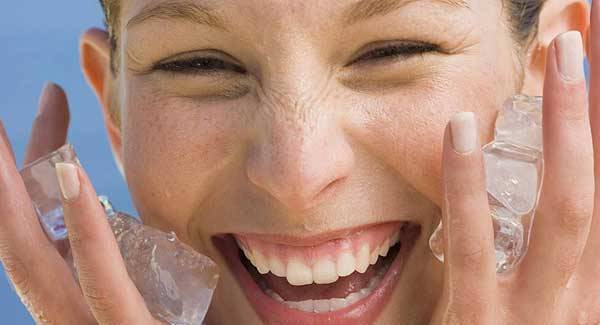
Forget hot yoga, stifling gyms and bubbling hot tubs, the most effective way of shedding body fat and boosting your metabolism is to stay in cold temperatures as often as you can.
It’s a trend that has emerged from cutting-edge scientific investigation, but which is so effective that it is taking the fitness world by storm and has attracted a number of A-lister advocates who claim that it is their secret weapon to a super-toned and bump-free bikini body.

Fitness expert Romana Braganza has a list of celebrity clients as long as her arm — including Kate Beckinsale, Jessica Alba and Halle Berry — and says she encourages all of them to work out in cool temperatures so that their metabolism is fired up to maximum.
And in his latest book, The Pop-Up Gym, celebrity trainer Jon Denoris, who helps to hone the bodies of elite athletes and celebrities like Rachel Stevens and Estelle, raves about the benefits of cool body temperatures.
“The theory is that by manipulating body temperature and making it cold, it forces the body to burn calories from brown adipose tissue,” Denoris says.
“I’ve been using this technique with my clients with showers and foot spas for a year or two and have seen some great results, even when it’s done on its own without exercise.”
Although a relatively recent discovery, the trend for using icy temperatures to aid fat-burning has risen sharply since three years ago when it was considered something of a faddy approach to fitness. A growing number of people take icy slush drinks, or wear ice packs on their body to stimulate the metabolism.
I prefer a short, sharp icy cold blast of my shower. But as someone who tends to lose weight as soon as temperatures drop in autumn every year, I am convinced of its merits.

It boils down to a substance called brown fat that, unlike the more familiar yellowish-white body fat that stores excess energy accumulated when you eat too many calories, actually burns extra energy to generate heat and maintain the body’s core temperature.
It has long been known that babies have deposits of brown fat around their shoulder blades to help keep them warm after birth. But until recently scientists thought it disappeared in infancy once its physiological uses had been exhausted.
Professor Michael Symonds, a leading researcher in brown fat’s effects at the University of Nottingham’s Queen’s Medical Centre, says it was only rediscovered in humans a few years ago when researchers carrying out PET-CT scans on patients noticed that it was more noticeable in the winter months when activated by the cold weather. These scans detected small amounts of the substance in the upper back, on the side of the neck, in the dip between the collarbone and the shoulder, and along the spine — enough to warrant further investigation.
Since then, brown fat has become a rapidly growing area of interest among researchers who believe it could hold a vital key to weight problems. It’s now accepted that brown fat not only persists into adulthood, but that exposure to cold temperatures spurs it into action in some people. Because of their higher total body fat, women are known to have proportionately more brown fat than men and it is more detectable in lean people than obese, although researchers are still trying to determine why. It could be, experts say, that women’s bodies react more quickly to drops in temperatures than men’s.
Unlike the more familiar yellowish-white body fat that stores the excess energy accumulated when you eat too many calories, brown fat — so-called because it is light brown in colour — does the opposite, burning excess energy to generate heat and maintain the body’s core temperature. When ‘switched on’ it is said to produce around 300 times more heat than any other organ in the body.
In a study published in the Journal of Pediatrics last June last year, Professor Symonds used thermal imaging to show that the neck region in healthy children produces heat.
“There is only about 50g of brown fat in the neck region of children and it switches on and off throughout the day as it’s exposed to different temperatures or if you exercise or eat,” he says. The effect is less well defined in adolescents and adults. But there are ways of boosting your brown fat. Here’s how:

Professor Symonds and his team have been looking at whether cool temperatures can manipulate brown fat action, thereby preventing excess weight gain. They have been testing the body’s fat-burning response, by asking subjects to plunge their hands into ice-cold buckets of water. And it seems to work.
If you can’t bear the thought of an icy dip, then there are simpler ways to activate your brown fat.
Professor Mike Cawthorne, director of metabolic research at the University of Buckingham who has researched its effects, says our cooped up lifestyles have helped to ‘switch off’ brown fat’s usefulness in the modern world.
“Even 30 years ago it was more difficult to stay warm than it is now,” Cawthorne says. “Today, our homes, cars, offices and shops and almost everywhere we go is warm.”
Cawthorne says just turning off the central heating in winter could help spur brown fat into action, but also subjecting ourselves to cold areas in shops — like the freezer aisle and air conditioning — could make a difference.
“If we were to expose ourselves to cooler temperatures more often, then a lot of people would probably lose weight,” he says. “Don’t have the heating on in the car and spend more time outdoors, especially in winter.”

Several studies, including one at the Wellcome Trust Clinical Research Facility at Addenbrookes Hospital, Cambridge, have suggested that eating chilli peppers might help as a compound they contain, called capsaicin, seem to trick the brain into thinking it is cold, coaxing brown fat into burning just a few more calories than normal.
“Certain foods, including milk, seem to have a positive thermogenic, or warming, effect on brown fat that triggers it into action and some pharmacological compounds could have the same beneficial outcome,” Professor Symonds says.
Salad foods with a high liquid content — like lettuce, cucumber and tomatoes — can have a cooling effect. And consuming cold, slush puppy type drinks may be useful, particularly when combined with exercise, whereas hot drinks like coffee and hot chocolate and high-fat foods are probably not great brown fat triggers.
A 2010 study by exercise physiologists at the University of Texas Southwestern Medical Centre showed how a slushy ice drink helped athletes keep their body temperature down during exercise — and it has the same effect in everyday life, meaning more brown fat is activated.
Taking the right kind of exercise can also help. Reporting in Nature journal, Bruce Spiegelman, professor of cell biology and medicine at the Dana-Farber Cancer Institute in America, revealed that in mice, exercise appears to turn white fat into a version of brown fat called ‘beige fat’ which burns calories.
When they were physically active, the muscle cells of the mice in the study released a then newly discovered hormone, called irisin, that enabled their bodies to make beige fat from white.
Since humans also have irisin in their blood that is identical to mouse irisin, the same could be true in people who exercise.
“What I would guess is that this is likely to be the explanation for some of the weight loss effects of exercise,” Professor Spiegelman said, suggesting that beige fat is partly responsible for the so-called ‘after-burn’ of calories following a workout. HIIT (high intensity interval training) — in which you sprint hard for a few seconds and then rest — appears to be the most effective way to prompt your brown fat into action.
Try running or cycling for five minutes gently to warm up, then performing 15 seconds sprinting followed by 45 seconds rest four to six times. Cool down to finish.
This year, I co-authored with Dr Michael Mosley a book titled Fast Exercise. We are both huge advocates of brown-fat activation. Dr Mosely prefers short, sharp indoor bicycle sessions — such as 4 x 15 seconds flat out with plenty of rest between — to activate his brown fat, whereas my favourite is a brief hill running session where I perform 6 x 20 second sprints up a hill with a slow walk back down to recover. We are convinced that the effects HIT has on brown fat are partly responsible for its impressive body-transforming abilities.
1. Oprah Winfrey is said to use ice packs, attached to her body, to trigger brown-fat action. A similar effect can be achieved by wrapping frozen peas in a tea towel and placing them on your stomach, arms, feet and legs for 30-second intervals a few times a day.

2. Drink cold water or ice-cold juice. Some studies have shown that cold drinks keep the body’s core temperature lower during exercise — the effects might also trigger brown fat into action.
3. Avoid the gym. Take a walk, go for a cycle, or just skip outdoors on a chilly day. An outdoor swim, anywhere in Ireland, is guaranteed to get brown fat working. Outdoor exercise, of any kind, is beneficial, says celebrity trainer Romana Braganza.
4. Consume dairy products — yoghurt, milk, and cheese are important in activating brown fat.
5. Steer clear of high-fat, sugary carbohydrates and highly processed foods. While evidence is not conclusive, it is likely they have an adverse impact on brown fat.
6. Rotation shower: A less daunting option to the foot spa, says celebrity trainer, Jon Denoris. “Take a shower for five minutes, alternating 20 seconds cold, 10 seconds room temperature,” he says.
7. Foot spa: Denoris recommends his clients fill a basin with ice-cold water and put their feet in for up to 15 minutes, first thing in the morning. “It’s definitely one for the brave and hardy,” he says. But it works.
8. Add chilli peppers to food — the active ingredient, capsaicin, triggers brown fat into action.