Children’s book reviews: Young girls find a sense of belonging

Pet O’Connell rounds up a selection of the latest children’s books from one of developing childhood friendship and a growing feeling of belonging to an autistic girl finding her place in the world to a county-wide tour of Ireland
Cork native Judi Curtin sets her new novel for ages nine-plus in 1930s rural Ireland, where through Gracie’s eyes the limited choices available to many young women, and indeed men, become clear.

Cork native Judi Curtin sets her new novel for ages nine-plus in 1930s rural Ireland, where through Gracie’s eyes the limited choices available to many young women, and indeed men, become clear.

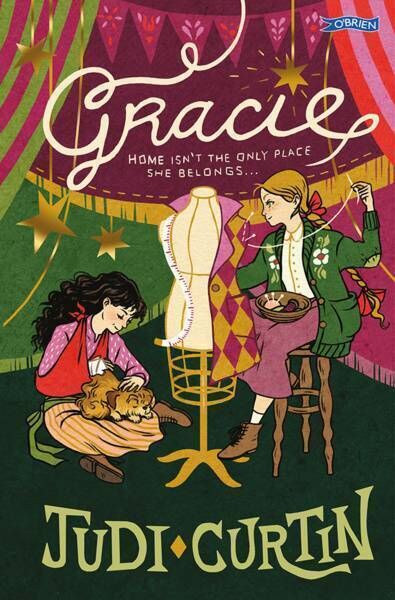
Gracie by Judi Curtin (O’Brien Press, €10.99)

Gracie’s family home is bursting at the seams. “There’s too many of us, all vying for extra food, and space at the table, and space in the bed. 

“There’s forever a baby crying or some of my brothers and sisters fighting. Mammy’s always busy and Daddy’s always out working in the fields.”

Gracie has to do her fair share too, minding her younger siblings and darning clothes, while also trying to keep up with her schoolwork. 

But while she might sometimes dream of how lovely it would be to have a bed all to herself, home is a safe, familiar place where Gracie is loved and knows she belongs.

However, the death of her uncle Patrick signals a sudden and complete change for 12-year-old Gracie. 

Her parents decide that she will not be returning home with them after the funeral and instead must stay in an unfamiliar village, away from her siblings and friends, to act as companion to her widowed Auntie Peg.

Her aunt’s home is spacious, quiet, and everything Gracie’s is not. She is given a comfortable bedroom of her own, with no little brothers or sisters wetting the bed, and despite her grief, Peg makes sure Gracie is well fed and cared for.

Peg has no children of her own and comes to love having Gracie living in the house. 

She looks forward to hearing the stories Gracie brings each day from her new school, and to teaching her embroidery in the evenings.

Gracie, in turn, becomes very fond of her aunt, though she desperately misses home and is mystified by the fact that her cousin Nora is not allowed to associate with her at school. 

Though the two girls have always got on well together, family jealousies have been stirred and it is soon evident that Gracie’s arrival in their aunt’s home was not solely an act of kindness on her parents’ part, but a tactical move born of financial necessity.

Cork native Judi Curtin sets her new novel for ages nine-plus in 1930s rural Ireland, where through Gracie’s eyes the limited choices available to many young women, and indeed men, become clear.

If the options facing Gracie consist of paving the way for her brother to inherit land, before she marries a farmer herself, the possibilities are even less plentiful for those with any form of disability, like her older sister Eileen.

While Curtin sets her story in a bleak, economically stagnant period in Ireland’s past, she avoids turning it into a social history lesson, adding a splash of colour and vitality with the introduction of a troupe of travelling players.

The author of the Alice and Megan and Lily at Lissadell series, Curtin’s trademark is her ability to weave compelling friendship yarns and Gracie is no exception. 

In a gentle story threaded through with a theme of needlework, the caring relationship between niece and aunt is complemented by a developing childhood friendship and Gracie’s growing feeling of belonging.

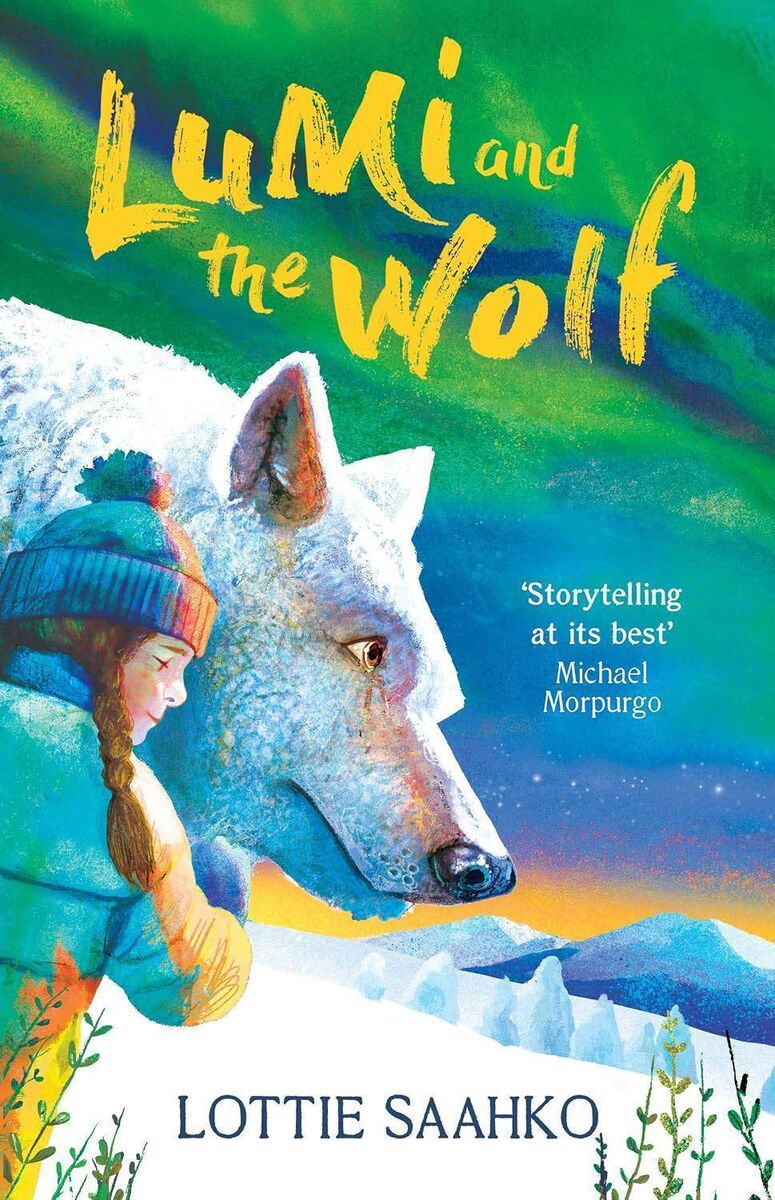
Lumi and the Wolf by Lottie Saahko (Star Board/Hachette, €17.99)

Finding a sense of belonging in a new environment is also central to Lumi and the Wolf, where both human and lupine friendships are forged by a young girl sent to stay with her aunt and uncle in Lapland.

Lumi, who is autistic, has not visited her mother’s home country since she was a baby and objects strongly to this enforced change in surroundings. 

Her relationship with her Uncle Niko, who once worked at a reindeer farm and is firmly of the opinion that wolves should be shot, does not improve after Lumi’s encounter with a lone white wolf.

Realising this wolf is injured, she offers him her sandwich, and though she knows he could attack her, she chooses to trust him.

The trust appears to be mutual and Lumi, who struggles to make human friendships or read social cues, determines to protect this wild animal, with whom he feels an immediate bond.

With the local reindeer farmer seeking to shoot the wolf, Lumi makes a rash decision to lead him through thick snow and over mountainous terrain on a 100km journey to the protection of a national park.

Though she possesses ultra-sharp senses and an ability to memorise maps, London city living has prepared Lumi poorly for such an expedition. 

Quite apart from the dangers of setting off with a wolf as her sole companion, with no phone communication, and without informing her family of her whereabouts, she has underestimated her food supply requirements.

Luckily for Lumi, local boy Oskár is intrigued by her mission and although she initially attempts to conceal her plans from him, she realises Oskár has survival skills and, importantly, food, making him an indispensable travel companion.

He also teaches Lumi about the native flora and fauna, the traditional Sámi way of life, and the impacts of climate change on both humans and animals.

The pair form an unconditional friendship, “like a pair of woolly socks that have been hung above the fireplace — comforting, soothing, and soft” — and emblematic of the warmth at the heart of this snowstorm of a novel for ages nine-plus from Finnish-born neurodivergent author Lottie Saahko.

Though the girl-wolf relationship stretches plausibility, Lumi’s journey into the wilderness to save the animal’s life certainly serves to change her own, as she finds her place in the world.

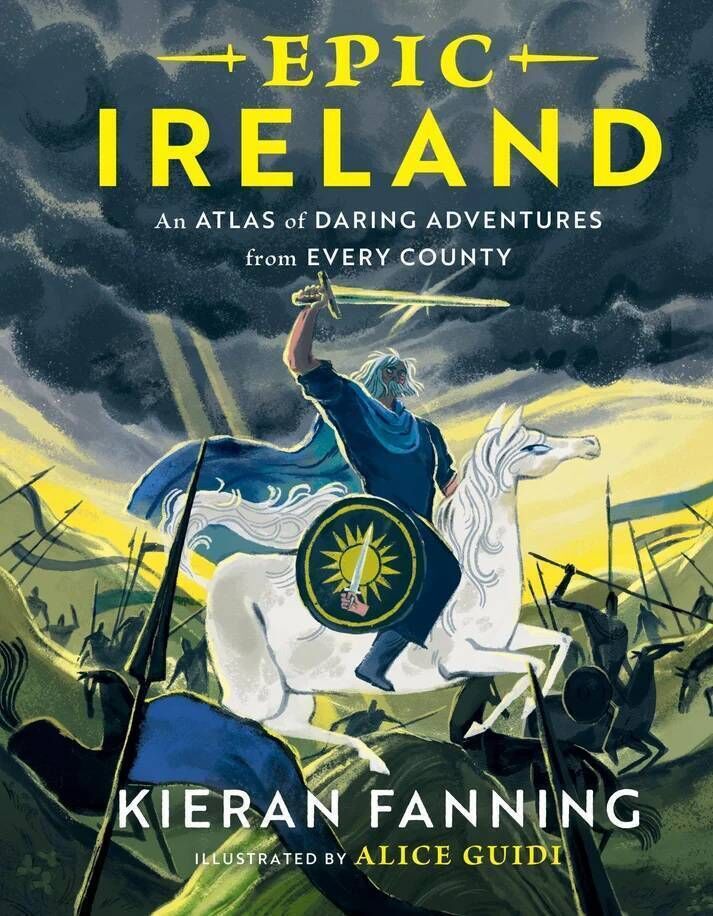
Epic Ireland by Kieran Fanning, illustrated by Alice Guidi (Gill, €24.99)

The geographical sweep of all 32 counties of the island of Ireland is not the only all-encompassing aspect of Kieran Fanning’s “atlas of daring adventures from every county”.

A writer and primary schoolteacher, his countrywide tour delivers 10-minute history lessons on a wonderfully diverse selection of saints, sinners, heroes, and villains, spanning 15 centuries.

Brian Boru and St Patrick keep company with a murderer who went on to be Ireland’s first hang-woman and a slave who became a champion boxer before dying penniless in Galway.

Cork-born pirate Anne Bonny makes an appearance, as does Kerry’s Antarctic explorer Tom Crean, along with Thomas Hughes of Monaghan, decorated with a Victoria Cross for his bravery in the Battle of the Somme.

Fanning returns to his home county of Wicklow for the tale of Michael Dwyer from the Glen of Imaal who, outraged by the 1798 massacre at Dunlavin green, joined the United Irishmen and waged a guerrilla campaign against British forces.

The Wexford man who was the inspiration for masked fictional hero Zorro, and the Spanish Armada sailor who ended up in a lake in Leitrim are also in the mix in this fascinating flit through feats of derring-do and downright audacity in an Irish context.

BOOKS & MORE

Check out our Books Hub where you will find the latest news, reviews, features, opinions and analysis on all things books from the Irish Examiner's team of specialist writers, columnists and contributors.


More in this section

Scene & Heard

Newsletter

From music and film to books and visual art, explore the best of culture in Munster and beyond. Selected by our Arts Editor and delivered weekly.

Cookie Policy Privacy Policy Brand Safety FAQ Help Contact Us Terms and Conditions

© Examiner Echo Group Limited