Children’s book reviews: Séamus courts disaster in his futile attempts to be famous

Pet O’Connell rounds up a selection of the latest children’s books from a tale on the pointless pursuit of fame, to a canine caper of acceptance, and a children’s writing debut from best-selling author Cecelia Ahern
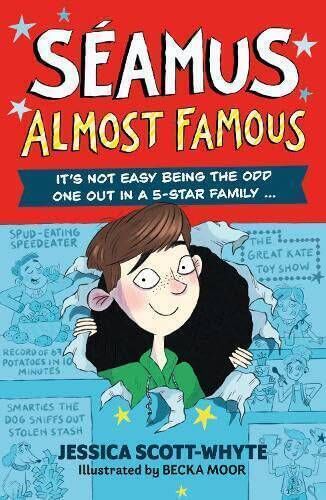
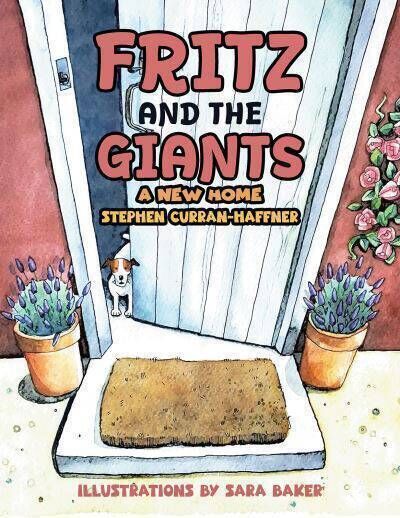
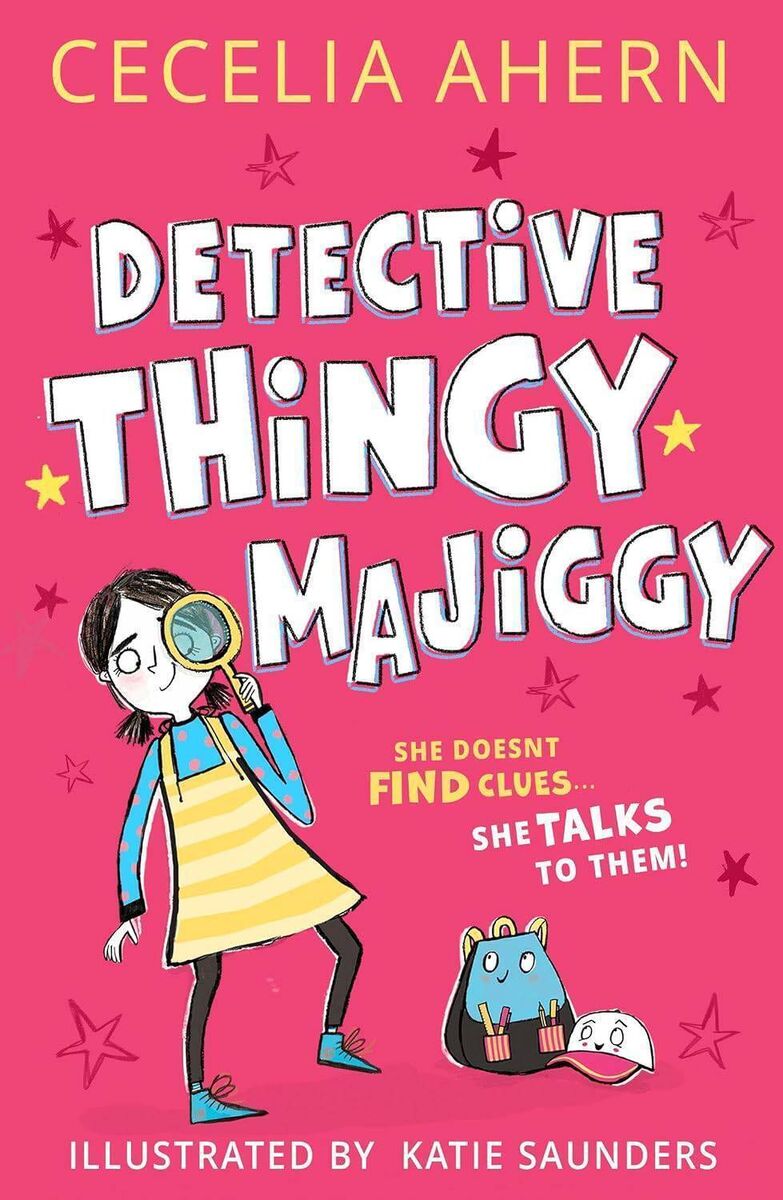
Above from left: Dublin author Jessica Scott-Whyte’s ‘Séamus Almost Famous’ is an uproariously entertaining tale, Stephen Curran-Haffner’s ‘Fritz and the Giants: A New Home’ is an engaging story to warm the hearts of young dog-lovers, while Cecelia Ahern has turned her hand to children’s fiction with the release of ‘Detective Thingy Majiggy’.

Above from left: Dublin author Jessica Scott-Whyte’s ‘Séamus Almost Famous’ is an uproariously entertaining tale, Stephen Curran-Haffner’s ‘Fritz and the Giants: A New Home’ is an engaging story to warm the hearts of young dog-lovers, while Cecelia Ahern has turned her hand to children’s fiction with the release of ‘Detective Thingy Majiggy’.

Séamus Almost Famous by Jessica Scott-Whyte, illustrated by Becka Moor (Gill, €10.99)

The pursuit of fame is an obsession for many in the age of social media influencers and reality TV shows, with some ‘celebrities’ famous only for being famous.

How does it feel though, when fame defines your worth to your own family? 

The pressure to stay in the public eye is real, even for those, like Séamus Murphy’s annoying younger brother Mark, who are born winners at every sport, academic subject, and artistic pursuit. 

But for Séamus, who is not exceptional at anything, his chief role in the family is handing out biscuits when reporters arrive at the house to interview the latest Murphy celebrity.

Both of their parents are famous; their father being a 14-time all-Ireland spud-speed-eating champion who once consumed a record 67 potatoes in 10 minutes, while their mother is a champion baker and celebrity wedding-cake creator.

The family fame began a generation back with their granny, a local legend in Callan, Co Kilkenny, who was feted as a lucky omen for being born on the third day of the third month of 1933 at 3.30pm, with three teeth already showing.

Séamus’s little sister is only four but already a viral sensation after test-driving a plastic tractor on the Late Late Toy Show and sticking out her tongue when asked her opinion of the tractor. 

Even the family dog Smarties has now got in on the act by sniffing out a haul of stolen cash, but did he really have to do it on Séamus’s birthday?

Just as the family members are all gathered to sing Happy Birthday on the one day when they might turn their focus to Séamus, his little bit of limelight is stolen by the dog.

In come the cameras and reporters again and … “Séamus,” his mother says, “would you go and get the biscuit tin?”

That’s the final straw for Séamus. If the only way to get noticed by his family (and perhaps by the girl he can’t admit he likes) is to make it big, then he’ll have to become Famous Séamus.

Aided and abetted by his best friend Dara — the tallest 11-year-old in Kilkenny — Séamus sets himself a tight deadline, to find fame within 11 days.

He tries his hand at becoming a rapper, a comedian, actor, daredevil, businessman, and activist, with varying degrees of success, ranging from mediocrity to outright disaster, but veering strongly towards the latter.

Fame, as anyone could have told Séamus and the rest of his dysfunctional family, is rarely the key to happiness, but his mishaps and misfortune in search of stardom succeed in unlocking plenty of hilarity for readers aged eight-plus.

Dublin author Jessica Scott-Whyte tells an uproariously entertaining tale in which the Blarney Stone looms large, hardened criminal bodyguards show their softer side, and whenever it seems things cannot get any worse for Séamus, they invariably do.

Fritz and the Giants: A New Home by Stephen Curran-Haffner, illustrated by Sara Baker (Austin Macauley, €10.95)

Fritz is alone. No longer with his brothers and sister in a box at the puppy farm, he wakes in a strange bed in an unfamiliar house in Baltimore, West Cork.

The little dog shivers as he recalls a ‘giant’s hand’ scooping him up and taking him away to live with a new family. 

Though he may have been rescued from a bad situation, possibly one of neglect, everything is big and scary in this new place and Fritz’s belly aches with longing for his family and familiar surroundings.

The ‘giants’, otherwise known as humans, may seem huge to the tiny terrier but they turn out to be very welcoming and soon Fritz is befriended by the family’s older dog, who assumes a fostering role.

The first in a series of eight books, brightly illustrated by Sara Baker, the stories are based on the real, and recently deceased, Jack Russell terrier of the Haffner family of Rolf’s Country House in Baltimore.

Though like many books printed by “hybrid publishers”, Fritz and the Giants would benefit from a rigorous editing process, it is an engaging story to warm the hearts of young dog-lovers.

There’s more to this than just a canine caper, however. Author Stephen Curran-Haffner, who has experience working with children in crisis and has a BA in early childhood studies and masters in applied psychology from UCC, uses Fritz and friends as a means of opening conversations on complex childhood emotions.

“I am currently part of the teaching team for Early Years and Childhood Studies in the UCC BA degree programme, for the past 11 years, and felt there was a lack of quality semi-fiction books that UCC students could use for a reading activity that could connect with children going through the challenges of childhood,” he said.

Mr Curran-Haffner, who has tutored students from caring disciplines including social work, introduces themes of sadness, loss, and fear at changing family circumstances, allowing children to explore their feelings courtesy of the loveable Fritz.

Detective Thingy Majiggy by Cecelia Ahern, illustrated by Katie Saunders (HarperCollins Children’s Books, €8.99)

People talk to inanimate objects all the time. Even before the advent of AI, we were chatting away to computers, televisions, and radios. 

Printers and cars are more likely to get sworn or shouted at, even by those with more self-control than Basil Fawlty during his famously tempestuous relationship with an Austin 1100.

Hearing objects talk back is rare, however. It’s a gift that 10-year-old Mia keeps secret, though it gives her great comfort as she moves from one foster home to another.

In particular, since she can no longer live with her birth parents, she values her conversations with a collection of her mother’s old hats, each with its own individual personality.

All objects have distinctive voices, though some use them only for complaining, such as the malfunctioning toaster Mia meets at the home of her new foster mother, a detective named Lucy.

Toaster speaks with a deep voice, hoarse from coughing, as he burns each slice of bread, setting off the smoke alarm in Detective Lucy’s house.

The only person who can hear Toaster’s outraged cries as Lucy threatens him with the recycling centre is Mia, who resolves to help him and the other faulty ‘thingy majiggys’ gathering dust in the shed since the death of Lucy’s father.

As it turns out, the thingy majiggys may be able to help Mia, who must hone her own detective skills in order to clear her name at her new school.

Humorous and heart-warming, the first title in a series for readers aged seven-plus is a refreshingly imaginative children’s writing debut from best-selling adult author Cecelia Ahern.

x

BOOKS & MORE

Check out our Books Hub where you will find the latest news, reviews, features, opinions and analysis on all things books from the Irish Examiner's team of specialist writers, columnists and contributors.

More in this section

Scene & Heard

Newsletter

From music and film to books and visual art, explore the best of culture in Munster and beyond. Selected by our Arts Editor and delivered weekly.

Cookie Policy Privacy Policy Brand Safety FAQ Help Contact Us Terms and Conditions

© Examiner Echo Group Limited