Author interview: Psychopaths are not very different from you or me
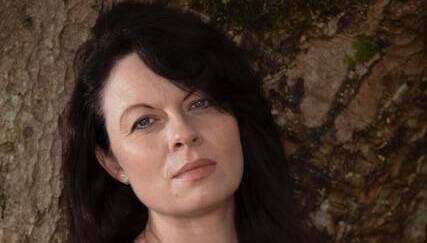
Often represented as monsters in literature, Emma Kavanagh argues that there are everyday psychopaths amongst us who can form close relationships that can be devastating emotionally for those who engage with them
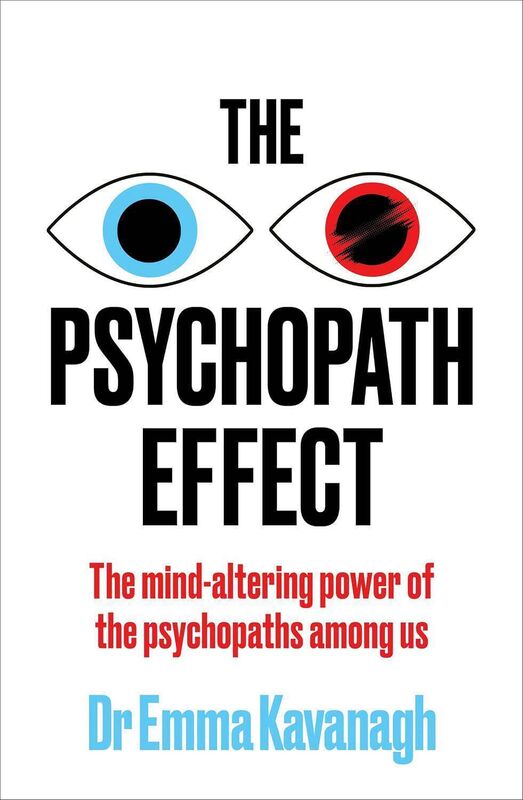
Emma Kavanagh points out that the average person is unlikely to interact with a clinical psychopath in her book 'The Psychopath Effect: The mind-altering power of the psychopaths among us'.

Emma Kavanagh points out that the average person is unlikely to interact with a clinical psychopath in her book 'The Psychopath Effect: The mind-altering power of the psychopaths among us'.

  • The Psychopath Effect: The mind-altering power of the psychopaths among us
  • Emma Kavanagh
  • Seven Dials, €26.40

On the night of May 19, 1983, Diane Downs presented herself at a hospital in Springfield, Oregon. The 27-year-old divorced postal worker claimed to have experienced a carjacking. 

The stranger, she said, lurched from the darkness on a country road, and shot her three children. Christie, aged eight, and Danny, aged three, received life-changing injuries.

Their sister, Cheryl, aged seven, was murdered in cold blood. Meanwhile, Downs had sustained a gunshot wound to the forearm with a 22-calibre pistol.

Immediately after hearing this story, however, the hospital authorities felt something was off.

The warning signs came from Down’s odd behaviour. Especially her facial expressions. 

“What I observed was a very calm woman who was self-assured and occasionally smiling and chuckling,” observed Dr John Mackey, a doctor, who interviewed Downs that night. 

Later, when police entered the apartment where Downs lived, they found bullets that matched those found at the crime scene. 

In August 1984, Downs was sentenced to life in prison, plus 50 years, after being found guilty of the murder of one child, and the attempted murder of two others.

“We all think we know exactly what is meant by the word psychopath. It describes someone like Diane Downs,” writes Welsh crime novelist, Emma Kavanagh in The Psychopath Effect. 

There are several examples of clinical psychopathy scattered throughout her book. 

Statistically, though, the author points out, the average person is unlikely to interact with a clinical psychopath. Kavanagh’s focus is those individuals, she claims, are “a little bit psychopathic”.

“For a long time, the study of psychopathy has focused on clinical psychopathy, but what interests me, are the people that we see in our everyday lives,” Kavanagh explains from her home in south Wales. 

“We don’t have a good definition for it in the psychological literature, but everyday psychopathy might be a good way of putting it.”

These individuals are unlikely to break the law or go to prison. They will most likely lead successful lives and have lasting relationships.

Those who form close bonds with these individuals, however, are likely to encounter a life of psychological torture — where gaslighting, emotional abuse, and nasty insults are a common daily occurrence.

Kavanagh, whose bestselling novels include To Catch a Killer (2019) and The Devil You Know (2020), explains why she chose to write nonfiction for a change. 

Psychopathy ever-present in crime fiction

“Psychopathy is one of those personality features that’s ever-present in crime fiction.

“When I write novels, I do a lot of research beforehand, so this is something that I’ve been researching in the psychological literature for years and years. I also did a PhD in cognitive psychology.”

Kavanagh’s book provides readers with a brief history of psychopathy. The first major work to be published on the topic was Hervey M Cleckley’s, The Mask of Sanity (1941). 

“Cleckley’s definition of a psychopath described someone low in empathy, who is manipulative, uncaring, callous, but also quite charming,” Kavanagh explains.

Three decades later, Canadian forensic psychologist, Robert Hare, created a diagnostic tool that eventually became known as the Psychopathy Checklist-Revised (PCL-R).

This measured psychopathy on a 20-item scale and scanned for traits like glib and superficial charm, grandiose estimation of self, need for stimulation, pathological lying, cunning and manipulativeness, lack of remorse, and callousness.

However, in recent years, various questions have been raised about the accuracy of the PCL-R. 

Not least because it was developed in a clinical setting, Kavanagh explains: “The PCL-R was based on research that was carried out on individuals who were mostly in prison, which meant when it came to looking at psychopathy in the everyday, it wasn’t so good.”

Triarchic Model of Psychopathy

Other researchers have started to assess psychopathy from another angle.

The Triarchic Model of Psychopathy (TriPM) for instance, published in 2009, does not consider psychopathy as a unitary disorder. 

Instead, the psychological framework argues that psychopathy encompasses three distinct phenotypic constructs: 1. Boldness, 2. Meanness, and 3. Disinhibition.

In this model, psychopathy is described as an amalgamation of behavioural tendencies. But a nuanced understanding of these terms is important, Kavanagh keenly stresses.

“When a person is high in boldness, they tend to be socially dominant. This can be good, as it allows people to engage in high risk but high-reward behaviours.

“But boldness also has a maladaptive side and is often associated with a tendency to use aggressive behaviour to achieve a goal.”

The Psychopath Effect explains these complex psychological terms in lucid layman terms.

The entire concept of psychopathy, we learn, is predicated on a lack of empathy, and those high in psychopathy have been shown to experience lower empathy when viewing another person in pain. 

Typically, the psychopath’s interactions are dedicated to controlling the mental world of those around them.

The book also features several interviews with people who have spent their lives around those high in psychopathic traits. We hear about psychopathic partners, parents, friends, and bosses.

The interviewees all had the same response patterns. Namely: issues with anxiety, depression, chronic ill health, and complex post-traumatic stress disorder (PTSD).

To protect her sources, Kavanagh has deliberately changed names and merged characters.

Accounts of everyday psychopaths

In a way, these accounts of everyday psychopaths read like fiction. Today, Kavanagh confesses that some of these stories come from her personal life. 

“Yes, I’ve had close dealings with psychopaths in my own life and doing this research has been cathartic and focused my understanding of who I’ve become as a person,” she says.

Having a detailed conversation about psychopathy is almost impossible without briefly mentioning narcissism: a personality trait marked by an inflated sense of self-importance.

Narcissism has been grouped with psychopathy and Machiavellianism as the Dark Triad: a cluster of traits that tend to go hand in hand, having a negative impact on the people around them.

“It’s important to remember that every psychopath is a narcissist, but not every narcissist is a psychopath,” Kavanagh explains. 

“I also think we need to move away from seeing things like narcissism and psychopathy as personality disorders. There are [some cases] where that’s appropriate.

“But in everyday life, narcissism and psychopathy simply describe behaviour traits and survival strategies that people have adopted to allow them to live within what is often a hostile environment.”
Under hostile circumstances, psychopathic traits make perfect sense as a behaviour pattern, says Kavanagh.

“In psychology, we often tend to look for the biological explanations for many things, rather than asking: how does this individual’s behaviour make sense or why is it appropriate in a certain setting? 

“For example, having low empathy in a world where nobody else is going to care for you would seem to make sense.”


For far too long psychiatrists and psychologists have been treating psychopathy as a kind of “strange monster under the bed”, says Kavanagh. 

“When you look at someone as monster, that definition separates them. It says: they’re different from you and me.”

Kavanagh believes speaking about psychopathy in moral terms isn’t helpful either.

“We don’t gain anything valuable by using labels like good and evil,” she says. “This shuts down our understanding of psychopathy. A nuanced conversation will inevitably give us far more information.”

It’s easy to describe a psychopath as the ultimate bad guy. But in doing so, Kavanagh believes we have lost the capacity to see beyond the extreme.

 “There has been far too much focus in the psychological literature on clinical psychopaths,” Kavanagh concludes.

“But there is very little research about how a psychopath will interact successfully in society. People high in psychopathic traits tend to marry, have children, friendships, and colleagues. In fact, psychopaths are not very different from you and me.”

More in this section

Scene & Heard

Newsletter

From music and film to books and visual art, explore the best of culture in Munster and beyond. Selected by our Arts Editor and delivered weekly.

Cookie Policy Privacy Policy Brand Safety FAQ Help Contact Us Terms and Conditions

© Examiner Echo Group Limited