Culture That Made Me: Cork poet John FitzGerald picks his touchstones
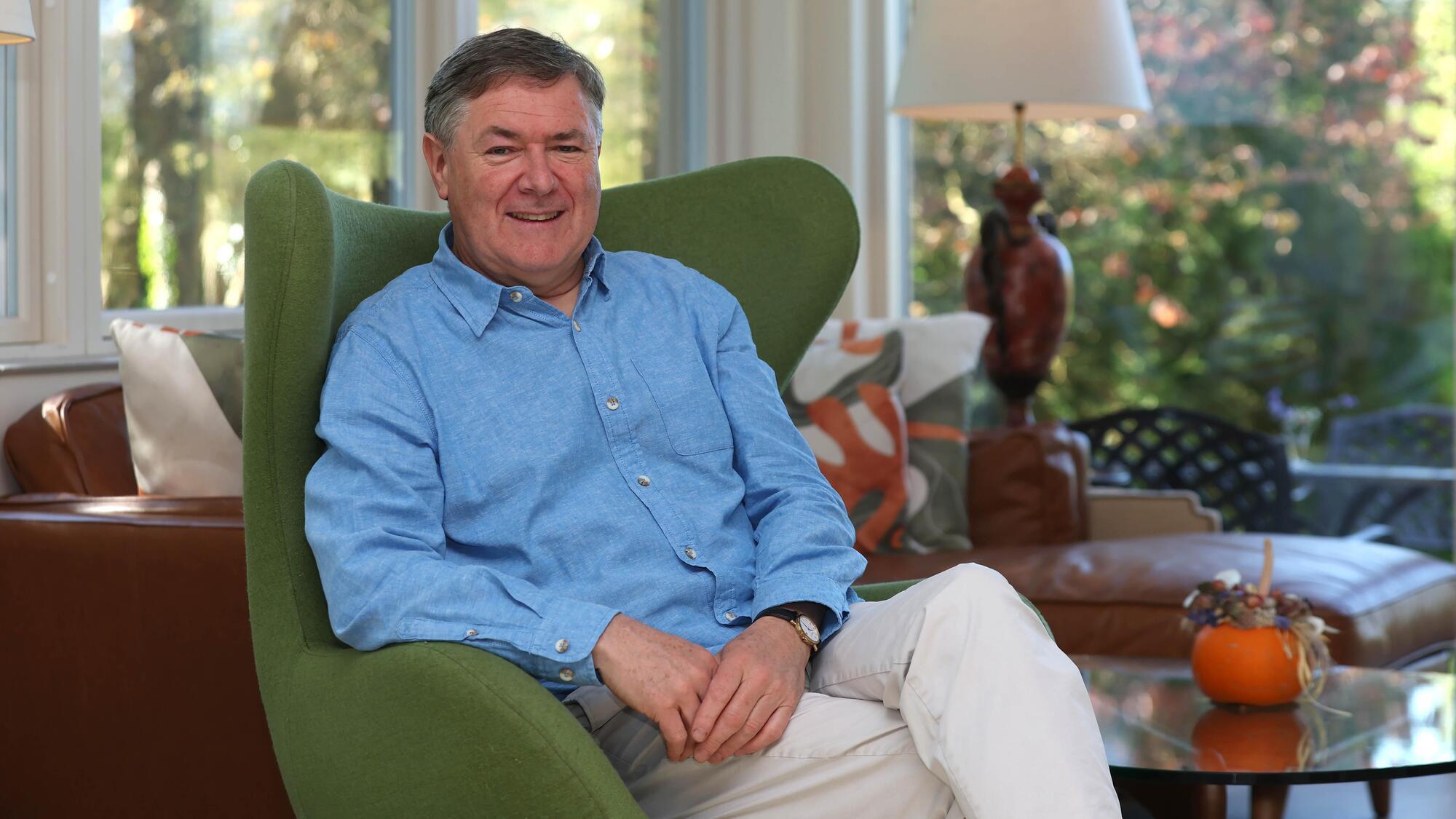
John FitzGerald's latest collection of poetry is Mud Angels. Picture: Jim Coughlan
John FitzGerald, 64, grew up on a farm in Lissarda, Co Cork. He worked as a university librarian at University College Cork (UCC) from 1995 until 2022; he is currently an adjunct professor of English literature at UCC. He won the Patrick Kavanagh Poetry Award in 2014. In 2021, his first poetry collection, was published. His new collection of poetry, is published by the Gallery Press.
Poetry got me from an early age. I was drawn to Emily Dickinson — the wonderful, adolescent darkness, the sombre, moody imagery and language she used. She had an expression I later learned to use: “When you're telling something, tell it slant.” In other words, write poetry by suggestion rather than by description. She opened the door to language as something that can suggest rather than that can describe.
Later in my teens, I started reading the serious, romantic poets. WB Yeats was the big man. His early stuff is very magical. He did extraordinary work in his 20s — and , all that dream poetry he wrote, I loved. Yeats can say simple things which resonate to a great degree, like “out of the murderous innocence of the sea”, or “Romantic Ireland’s dead and gone”, or “the silver apples of the moon, the golden apples of the sun”. There’s nothing complicated about what he says and yet he had an ability to make language new.
I remember being down in Muckross House in Killarney as a youngster and hearing a tour guide say Yeats started while staying there. Later, sure enough, I found evidence of this in letters in the National Library. Yeats was a reasonably frequent visitor down there. He took inspiration from Muckross. I found that interesting because it's only down the road from us here in Cork.
Dylan Thomas wrote interesting magic realist stories. Everybody knows , his great poem, his creation lyric. There's also his brilliant radio play. The music of his verse — “do not go gentle into that good night” — is powerful. That appealed to me greatly. In secondary school, I used to get the bus into Cork on a Saturday. I'd go to all the bookshops — The Lee Bookstore, Egan's, Russell’s. I came across the prose writings of Dylan Thomas. They were bizarre in some cases, but I loved them. Set in Welsh coastal areas and in the Welsh valleys, but featuring all sorts of characters. They were like nothing I had ever read.
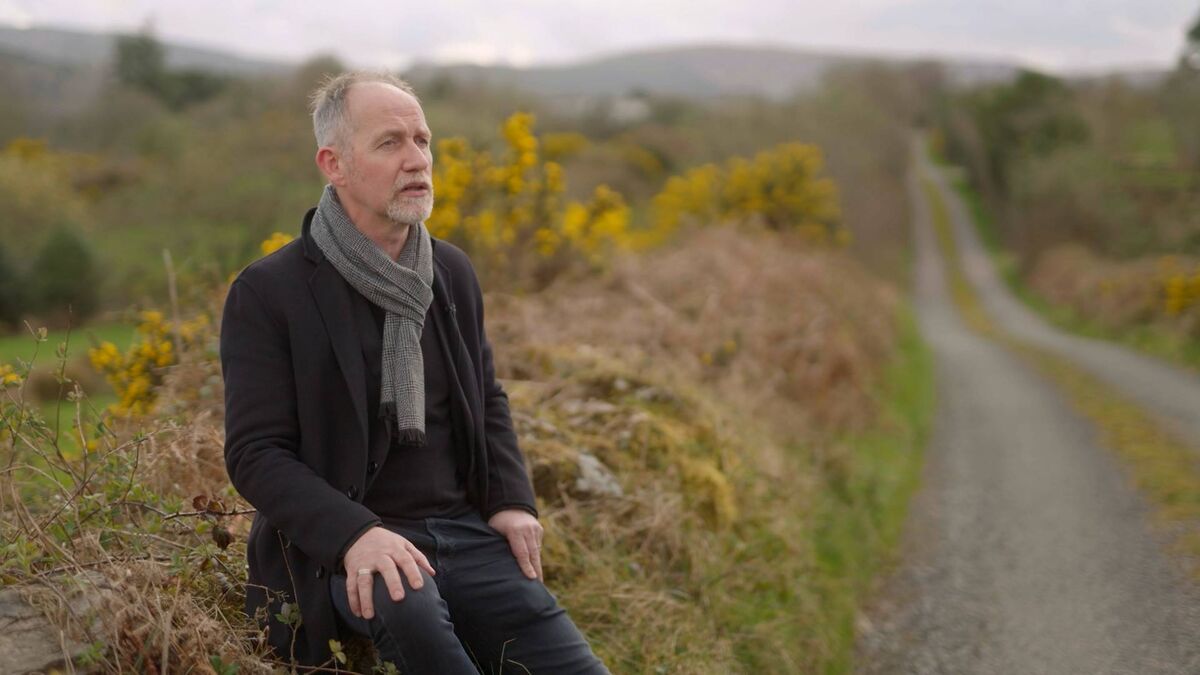
I'm a big fan of Iarla Ó Lionáird. He comes to Cork’s Triskel Arts Centre most Decembers, often with other musicians. I love his candid, Cúil Aodha approach to life. He takes his work seriously, but he also knows how and when to be funny, and the role of humour in telling a sad story. His passion for world music is interesting. When you hear him sing a song, you can hear his inherited skill and wisdom, the richness of the Gaeltacht, and what all that means to us. He's an extraordinary tuning fork or transmitter for our age, keeping things alive. And the sheer quality of his voice — it has this depth to it, which is unique.
My other great music love is Horslips. I saw them in the Dome in Macroom at the Mountain Dew Festival in the late 1970s. They were wearing their white sequin suits. At the time, you had people like Focus in Holland, and Alan Stivell in Britain doing this Celtic rock thing, but Horslips were at the vanguard. They basically exploded the whole thing. They blew it apart — their arrangements and lyrics and their whole approach to traditional Irish music.
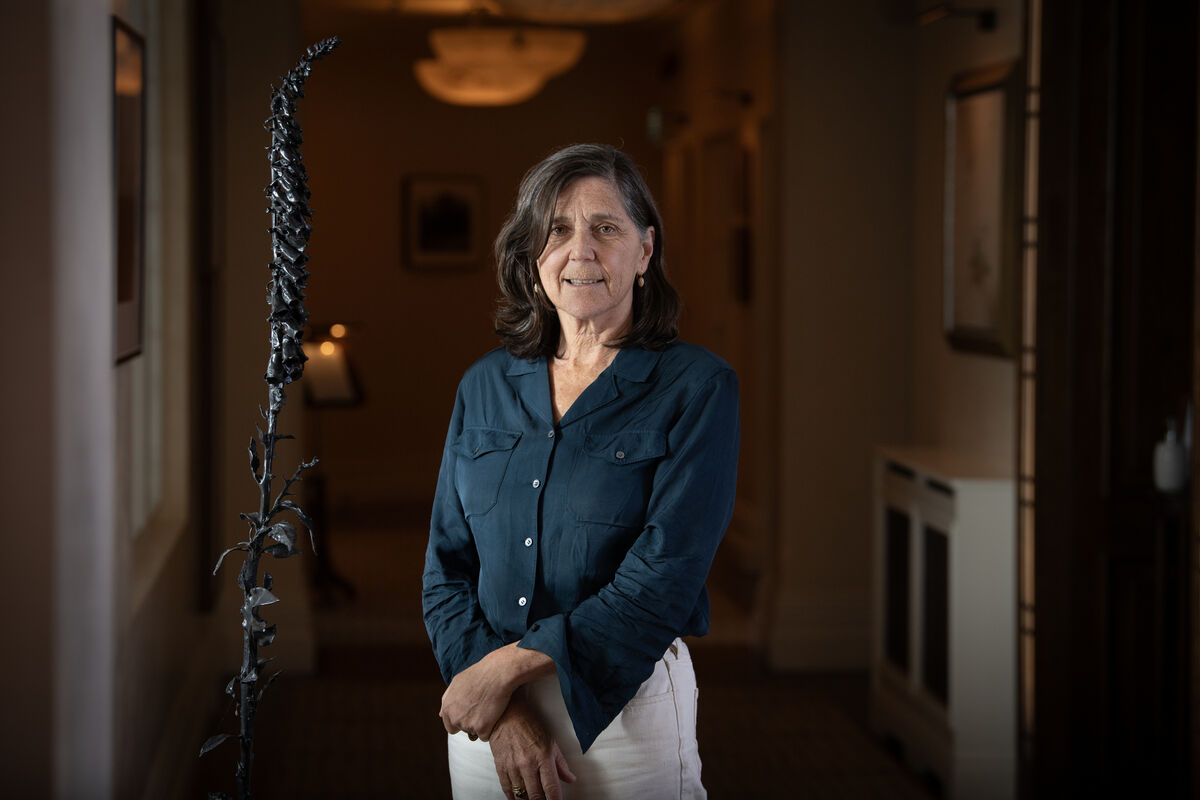
Dorothy Cross uses the art of juxtaposition — she brings ordinary concepts and objects out of their context, making us think not just about the arresting image which we see of, say, a shark suspended upside down, or foxgloves dipped in bronze, but what does this mean? Often, she makes statements which bring us into ecology, humanity's role in the environment, either managing it or mismanaging it.
She's interested in the materiality of life, how things feel, and not just in terms of touch, but how they feel emotionally — how does a cow's udder built into a chair make us feel? How do skeletal remains found on beaches make us feel? She's also an extraordinary photographer — her Instagram account is one of the best I've ever seen.
I remember in the late 1970s getting the bus in from Macroom to this new thing called the Triskel Arts Centre. There was a poetry reading by Derek Mahon. I didn’t know who he was. It was a transformative moment. Here was a man standing up reading extraordinary poetry. I realised you could live a life as a writer — his sole occupation was writing and reading poetry. I was struck by how much part of the man the poetry was. It seemed incredibly natural.
The only performances I was used to up to then were teachers and priests. Here was a man speaking poetry that he’d written, some of which was very fresh. He had just been to North America. This was all very immediate. It was taken by the audience around me as news, just off the press. The excitement with which it was received was also very interesting.
Seamus Murphy’s is an extraordinary book. He was a sculptor. It tells the story of the tradesmen and craftsmen who created and worked on a lot of churches and older buildings, a litany of stories about stonemasons and stonemasonry. It's a book I often go back to. There's one character in it called “The Gargoyle”, who has the funniest lines, the best turns of phrases. The Cork sense of humour and the Cork accent comes out. It's a fabulous book.
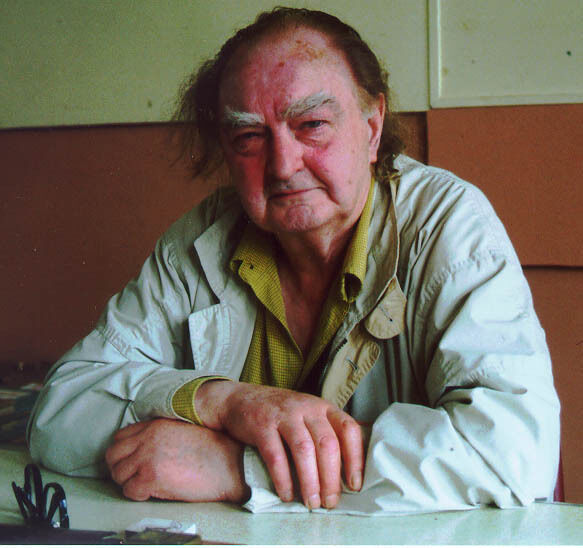
The poet Paddy Galvin is a great Cork writer, a remarkable songwriter, poet and novelist. He wrote Song for a Raggy Boy, which was made into a film. He was born in Margaret Street in Cork. He wrote these amazingly strong balladesque poems that are very typically Cork, like The Madwoman of Cork. She’s this character who walks around the city. She has the most amazing turns of phrase: “Sometimes / With an eagle in my brain / I can see a train / Crashing at the station / If I told people that / They’d choke me. / Then where would I be? / I am the madwoman of Cork…”
I'm a great fan of Gare St Lazare Players, which is run by Judy Hegarty Lovett and Conor Lovett. The last thing I saw of theirs was at the Kilkenny Arts Festival in August. There was a musical element to it, which was new for them. A Hungarian, Marcel Mihalovici, adapted for music. Sound design was done by Mel Mercier. Judy and Conor blended the music with the play’s text. It was the best thing I've seen in a long time.