Tom Dunne: The Rory Gallagher book is great, but leaves unanswered questions
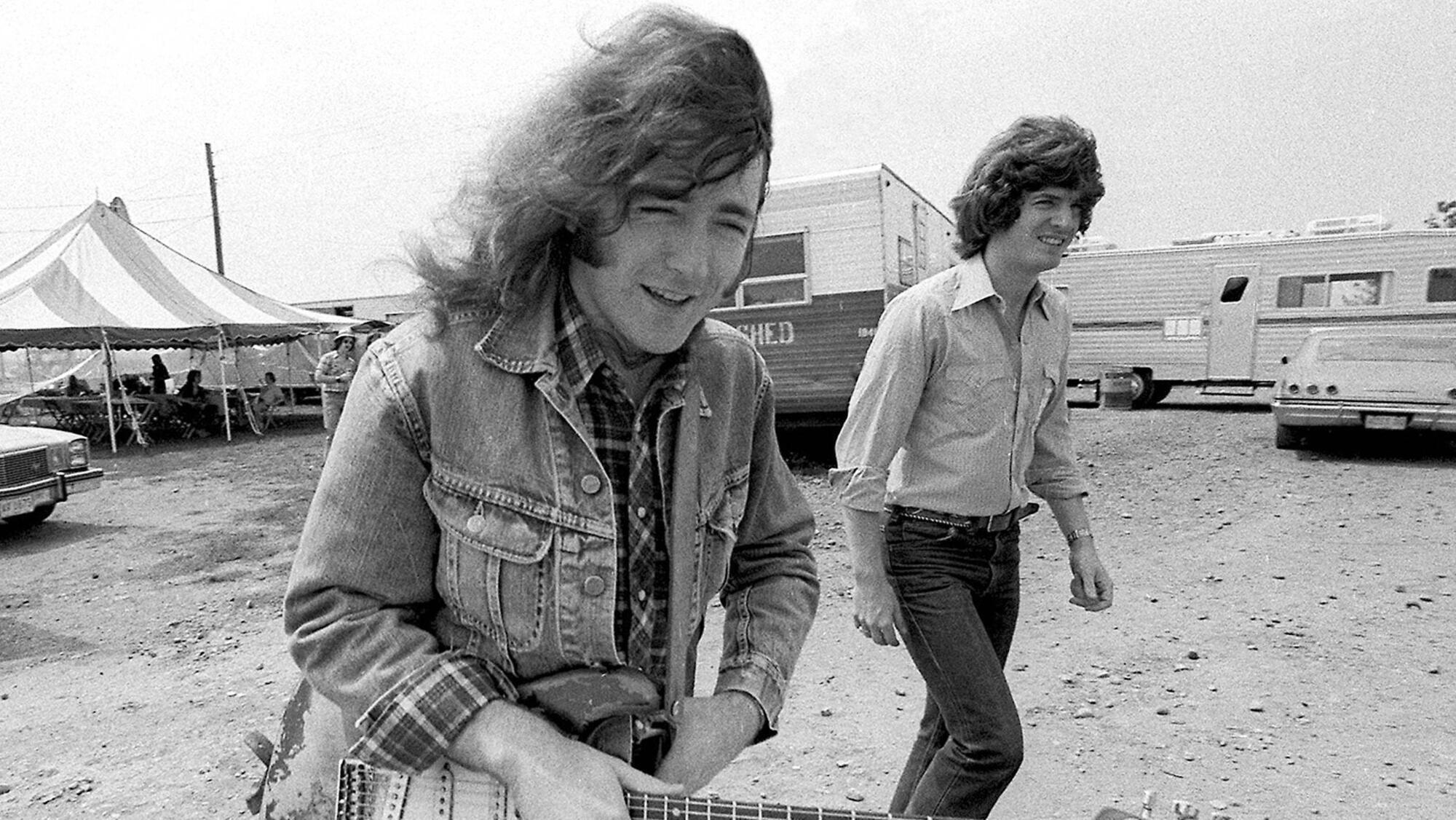
Rory Gallagher and his brother Dónal in Dayton, Ohio, in 1976, the cover photo from Edged In Blue. Picture: Fin Costello

Dónal Gallagher’s his chronicle of his brother’s epic life in music is the book Rory Gallagher fans have been waiting for. An at times laugh out loud page turner, it captures the obsession, talent and sheer decency of the man like no book before. My only question: when do get the film?
Rory’s story was made to be filmed. It would be like an Irish version of the Elton John or Freddie Mercury biopics, not that Rory liked “Irish versions” of anything. Ireland, old and new would be front and centre, with Rory playing no little part in linking them.
It starts in old Ireland. The Emergency as opposed to the ear. A boy from Derry called Dan, a girl from Cork called Mona. Post-war, there is work on the hydroelectric scheme in Ballyshannon. Then it’s an attempt at life in Derry in the era of the B Specials and no jobs for Catholics. It’s grim up North.
But music is everywhere. Dan can play accordion and Mona can sing. American jazz and blues beams into the house via the radio of the American Forces Network. There’s the Sunday night Radio Luxembourg top 10, and people watching silent TVs through shop windows.
But by the late 1950s, Mona and her two young boys are making a life for themselves in Cork, in her family’s pub. The boys have Derry accents. That doesn’t play well in the Free State education system. It’s a matriarchal home. Strong women, and God knows you’d need them.
There are two Rorys, the pre-guitar version and the post-guitar one. The pre version is very bright, good at school and into football. He is his brother’s protector. The post version is a different proposition. “I lost my brother when he got that guitar,” Dónal would later rue. Obsession is too small a word.
The change starts at aged 11. He disappears to his room to practice, appearing again only for talent contests, variety shows and church hall performances. He is equally obsessed about playing live and is in — and dominating — a “semi-professional” showband, The Fontana, by the time he is 15.
All film subplots are at this point lead to the Stratocaster guitar in Crowley’s. Two boys with their faces pressed against a window, gaping, slack-jawed, in awe. A “Buddy Holly” guitar has appeared there, a cast-off from a successful showband. Its colour didn’t match their suits. Everything you need to know about showbands.
Getting it into the hands of young Rory requires a mother willing to put her name to an onerous HP agreement and a kind shop owner who knows not only is the boy good for it but can play it too. This is the guitar that will be bought for the State years later for €1m.
There is time before the inevitable rise to world fame for a cameo appearance from old Ireland. A teacher beating Rory badly for being late after a gig. A mother — Brenda Fricker would have been perfect — confronting him and taking her boys out of school. Putting them in a new school with a message to the principal: “This boy knows what he wants to be. He’s going to be a musician.”
After that, there is the formation of Taste one morning in the upstairs room in The Long Valley, a Pete Best moment with Polydor and the bittersweet end at the Isle of Wight. There is an unlikely saviour in the form of Peter Grant, the man who inspired the cricket bat in Spinal Tap and who delivers to Rory a six-album deal with Polydor.
The legend building comes next: Playing in Belfast at the height of the Troubles against a headline of “Bombs, Boredom and No Bands”, Irish Tour ’74, Macroom, inspiring The Edge and Johnny Marr, playing with ZZ Top and The Faces, almost joining The Rolling Stones.
One thing you won’t learn much about in all this is Rory himself. He takes being deeply private to a whole new level. Who Rory Gallagher is off stage is as much a mystery at the end of this book as it is at the beginning.
In later years, he would come for Sunday lunch with Dónal’s wife and his two children. I found this sad. Where were his own relationships? Was he ever in love? Or did music and playing live meet all his emotional needs? Is the Strat his Rosebud? Paul Mescal, when you’re ready.
- Dónal Gallagher will read from at Cork City Hall on Sunday, October 25, from 12.30pm, in advance of the tribute concert, Rory Gallagher: The Legend Lives On