Author interview: Faith’s intuition sees her write sometimes with her eyes closed
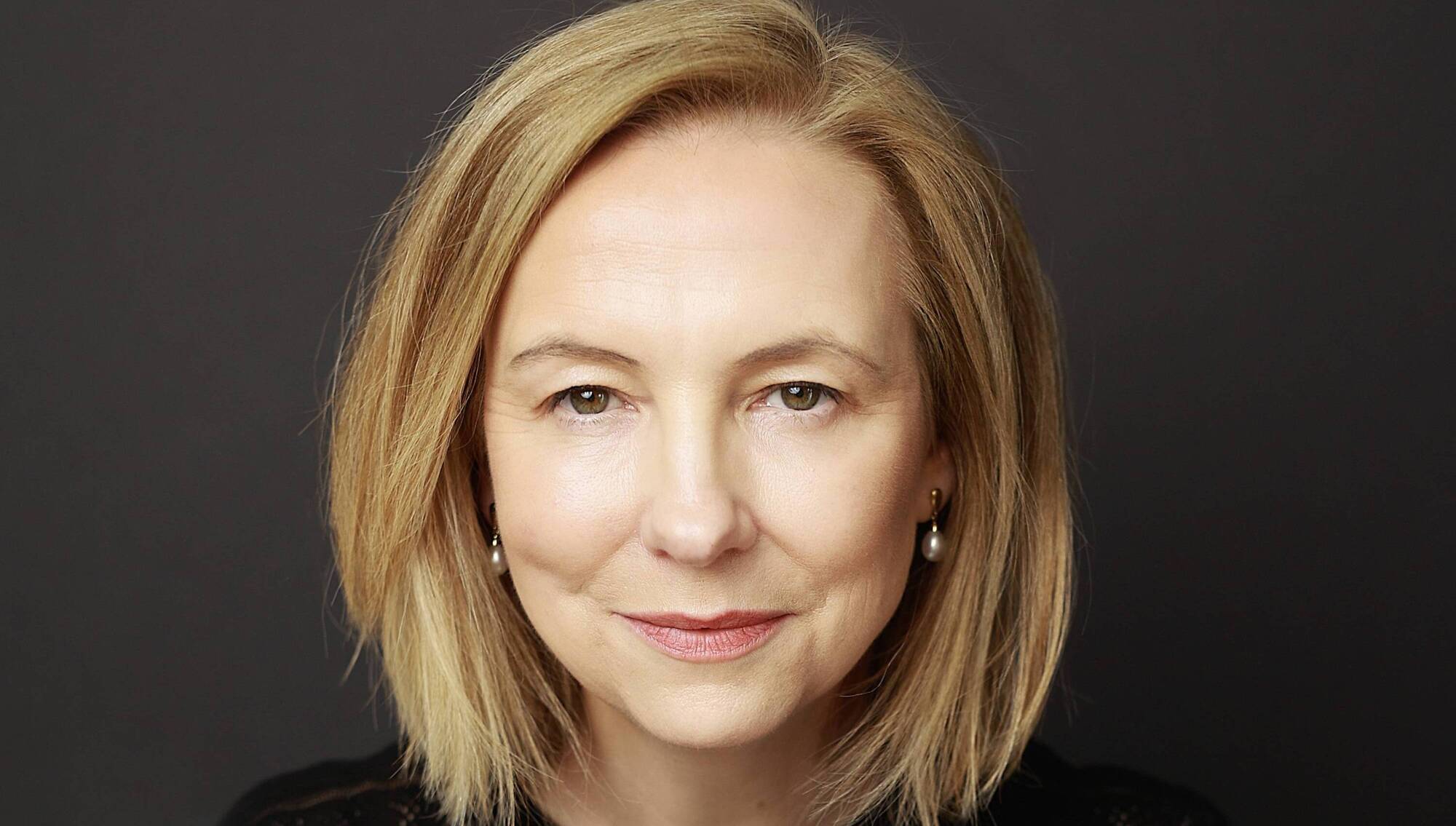
Faith Hogan found her niche in fiction after her initial efforts into writing crime novels failed to take off, she’s in a good place now but doesn’t like happy ever after endings for the characters in her books
Faith Hogan has authored 12 books in 10 years with one-and-a-half million English language sales: ‘I hope the books are getting better as I go. I try to expand them more and more, not necessarily in terms of terms of size, but of depth.’

Faith Hogan has authored 12 books in 10 years with one-and-a-half million English language sales: ‘I hope the books are getting better as I go. I try to expand them more and more, not necessarily in terms of terms of size, but of depth.’

  • The Sisters of Hope Square 
  • Faith Hogan 
  • Head of Zeus, €12.99

Back in 2016 when Faith Hogan’s debut was published, she didn’t expect it to go anywhere. She’d written three crime books, and gained an agent, but they failed to sell.

“When the three books hadn’t sold, my agent said, ‘let’s try something different’,” says Faith, on a Zoom call from Co Mayo. 

“I hadn’t read anything but crime for years, but when I was a teenager of 14, 15, and16 I loved Rosamund Pilcher and Maeve Binchy was amazing as well. I thought I’d give it a go.”

A new imprint, Head of Zeus Aria took it on as an eBook, with the proviso that if it sold 10,000 copies in the first year, they’d put it in a bookshop. 

The ebook sold brilliantly, meeting the target within months, and the physical book flew off the shelves. 

Ten years, 12 books, and one-and-a-half million English language sales on, Faith has sold in 10 different countries, including Italy, Spain, Portugal, and Finland.

“And I’m big in the Balkans,” she says.

More importantly, Faith loves writing the books.

“That’s the difference,” she says. “They’re not necessarily easier to write than crime, but they’re more intuitive. I start with a voice, and the voice will lead me where to go.”

In the case of The Sisters of Hope Square, it was the elder sister, Blyth, who appeared on the page.

“She walked into my head and said two or three lines, and it was, ‘oh! You’re a piece of work’. Once I got her on the page there was no stopping her.

“I’m not someone for confrontation, and she’s one of those people, if I saw her coming, I’d definitely cross the road from her,” she laughs. 

“But she was such fun to write.”

Faith doesn’t always know what will happen to her characters along the way, but when she starts writing the ideas come.

“Sometimes I write with my eyes closed, and then, when I open them again, I read it over and like it.”

Editors' advice on first drafts

She struggles at times with the logistics of getting her characters from place to place but says that this is where her editors come in when they go through her first draft — they give great advice. 

Faith’s characters don’t fall into each other’s arms at the end, because she’s not a fan of the happy every after ending — but she does try to give them a ‘good ever after’ ending.

“Happy ever after is easier,” she says. “I have to iron things out for my endings, and the only way is to sit down with a cup of coffee and work it out.”

Famous for her series of books based in the fictitious seaside town of Ballycove, Faith has now changed her setting to Pinhill Island, and this new novel is the second in the series.

“But you don’t have to have read the previous one,” she says. 

“There is no continuation of characters — except for some of the women who pop up at the book club. They’re there as familiar faces for people who have read every single book.”

This new one centres on sisters Blyth and Rae. All her life, Blyth had believed she would take over her grandfather’s hotel. 

She’s worked for it, and gone to catering college, whereas as an impractical wild child, Rae dreamt mainly of escape. 

But when Rae falls for Blyth’s ex, Marcus, he connives to take over the hotel, and it’s Rae who lives the life her sister longed for. Can Blyth ever put her jealousy aside and fight for her future?

Idea for novel came from lockdown

The idea came from lockdown, when Faith was unable to see her sister, who lived locally, and was looking after her newborn baby.

“My sister and I are so close — as close as its possible for sisters to be and always have been. I missed her in lockdown like a missing leg.

“I wanted to get that sense with Blyth and Rae. I felt Blyth was incredibly protective of her sister, but Rae had gone off the rails.

“She’d stepped off the path and for a long time their lives were running parallel.”

It’s a gorgeous empathetic book, with interesting psychological insight. And though it’s a perfect holiday read, it contains more than a tincture of darkness. 

Marcus’ adulation for Rae is something to behold, until they tie the knot; then she starts to diminish before our eyes. 

And when newcomers Melissa Val and her grandson Daniel arrive, Blyth can’t see beyond the colour of their skin — until they prove their worth in forgiveness and bravery.

Newcomers to Irish towns

“Here in Ballina, we’ve had Polish people for years,” says Faith, “and now we have our Ukrainians. They’re really great and make the town more interesting.

“We needed new people, because there’s a problem with dereliction in our towns. I know some readers are finding that situation difficult, but I wanted new blood to be a part of this book.”

When I spoke to Faith back in 2016 for the release of her debut, she was working in disability services.

“I left the day job five or six years ago,” she says. “And it was very hard to leave, actually, because I’d built up a network of people who meant a lot to me.

“I had a busy day, and wrote in the mornings, and they expected me to leave much sooner.”

Presumably she gets much more done now that she’s at home all day.

“No, I get less writing done, actually. My husband, James, has retired, and he thinks I’m retired too.

“We walk the dog every morning, and my mother is a bit older now. You think you’re going to have all this time … ”

She finds it frustrating that when you write from home, people assume you’re doing nothing.

“A friend of mine runs a charity shop. She said ‘you should come down and volunteer, you’d love it’. She’d never say that if I was in my old job.”

She has a strict routine, writing from 11am each morning, stopping for lunch with James at 1pm, and continuing until three or four, when she picks 16-year-old Cristin up from school. She’s the youngest of four.

“And I might get an hour or two in after that,” she says.

The internet is her enemy. To avoid going down a rabbit-hole, she dedicates Wednesdays to the writing of emails and social media.

“It’s a time-suck. I might spend all day on it, and by the time I finish I’d be worn out. More so, than if I’d sat down and written 6,000 words.”

I ask if she’s proud of this book — if she feels it’s her best yet, and she says she can’t remember it clearly because she’s now editing the next book in the series, as well as tinkering with something different.

“Before, I talked to you, I had to write down a list of all the characters,” she confesses. 

“I’m always excited about what I’m doing now, so when I look back at my debut, My Husband’s Wives, I forget bits of it, and the enthusiasm has waned.

“I hope the books are getting better as I go. I try to expand them more and more, not necessarily in terms of terms of size, but of depth.”

Sitting in her room, writing each day, still makes Faith happy.

“I remember for a long time walking around the town thinking, will I ever be able to be a writer? Will people ever get to read these words that in are in my head?

“I’m really lucky. It’s a privileged position to be in and I do appreciate it, I really do.”

More in this section

Scene & Heard

Newsletter

From music and film to books and visual art, explore the best of culture in Munster and beyond. Selected by our Arts Editor and delivered weekly.

Cookie Policy Privacy Policy Brand Safety FAQ Help Contact Us Terms and Conditions

© Examiner Echo Group Limited