My trip to the Venice Biennale: Irish exhibits hold their own in esteemed international company
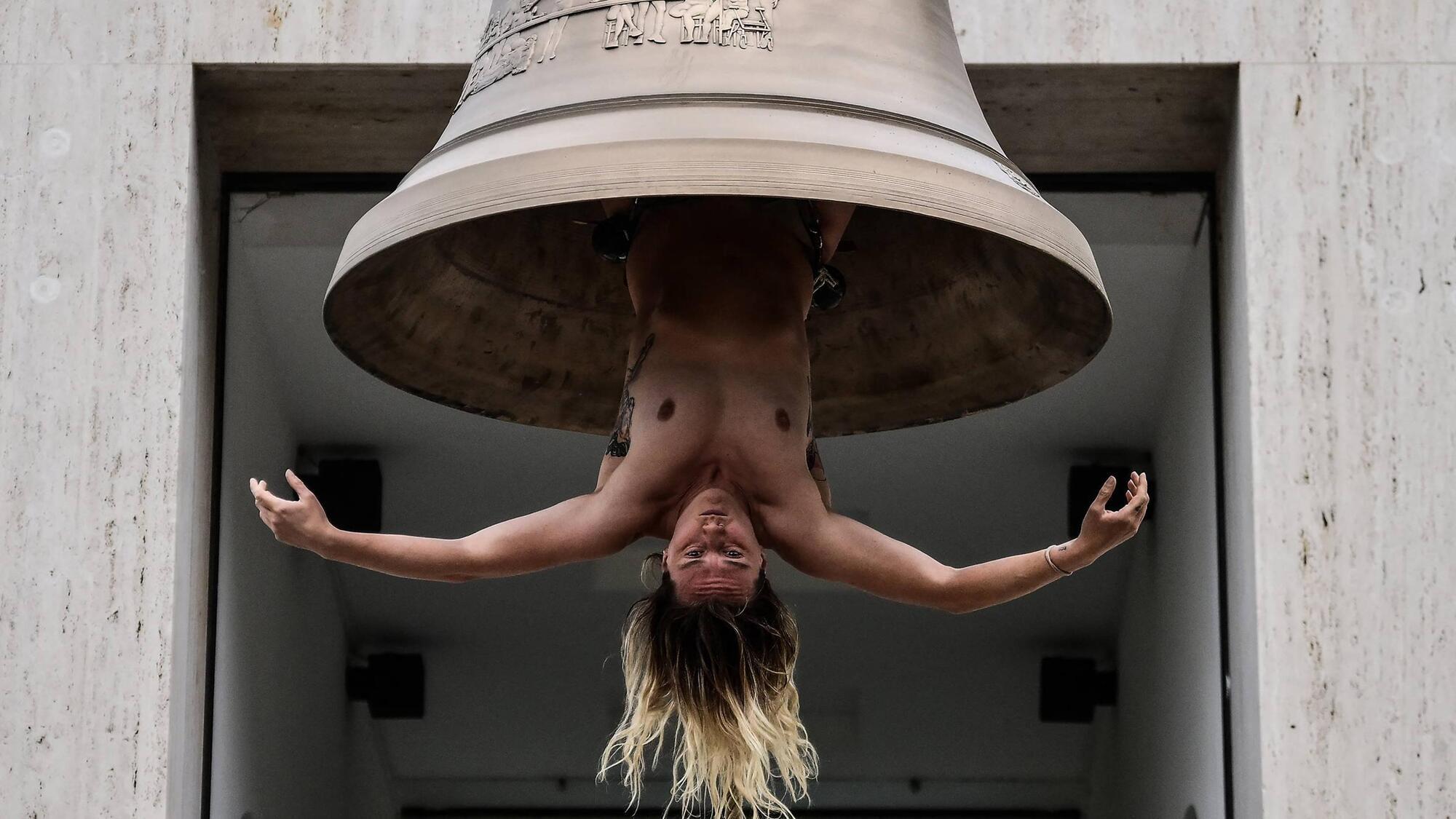
A dancer performs in the "Seaworld Venice" by Austrian artist at the Venice Art Biennale. (Photo by MARCO BERTORELLO / AFP via Getty Images)
My visit to the Venice Biennale last week was my seventh in 21 years, and my first in the dense heat of the northeastern Italian summer. Only the direct flight available from Cork compelled me to visit in August; otherwise I would have been happier to wait on the cool of autumn.
The Biennale has run since 1895, and is easily the most prestigious celebration of the visual arts in the world. Much of its programme is housed in two venues, a dedicated park called the Giardini and a suite of old shipyard buildings known as the Arsenale, both in the Castello district at the eastern end of the island. If one has time, and a high tolerance for meandering through labyrinthine laneways while lathered in Factor 50 sunscreen, one can also visit dozens of exhibitions in palaces and former abbeys, hospitals and prisons all over the city.
There are two main threads to the Biennale. One is an international art exhibition on a particular theme, chosen by an invited curator, the other a string of exhibitions by individual countries, in a series of national pavilions.
Ireland’s participation was haphazard to begin with. Nano Reid and Norah McGuinness sallied forth in 1950, Louis le Brocquy and Hilary Heron in 1956, and Patrick Scott in 1960. Scott later recalled that he had to pay his own fare, which may explain why there was then a gap of 33 years before Dorothy Cross and Willie Doherty were dispatched in 1993. Since then, however, Ireland has participated in every Biennale, funding a significant exhibition by an individual or group of artists.
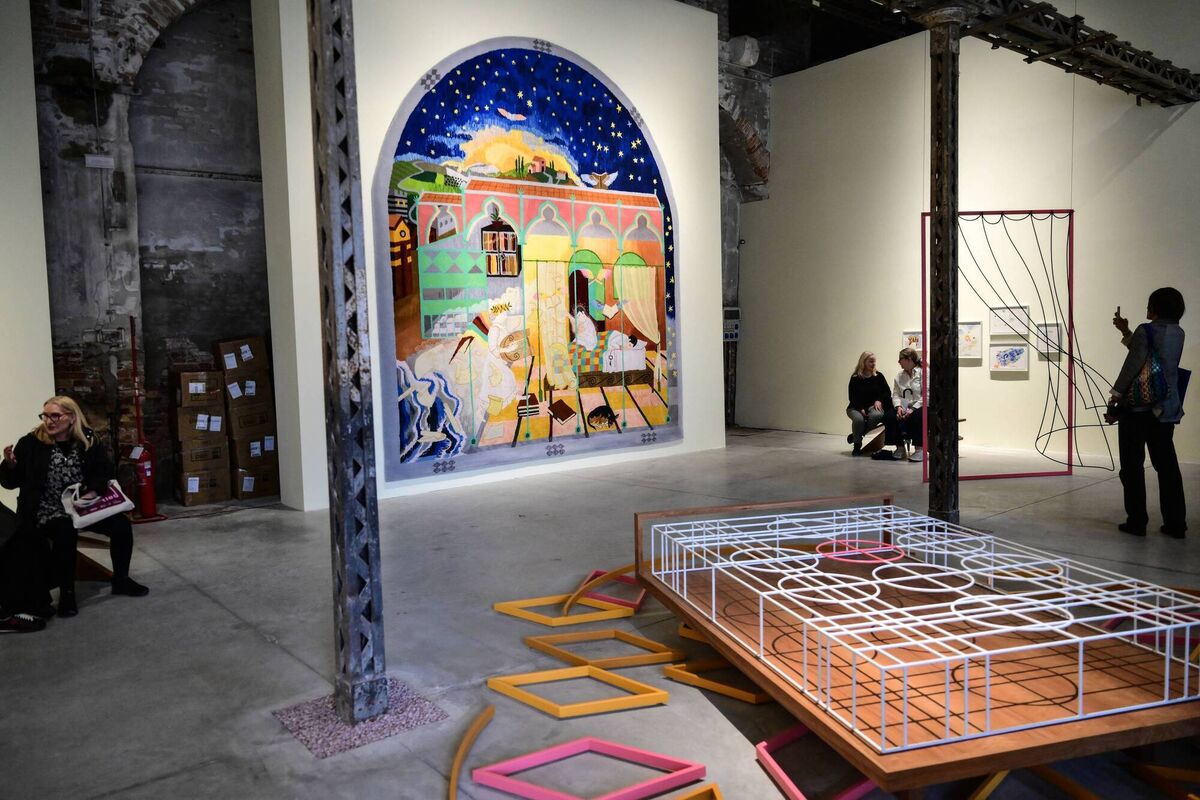
On this occasion, Ireland is one of 100 countries participating, and is represented by the Dublin-based artist Isobel Nolan, whose exhibition, Dreamshook, is installed in a large, light-filled warehouse space on the waterfront in the Arsenale.
Dreamshook refers to the liminal space between sleep and consciousness, and Nolan’s tapestries, sculptures are drawings are largely inspired by the life of Aldo Manuzio, also known as Aldus Manutius, who might be described as a humanist dreamer. A printer in Venice in the late 1400s and early 1500s, he took it on himself to produce mass market, affordable editions of classical works of literature, in the belief that they should be accessible to all.
Nolan’s tapestries are large and colourful, and revel in exotic titles, such as Aldus Dreams of a Plentiful Supply of Good Books. They resemble stained glass windows, or the pages of illuminated manuscripts. The most striking of the sculptures is Oh!, a work in mild steel that depicts a curtain fluttering in the breeze, a playful contrast between the rigidity of the material and the animation of its subject. Nolan’s exhibition more than holds its own among the international exhibitions.
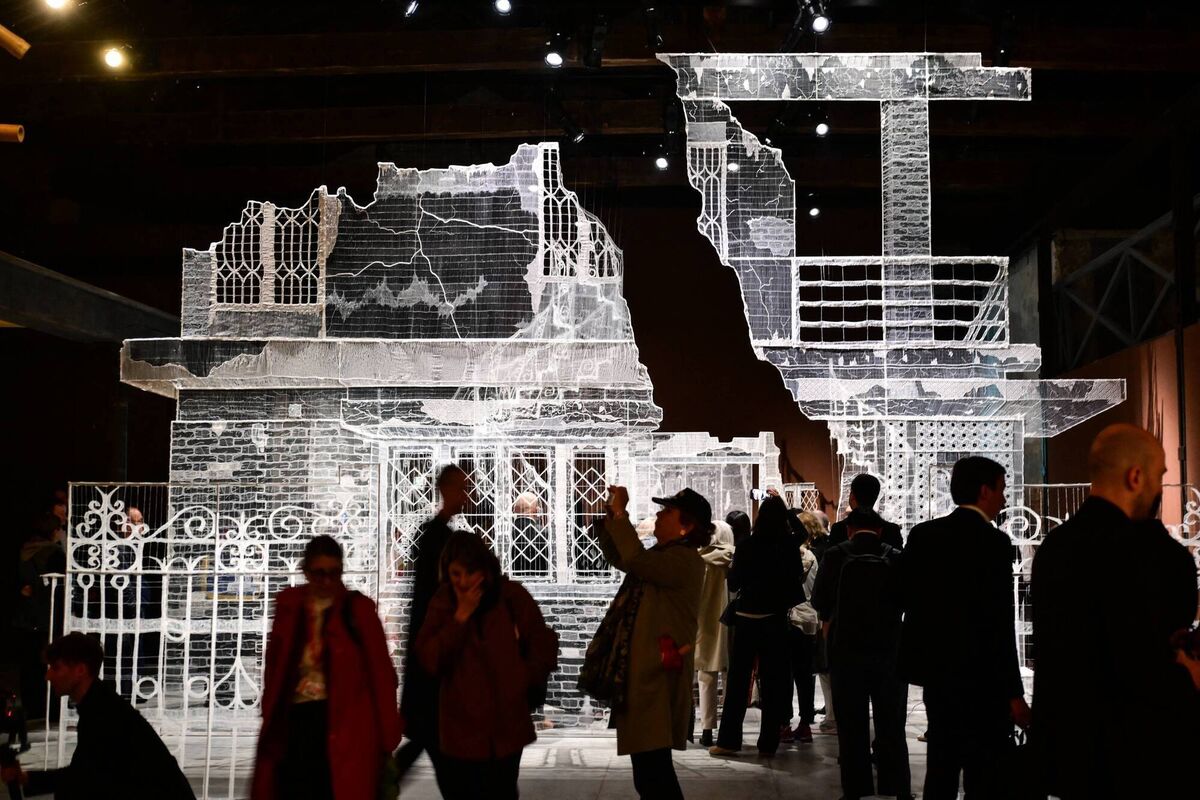
If I had to pick three others I particularly enjoyed, they would be India, Poland and Austria. The Indian Pavilion features installations by five contemporary artists, the most memorable being Sumakshi Singh’s hugely ambitious and beautifully realised piece of work, a reconstruction – in lace, no less – of 33 Link Road, her grandparents’ home in Delhi, which includes the room in which her mother was born.
The Polish Pavilion features a work on video called Liquid Tongues, produced by the artists Bogna Burska and Daniel Kotowski in collaboration with Chór w Ruchu (Choir in Motion), a collective of deaf and hearing participants who perform interpretations of whale songs in English phonic and international sign languages, all while submerged in a swimming pool. The project is inspired by Roger Payne’s Songs of the Humpback Whale, recordings released in 1970 that led to a ban on whale hunting and saved the humpbacks from extinction.
On the day I visited, the Austrian Pavilion in the Giardini was the only one with a large queue, a crowd of at least 100 clamouring to experience the performance artist and choreographer Florentina Holzinger’s installation, Seaworld Venice. It begins outside the pavilion, with a naked woman shimmying up a rope to hang upside down inside a bell suspended from a crane, ringing it repeatedly with objects strapped to each hip. Inside the pavilion, the audience is treated to the sight of another performer submerged naked in a glass tank of water, which turns out to have been filtered from urine contributed by visitors in the portable toilets on either side.
Another naked performer mounts a jet ski, which she spins round and round in a pool of water, churning up waves that eventually spill over the sides and splash a number of the spectators. Three more performers scale an enormous metal weathervane, posing far above the crowd among sculptures of themselves. Holzinger’s work is undoubtedly the most provocative in the entire Biennale, but her collective’s performances also have an otherworldly beauty, and held the audience spellbound throughout.
The international exhibition that forms the second thread of the Biennale is spread across the Arsenale and the Giardini. This year’s edition is titled In Minor Keys, and features work by 110 artists, collectives and artist-centred organisations selected by the Cameroonian-Swiss Koyo Kouoh, the first African woman invited to curate the Biennale. Sadly, Kouoh died of cancer, aged 57, in May 2025, but the Biennale has honoured her selection.
In Minor Keys is dizzying is its breadth and depth, but inevitably, a number of individual artists stand out. Kaloki Nyami, from Kitul, Kenya, creates what might best be described as ‘assemblages’ – of fabric, paper, photographs and yarn – on canvas. The works often feature domestic subjects, but are epic in scale and utterly captivating.
Buhlebezwe Siwani is a traditional healer from Johannesburg, South Africa, whose work queries the legacy of colonialisation and apartheid. Her five-channel video installation, Amagugu, features six Black women in deep chiaroscuro, the Renaissance art technique defined by a strong contrast between light and shadow. More remarkable again are her two sculptures of pregnant women, Zanenkosi and Ilifa Iakhe, made entirely of the green soap used in low-income households in South Africa.
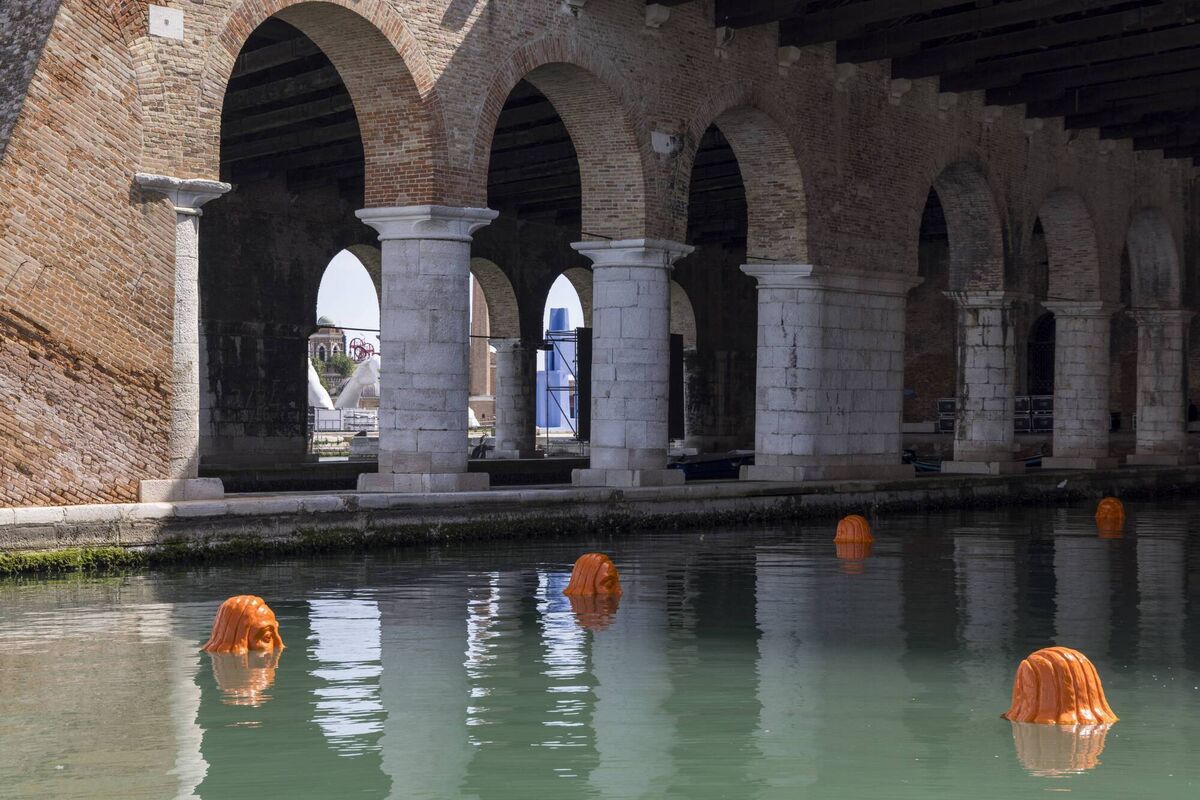
Alice Maher’s work is also a highlight. The Co Tipperary-based artist is represented by three major pieces: Les Filles d’Ouranos is an installation of red female heads floating under the canopies in the Arsenale; The Sybils are four large drawings of women wrestling with vast swathes of their own hair; while The Map, a collaboration with Rachel Fallon, is a huge hand-stitched work in textiles with images that refer to the Mother and Baby Homes, the Magdalene laundries, and other experiences of womanhood in Ireland.
As mentioned, the Biennale features 100 countries this year. It is worth remarking on the three that have caused the most controversy. Israel is represented, despite much protestation by international artists and artists’ organisations, with a slight exhibition by Belu-Simion Fainaru. This is housed in the Arsenale, as the Israeli pavilion in the Giardini remains closed. The Russian pavilion opened briefly for the official Biennale preview, from May 5 – 8, and has since remained closed as well.
More divisive than either, perhaps, is the United States pavilion, which features work by the sculptor Alma Allen. Under the Trump administration, the State Department took a direct role – for the first time ever – in selecting the artist, whose brief was essentially to promote “American values.” This interference was condemned by many in the art world, and Allen was swiftly dropped by his gallery. Ironically, for a show with so precise a theme, his work in the Biennale is largely lumpen and devoid of any coherent meaning.
The Venice Biennale runs until November 22. Further information: labiennale.org, irelandatvenice2026.ie