'We have a similar legacy of colonial oppression': Artist Spicebag on building a school in Gaza
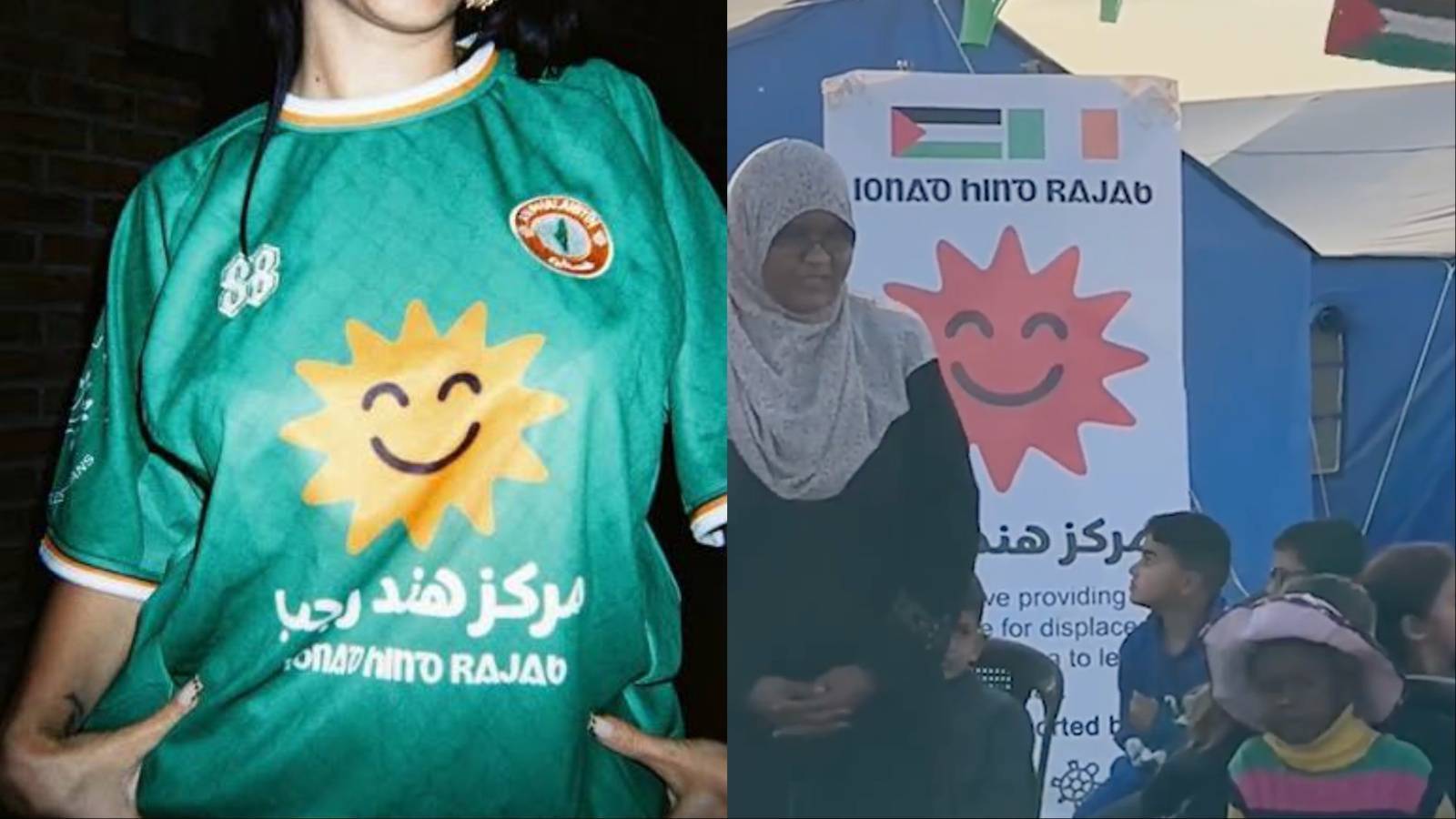
Adam Doyle, axa Spicebag, helps fund a school in Gaza through sales of his artwork.
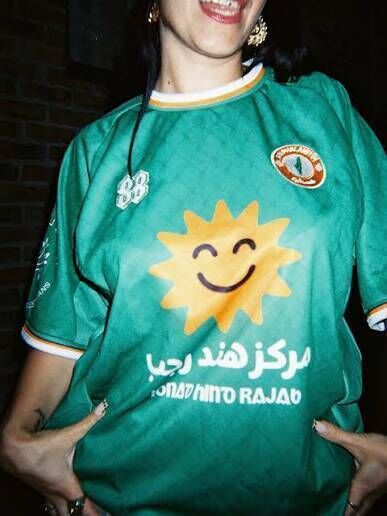
Adam Doyle, AKA Spicebag, has yet to visit Ionad Hind Rajab, the school he opened in January this year in Mawasi, Khan Younis, in the Gaza Strip.
“I’ve never been to Palestine,” he says. “I’d love to go, I’d love to get stuck in over there, but there’s no way into Gaza at the moment. It’s completely shut off.”
Doyle established Ionad Hind Rajab in partnership with Dignity for Palestinians, a humanitarian organisation on the ground in Gaza run by Dr Musallam Abukhalil.
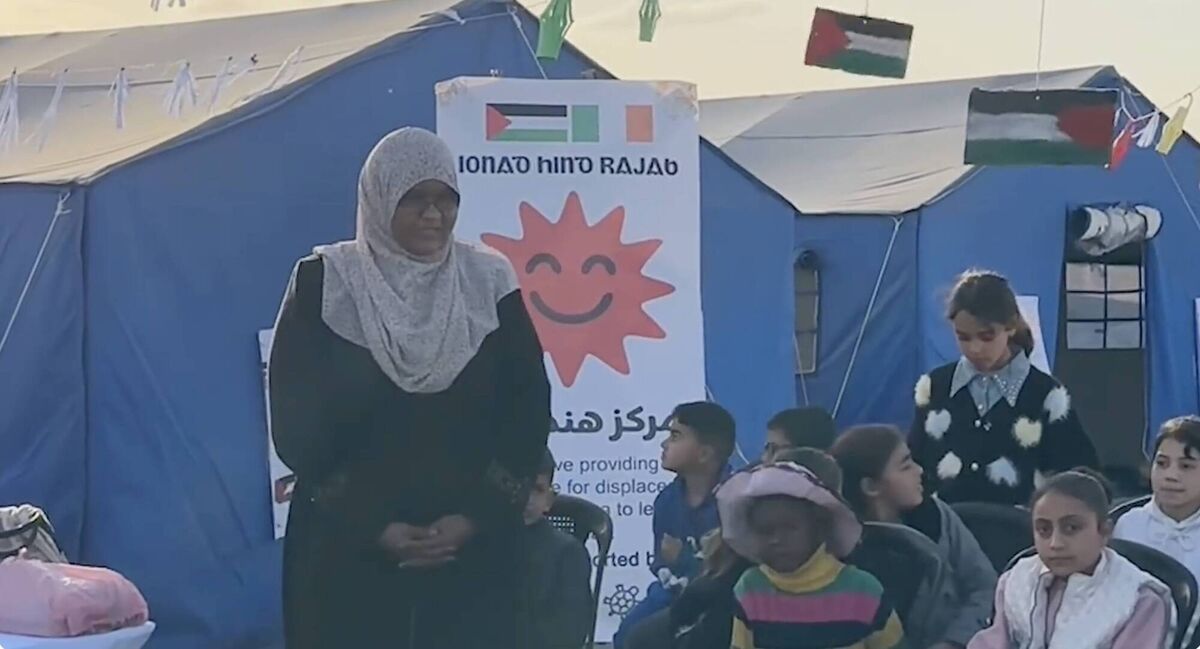
The school is named after Hind Rajab, the five-year-old Palestinian girl killed by Israeli forces in January 2024. It is run by a party of local volunteers, and currently provides educational and recreational facilities for 93 children.
“We have a project lead,” says Doyle, “a coordinator who helps out with the actual running of the centre and acquiring things like tents when we can afford to pay for them. We have a couple of teachers, and Musallam himself. They're like 50% of the team, and then the other 50% is the team I have around me in Ireland and the UK.”
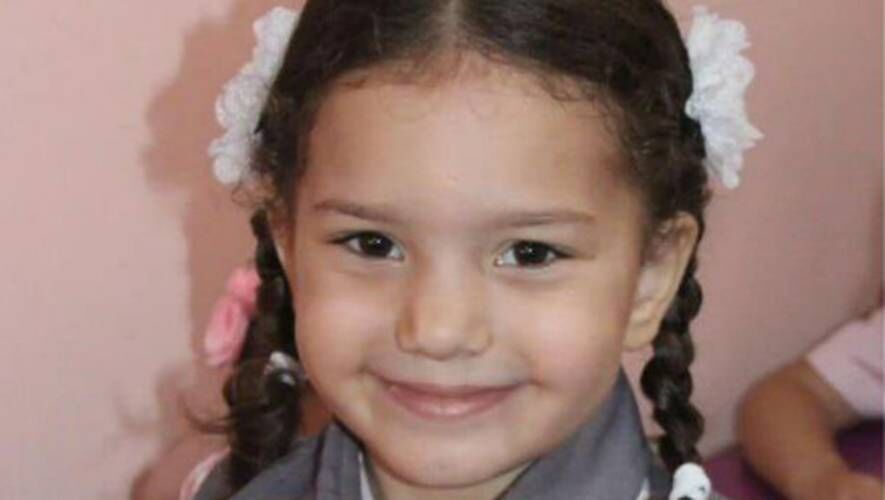
Doyle helps fund the operation through sales of his artwork. Self-taught, he has worked with Kneecap and the conflict journalism platform Popular Front, he came to public attention in 2023 for what he calls “the Eviction thing,” a digital artwork that superimposed contemporary photographs of gardaí and private security men onto a Famine-era painting by the Cork artist Daniel Macdonald.
When Sinn Féin TD and spokesman for housing Eoin Ó Broin posted Doyle’s artwork on Twitter, it kicked off a major controversy. On on Virgin Media, Fionnan Sheehan, Ireland editor of the claimed it was “politically motivated” and disrespected the gardaí. Doyle defended it as satire.
There followed a spirited exchange between the two, in which Doyle more than held his own with the veteran journalist, to the extent many wondered if he had trained in communications.
“I hadn’t,” he insists. “That was more to do with me being surprised at the level of attack I was under than anything else.”
What may have got lost in the hullabaloo was that Doyle donated all proceeds from sales of the print to homelessness charities.
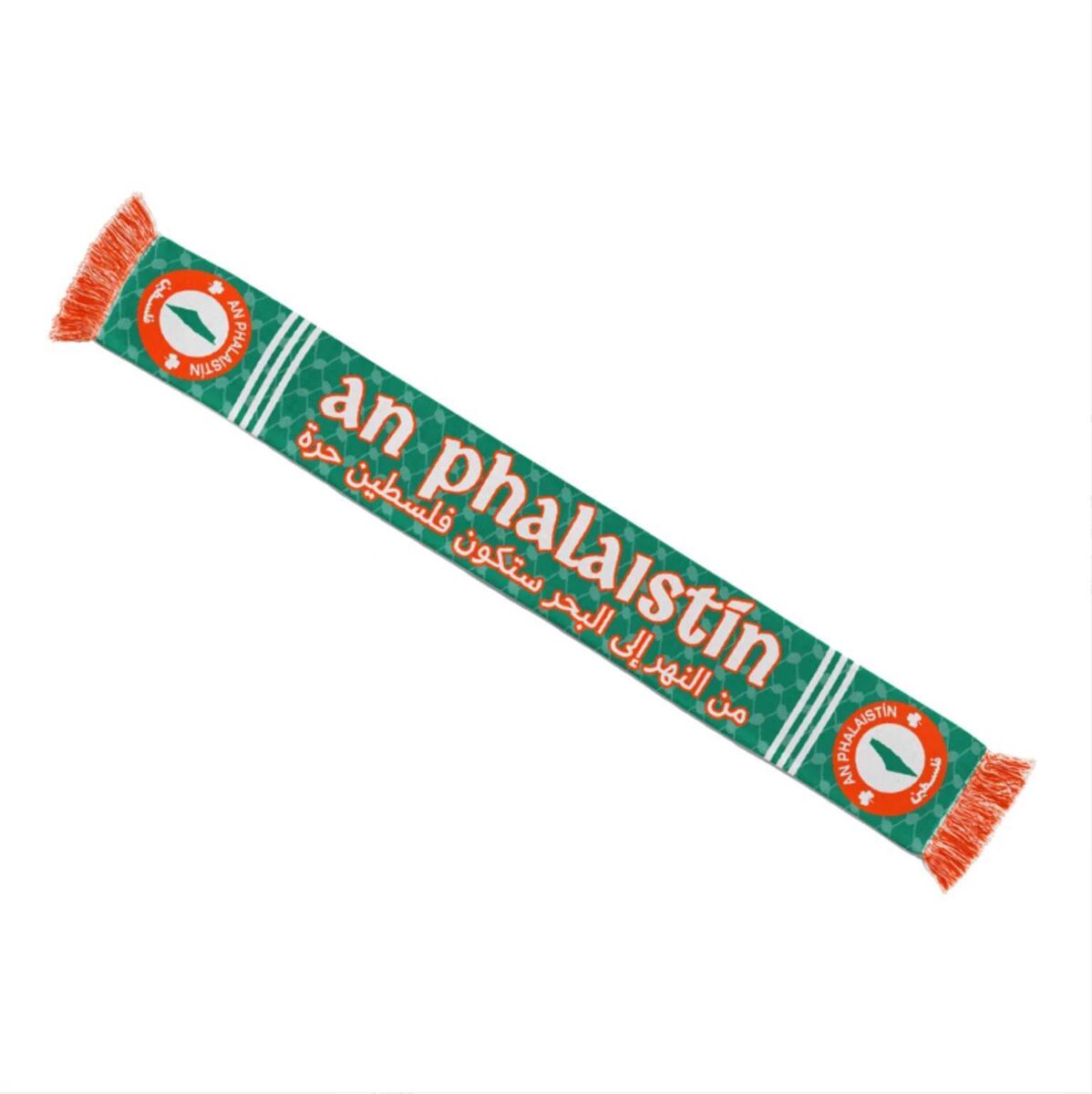
Later that year, not long after the Israeli assault on Gaza began, Doyle launched a new fundraiser, producing an An Phalaistín scarf that incorporates a message from the late Palestinian poet Refaat Alareer reading: ‘If I must die, let it bring hope.’ Doyle donated all the profits — it raised at least €10,000 in three weeks — to the Palestinian Red Crescent, with some of the money being used to get Zak Hania, an Irish-Palestinian man, out of Gaza.
Thereafter, he designed a range of products, including football jerseys, with all the profits going to Dignity for Palestinians. Soon, he began thinking about how he could provide a more direct form of assistance.
“I was talking to Massalam, essentially asking what would be most useful,” he says. “We talked about how there are between 600,000 and 650,000 kids in Gaza that are without any sort of school. Most are living in displacement camps, and it's something that needs to be addressed. So I said, grand, we'll try to do something about that.
“Initially I wanted to build a brick-and-mortar school, because in my head, I was like, that's a bit more permanent. But the reality on the ground is that building materials are completely unobtainable, everything is destroyed, it's post-apocalyptic, essentially. And also, if you were to do something like that, it would become a target, and be destroyed.
"So we decided on making a non-permanent structure that we could move if the area got too dangerous, or the people were moved on or anything, because everything in Gaza is very fluid and very volatile. So that's how we ended up with the centre we have now.”
At Ionad Hind Rajab, the children are taught literacy and numeracy, but time is also devoted to sports and recreational activities. “We make sure they’re fed as well,” says Doyle. “Hungry brains can't really learn, do you know what I mean? They’re getting a level of care that all Palestinian children should have access to, that they have a right to, and that they've been deprived of by the state of Israel.”
The school is at capacity at present.
“We have a waiting list,” says Doyle, “and depending on how much we're able to scrounge up, we’d like to push the number of students out to 300. There's a lot of one-time start-up costs associated with it, like getting the correct equipment, getting water facilities, getting toilets, all that kind of thing. It's absolutely bonkers expensive. But we're slowly building up the facilities, and once that's done, we'll have a bit more in the tank and we can expand and take in as many children as possible.”
Doyle’s fundraising efforts have been supported by other artists and musicians and all over the world.
“We have a lad in Detroit who has been fundraising non-stop. We have people doing fundraisers in the Netherlands. We have people doing fundraisers in London, Belfast, Dublin, all over the place. One month, we might bring in eight or nine grand. And then other months we’ll bring in three, which just about covers the cost of the centre.
“What would really help us fund the whole venture properly and in a stable way is the recurring monthly donations. If people could give us a small amount each month, and enough people do it, we’d be in a much more secure place.”
Doyle is not surprised Irish people, in particular, have been so supportive of the venture.
“I feel we have a very similar legacy of colonial oppression,” he says. “I think Tel Aviv's campaign of starvation against the people in Gaza certainly rhymes with Irish history, and Irish people maybe aren't so easily led on the quote-unquote issues around resistance in the face of a colonial occupation. I think that bothers us less than the fact that there's an ongoing genocide and children being blown to bits.”
He is not optimistic about the conflict ending any time soon.
“If Israel was to get its way, they would eradicate the Palestinians from the Gaza Strip. I don't think they'll stop unless they're really seriously forcefully stopped. And the only way that would happen is for people to stop backing them, particularly the United States and their partners in countries like Germany and Britain that give them the weapons to carry out their horrific crimes.
"Unless there's a real shift in thinking, I think that Israel is a machine that will just keep eating people until they're all gone.”