Leanne McDonagh: 'I wanted to photograph people in a way that hadn't been done before'
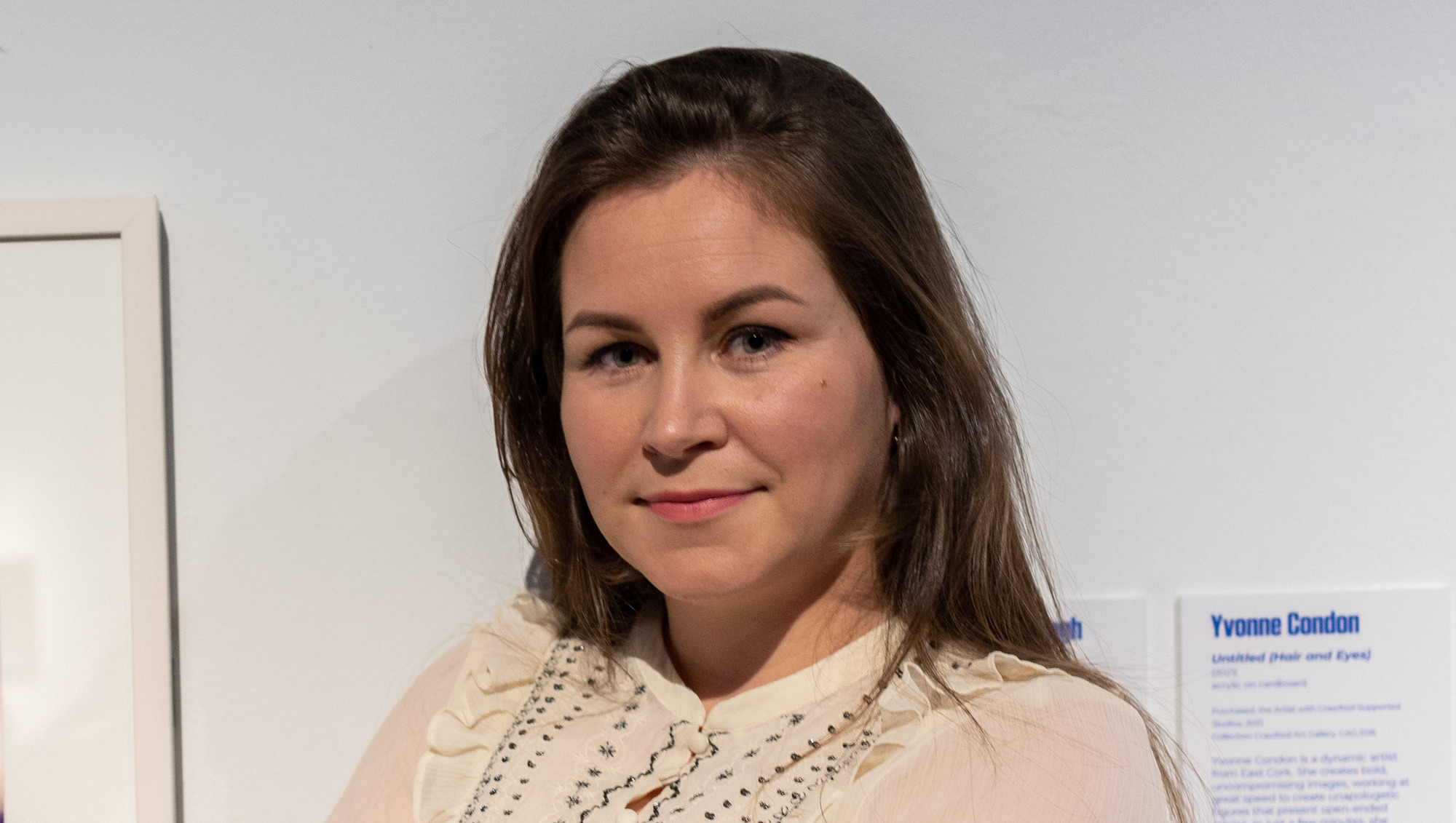
Artist Leanne McDonagh. Picture: Darragh Kane
Leanne McDonagh balances her career as an artist with her occupation as Traveller education co-ordinator at Munster Technological University. “It’s a new role, within the Access Service,” she says.
“What I do is I create projects and go into secondary schools. I work specifically with Traveller kids. And the projects are designed to get them thinking about progressing into further and higher education.”

McDonagh is herself a graduate in Fine Art from Crawford College of Art and Design. She has exhibited regularly since completing her degree in 2011, and her new solo exhibition at the Sirius Arts Centre in Cobh, Co Cork, features a broad selection of her work from then to the present day.
Much of the work is inspired by McDonagh’s upbringing in the Traveller community.
“I lived on a site in Dungarvan, Co Waterford until I was about 10 or 11,” she says. “I‘ve also lived on a campsite, and in a house, and I guess each of those brought its own nuances to my experience.”
Growing up, she always had a creative streak. “I loved making things, drawing pictures, doing whatever it was with my hands.
"And I know now, looking back on that and reflecting on it, that this was something that always happened within the community; there was a tradition of making and upcycling things. I think there's a wealth of creativity within the community, but unfortunately it isn't always viewed as art.”
It was only in her Leaving Cert year that McDonagh considered going on to third-level education.
“I had a number of teachers ask what I was going to do,” she says, “and I really wasn't thinking about doing anything, to be honest. But they pushed me to progress with my potential, and I began to think about the possibility of art college. And then, once I had made the decision to go, I was really excited.”
McDonagh embarked on the four-year Fine Art degree in 2007.
“I remember when I went in first, I spent a couple of years immersed in abstraction. I was covered head to toe in paint and getting lost in it, really. By third or fourth year, I had spent so much time in abstraction, it was like, okay, I have a great sense of colour and motion, and I know what all this means for me now.”

Most of her classmates would not have been aware of her background until she brought in some photographic negatives from home. “I had played around with them and blown them up really, really big and put them on the wall,” she says. “And you could clearly identify that I was within a site, or in a caravan or a mobile home or whatever.
“We had a seminar, and I spoke about it very, very briefly. One of my lecturers must have sensed a little apprehension from me. She came to me afterwards and said, 'look, Leanne, you don't have to speak on behalf of an entire community. You can share your experience, or more if you choose.'
"That was really helpful. I was 19 or 20 at the time, and I was really conscious of the tensions between the Traveller community and the settled community.”
McDonagh eventually made her personal experience the subject of her degree show.
“I was thinking, if I identify myself here, what does that mean for me?” she says. “Where is that going to bring me? Where is that going to lead? How are people going to treat me and so on? But I said, you know what? I can only speak on behalf of myself, I could never pretend to know what anybody else's experience is. And that's how I went about it.”
After securing her degree, McDonagh decided to continue in education and train as a secondary teacher.
“I spent the next seven or eight years doing as much teaching as I possibly could, and doing a lot of community projects as well.
"It was only in 2014, when I got the opportunity to have my first solo show at the Origin Gallery in Dublin, that I pulled all my college work back out, and I began to look at it again properly and start thinking about, where am I at now? This was seven or eight years in, I suppose, and I was more experienced within the world of work and society in general.”
That first exhibition in Dublin was called 'Reminisce'. It featured a series of photographs she took at Cahirmee Horse Fair in Buttevant, Co Cork, an event she attended regularly from childhood.
“I wanted to photograph people in a way that hadn't been done before,” she says. “I was playing around with long exposures. So essentially the images were blurry and hazy and elusive and somewhat transient as well. I liked how that played into the notion of Travellers as a transient community.
“I wanted people to go, what the hell is happening here? Are there people in these photographs? Are there animals? I was trying to create images that would allow people to ask more questions. I really liked this style, and I have kept recreating it in various ways ever since.”
McDonagh produced her next major body of work in 2016/17, and called it

“The title was one of those I wrote on a list when I was at college,” she says. “Years later, in 2015, the tragedy happened at Carrickmines, Co Dublin, when a mobile home went on fire and 10 members of the same family died.
"Two things happened at that time. There was a national outpouring of grief, there were books of condolences and everybody was really sympathetic towards the community, showing a lot of respect and sharing their sympathies.
"But then to me it felt like it only lasted about two days, because when some of those families went home to bury their dead in Wexford, from what I could see on my social media, the town shut down, pubs were closed, restaurants were closed, there was no accommodation available, and local car parks were bouldered off.”
McDonagh was reminded of the occasion when her grandmother died; she was refused permission to use the toilet at the local chipper, a place she and her cousins had frequented for years.
“It really pissed me off,” she says. “If I went out into the community and looked for more of these stories, I know without a doubt I would find them. So that's when I immediately knew it was time for the exhibition. I created that body of work to try and create a dialogue in and around the topic of accommodation within the community.”
McDonagh continued teaching up until 2019, when she assumed her present role at MTU. On the subject of students from the Traveller community going on to third level, “it’s progressing, but it's still slow,” she says.
“This year we have two full-time Traveller students and 19 part-time Traveller students in MTU. But there are more and more Travellers employed within further education and higher education, and I think that has helped. So I do see an improvement. It's not as quick as I'd like, but it is improving.”
- Leanne McDonagh, Community & Connections runs at Sirius Arts Centre until September 12, and then tours to Uillinn: West Cork Arts Centre and Limerick City Gallery of Art.
- Further information: siriusartscentre.ie; leannemcdonaghartist.com