Tim Pope: I've shot music videos for Freddie Mercury, George Michael, and Paul McCartney
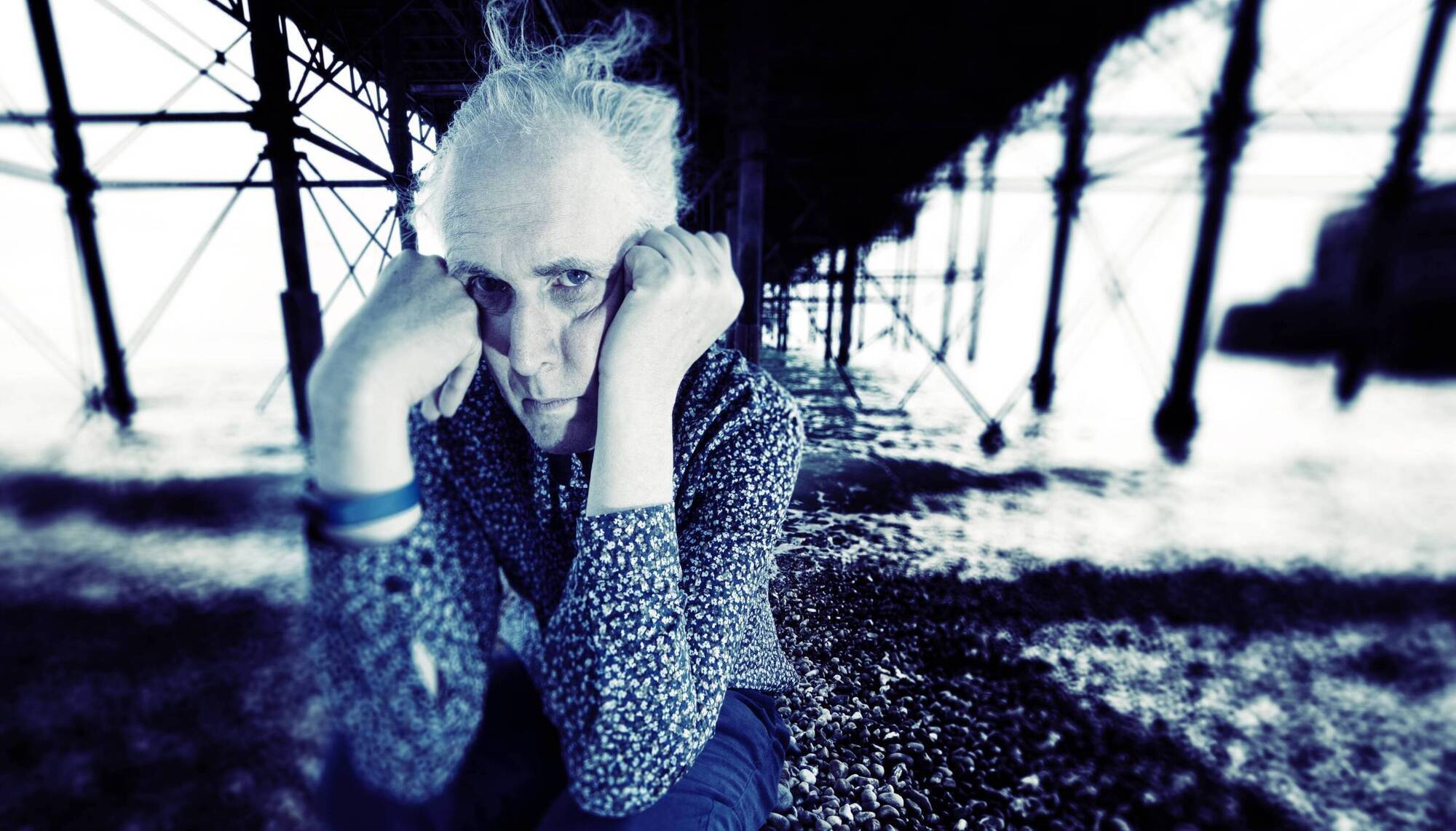
Filmmaker Tim Pope. Picture: Andy Vella
Anyone alive in the 80s and 90s will know the work of Tim Pope, the self-described “wonky-eyed git from Enfield” whose creative vision gave us over 200 hallucinatory works of art in the form of music videos, accompanying the soundtrack of our youth. His work has been viewed over a trillion times.
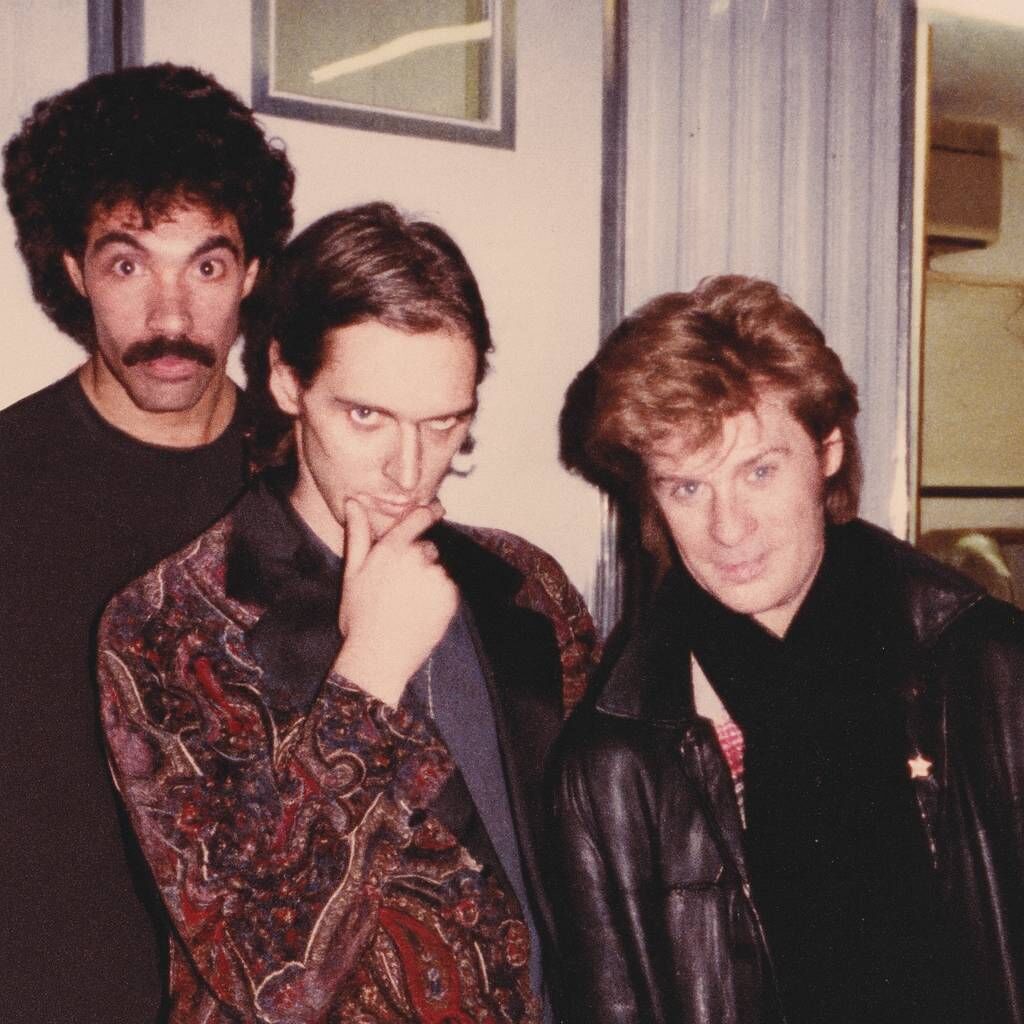
Breaking out in 1981, coinciding with the launch of MTV, Pope — known as El Pap by The Cure’s Robert Smith — has shot all the big guns, including Bowie, Iggy, Freddie Mercury, Neil Young, The Cure, Siouxsie, Paul Weller, The Specials, The Bangles, Paul McCartney, George Michael, Hall & Oates, Altered Images, The The, Talk Talk, Strawberry Switchblade, Psychedelic Furs, Fatboy Slim, The Darkness, Kaiser Chiefs, and KT Tunstall. Only Kate Bush was the one that got away — they spoke about working together, but somehow it never happened.

Now aged 70, Pope has compiled a cracking compendium of his adventures with the musical deities with whom he’s collaborated, a “love story” and “companion piece” to his videos (there’s a QR code at the end of each chapter so you can view what he has been talking about).
“It was so cathartic, I loved writing it,” he says, speaking from his home in Brighton, where he lives with his family. “I have a ridiculously clear memory of certain events.”
This vivid colour and detail, plus his uncanny knack of being in the right place at the right time, allows us into “the crawl space” with him, to share his joy, awe and wonder as he works with his — and our — musical heroes. A pinnacle moment happened in a tiny studio with two of these heroes, watching them record a version of Queen Bitch together: “Lou fucking Reed and David fucking Bowie, and me, just a boy from Enfield, trying to play it cool.”)
In person, Pope is affable, unguarded, stuffed with brilliant stories and hugely engaging — just like his book. There is no ego, no boring I-snorted-cocaine-with-Aerosmith cliches — just the joy of creating free-range mayhem with artists he admires. His advice to the film students he coaches is what he has always lived by himself: “You have to recognise when there’s a moment, and then exploit the fuck out of that moment.”

Pope is a fanboy, “an anorak with a capital A”, without ever being a sycophant. Instead, he is “driven by rebellion and free-spirited self-expression,” an artist who works in the medium of film, just as his hero Bowie worked in the medium of music. In an analogue era of great creative freedom and fat budgets, he ran on gut instinct and raw creativity, eschewing the formulaic Thou Shalts of American rock video clichés — big red cars, helicopters in deserts, Spandex, “babes with big hair and even bigger boobs” — in favour of the clever, the surreal, the unexpected, the beautifully peculiar.
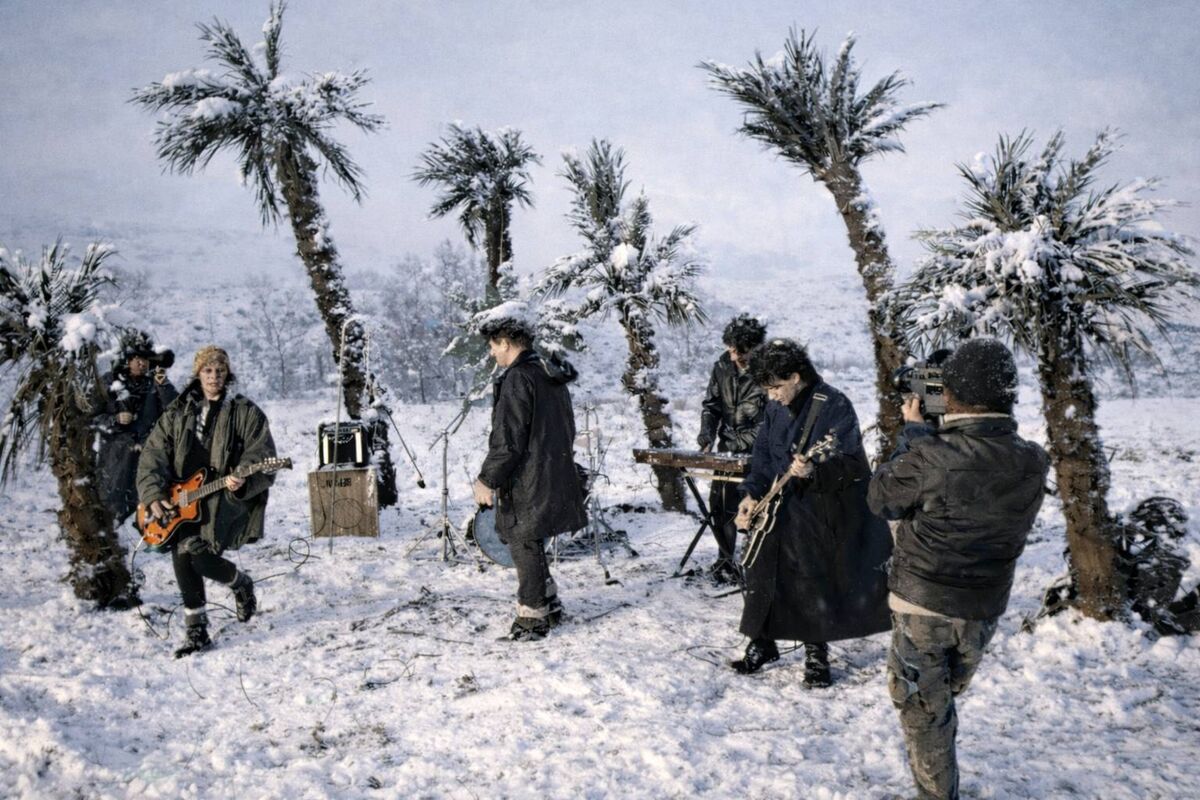
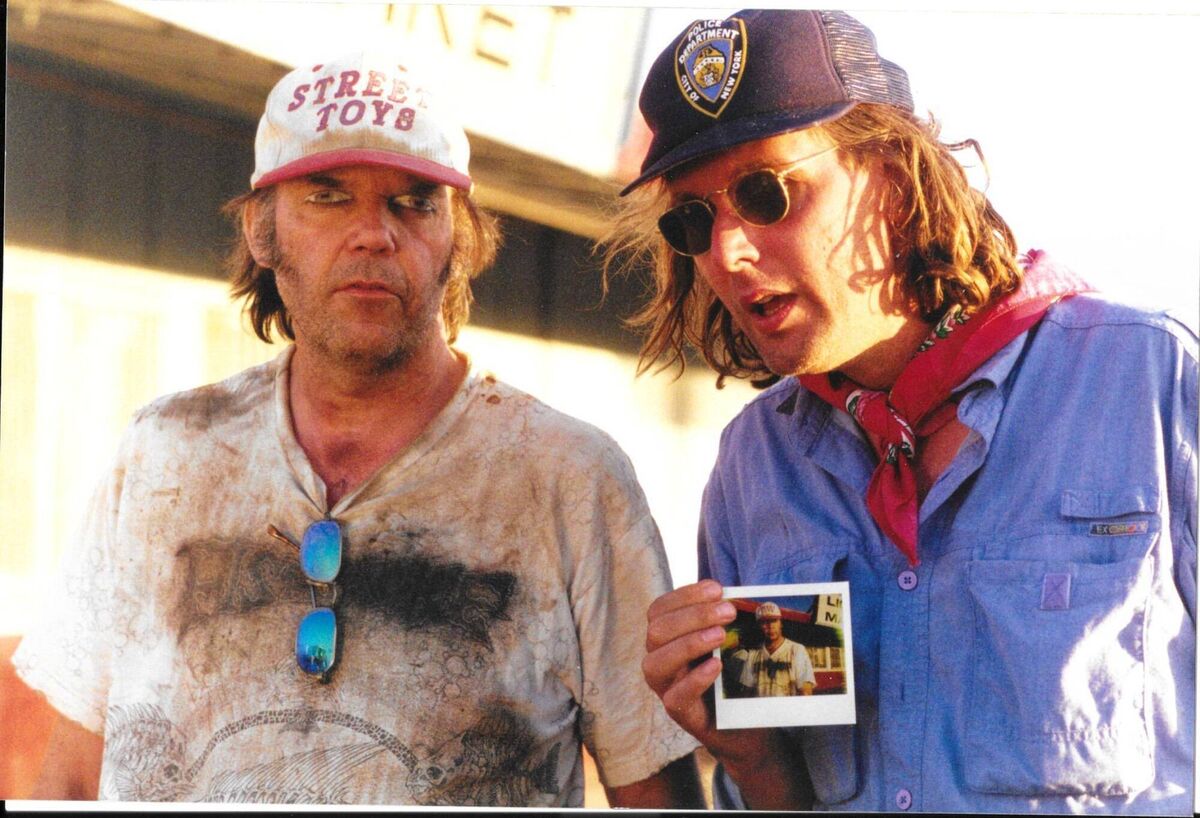
He squashed The Cure into a wardrobe underwater, then pushed the wardrobe off Beachy Head. (The band had been allowed to climb out beforehand). He dressed Freddie Mercury as a giant prawn, and on his initial visit to Neil Young’s ranch — whose residents included two llamas named Cheech and Chong, a dog called Elvis, and an elaborate model railway — quite literally gave Young the psychedelic-patterned shirt off his back.
Pope had a penchant for adding large amounts of small creatures to his shoots: He purchased a thousand cockroaches (“one dollar a pop”) to create “a rundown, sleazy vibe” when directing Matt Johnson of The The (“significantly influenced by his recent adventures in Bolivia”) in New York’s still dangerous Bowery. The cockroaches escaped. On another occasion, he bike-couriered a thousand live frogs to the lakeside home of his friend, the late Mark Hollis of Talk Talk, after the frogs had completed their hop-on part in the video for Cork band Stump’s track, Charlton Heston Put His Vest On. (“Ha! I never confessed [to Hollis] to the deed, but I often wondered how that surprise turned out.”)
On his first trip to the US in the early 80s, Pope flew 12 hours in economy and didn’t realise that Hollywood was situated in LA until he saw the sign out the plane window; by the mid 80s, he was flying high, both on Concorde and on MTV rotation. Soon, music video aesthetics had bled into the era’s mainstream cinema — “high contrast, colour grading, rapid editing” — so that box-office bangers like Top Gun, Footloose, and Flashdance “stole our techniques and approach”.
Born in the north London suburbs in 1956, Pope began studying film at school aged 16 and was quickly hooked. He bought his first 8mm camera (second hand, £11, its case “a lavender coloured brushed velveteen interior” with an “erotic” scent of old perfume and cigarettes), his funded his new passion by peeling spuds in a chip shop and doing a milk round and paper round, and shot his first concert — Emerson Lake & Palmer — with a camera smuggled down his trousers.
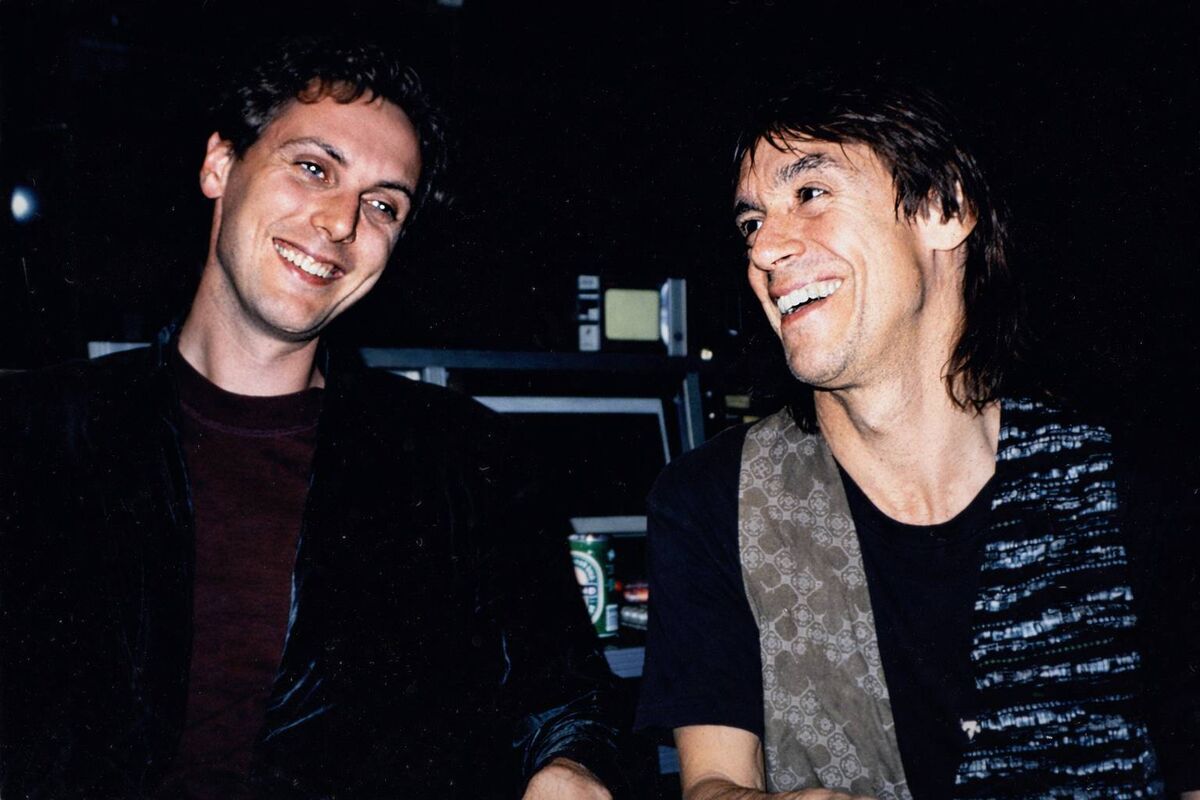
After another gig, a female friend blagged him into Iggy Pop’s dressing room, where he froze, awestruck, never imagining that one day they’d be friends and collaborators. After film school, he began supplementing his day job by filming bands on stage for record companies for £100 a go.
And then came his breakthrough in 1981 when he made the video for Soft Cell’s Bedsit Land, the single released after Tainted Love. After it was shown on Top of the Pops, “the floodgates opened”. Overnight, he was hot. Offers poured in, and the creative adventures took off.

He remembers lending bus fare to an unknown duo called Wham!, before a few months later doing their Young Guns video (“West Side Story remixed by Chic”), and hanging out in Leicester Square with Marc Almond and a fan of Marc’s, a “brassy, dungaree-clad 24-year-old” from New York called Madonna. (He says he never wanted to work with her — she’d have been “too controlling”.) Pope cannot bear the idea of being creatively controlled. His worst professional experience happened years later in Hollywood, where he had been persuaded to direct a feature film, the sequel to The Crow.
Overseen by Bob and Harvey Weinstein, “bullies, nasty pieces of work”, they butchered his film by editing it until it was so non-sensical it needed a voiceover; the older Weinstein brother was known as Harvey Scissorhands.
Speaking quite seriously, and keen to emphasise that what happened to him at the hands of Harvey Weinstein is not remotely comparable to what happened to the women Weinstein raped and sexually assaulted, Pope says he was “spiritually Me Too’d” by the experience, that it “screwed up my life for years” afterwards. His confidence as a film maker was badly shaken.
“Harvey said the worst three words that anyone has ever said to me,” he recalls. “He said, ‘we own you’.”
Pope fled Hollywood, eventually regaining his mojo with another Neil Young collaboration. “I’m going to send a signed copy of my book to Weinstein in jail,” he says. It’s the only time during our conversation where his joyfulness falters.
But soon Pope is back in the present, talking about his most long term collaborators, The Cure, with whom he has made 37 films to date, with another big Cure project in the pipeline. Having gained a reputation for “working with bands that were unenthusiastic about making music videos”, Pope managed to gain the trust of the famously deadpan Robert Smith. ‘Smithy’, as Pope calls him, wrote a forward for the book.

“I can honestly say that — apart from the hours left hanging in midair by very painful wires, the hours spent drowning in freezing filthy water, asphyxiated slowly with strong glue, fed into a giant spider’s mouth, trapped inside a mite-infested polar bear suit, freezing to frostbite up a Scottish mountain, being chucked off a pier, being orally endoscoped — I have enjoyed every moment I have lost in his company.” Smith goes on to describe Pope as a “serious, playful film-maker, just the right side of deranged.” But it was a forgotten answer machine message from Pope’s greatest hero of all — David Bowie — which was the catalyst for the book. Hearing Bowie’s Marlboro-inflected voice, years after the singer’s death, triggered a flood of memories. Pope was first introduced to Bowie by their mutual friend Iggy Pop. An 11-year collaboration ensued, culminating with Pope filming Bowie’s 50th birthday concert in 1997 at Madison Square Garden.

At the afterparty in artist Julian Schnabel’s loft, what Pope remembers most vividly was the queue for the loo: “Iman, Christopher Walken, Robert Smith, Dave Grohl, and yes, Lou Reed, all waiting politely.” Although Pope didn’t realise it at the time, that was his last time working with the man he called The Guv’nor; Bowie did that famous Bowie thing of cutting loose and moving on.
These days, Pope no longer makes music videos. Just as video killed the radio star, the internet killed the music video; everyone is a star now, everyone with a smartphone is a director.
He doesn’t seem remotely bothered; he has a slew of new projects on the go. Apart from his book — which, if I were reviewing it, would unhesitatingly give five stars — he is currently casting for a feature film he wrote titled The Photographer’s Assistant. He has already bagged its producer, Derek Frey, who worked with Tim Burton for 25 years. Then there is a major forthcoming Cure documentary, and a Cure photography exhibition. He sounds brimming with enthusiasm as he describes these upcoming creative adventures. Just don’t, whatever you do, refer to him as a legend. It’ll make his toes curl.
- ‘I Shoot Rock Stars: The Wild Adventures of a Music Video Director’, published by Wildfire, is available now
No obligation. Ts&Cs apply.