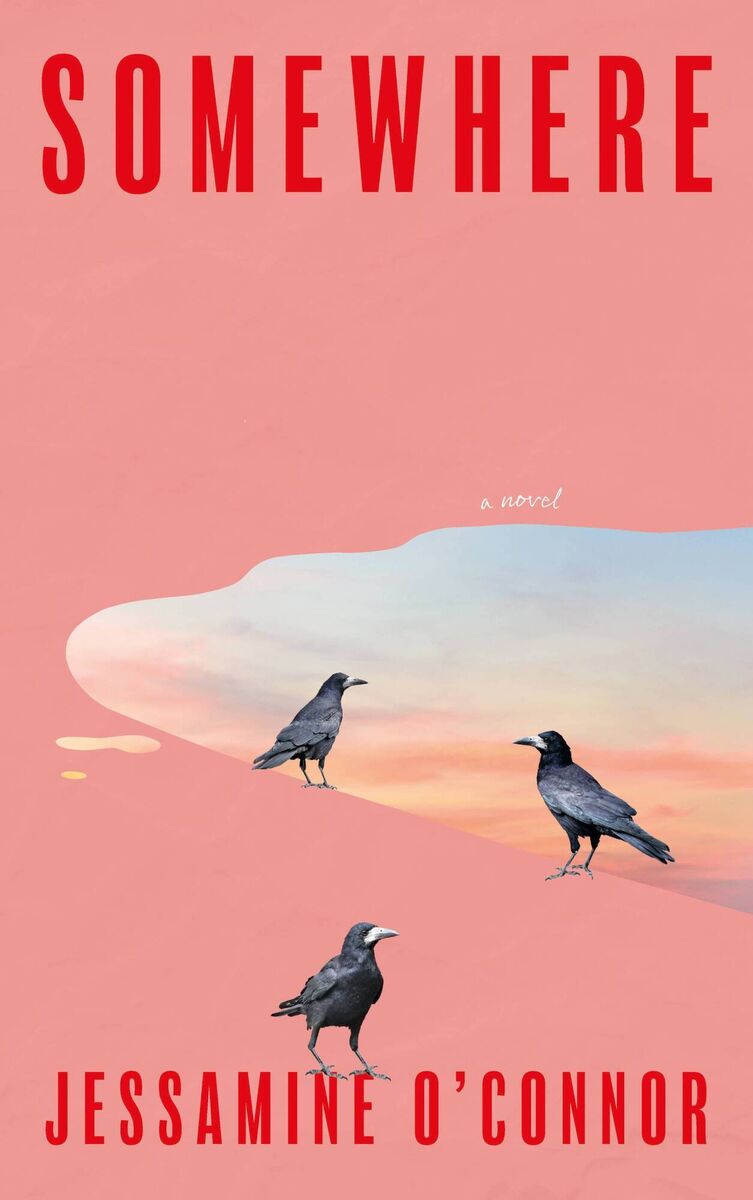
Book review: Gripping portrayal of addiction

Jessamine O'Connor’s 'Somewhere' is a mightily strong debut with superbly evoked characters that will keep readers enthralled to the very end
Jessamine O'Connor has a long history of poetry publishing and demonstrates a poet’s knack for allowing seemingly small details to transmit vital information about her characters.

Jessamine O'Connor has a long history of poetry publishing and demonstrates a poet’s knack for allowing seemingly small details to transmit vital information about her characters.

  • Somewhere 
  • Jessamine O’Connor 
  • Lilliput Press, €16.95

Jessamine O'Connor’s impressive debut novel, Somewhere, offers an unflinching and unsentimental take on addiction and homelessness in 21st century Dublin.

The main protagonist, Clodagh, is a young woman trying to move on from a breakup while living temporarily in the spare room of her mother’s flat. 

However, Clodagh’s biggest problem, the one that all the others originate from, is her addiction. 

Each day for her is a crushing cycle of acquiring drugs, hiding her drug use, denying her problems to herself.

While she is  Somewhere’s largest single figure, the story is told through the eyes of several characters — Clodagh’s ex Seamus, her mother Sylvia, and a collection of friends and loose acquaintances. 

With the exception of her mother and her friend Emma virtually everyone that Clodagh associates with is a homeless addict.

The narration switches rapidly from character to character, giving the novel a choppy feel which suits the internal chaos of its protagonists. 

While Somewhere is O’Connor’s debut novel, she has a long history of poetry publishing and demonstrates a poet’s knack for allowing seemingly small details to transmit vital information about her characters. 

Everyone has their own ticks; ways of walking, sitting, talking; habits that betray their real feelings in spite of what they say. 

Superb evocation of Dublin city centre

Dublin city centre is superbly evoked and here too, singular details such as traffic, shopfronts, pubs, sounds, and smells bring us right to the heart of the action.

A feature of the novel is its long stretches without major dramatic incident. This is partly because a lot of the story development is played out through inner monologues and mundane interactions between characters. 

The main reason is that O’Connor refuses to romanticise her subjects. Yes, everyone is portrayed sympathetically but those in the grip of addiction, which is most of the main characters, lead grinding, repetitive lives. 

Day after day the formula for their existence is the same: Somehow find enough cash to feed their habit, to keep the agonies of withdrawal at bay for a few more hours. 

We get uncomfortable detail on what some characters, like Clodagh’s ex Seamus or their mutual friend James, have to do to earn money, what heroin does to their bodies, what they do to their own bodies.

For all of Somewhere’s dark elements, O’Connor walks a fine line between portraying the hard realities of her characters’ lives and offering the reader just enough hope to keep the suspense alive, to keep us turning pages. 

Everyone has their own back story, skilfully woven into the narrative. They weren’t always how we see them now. Nothing is inevitable in their journey and change is always held out as a possibility. 

Clodagh’s friend, Cathy O, for instance, tries desperately hard to quit her habit, Clodagh herself tries and tries again.

Dublin and Ireland’s housing crisis hovers in the background of every paragraph, almost like the ghost of an additional character. 

Full-time workers, like Sylvia and Emma, are precariously renting, never sure how long their landlords will allow them to stay in situ.

Clodagh herself sleeps on a mattress in her mother’s spare room but it’s clear to all that the arrangement can’t continue. 

As the book’s title insinuates, all of the characters are seeking that elusive somewhere to shelter, to feel safe, to love and be loved.

Understandably for a first novel, some flaws are on display. The drudgery of addiction is a little over emphasised in places and can feel repetitive; at other times the narrative is unnecessarily poetic. 

However, this is a mightily strong debut with superbly evoked characters that will keep readers enthralled to the very end.

BOOKS & MORE

Check out our Books Hub where you will find the latest news, reviews, features, opinions and analysis on all things books from the Irish Examiner's team of specialist writers, columnists and contributors.


More in this section

Scene & Heard

Newsletter

From music and film to books and visual art, explore the best of culture in Munster and beyond. Selected by our Arts Editor and delivered weekly.

Cookie Policy Privacy Policy Brand Safety FAQ Help Contact Us Terms and Conditions

© Examiner Echo Group Limited