Author interview: ‘I don’t buy into the idea that a writer can speak for the nation’
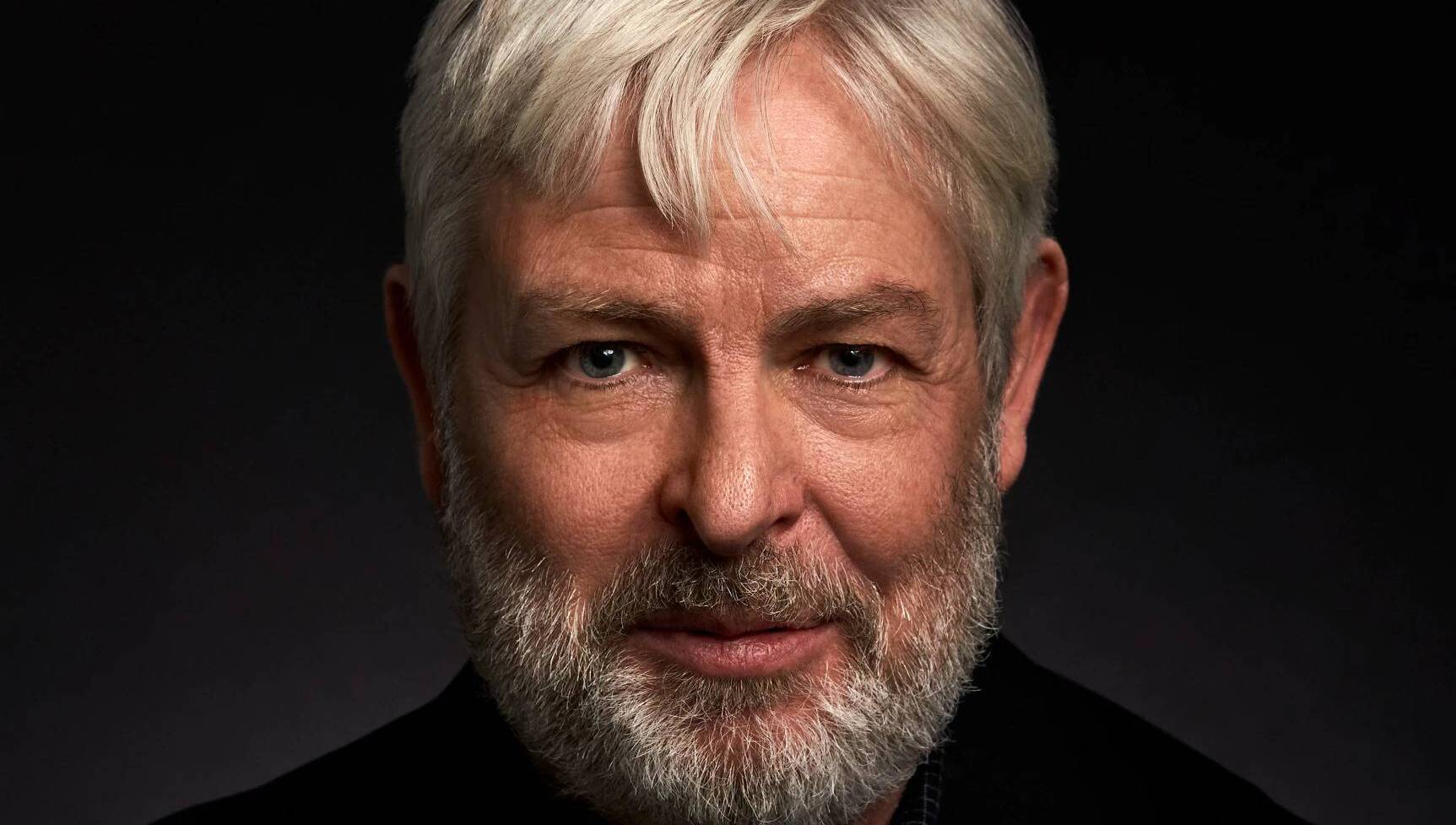
Jonathon Coe speaks to Marjorie Brennan about his latest novel, how he’s fallen in love with writing again, and why he thinks Margaret Thatcher would be appalled at how far right Britain has shifted
‘What I can bring to the table, now that I’m in my 60s, is that kind of slightly longer perspective, and a glance back over the arc of British politics over the last 50 years, because the trajectory is quite clear now, and it’s a very, very alarming one,’ says author Jonathan Coe.

‘What I can bring to the table, now that I’m in my 60s, is that kind of slightly longer perspective, and a glance back over the arc of British politics over the last 50 years, because the trajectory is quite clear now, and it’s a very, very alarming one,’ says author Jonathan Coe.

  • The Proof of My Innocence 
  • Jonathan Coe
  • Penguin, €12.99

Jonathan Coe is one of Britain’s most celebrated writers, known for his witty and erudite novels which cast a keenly satirical eye on politics and society in his native England. 

The descriptor “state of the nation” crops up fairly regularly in reviews of his work but he is having none of it when he chats to me from his home in London.

“I don’t really buy into the idea any more that a writer can speak for the nation or even speak for a large portion of the nation or anything like that,” he says. 

“That’s a very outdated idea. My take on Britishness, it’s my own, and has arisen from my own background, my own circumstances, my own education. 

"I wouldn’t claim that I’m speaking for anyone, actually, other than myself.”

Coe’s latest book, The Proof of My Innocence, which he will discuss at the upcoming West Cork Literary Festival, does tackle one of the most pressing political issues facing Britain at the moment — the continuing rise of the far right.

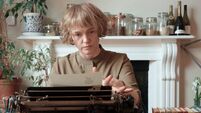
The protagonist Phyl is a 20-something adrift after graduating from college, living with her parents and working a mind-numbing service job in Heathrow Airport. 

But things liven up when her mother’s friend Christopher and his daughter Rashida visit. 

He is investigating a radical think-tank which has been pushing the British government in an increasingly extreme direction and is preparing to attend a conference its members are holding in a Cotswolds hotel. 

In turn, Phyl’s latent novel-writing ambitions are stoked, and she ponders whether she should write it in the form of cosy crime, dark academia, or auto-fiction. 

This conceit allows Coe to flex his narrative structuring skills, using the framing device of a classic whodunnit.

“It was meant to be a straightforward crime novel, but once I decided to set it at this far-right conference in the Cotswolds, I thought I should give a bit of context to what these people are talking about and where they’ve come from, how the right wing has radicalised itself, not just in the UK, but in the States and elsewhere, over the last 40 years. 

“Because what it means to be Conservative now, which is one of the themes of the novel, is very different to what it meant back in the 1970s,” he says.

Moving portrait of British society in the 1970s

Born in Birmingham in 1961, Coe’s acclaimed 2001 novel The Rotters’ Club, the first of what became a trilogy, mined his own schooldays as inspiration for a powerful and moving portrait of British society in the 1970s.

“I grew up in a very Conservative household. My dad was a Tory, and we used to take The Daily Telegraph and the Daily Mail, that kind of thing, but this was the era of Edward Heath. He would be seen as a kind of dangerous left-wing radical these days,” he says.

His breakthrough novel, What a Carve Up!, published in 1994, was a brilliant and hilarious social satire on the era of Thatcherism, what must seem like halcyon days in some ways, I suggest.

“Yeah, I mean, I don’t want to get sentimental about Margaret Thatcher, her policies led to a lot of the places we are now, but I think she would have been horrified to see where what she started has ended up.

“She would not have been a Brexiter, I don’t think, because she was a pragmatist, and so much of what’s happening on the right at the moment is driven by pure ideology,” he says.

Britain is not alone in finding itself in a state of chassis in recent years. When Keir Starmer was elected, Coe said at the time he was relieved and hopeful.

“Keir Starmer has made some terrible mistakes but prime ministers have always made mistakes, and we used to cut them some slack for the sake of stability and continuity.

“The figure that alarms me, in particular, is that the UK has had six prime ministers in 10 years.”

Andy Burnham tipped as new UK prime minister

Of course, we are overtaken by events and the prime-ministerial body count rises once again shortly after I speak to Coe, with the resignation of Starmer and Andy Burnham being tipped to take possession of that particular poisoned chalice. 

He may be just a placeholder, however, with the prospect of Reform UK and Nigel Farage in power not so distant anymore.

“I grew up in the ’70s, when the policies of the National Front were considered fringe and lunatic, and so far outside the mainstream that they weren’t worth discussing. 

“To see those same policies now, slightly more extreme in some cases, being adopted by a British political party, which is right in the mainstream, and is being platformed with incredible enthusiasm by the media, that’s profoundly shocking,” says Coe.

“What The Proof of My Innocence does have, and what I can bring to the table, now that I’m in my 60s, is that kind of slightly longer perspective, and a glance back over the arc of British politics over the last 50 years, because the trajectory is quite clear now, and it’s a very, very alarming one.”

While it deals with a serious topic, The Proof of My Innocence has the trademark Coe humour and empathy running through it. He also found it hugely enjoyable to write.

“I increasingly find writing fun. Actually, it’s been a welcome new development in the last three or four books, because I always used to say that I like to have written books, but I don’t enjoy writing them.

“But now I do enjoy writing them, and although the novel tackles the radicalisation of conservatives in the UK and the rise of the far right, it’s also a very playful book. I’m enjoying myself with lots of different genres.”

Coe’s next book already completed

He has already completed his next book, in which he reimagines the friendship between Ralph Vaughan Williams and Maurice Ravel, two of his favourite composers.

“I just thought to myself, why not take a holiday from the horror of what is unfolding in the world on a daily basis, and just write a novel about art and creativity and friendship and all these wonderful permanencies which are also going on as the world implodes. 

“I have to say it has been a really delightful two working years so I’m feeling a little bit bereft that I’ve got to wave goodbye to them,” he says.

Coe published his first book in 1987 and considers himself lucky that he has been able to forge a career as a writer.

“I remain grateful that I’m published, that I make a living, that I’m keeping my head above water in the marketplace. I think that’s about as much as you can ask for these days.

“I’m very, very grateful that I’ve been able to do that for 40 years, because writers, we’re quite strange, vulnerable people, and the work that we do is incredibly important to us, in a therapeutic sense, really.

“Even though a lot of my books are political and outward looking and socially engaged, they’re also very personal pieces of work, and to not to be able to carry on doing that would be an absolute tragedy for me.

“So I’m eternally grateful that I’m still standing, as Elton John would have it.”

  • The Proof of My Innocence by Jonathan Coe is published by Penguin, €12.99;
  • Jonathan Coe will be appearing at The Maritime Hotel, Bantry, at 8.30pm on Thursday, July 16, as part of the West Cork Literary Festival;
  • westcorkmusic.ie

x

More in this section

Scene & Heard

Newsletter

From music and film to books and visual art, explore the best of culture in Munster and beyond. Selected by our Arts Editor and delivered weekly.

Cookie Policy Privacy Policy Brand Safety FAQ Help Contact Us Terms and Conditions

© Examiner Echo Group Limited