Croí Glan: Inclusive dance company marks 20 years with new show
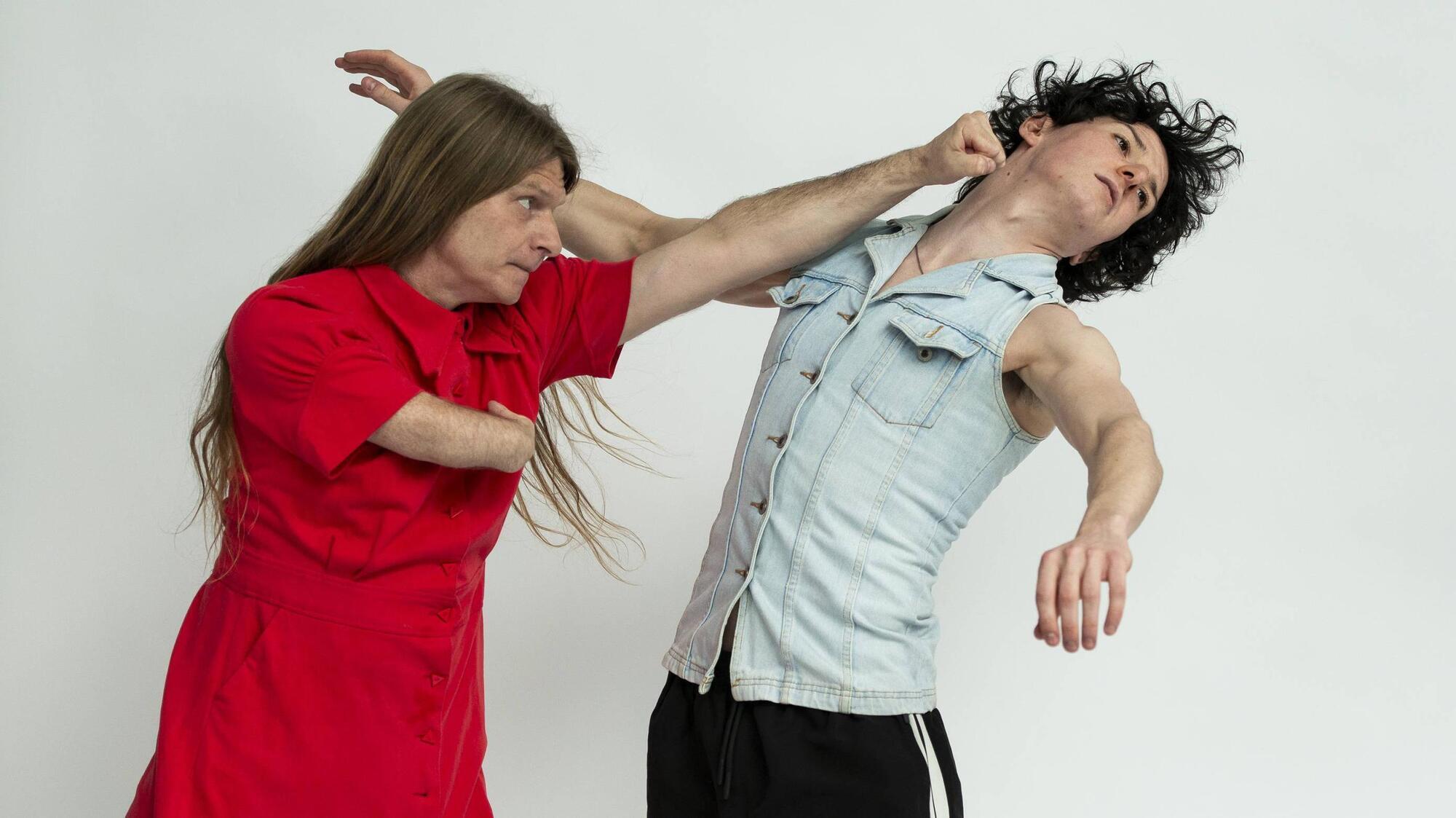
Bobbi Byrne and Ben Sullivan in The Act of Existing, premiering at Firkin Crane in Cork. Picture: David Keegan
“A huge turning point” is how disabled transfeminine dance artist Bobbi Byrne describes taking up martial arts at the age of about 10. Byrne, who stars in Cork-based Croí Glan Integrated Dance Company’s new show, by choreographer Philip Connaughton, was encouraged by her mother to get involved in the Asian discipline.
Although as a child, Byrne wanted to be a palaeontologist (and is still fascinated by dinosaurs), she became enthralled with martial arts and how it made her aware her body had abilities and talents.
Byrne, 50, was born with one fully formed arm and another that stops developing below the forearm. It’s called a unilateral congenital below-elbow difference. Byrne was verbally bullied and teased about her disability at school.
She went through a stage at secondary school of being aggressive and getting into fights. But martial arts gave her a way of channelling and controlling her aggression. Before that, Byrne’s world was limited.
“While I was very small and I had this funny arm, I had to learn to think of myself primarily as a smart kid,” says Byrne. “So I read a lot and didn’t engage in any physical activities. I was very disconnected from my body. When I started practising martial arts, I discovered that I was good at it. I won competitions. It made me take a second look at my body as an entity and my relationship to it.”
As a transgender woman, Byrne says she hasn’t yet undergone hormone therapy, explaining it would result in the loss of a lot of muscle mass, making it difficult to dance.
“I could take hormones as an option, perhaps next year. But I want to be able to establish myself physically as a performer again before I take that step.”
Byrne got involved in amateur drama in her native Dublin, which she really enjoyed. Then, a workshop Byrne joined was led by a dancer from Counterbalance (Ireland’s first inclusive dance company). This dancer said there would be regular classes for people with disabilities and Byrne might think of getting involved.
“It just went from there. There wasn’t a lot of dance training in Ireland at the time, and what training there was wasn’t very accessible to people with disabilities. It gave me a sense of how to make the environment functional for disabled people and how to adapt training and materials. I largely hung around the dance community, going to workshops and classes. After a while, I became professional, doing shows. I’m not a formally trained dancer; it’s an ongoing project.”
Byrne says while she can’t do handstands, for example, she is very good at falling and at being off-balance. “There are things that my body allows me to do that are better than other bodies at doing them. Maybe ‘better’ isn’t the right word, but there are interesting variations in how my body approaches tasks.”
As the recently-appointed co-director of Croí Glan, which is celebrating 20 years, Byrne says she would like the company to have more of a presence in Dublin. “I’m also interested in creating a more disability-led approach. There are quite a lot of people working in inclusive and integrated dance across the country, but there are still relatively few artists with disabilities in leadership roles.”
The new show Byrne dances in opposite Ben Sullivan takes inclusivity to a whole new level. It explores what happens “when two artists willingly surrender to an audience’s will”.
In other words, the audience will, to an extent, guide what happens on the stage of Dance Cork Firkin Crane. This audience participation takes the form of a collective voice rather than that of individuals leading from the auditorium. The show is described as playful and provocative.
Connaughton, one of the country’s leading choreographers, is interested in breaking social norms. His concerns include themes of otherness and power dynamics which, says Byrne, are particularly relevant in today’s world.
For Byrne, her “biggest challenge” is her age. Also, she was away from dance for about 12 years as she took time off to rear her two children which she had with her ex-wife.
Byrne broke her left shoulder, which led to a lot of complications. “I also suffered a minor back injury which kind of led me to drifting away from the dance profession. I reconnected with dance about three or four years ago. I missed it more than I realised I would.”
- The premiere of will be at the Dance Cork Firkin Crane on July 3 and 4. dancecorkfirkincrane.ie