Sonny Rollins, saxophonist and restless jazz pioneer, dies aged 95
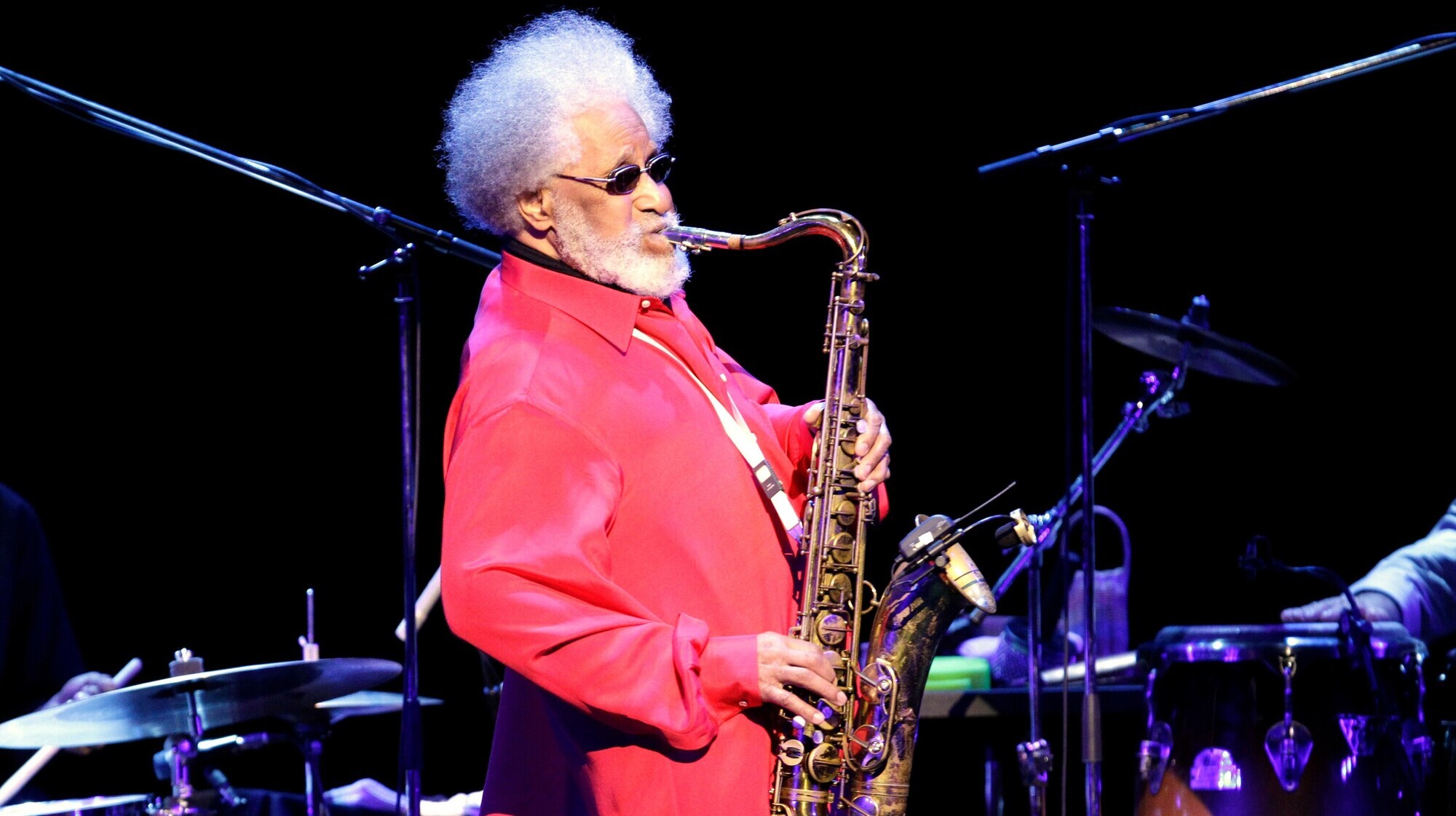
Rollins was revered for his improvisational skill (Junji Kurokawa/AP)
Sonny Rollins, the tenor saxophonist whose bold, distinctive tone and constant experimentation kept him on the cutting edge of jazz for more than 50 years, has died aged 95.
Spokesperson Terri Hinte told The Associated Press (AP) that Rollins died at his home in Woodstock, New York, on Monday. She cited no specific cause of death, but said he had been largely housebound over the past couple of years because of various physical problems.
Among his many international appearances was a visit to Cork Jazz Festival in 1981, as a relatively fresh-faced 51-year-old when he travelled to Cork.
It was a big year for the New Yorker, as he’d also just guested on the Rolling Stones’ comeback album Tattoo You, and was about to hit the charts on the record’s hit single, Waiting On A Friend.
Rollins took to the Opera House stage wearing a red hat and white shirt, and festival cofounder Pearse Harvey remembered Rollins’ performance as being a “revelation”.
He laid on an unforgettable exhibition of technical virtuosity which, allied to a bewildering capacity to improvise with the greatest of ease, left his audience spellbound.
"His performance, albeit a bare hour, and not long enough by half for some punters and he was given a deafening ovation at the end of what was truly a wonderful concert,” recalled Harvey.
From his early days as a teenage phenom to his more measured solo work and experimentation with free jazz, Rollins was revered for his improvisational skill.

He was one of the last living greats of the bebop era and — along with John Coltrane and Charlie Parker — one of the most influential saxophonists of his time.
Rock fans got a dose of his music with the Rolling Stones’ 1981 album Tattoo You, which features Rollins’ wistful sax solo on the ballad Waiting On A Friend devised after watching Mick Jagger dance.
He also contributed original music to the soundtrack of Alfie, the 1966 British film that made Michael Caine a star.
Despite his enduring success, Rollins was never quite satisfied with his art, occasionally taking lengthy hiatuses from playing and consistently adopting eclectic new styles.
He always referred to himself as “a work in progress”, saying he wasn’t one of those artists who settle into one way of playing.
While his early bebop work was the most popular with his fans, Rollins never looked back, saying he found it “excruciating” to even listen to the flaws in his older recordings.
“I don’t consider myself a musician that has learned as much as I want to learn,” he told AP in 2007.
In the 1990s and 2000s, Rollins released a string of critically acclaimed albums. He maintained a rigorous practice regimen, and continued to tour, into his 80s.
Pulmonary fibrosis, a thickening and damaging of the lungs, would eventually force him into retirement.
He played his last concert in 2012 and stopped playing altogether in 2014.

While he missed the adoration of crowds, he missed the actual playing more.
“I played a couple of concerts early on where I was out in the open in the afternoon,” he told the New York Times in 2020.
“I was able to look up in the sky, and I felt a communication; I felt that I was part of something. Not the crowd. Something bigger.”
His 2001 album This Is What I Do earned him a Grammy award for best jazz instrumental album. He won again in 2006 for best jazz instrumental solo for Why Was I Born?
Why Was I Born? was from the album Without A Song: The 9/11 Concert, a live recording from a performance in Boston just four days after the September 11 attacks.
Rollins, who had been evacuated from his apartment a few blocks from ground zero, had gone ahead with the concert at the urging of his wife and manager, Lucille. She died in 2004.
His survivors include a nephew, Clifton Anderson, and nieces Vallyn Anderson and Gabrielle DeGroat.
Rollins got his first major break in his late teens when he was invited to join Thelonious Monk’s band. He soon was jamming with Miles Davis and Bud Powell, who introduced him to the recording world even before he finished high school.
But like many jazz musicians in the late 1940s and early 1950s, Rollins’ rising star almost faded when he became hooked on heroin at the age of 19.
As his addiction grew steadily worse, Rollins served two stints in jail — 10 months in 1950 and three months in 1953 — and ultimately found himself living on the streets in Chicago.
In 1954, Rollins checked himself into a hospital to undergo drug treatment, and underwent a spiritual awakening as he kicked drugs.
“I began to have a deeper philosophy of what life was about,” he told AP in 2007.
“From that point on is when my consciousness awoke.”