I never set out to be a writer, but researching my great-grandparents led to this book
When Liam O’Connor discovered an old photo of his great-grandparents, he began to research their history. A decade on, he tells their story in a new book that lays bare a tumultuous 19th century Ireland. By Deirdre McArdle
I never set out to be a writer, but researching my great-grandparents led to this book

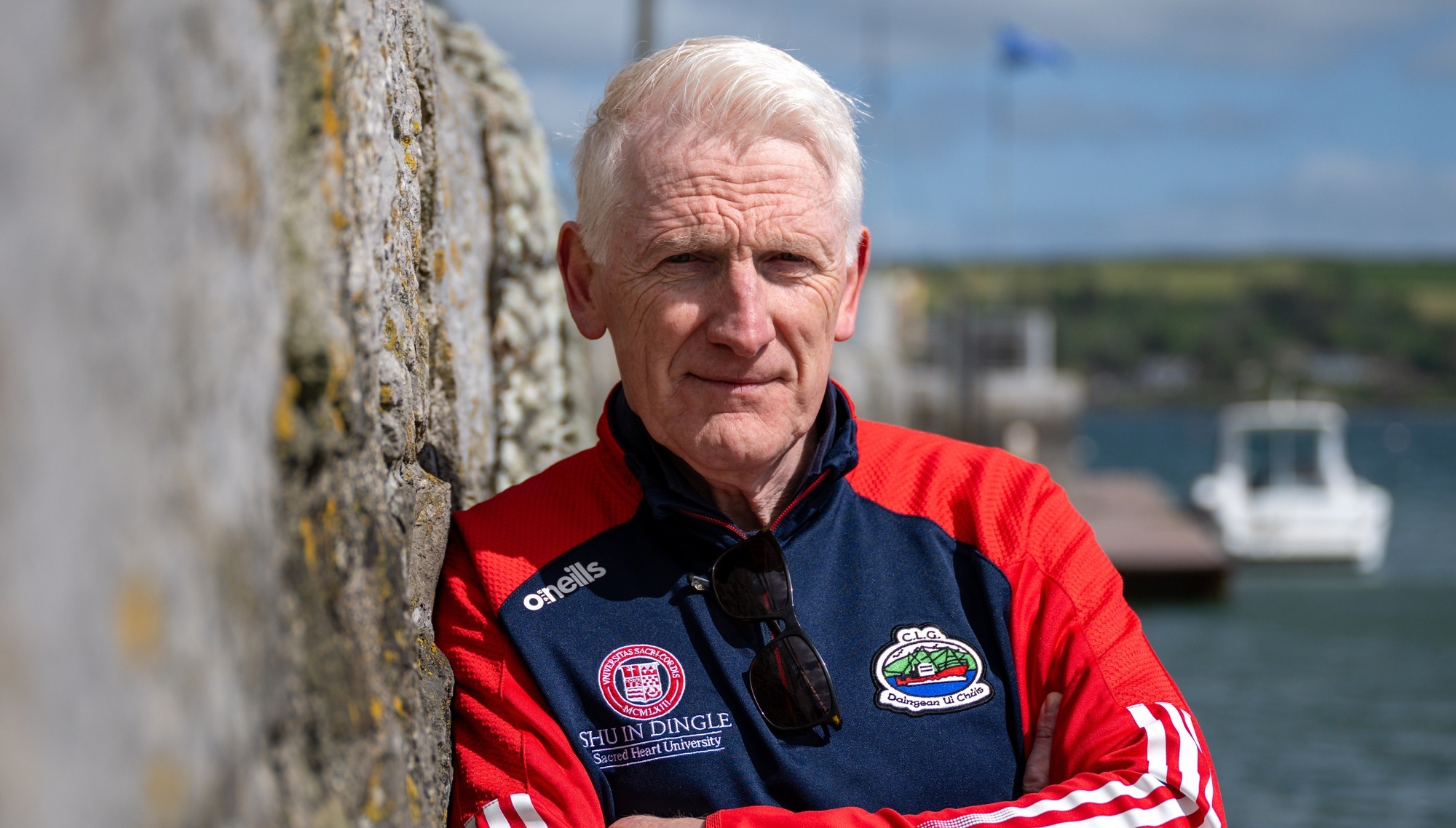
Liam O’Connor at Aghada Pier, where family history, local research and stories passed down through generations helped inspire his debut novel The Sailor and Seamstress. Picture: Chani Anderson

In his grandmother’s house in Dingle, a photograph on the wall snagged the attention of a young Liam O’Connor. He didn’t recognise the couple.
“The photo had been there for years, but I only really looked at it that day. I asked my aunt who they were, and she told me they were her grandparents — William and Norry. She was busy, so she told me to ask my grandmother about them.”

O’Connor’s grandmother, Nora, a font of information, sat with him by the fireside and told him about her father William’s adventures at sea as a member of the Royal Navy in the mid-1800s, and William and Norry’s life after the navy, when he transferred to the coastguard.

“There started nighttime stories and daytime stories and fireside stories about this man who had sailed all around the world.”

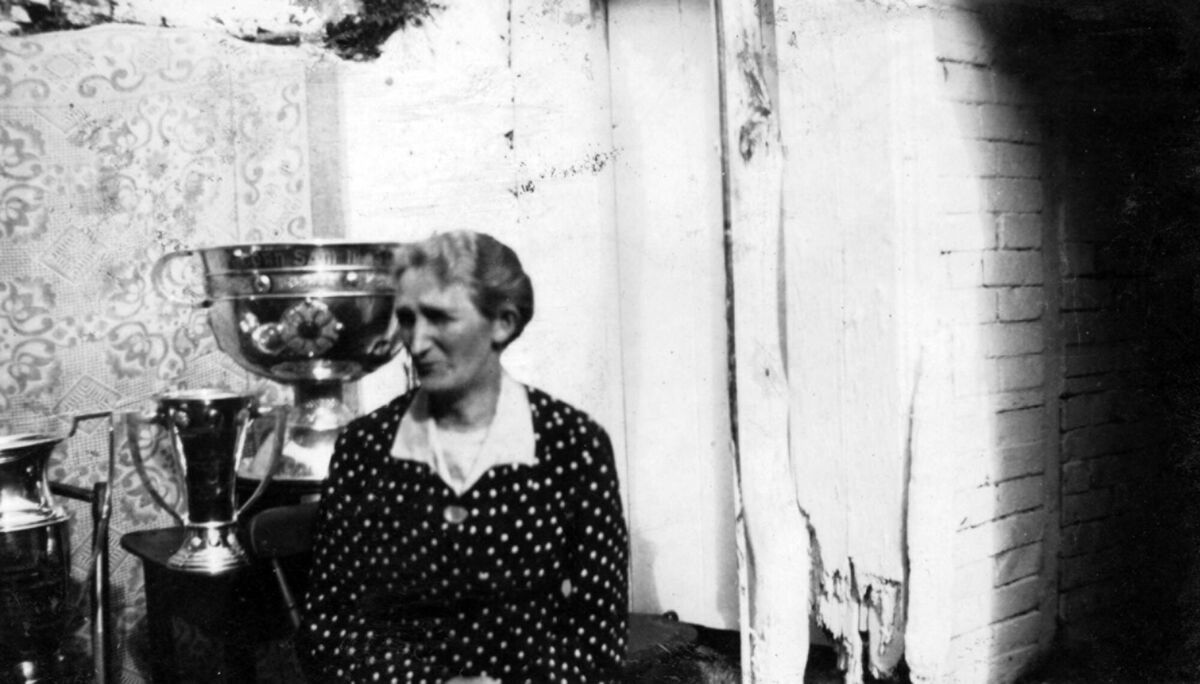
Liam’s grandmother posing in the backyard of her home on Green St, Dingle in 1942, with the Sam Maguire cup, the Munster Championship cup, and the Kerry Football Championship cup, which her son Bill helped to win in 1941 with the Kerry and Dingle teams.

The photo is now the cover of O’Connor’s book The Sailor and the Seamstress, published this week. It is a project 10 years in the making — the writing and researching, at least. O’Connor’s fascination started many years prior.

As a young man, he discovered a book in his grandmother’s house where the births and deaths of his grandmother’s siblings were recorded, but this “research” was very much informal and “pre-internet”.

“In those days, doing any kind of further research was impossible, really.” And so, the story of William and Norry remained at a “loose, background level” for 20 years, says O’Connor.

With the advent of the internet, his research took on a more productive phase. The initial breakthrough happened when his early genealogy work resulted in finding William’s date and place of birth. Here, O’Connor says he was helped by a woman in East Cork called Frances Cronin, who “was more

experienced than me when it came to genealogy”.

Author Liam O’Connor at his home following the publication of his debut novel, The Sailor and Seamstress, inspired by stories passed down through generations of his family. Picture: Chani Anderson

Now armed with his great-grandfather’s date and place of birth — September 1833, Lahard in East Cork — O’Connor had a starting point for his story.

His grandmother’s house revealed another vital clue: His great-grandfather’s Royal Navy service record. The service record was a mine of information that O’Connor says he was able to cross-check using Google.

“The service record gave the list of ships he served on and the dates that he served on those ships. Using the internet, I was able to Google all of those ships, see where they were at those particular times, and I was able to determine where William was serving — in the Baltic, the Black Sea, in China, and Vancouver Island, among others.”

And so the project moved from “a simple family tree” into deeper research, and a story began to emerge. O’Connor initially charted all he’d found in a document.

“I was trying to put as much information into the chart as I possibly could. And like the fella said in the movie Jaws, we’re gonna need a bigger boat, I suddenly realised I was going to need a bigger sheet of paper.”

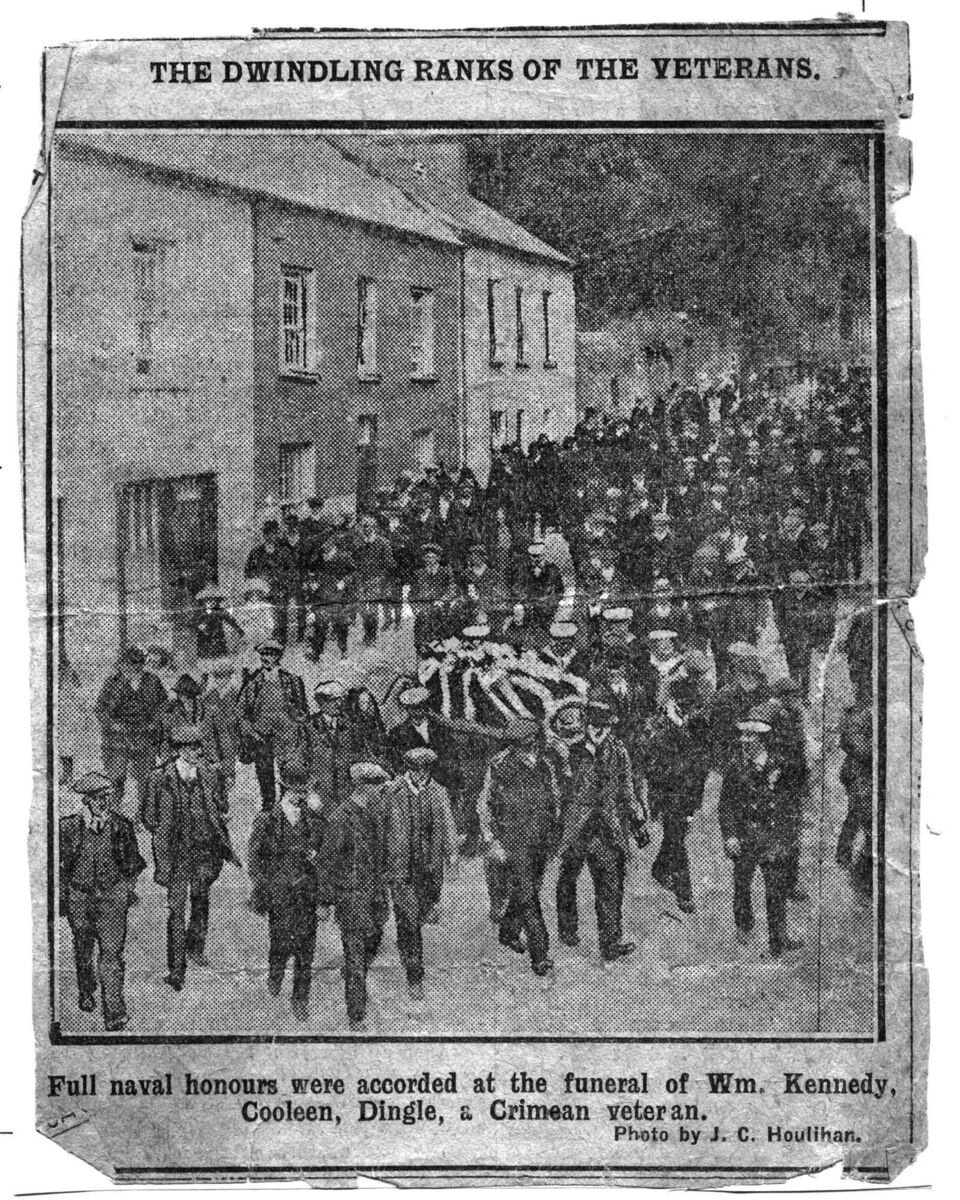
A newspaper clipping covering the full naval honours that were accorded at William’s funeral during July 1913 in Dingle.

He began to reshape the information into paragraphs, creating “a little book” that he could give to family members and say, “Look, there’s the history of one line of our family”. But his research kept yielding “more and more information” and as he started digging into naval records and journals, O’Connor began learning more about life on naval ships at the time, and what adventures his great-grandfather may have had.

At the time, in 2013, O’Connor’s wife Frances, who coincidentally was from the very place in East Cork where his great-grandfather was born, passed away. He said when his wife died “I lost the spark for being a teacher and school principal”.

Two years later, in 2015, he retired at 55. His research, together with working on their garden, which had been his wife’s passion project, helped “occupy my time” as he grieved.

He confesses he never intended his research to become a book — “I never set out to be a writer” – but the story of William and Norry was compelling, and soon O’Connor came up with the idea of fleshing out the information he’d gathered.

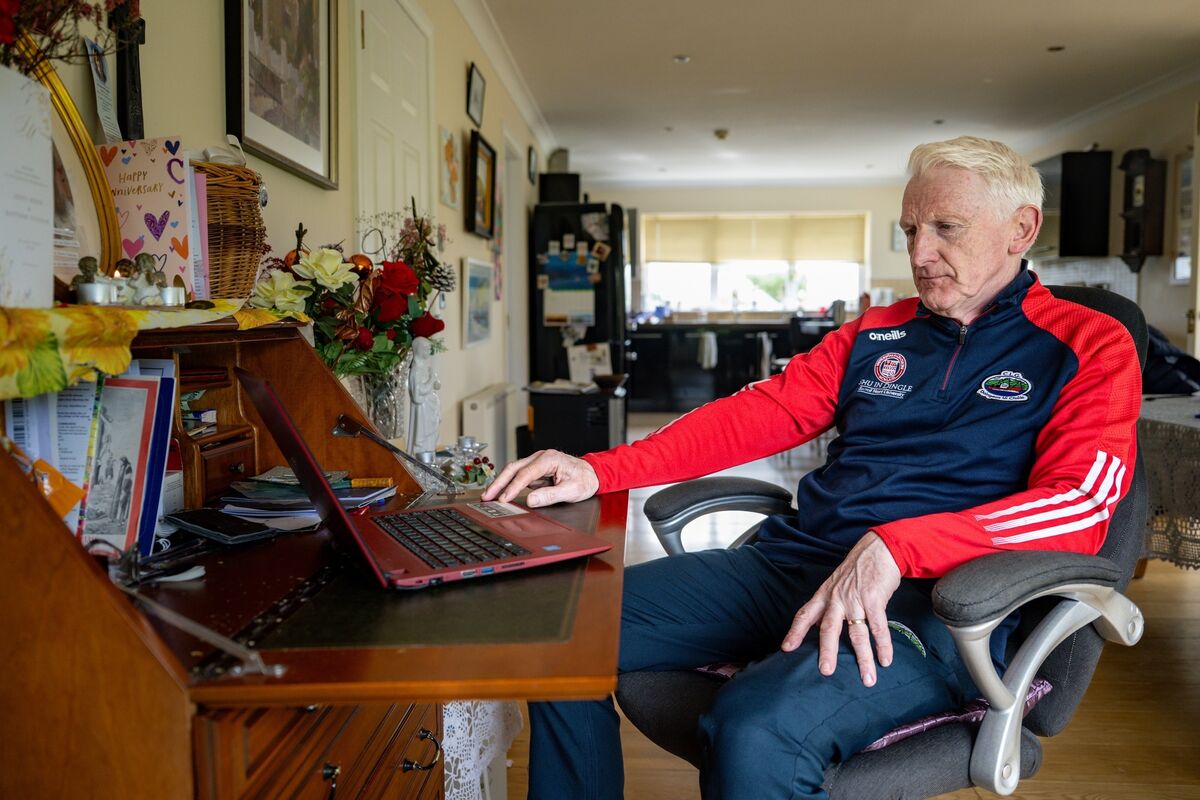
Author Liam O’Connor at the desk where much of his debut novel, The Sailor and Seamstress, was written at his home. Picture: Chani Anderson

Initially, he wrote the book as if William and Norry were telling their stories to their daughter Nora, O’Connor’s grandmother. He also began to bridge the gaps between dates, records, and his grandmother’s stories with a fictionalised version of certain events. For example, in all his detective work, O’Connor was never able to find out how his great-grandmother had ended up in East Cork: “I knew her father’s name and scant details about her family, but the rest of the details are fictionalised.”

But O’Connor knew he wanted to create a nice life for Norry. Through his research he understood much about life at the time of his great-grandparents and was able to use this knowledge to develop a realistic story for Norry.

“She was the eldest of her family, and at that time, you got a job for your children at a very early age; it was one less mouth to feed. For girls, this meant in many cases that they went into service in ‘big houses’.” And so he placed Norry in one of East Cork’s bigger houses of the time, Trabolgan House.

“I picked Trabolgan House and the Roche family because there were a lot of nice things said about them as landlords, especially during the famine years. I thought, ‘I’m going to give Norry a few nice years’. So I put her into the house of a nice landlord.”

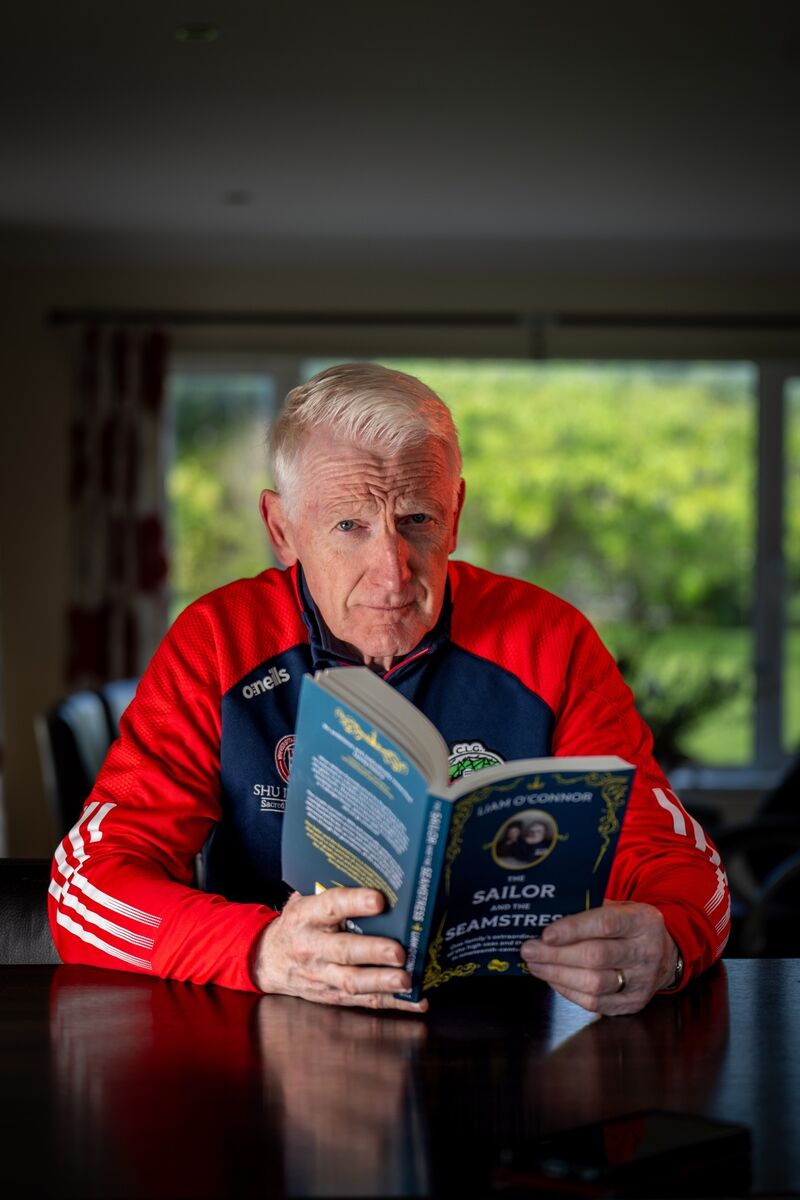
Liam O’Connor reads from his debut novel, The Sailor and Seamstress, at his home. Picture: Chani Anderson

What O’Connor did know about Norry was her skill as a seamstress. She had passed this skill down to her daughter Nora, his grandmother. He also deduced, through William’s service records and his great-grandparents’ marriage certificate, that their marriage must have been arranged, a common occurrence at that time.

“Their marriage had to have been arranged because William left Ireland in 1854 and was back in Cork for the first time in August 1869; two weeks later he married Norry in Aghada.”

Though the marriage was a happy one, the harsh realities of the time reared their head over the years, with the couple losing their two eldest children within a couple of weeks from illness.

“There’d be breakouts of scarlet fever, meningitis, flus, and all that. Some families had lost two or three children in the course of one year.”

From his grandmother’s stories, he knew that though the losses deeply affected them, “there was a resilience in the people of that era”.

“You just had to pick yourself up. And none of us would be around today if those people just gave up. We’re all descended from those people who survived.”

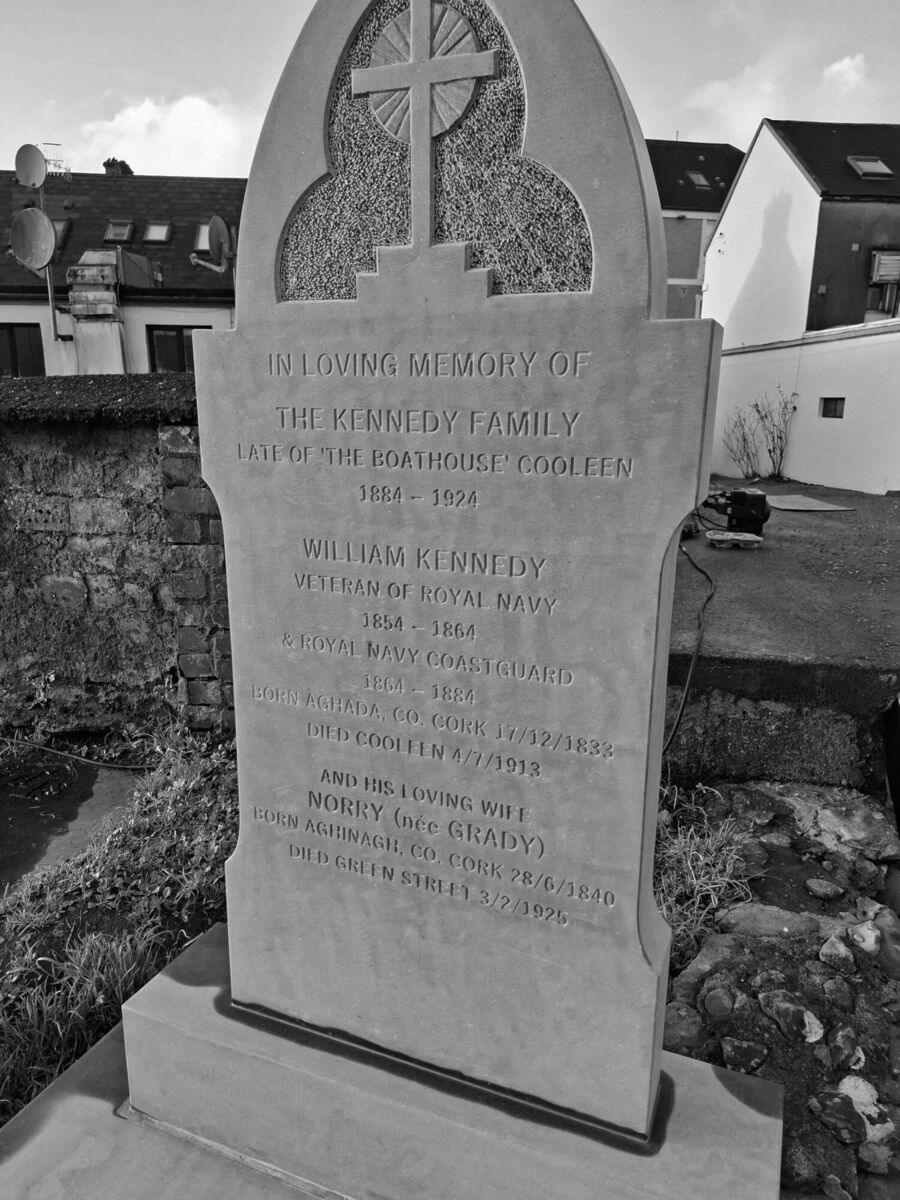
The restored grave of William and Norry in St James’s Churchyard on Main St in Dingle.

As he prepares for the publication of his book O’Connor’s wife Frances looms large in his mind. “She was the reader of us; she could be cooking the dinner and have a book in her left hand.”

He feels she is still looking after him and would be tickled with this latest development.

“I regard myself as very, very lucky that these things just happened for me, and I do believe that she’s been looking after me since. She was always looking after me, but even more so now,” he says. “If she was around today, seeing that something I have written is being published, she would just crack up.”

  • ‘The Sailor and the Seamstress’ by Liam O’Connor is published by Gill Books and out now.

x

More in this section

Scene & Heard

Newsletter

From music and film to books and visual art, explore the best of culture in Munster and beyond. Selected by our Arts Editor and delivered weekly.

Cookie Policy Privacy Policy Brand Safety FAQ Help Contact Us Terms and Conditions

© Examiner Echo Group Limited