Children's book reviews: Secret sisterhoods, high-seas adventure, and great scary fun
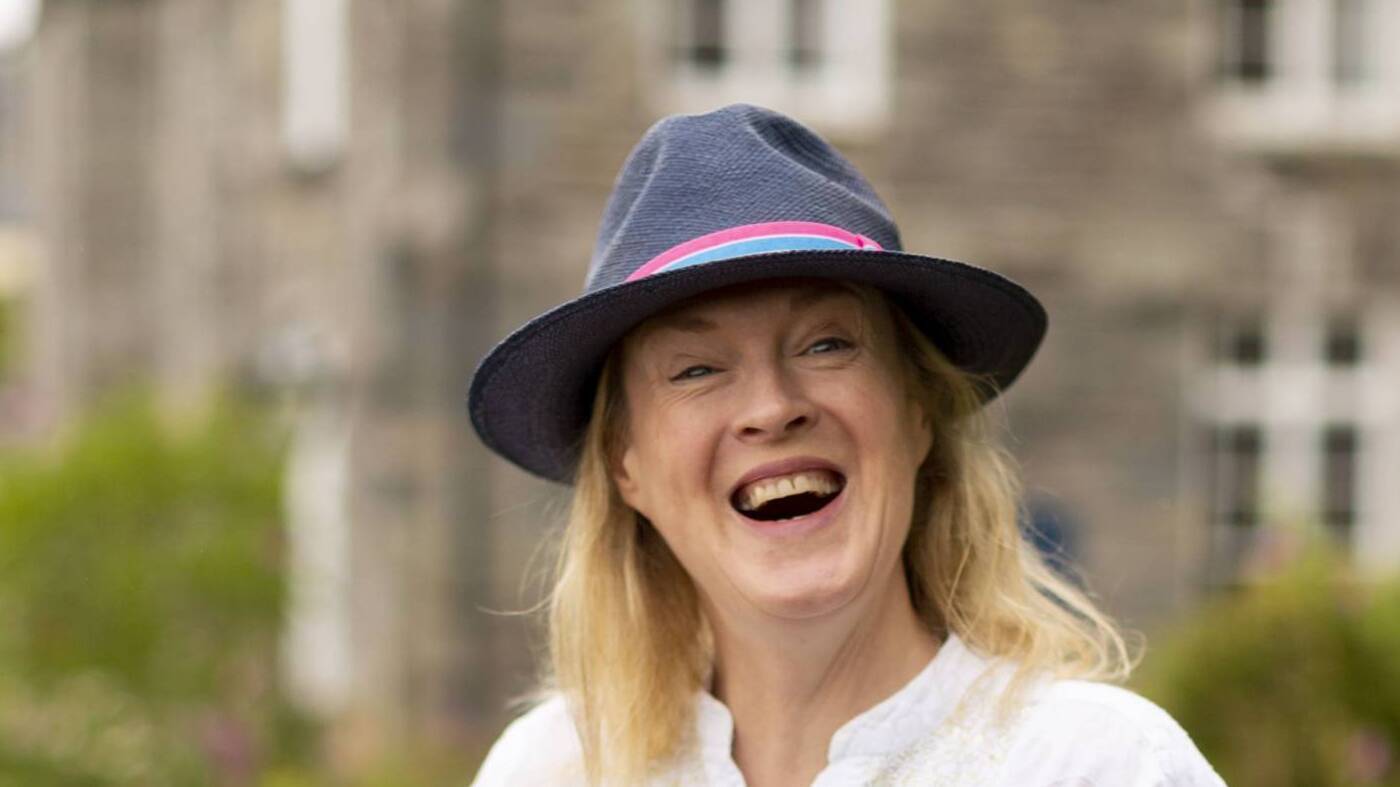
Sarah Webb’s ‘The Bookshop Sisters’ offers an authentic, and relevant, history lesson. File picture: Emma Jervis
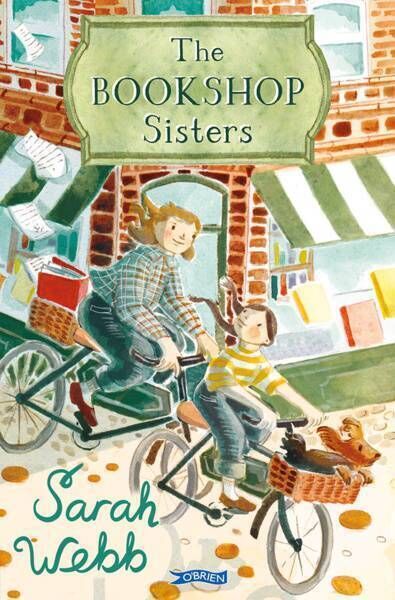
Never, not even at the Carbery Show in Skibbereen, has Rosy seen so many people in one place.
As she and her older sister Martha alight from the Cork train at Dublin’s bustling Kingsbridge (soon to become Heuston) Station, the lives of these country girls are about to be transformed.
Ireland in 1956 is teetering on the brink of social change, and the world into which the two sisters now step is populated by the radical thinkers and activists striving to bring it about.
Chief protagonist is their aunt Toto, who despite being estranged from the girls’ mother, has in desperation requested their help for the summer, due to a staffing crisis at the family-owned Baggot Books.
For teenage bookworm Rosy, this is a dream come true and she immediately channels her boundless imagination and enthusiasm into overhauling the shop’s children’s section, even though her impulsiveness initially earns the admonishment of her stern aunt.
Toto, though, has reason to keep a watchful eye over the bookshop. Staff are warned to be careful when selling books banned under the Censorship of Publications Act, which could land her in court.
Vigilance is required to ensure that books containing anything deemed sexually risqué or immoral according to the narrow Catholic conservatism of the time, or even those that question women’s role in society, are not purchased by “holy Joe” informers looking to report offending shopkeepers.
The books, however, remain under the counter and are available to like-minded readers, as are copies of undercover magazine Rise.
When they discover secret meetings taking place in the building and a printing press hidden in its basement, Rosy and Martha realise that the pages of books are not the only places in this shop where liberal ideas on social change are given expression.
“Toto doesn’t think that books that speak out about the government and the church or that stand up for workers’ rights and girls’ and women’s rights, should be banned,” they are informed.
Rosy and Martha, and their mother and aunt, are perhaps the titular “Bookshop Sisters” but a wider sisterhood exists at Baggot Books, one of whom states their case: “We can’t just sit around, hoping that Ireland changes. We have to be part of that change.”
In a society with no female gardaí or judges, where the marriage bar meant women must usually leave their jobs when they married, organisations such as the Irish Housewives’ Association were agents of change, disseminating ideas and helping women to stand for election.
This organisation is one of many well-researched historical sources of inspiration for author Sarah Webb, who also draws on her own extensive bookshop experience to create a novel custom-made for young bookworms and future booksellers.
Though employing 2020s language and adding a dash of family friction, Webb teaches readers aged nine-plus an authentic history lesson from a fascinating period of social change, when girls in denim trousers began to make their voices heard amid the darkness of the oppressive, censorial atmosphere of 1950s Ireland.
Scarily relevant today, with women’s rights under threat and censorship again rearing its ugly head across the world.
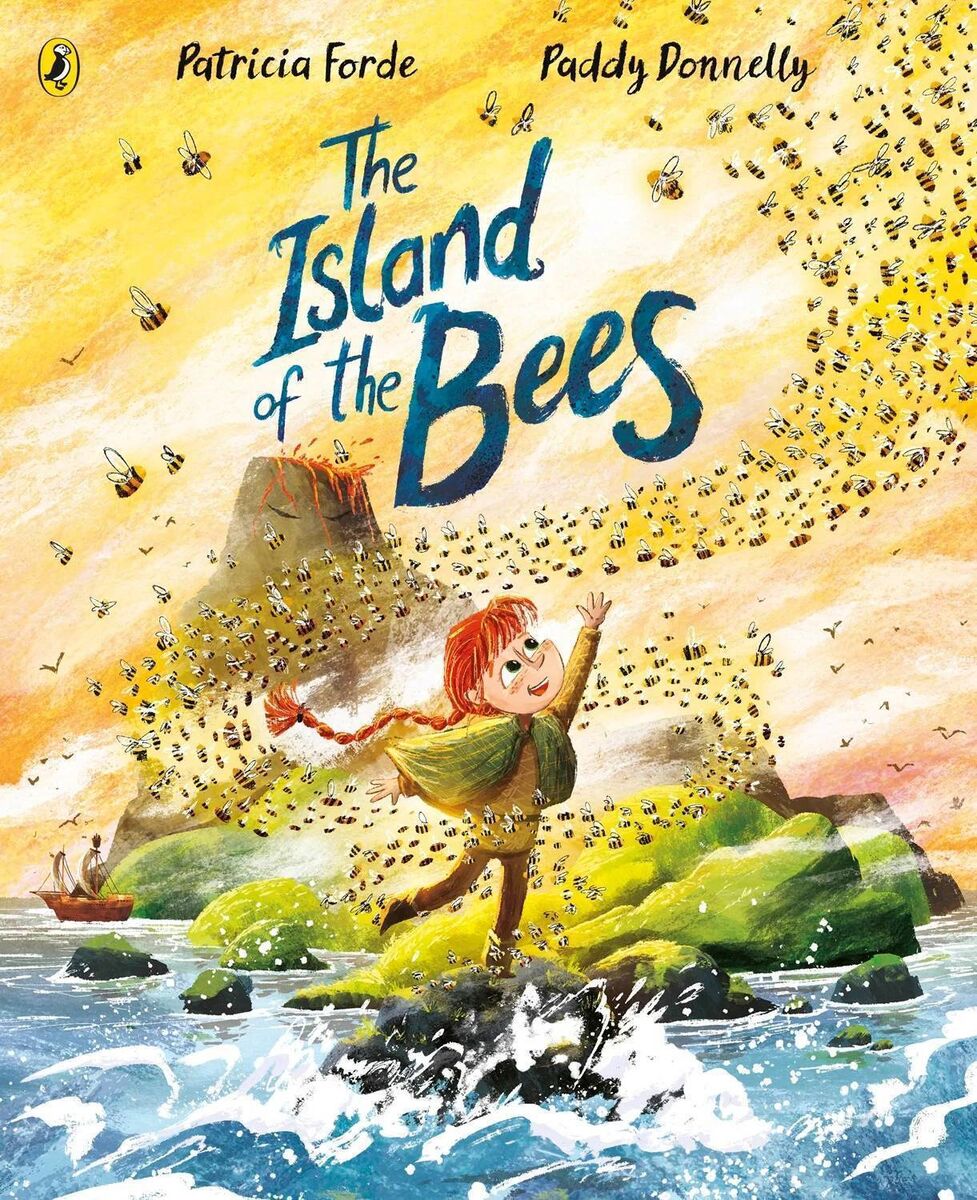
Orla and Mamó live peacefully on a beautiful island, where they tend to their hive of bees.
They continue the old tradition of telling their news to the bees, who bring them good luck and provide delicious golden honey.
All is well until a “sleeping monster” on the island awakens from its slumber.
Though it “growls and snarls”, this is no wild beast but somewhat surprisingly, an active volcano, whose eruption forces Orla, Mamó, and their fellow islanders to flee by sea.
In scenes straight from Noah’s ark, a farmer brings vegetable seeds aboard, a butcher brings hens, and a cook hauls his pots and pans on deck, but the captain tells Orla that her bees are not welcome on his ship.
Knowing the importance of the bees, Orla secretly stows them away in the hold.
Her prudence pays off when, after the ship’s passengers and crew have survived fierce storms and even fiercer dragons, it is the bees that are responsible for leading them to a new island where they can settle and live again in peace with nature.
Threads of Irish legends woven into a fresh new yarn create a high-seas adventure from children’s laureate Patricia Forde, colourfully illustrated by Paddy Donnelly.
It has at its heart an entreaty to humans to value and advocate for their insect friends as they face the challenges of climate change and habitat loss.
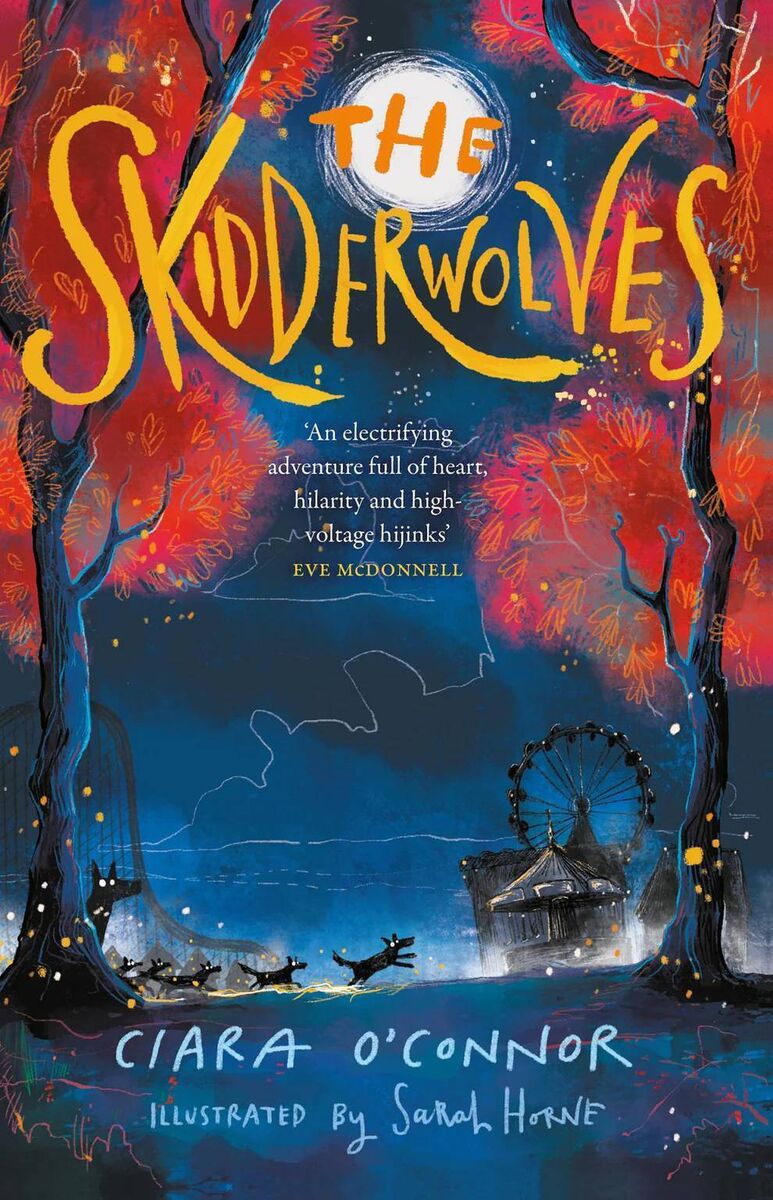
Skidderwolves: “Devious, bloodthirsty creatures” who once plagued the Galway village of Shoak with their nightly rampages and launched a vicious, random attack on a young girl asleep in her bedroom. Or so it seems.
Though not sighted since that infamous attack, the Skidderwolves are a protected species and had once been a tourist attraction in Shoak.
They were, in fact, “regular Irish wolves until the Great Storm of 1650, which ravaged the west coast of Ireland [it has continued to rain in Galway ever since].”
“Legend has it that the entire pack was struck by lightning during this storm, leaving them with unique electrical capabilities. For centuries, their electricity has nourished Shoak Forest, the place they instinctively fled to after the Great Storm, making it a national site of interest, a protected habitat, and Ireland’s only naturally glowing forest.”
The villagers, however, live in dread fear of the Skidderwolves’ return.
So when, in a frantic search for an item to draw in art class, Rory brings into school a weird old comb belonging to his dad, his teacher reports it to the gardaí, recognising it as one used on the hairy Skidderwolves.
His unfortunate choice of artistic subject sparks a chain reaction which involves his dad being arrested, Rory hiding a wolf in his bed, and the truth about the attack and the much-maligned Skidderwolves being uncovered.
Dundalk author Ciara O’Connor’s debut novel is ridiculously far-fetched, crazy, absurd … and great scary fun.
Among the many modern children’s books whose aims are worthy, their characters diverse, their eco-credentials exemplary, yet which fail to spark the imagination, this electrifying lupine escapade shines brightly.
Friendship is a central feature of most stories involving pre-teen girls, but O’Connor nails it for the boys with her depiction of Rory’s unbreakable bond with his best pal Don, their secrets sworn “on the yoghurt”, on pain of having to eat the six-month-old jar of fermented milk festering in Rory’s bedroom cupboard.
Deliciously gross.

BOOKS & MORE
Check out our Books Hub where you will find the latest news, reviews, features, opinions and analysis on all things books from the Irish Examiner's team of specialist writers, columnists and contributors.