From the White House to the new V&A: 10 Irish-designed buildings around the world
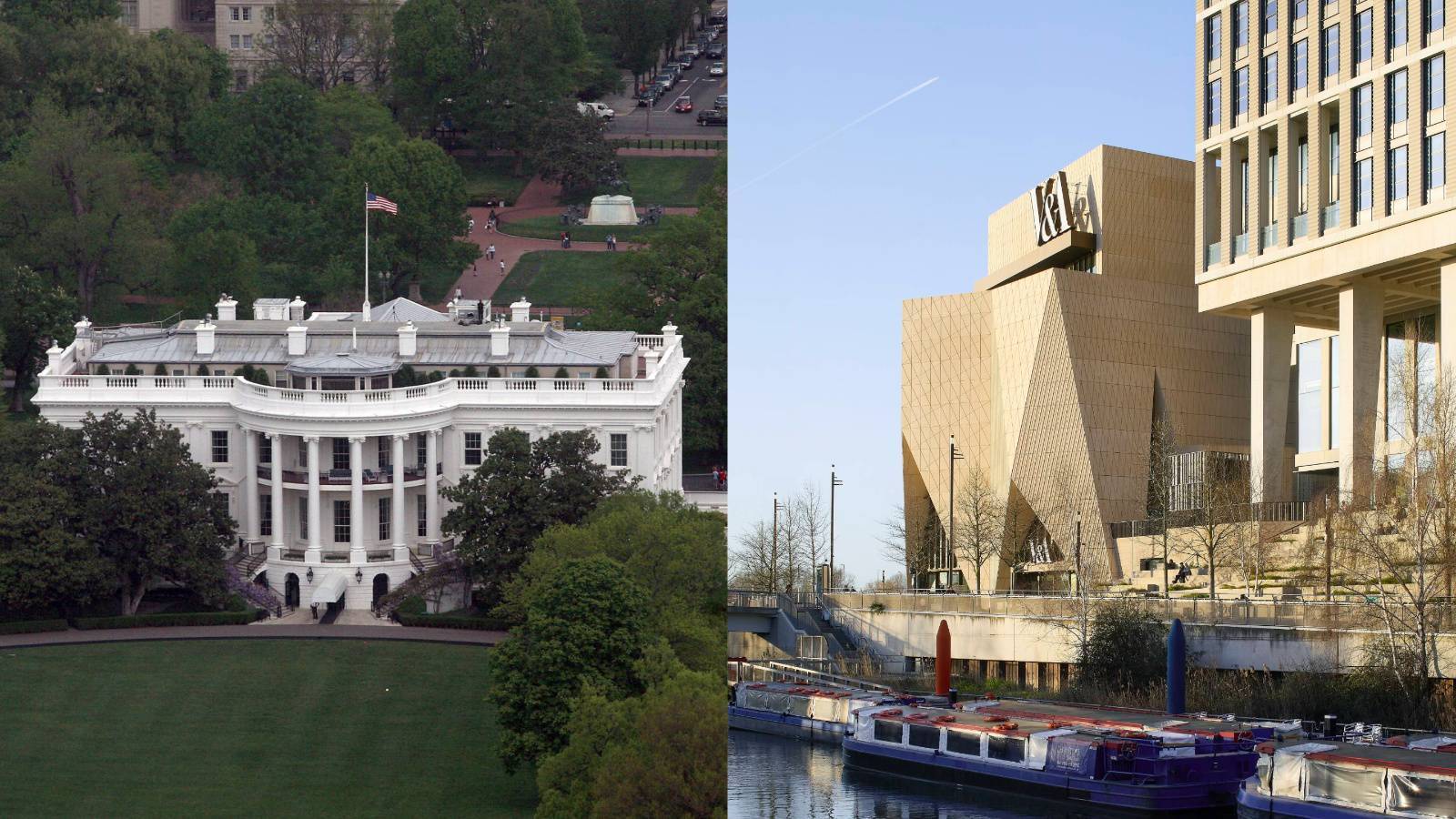
The White House and the new V&A are among some distinctive Irish-designed buildings around the world
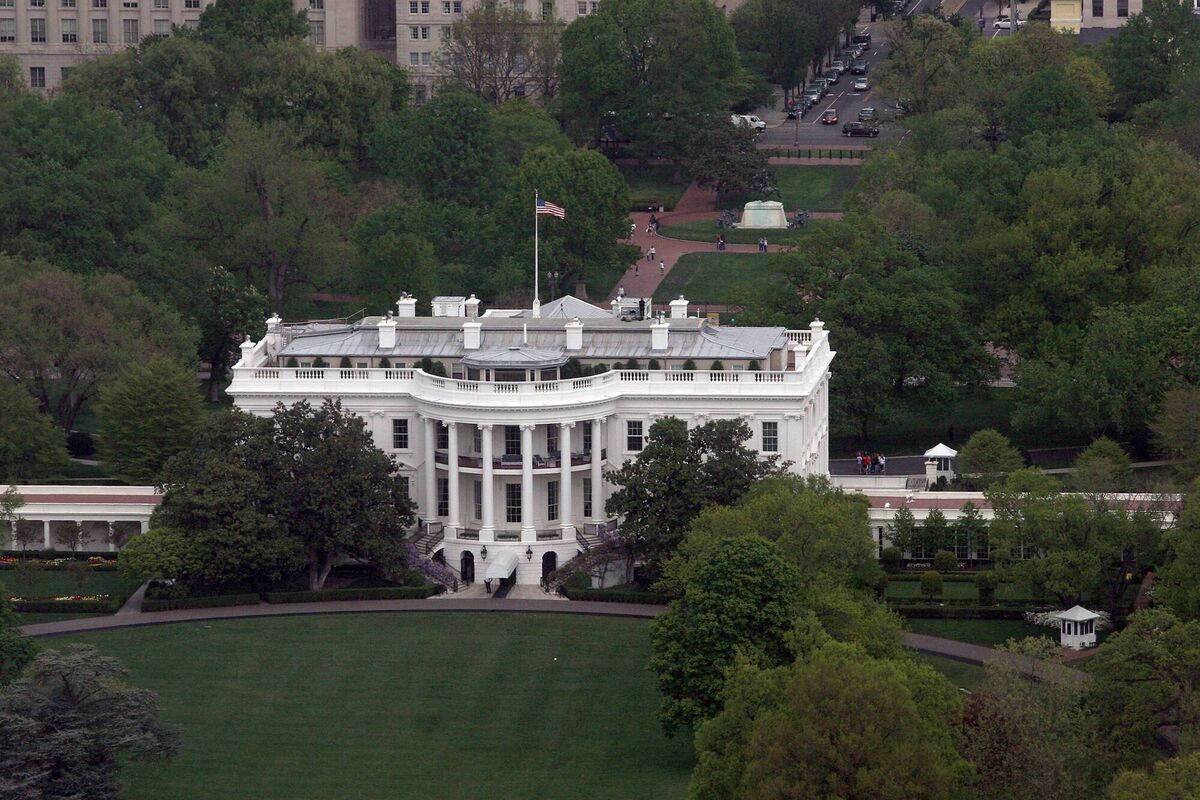
Donald Trump’s recent demolition of the East Wing of the White House in Washington DC, to facilitate the construction of a $400 million ballroom, has been the cause of much controversy. However, it is just the latest in a whole slew of alterations to Irishman James Hoban’s original design for the building.
Unlike Trump, Hoban was a self-made man and had remarkably good taste. Born in 1755 and raised in a thatched cottage on the Desert Court estate in Co Kilkenny, he became apprenticed to the architect Thomas Ivory, who designed many of the Georgian buildings around Dublin.
In 1785, Hoban emigrated to America, where he established his own practice in Philadelphia. Just seven years later, president George Washington commissioned him to design the White House.
Hoban based his plans on Richard Cassels’ design for Leinster House, which he knew well from his student days in Dublin. He envisaged a three-storey neoclassical mansion, built from Aquia Creek sandstone, which he had painted with a lime-based whitewash to protect it from moisture and winter freezing.
When work on the White House was completed in 1800, its most striking feature was the north-facing classical façade, whose four Ionic columns have survived even Trump’s ‘improvements’, contributing significantly to the building’s status as one of the most famous in the world.
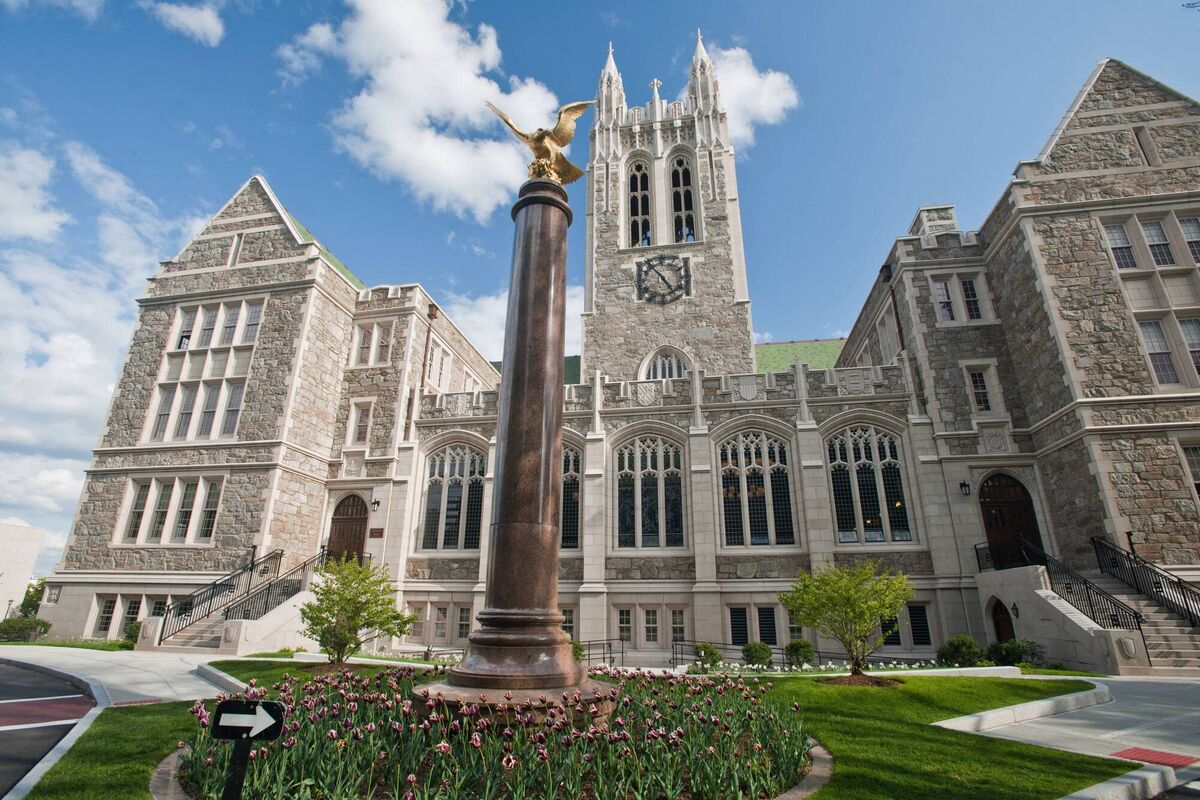
Boston College was based in Boston’s South End until 1907, when its president, Thomas I Gasson, organised the purchase of a large farm at Chestnut Hill, 10 km west of downtown Boston, and launched an international competition for the design of a new campus.
Charles Donagh Maginnis won for his proposal for an “Oxford in America.” Maginnis was then aged 40. Born in Derry, he had emigrated to Boston in his late teens and served his apprenticeship with the architect Edmund M Wheelwright. Later, in his own practice, he became best known for designing churches.
Boston College is a private Catholic Jesuit research university, and Maginnis’s vision was for a complex of six Gothic Revival stone buildings, laid out in a cruciform and centred on Gasson Hall, whose 600-foot-tall bell tower dominates the campus to this day.
On its completion, American Architect magazine voted Boston College “the most beautiful campus in America”. In 1948, the American Institute of Architects presented Maginnis with its highest award, the Gold Medal for “outstanding service to American architecture.”
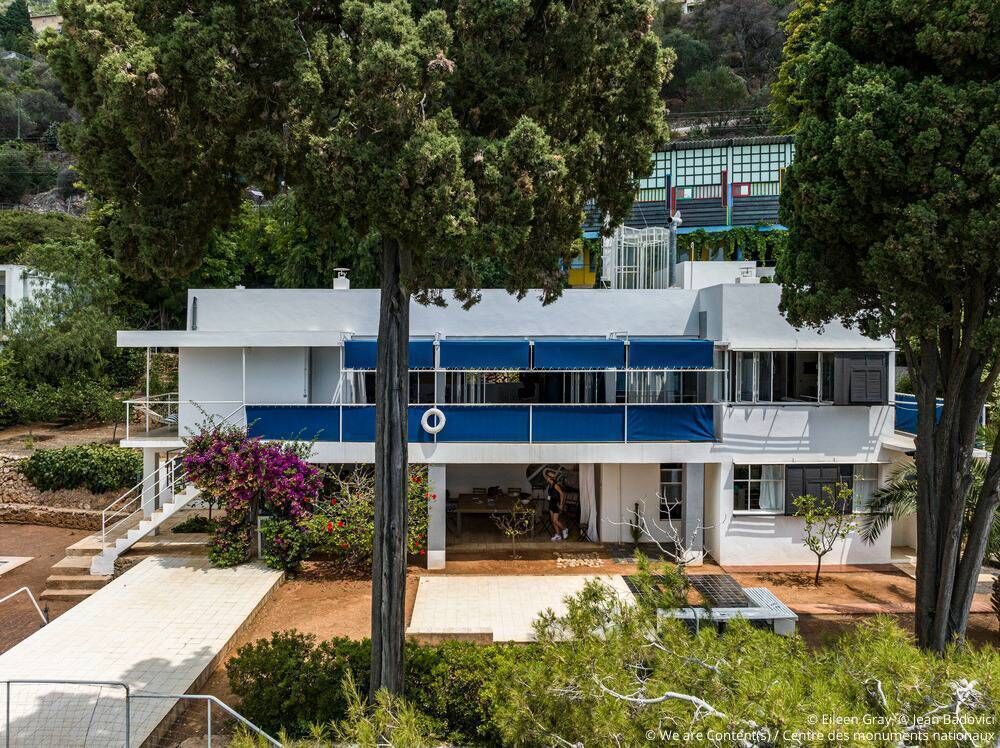
E-1027 is the home on the French Riviera that Co Wexford-born designer Eileen Gray shared with her romantic partner, Jean Badovici.
Completed in 1929, E-1027 is an L-shaped, flat-roofed dwelling on concrete stilts, with floor-to-ceiling windows overlooking the sea, and resembles an ocean liner. It was Gray’s very first architectural project. She also designed its furniture and fittings, which helped to emphasise the building’s free-flowing form and functionality.
The architect and architectural historian Sarah Lappin describes E-1027 as “one of the most important houses of Modernism, full stop. Eileen Gray managed to create an extraordinary array of spaces for different uses in what is a relatively small building, designing every square millimetre with the utmost care. She was striving for what she called a ‘humanised Modernism.’ E1027 exemplifies that intent.”
E-1027 passed through several hands before being acquired in 1999 by the French government, which declared it a National Cultural Monument. It opened to the public in 2021.
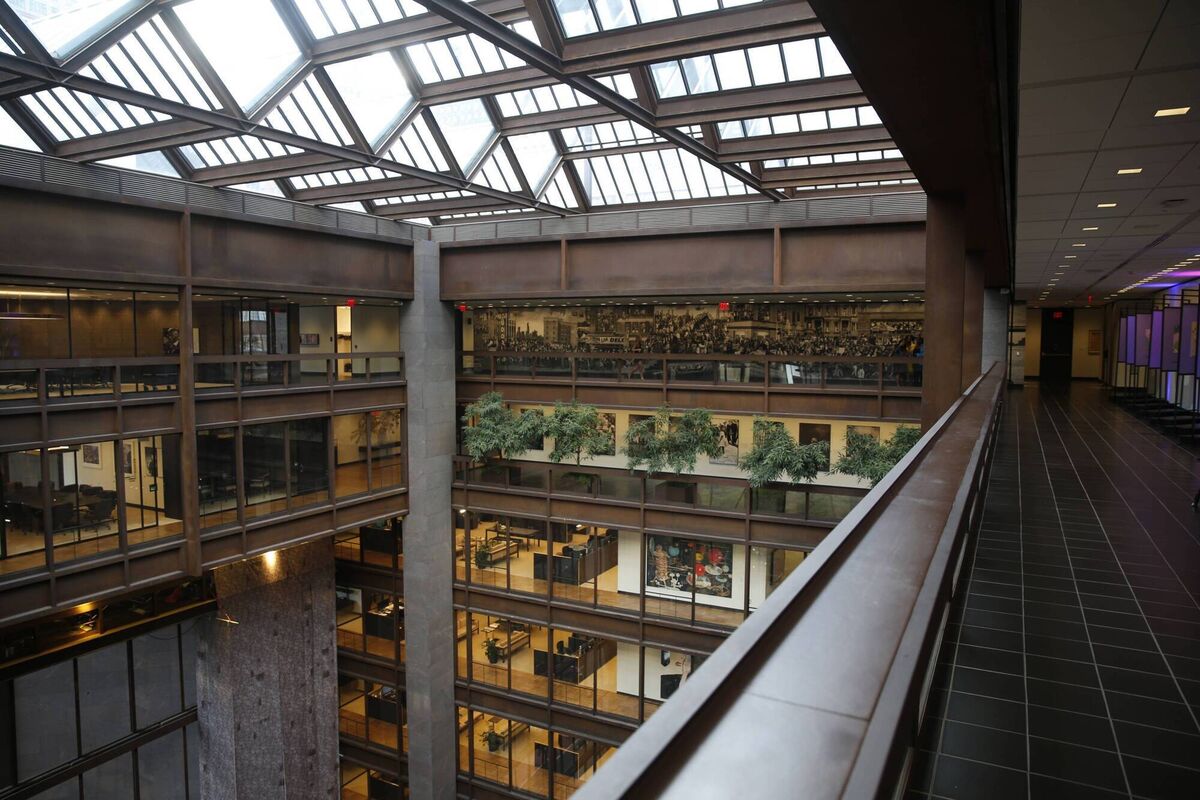
The Ford Foundation Building in New York was one of many triumphs for Kevin Roche, who grew up in Mitchelstown, Co Cork, and studied at UCD before establishing himself as an architect in America.
Commissioned by Henry Ford II to design a building on a 62 x 61m site between 42nd and 43rd Streets in New York, Roche responded with a 12-storey L-shaped edifice of granite, glass and weathered corten steel.
“Kevin Roche was really pioneering,” says Hugh Campbell, professor of architecture in the School of Architecture, Planning and Environmental Policy at UCD.
“What’s important about the Ford Foundation Building is that it features this huge atrium – a green garden space, basically – in the middle of an office building. It’s something we maybe take for granted now, but at the time, that was hugely innovative.”
The Ford Foundation Building opened in 1967 and won several major awards, including the American Institute of Architects Twenty-five Year Award.
Roche was awarded the Pritzker Prize, one of the most prestigious architectural prizes in the world, in 1982.
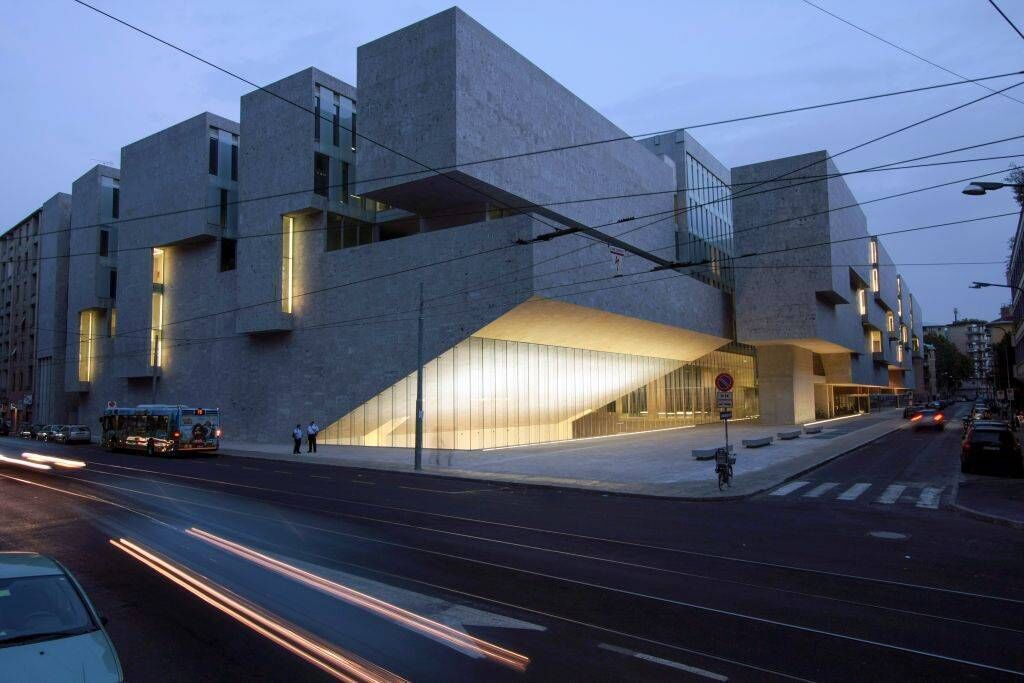
The Via Roentgen Building at Bocconi University in Milan won the World Building of the Year Award at the inaugural World Architecture Festival in Barcelona in 2008.
The building was designed by two Dublin-based architects, Yvonne Farrell and Shelley McNamara, trading as Grafton Architects.
It houses offices, a 1,000-seat auditorium, lecture theatres, public courtyards and a subterranean concourse. The outside is clad in ceppo, a natural stone material, and the plate glass wall on the northern front looks out on the Viale Bligny, one of the busiest streets in the city.
“What’s interesting about projects like this is that there was a competition,” says Campbell. “Grafton Architects basically pitched their proposal against firms from all around the world, and prevailed. This was Grafton Architects’ first major building outside of Ireland, and since then, most of their major buildings have been abroad.
“Grafton Architects have a staff of maybe 40 people. If they were in London doing the same jobs, they might have twice that number. What that means is that you get a lot of personal attention and investment from the senior architects of the firm in all the work. They’re very much hands on.”
Farrell and McNamara won the Pritzker Architecture Prize in 2020.
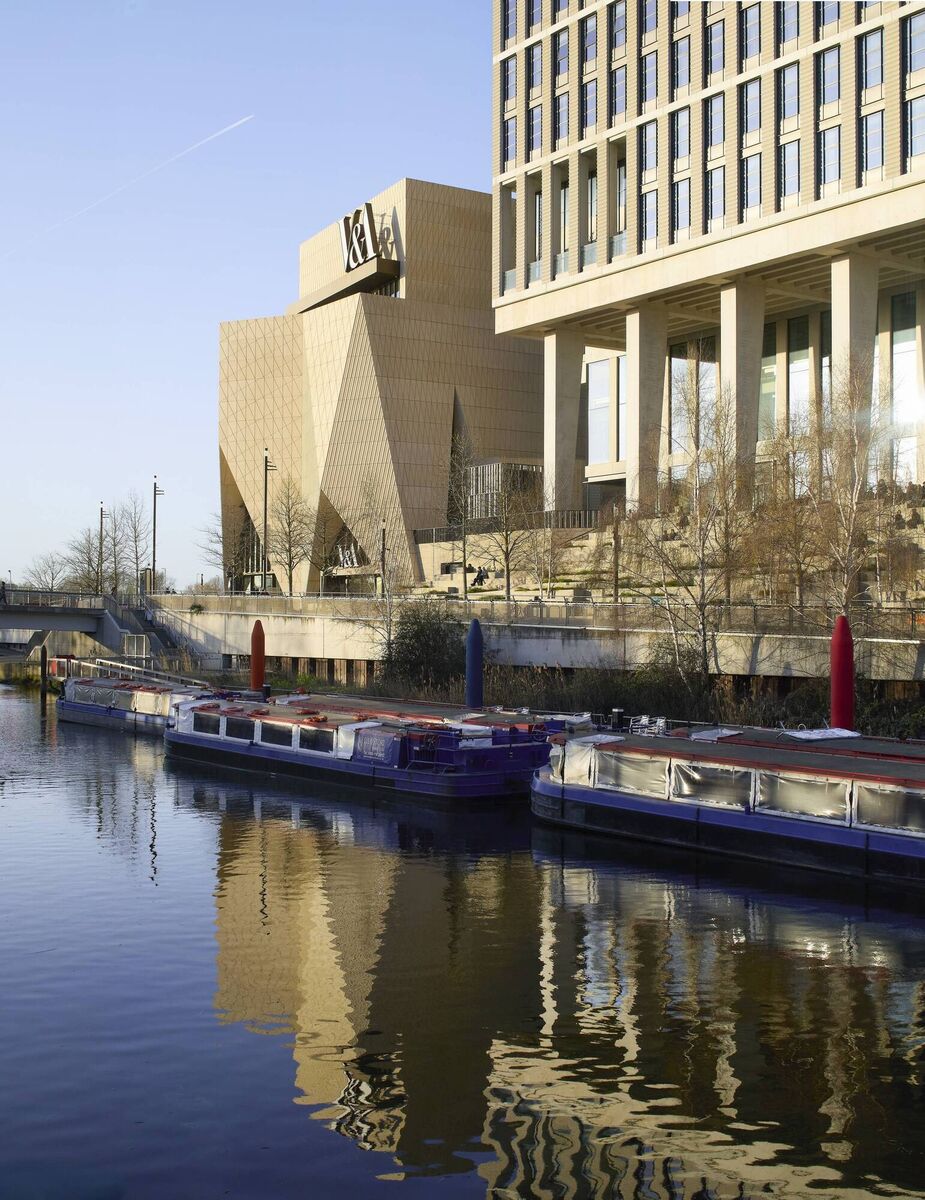
Officially opening on April 18, the V&A East Museum at Queen Elizabeth Olympic Park in Stratford, London will be a sister building to the V&A East Storehouse, which provides public access to over half a million artefacts and books, including the celebrated David Bowie archive.
The V&A East Museum will play a different role, showcasing works from the V&A’s permanent collection as well as hosting temporary exhibitions of contemporary and historical art and design.
The new museum was designed by O’Donnell + Tuomey, who describe it as “an angular, pyramidal building cloaked in a façade of concrete panels covered in lines that evoke the Vs and As of the V&A logo.”
“O’Donnell + Tuomey are very interested in a kind of place making, like they want to make something that has character,” says Campbell. “They’re interested in that whole orchestration of people’s movement in and around and through their buildings. Everything they do is bespoke. That’s a large part of their style.”
In 2025, O’Donnell + Tuomey were awarded the Royal Institute of the Architects of Ireland’s Gandon Medal for their outstanding contribution to architecture in Ireland, the UK and Europe.
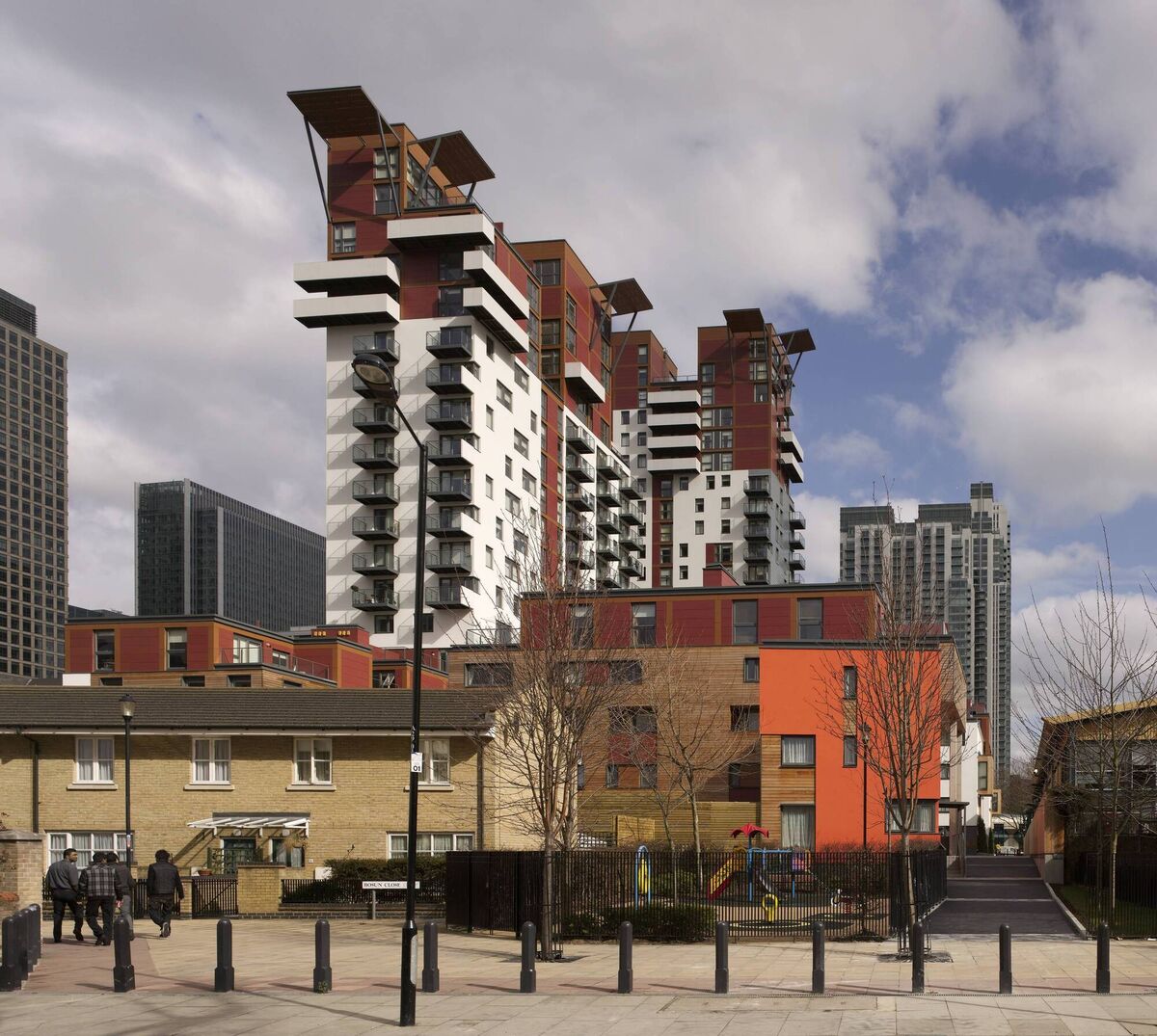
Phoenix Heights is a residential development built between 2007 and 2009 as part of the London Docklands/Canary Wharf regeneration. The project was designed by Dubliner Angela Brady and her husband Robin Mallalieu, trading as Brady Mallalieu Architects.
Phoenix Heights consists of 199 mixed-tenure homes, and varies in height from three storeys to 23. Families are housed on the lower floors, with access to gardens and playgrounds, while the smaller units higher up have roof terraces and balconies.
The community space on the ground floor has meeting rooms, a recording studio and a kitchen. There is also a rooftop sports pitch.
Phoenix Heights won the 2010 RIAI Award and the London Evening Standard New Homes Award.
Angela Brady is known to many for her work as a television presenter, fronting shows such as on RTÉ. She was awarded the Order of the British Empire in 2015.
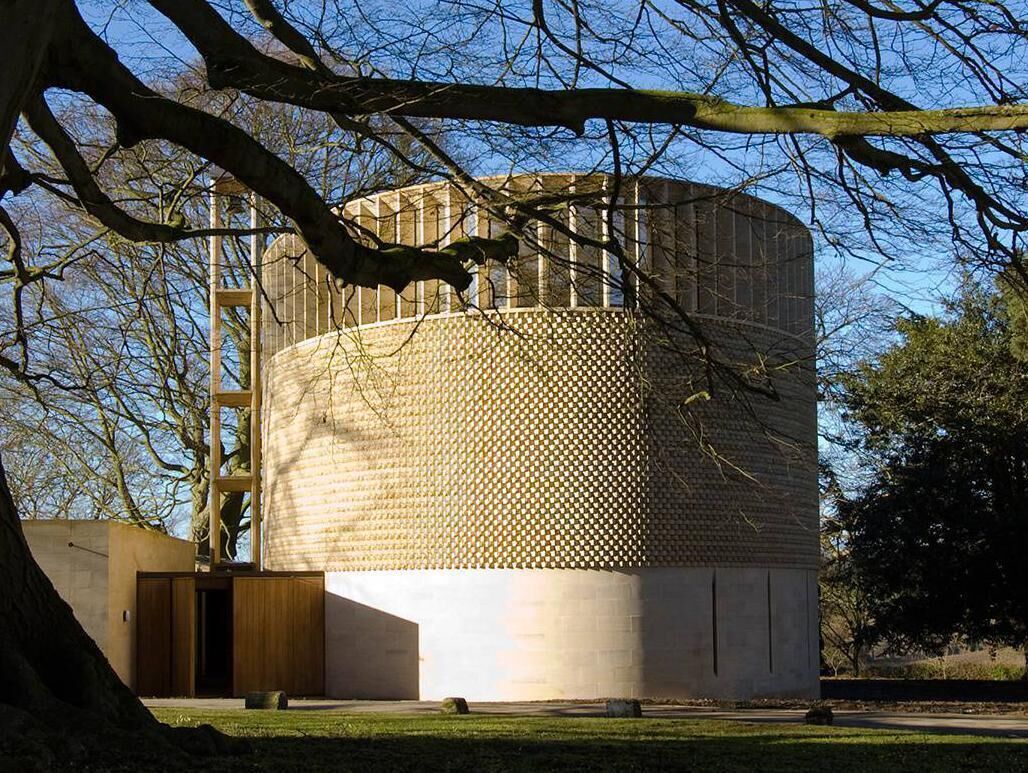
The Bishop Edward King Chapel at the Ripon Theological College in Cuddesdon, South Oxfordshire, won the RIBA National Award and was shortlisted for the Stirling Prize in 2013.
The chapel, which serves an order of nuns and 250 student clergy, was designed by the UCD graduate Niall McLaughlin, professor of architectural practice at the Bartlett School of Architecture, University College London.
“The chapel is quite a small project, but it’s very carefully and perfectly made,” says Campbell. “Niall is really very interested in the careful crafting of space, he’s built a reputation on making that kind of thoughtful work.
"And he would definitely trace a lot of those interests — the regard of thinking about materials and craft — back to the sort of education he had in Ireland.”
McLaughlin’s decision to build the chapel as an ellipse was partly inspired by the word ‘nave,’ which refers to the main part of a church, but is also the Latin for boat.
Inside, the latticed woodwork is made of larch and ash, designed to resemble a thicket of trees. Trees are a major inspiration; the doorway is aligned with a huge copper beech tree that dominates the site, while the window on one side sticks out between a Spanish chestnut and a Scots pine, affording a perfect view of the valley beyond.
On April 30, McLaughlin will be presented with the 2026 Royal Gold Medal by the Royal Institute of British Architects (RIBA).
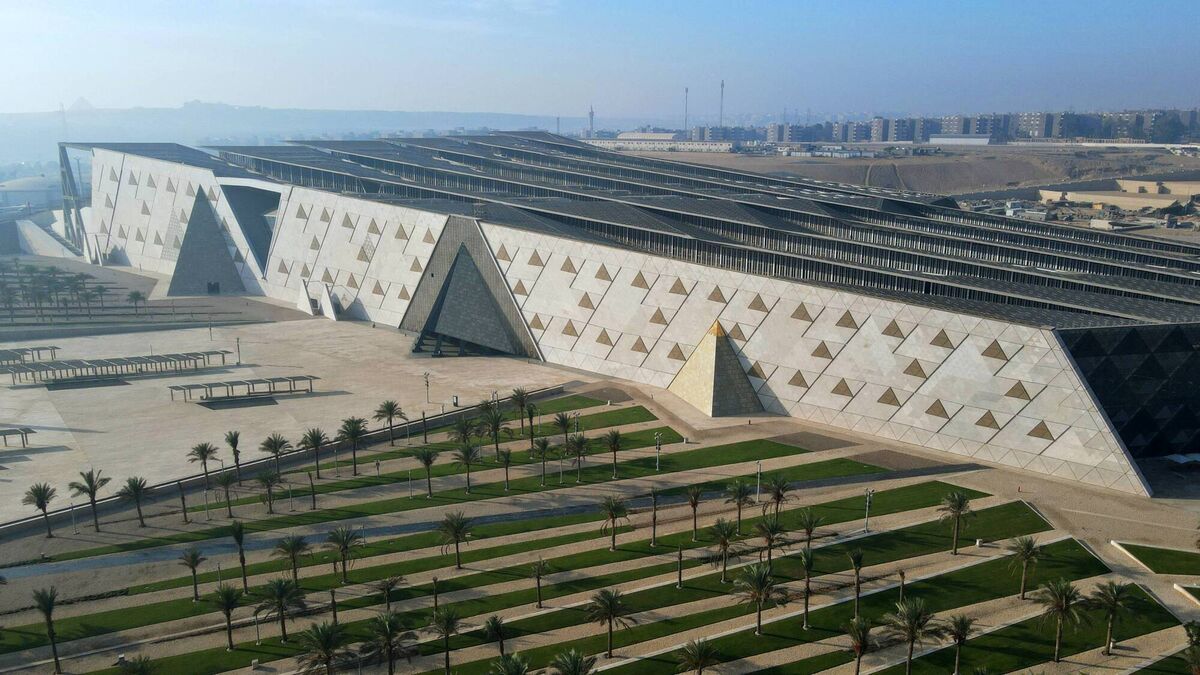
In 2003, Heneghan Peng — a partnership between Co Mayo-born Róisín Heneghan and her Taiwanese-American husband Shih-Fu Peng — won out over 1,557 submissions in the second-largest architectural competition in history to design the Grand Egyptian Museum, the largest museum in the world dedicated to a single culture.
The museum, located on a desert plateau on the edge of Cairo, is six storeys tall and spans half a million square metres.
“The museum achieves one of the most difficult architectural tasks,” says Lappin. “It is both an extraordinary building in its own right but also provides a backdrop to some of humanity's most impressive artefacts.”
The 100,000 objects on display include the golden Mask of Tutankhamun and the 4,600-year-old solar boats of King Khufu, who built the Great Pyramid at Giza, visible from the museum’s glass-roofed entrance, the Grand Hall.
“Heneghan Peng are enormously talented at siting their buildings so that they never take away from sensitive places but still manage to be exceptional buildings themselves,” says Lappin.
“You know you are at Giza to see the ancient buildings, but it will be difficult to tear yourself away from the museum.”
Construction was completed in 2023, at a cost of $1.2 billion. The museum opened to the public on November 1, 2025.
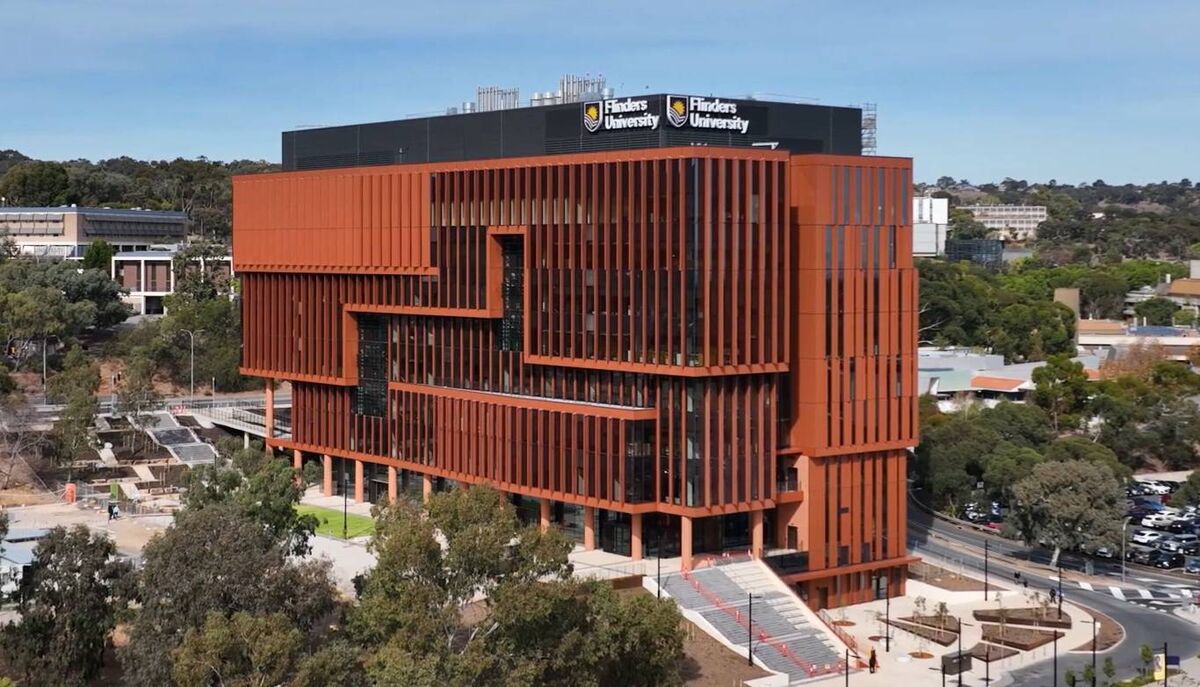
The Flinders University Health and Medical Research Building (HMRB) in Adelaide, South Australia, was designed by Alan J Duffy, a native of Co Wicklow who is now based in Sydney.
HMRB is located in an area known as Rainbow Country by the indigenous Kaurna people, with whom Duffy worked closely on his plans.
He designed the building to harmonise with the geological outcrops in the countryside around, used ochre-coloured masonry, concrete and metal in the exterior base, and installed a facade of terracotta blades and louvres.
The building features sculptural installations by Aboriginal artists James Taylor and Aunty Yvonne Koolmatrie, and the landscaping includes an Indigenous medicine garden.
Duffy won the prestigious State Medal for his work on the building in 2025.