I spent a day with The Young Offenders filming a very Cork wedding — here's what I learned
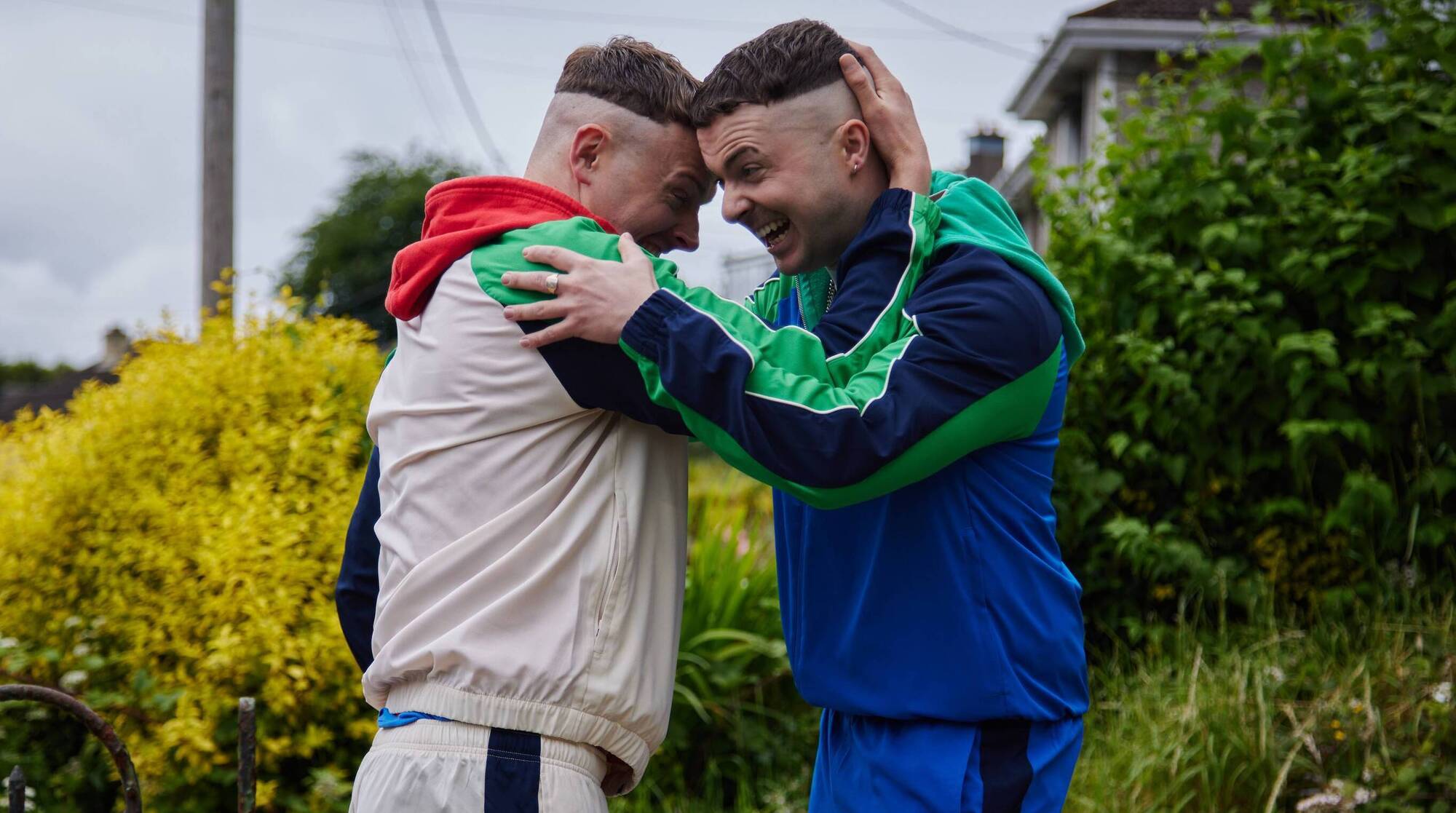
Jock O'Keeffe (Chris Walley), and Conor MacSweeney (Alex Murphy) in 'The Young Offenders' Picture: BBC/Vico Films
Between clusters of crew, snaking cables, big lights, stacked school chairs, and the scuff of runners on the skirting boards, the cast move through the space like they’ve never really left. In a way, they haven’t.
For nearly a decade, this school has been more than the St Finans set — it’s been the beating heart of one of Ireland’s most beloved, critically acclaimed comedies. So it feels fitting that the team have chosen it as the venue for their highly anticipated Linda and Gavin’s wedding day episode.
Read More
There’s an extra fizz in the air. The latest six-part season sees Conor reunited with Jock in Cork after they both spent the previous run in different prisons. It is episode three that they are filming today, and it feels like a milestone, an inevitable but slightly surreal one for fans who’ve grown up alongside Leesides’s most endearing tearaways.
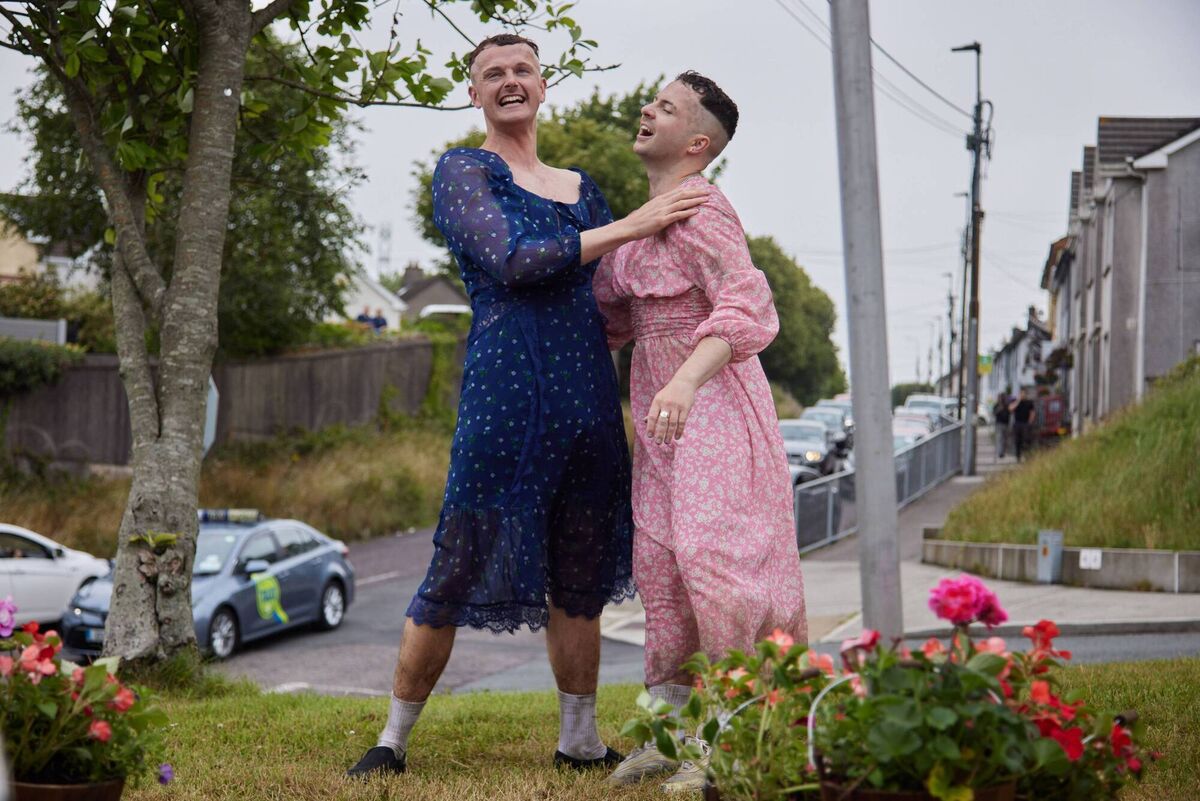
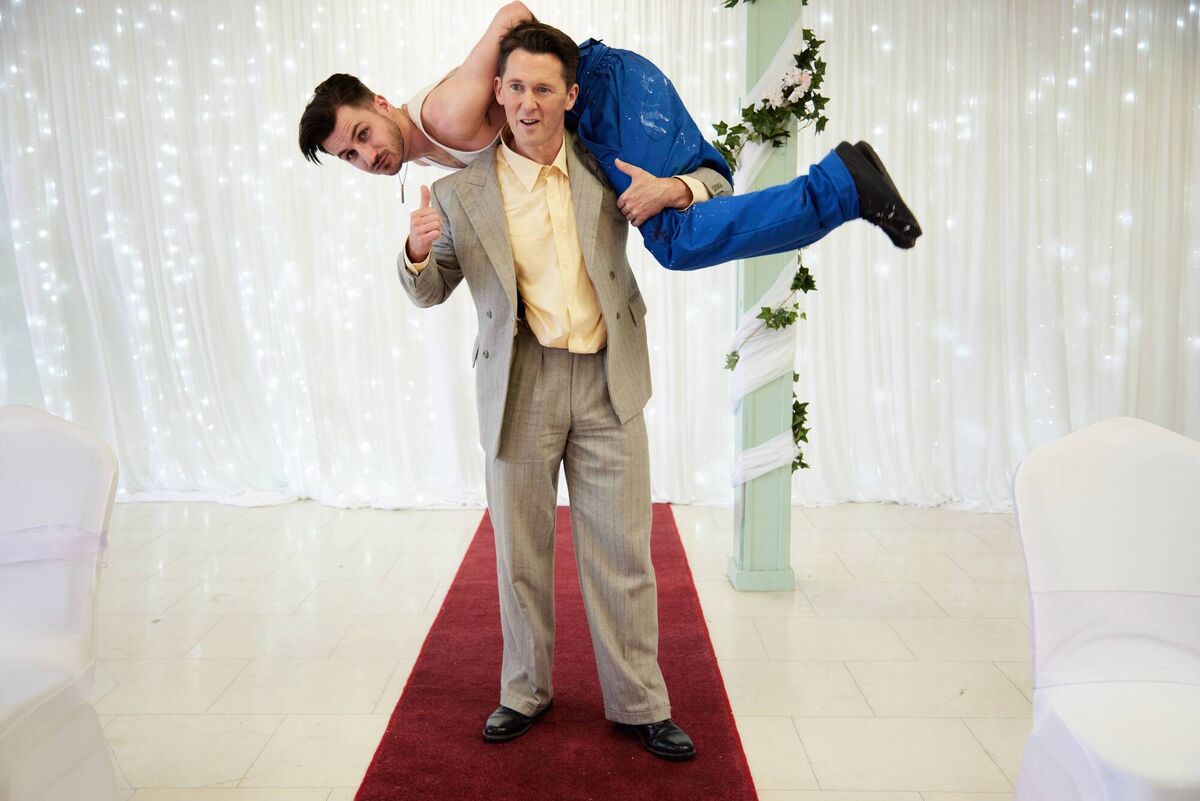
I walk past the bride outside, Mallow actress Demi Isaac, beaming — and shivering — in a meringue-silhouette sweetheart cut dress, a black cardigan thrown over her shoulders to keep her warm between takes. Around her, extras are dolled up in bright colours, spray tans, big earrings — and that’s just the fellas.
Hilary Rose stands out in a vivid orange dress and towering fascinator in the shape of a starburst, battling against the wind, while Chris Walley sports a tight black suit, with a red floral print so loud, you could hear it in Kinsale. His dress shoes are gleaming, but not as much as the white sports socks he has on with them. Pure Jock.
Shane Casey is strutting around sporting an ill-fitting mustard shirt that looks like it came directly out of Dwight Schrute’s wardrobe. A huge white Hummer sits unapologetically in the staff car park, and inside, the school cafeteria is transformed into a wedding venue, with hurricane candle jars, fake cherry tree blossoms, twinkling lights, and ivory chair covers.
At the centre of it all today is Paul Howard, whose sharp ear for dialogue has shaped some of Ireland’s most recognisable comic voices. His presence adds a quiet sense of occasion and a timely reminder that even in a show built on chaos, craft matters.
He’s the first one I grab for a chat.
If the cast brings the crazy, Howard is the man scribbling it. Best known for skewering a very different corner of Irish life through South Dublin posho, Ross O’Carroll-Kelly, he’s an unlikely — but oddly perfect — fit to write this episode for , a show he was already a fan of before being asked to step in.
“I didn’t even have to think about it,” he says, laughing. “You might think I paused for five seconds, but that’s only because I dropped the phone.”
We’re tucked away from the noise of the set, though it still seeps in: The voices in the corridor, the low thrum of the crew, the occasional call for quiet. Howard, who has spent the past few years moving from newspapers to best-selling author and into top-tier television, seems entirely at ease. He’s recently worked on Bad Sisters and has just returned from Canada, where he was writing the hit co-production between RTÉ and a Canadian broadcaster, Sisters, in conditions far removed from a Cork classroom with a slight smell of old milk.
“It was minus 20 there,” he says. “Freezing. So in the evenings and at the weekends, I just didn’t leave the hotel room. I ended up doing a lot of the work on this episode there, which was kind of handy.”
Writing a Cork wedding episode from a snowed-in hotel room in Hamilton feels oddly fitting for a show that has always punched above its weight. Howard slipped easily into the rhythm of it, helped by the fact that he already knew the characters so well.
“I’ve been watching it from the start, so their voices were already in my head,” he says. “And I love regional accents, especially Cork and Kerry. I tend to write dialogue almost phonetically, the way people actually speak.”
One question nags me, though: How does a Dublin writer land a Cork voice without it sounding off, djaknowwaddImeeeeanlike?
“I’ve always loved the Cork accent,” he says. “When I worked in newspapers, about half the sports department were from Cork. When they got together, it was Cork to the nth degree. We’d end up in Toners afterwards, and I’d just sit and listen.”
Not necessarily understanding, he admits: “It’s just such a beautifully lyrical accent. Like music. Half the time I didn’t have a clue what anyone was talking about, but I loved the sound of it.”
Back on set, you can hear exactly what he means. Outside, a scene between Mairéad and Sergeant Healy plays out in gusts of wind that do their best to upstage that giant orange fascinator. Around 20 crew members hover, adjusting, resetting, chasing something just a little bit better with each take.
Hilary Rose’s calm warmth radiates as she slips in and out of character with the ease of someone who has lived inside Mairéad for nearly a decade.
One of the show’s emotional anchors has always been Mairéad, the longsuffering, fiercely loving, frequently exasperated Irish mammy who’s spent the better part of a decade trying to keep two eejits alive. But as Hilary points out, Mairéad hasn’t stayed static. She’s grown, changed, and worn down in ways that feel recognisable to Irish mothers everywhere.
When I ask Hilary whether she feels Mairéad has evolved in terms of motherhood, she doesn’t hesitate.
“Even when I look back at the levels of aggression Mairéad had in season one, I think it’s now levelled off into exhaustion,” she says.
Isn’t that the most Irish mammy arc imaginable?
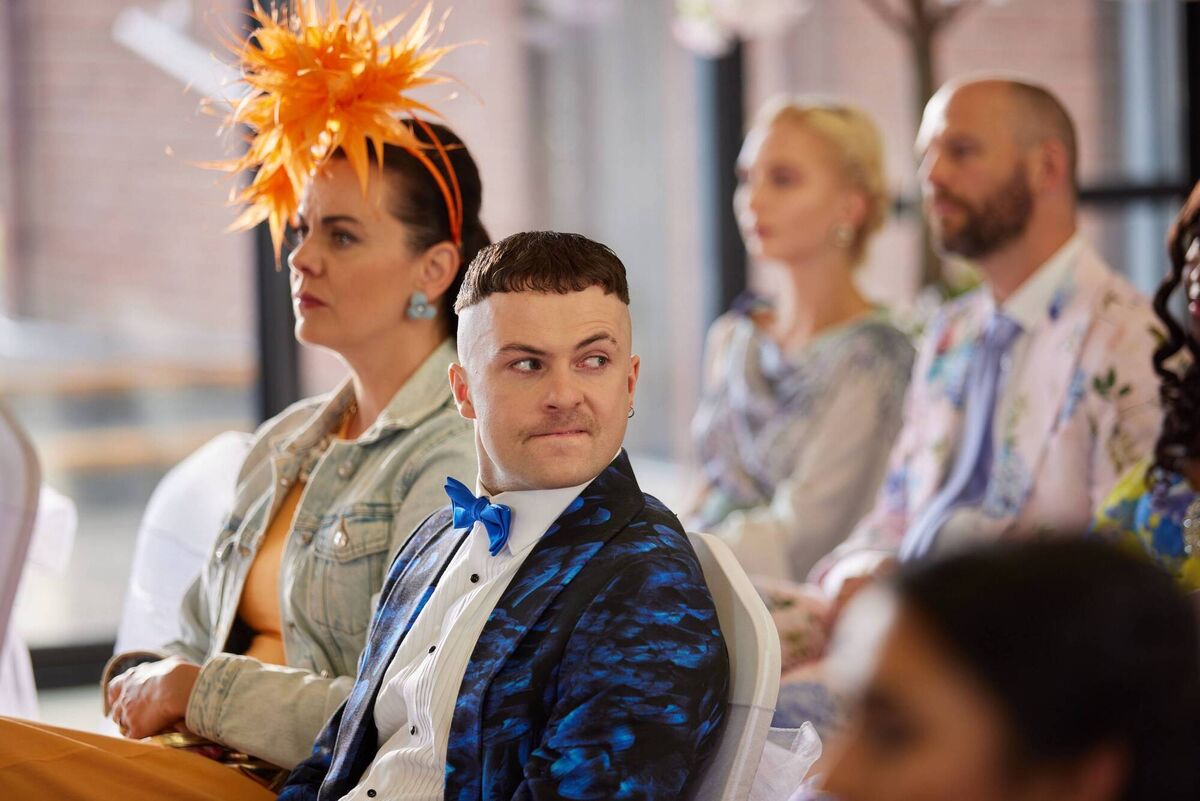
At first, you meet chaos with ferocity, roaring, marching, rescuing, keeping the whole show on the road. But years of trying to keep teenagers alive will soften that into something else entirely: Bone-deep tiredness, the kind that comes from caring so much for so long.
Hilary talks about how Mairéad spent the early seasons “trying to keep them alive and keep them out of trouble, and doing a lot of rescuing”. Now, there’s a shift, not a letting go, as such, but recognising the limits of what she can control, especially as the lads get older and the stakes change.
And, of course, in true style, just as she thinks she might get a breather, there’s a new baby in the house.
Hilary laughs about that, how Mairéad is essentially starting all over again, trying to “get it right” while juggling a blended, ever expanding family that now includes the boys’ once-upon-a-time nemesis, Sgt Healy. It brings fresh dynamics into play.
“It ties in the dynamic with Healy and the family,” she says, “we have to wonder where do these guys fit in?”
She reveals that viewers will be seeing Mairéad’s own story expand, not just as the mammy who absorbs everyone else’s drama, but as someone with her own internal shifts, her own personal journey. Hilary tells me that this season gives her a bigger arc and even a hint of backstory, something we’ve rarely seen for her character.
If Howard brings the ear for dialogue, the cast brings something harder to manufacture: History.
Alex Murphy and Chris Walley, the inseparable pair whose chemistry powered the show from cult favourite to cultural touchstone, come to have a chat. They spark off each other with the same sly, conspiratorial energy that first won audiences over.
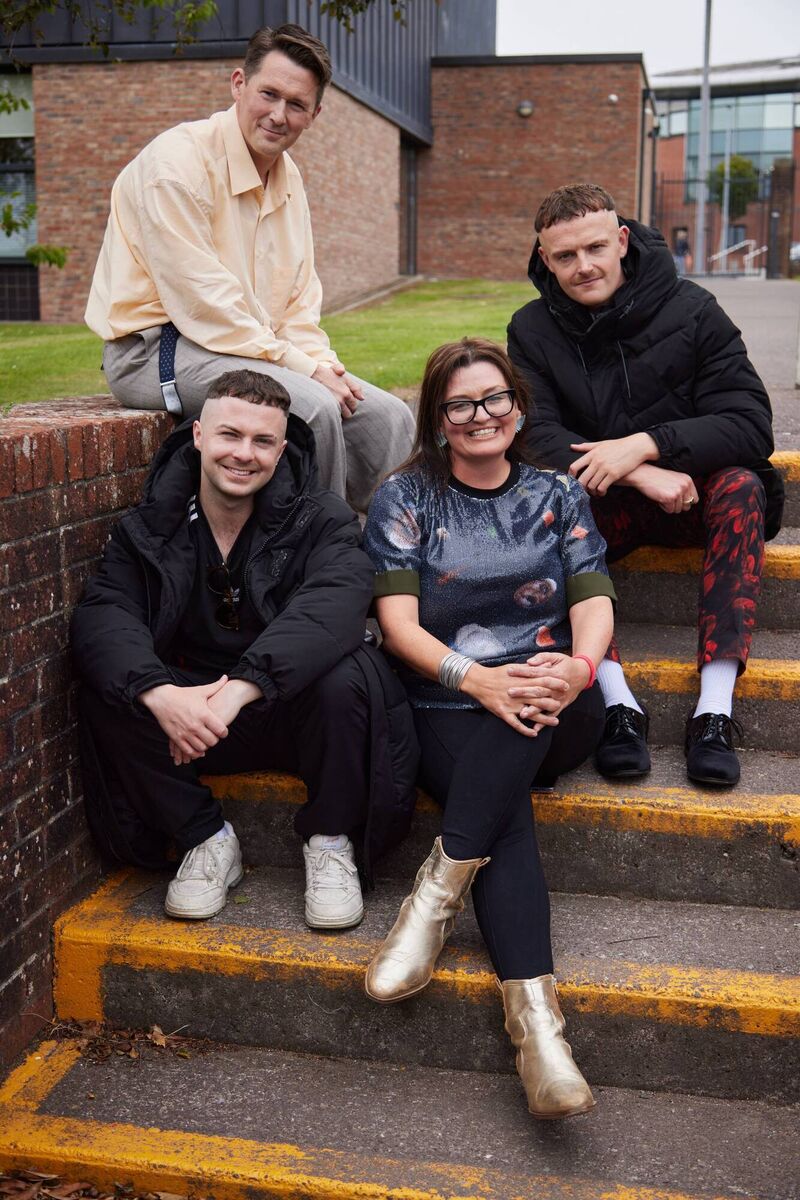
Murphy is the first to put his finger on it.
“We were so young when we started,” he says. “I’ve kind of grown up on the show. I’m 27 now, it’s been nearly 10 years, which is mad.”
What is actually mad — and really disconcerting — is hearing the gentle, middle-class tones of Alex coming out of messer Conor’s face.
Beside him, Chris Walley, aka Jock, nods. At the time of our interview, he’s on the cusp of turning 30, the passage of time written more in experience than appearance. I want to ask him what moisturiser he uses, but it seems unprofessional.
There’s a running joke about how easily they can always slip back into their younger characters.
“It’s the haircut,” he says. “And shaving the beard. It takes years off. We have to keep cutting the hair all the time to keep the look — every day, actually!”
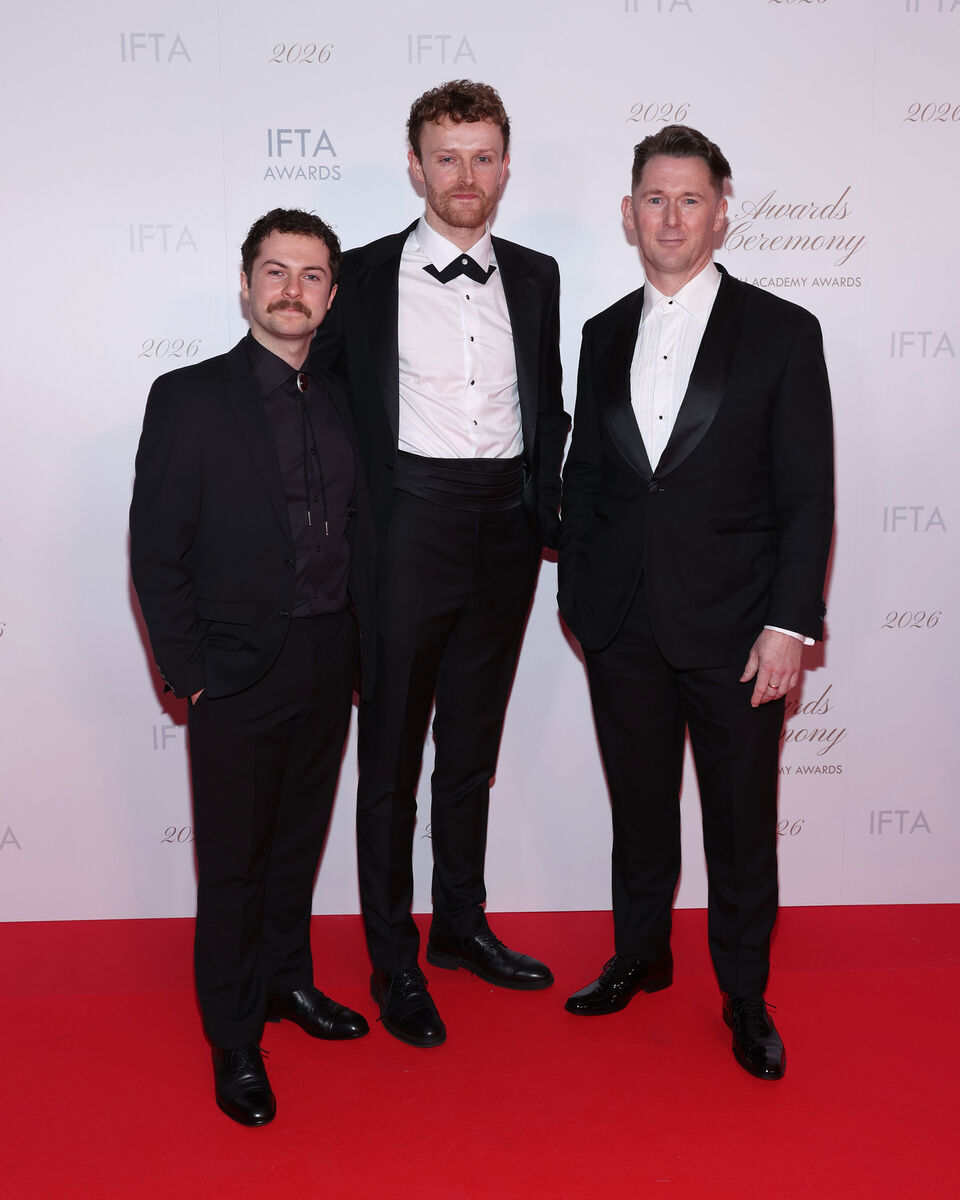
Murphy laughs, but there’s something more reflective underneath it.
“It’s the gift that keeps on giving,” he says. “You go off and do other jobs — which are great — but you realise how nice this one is. So many people have been here since day one. That’s hard to replicate.”
That familiarity shows in the work. The rhythm between them is quick, instinctive, maybe less like acting, more like muscle memory.
“We can nearly finish each other’s sentences,” Walley says. “For comedy, that’s everything. The timing only works because of those relationships.
“And because we’re let loose. You put on the tracksuit, and you’re set free like a child. I definitely am.”
“I put elastic bands in my pockets!” chips in Shane Casey, back in all his glory to play neighbourhood nutjob, Billy Murphy.
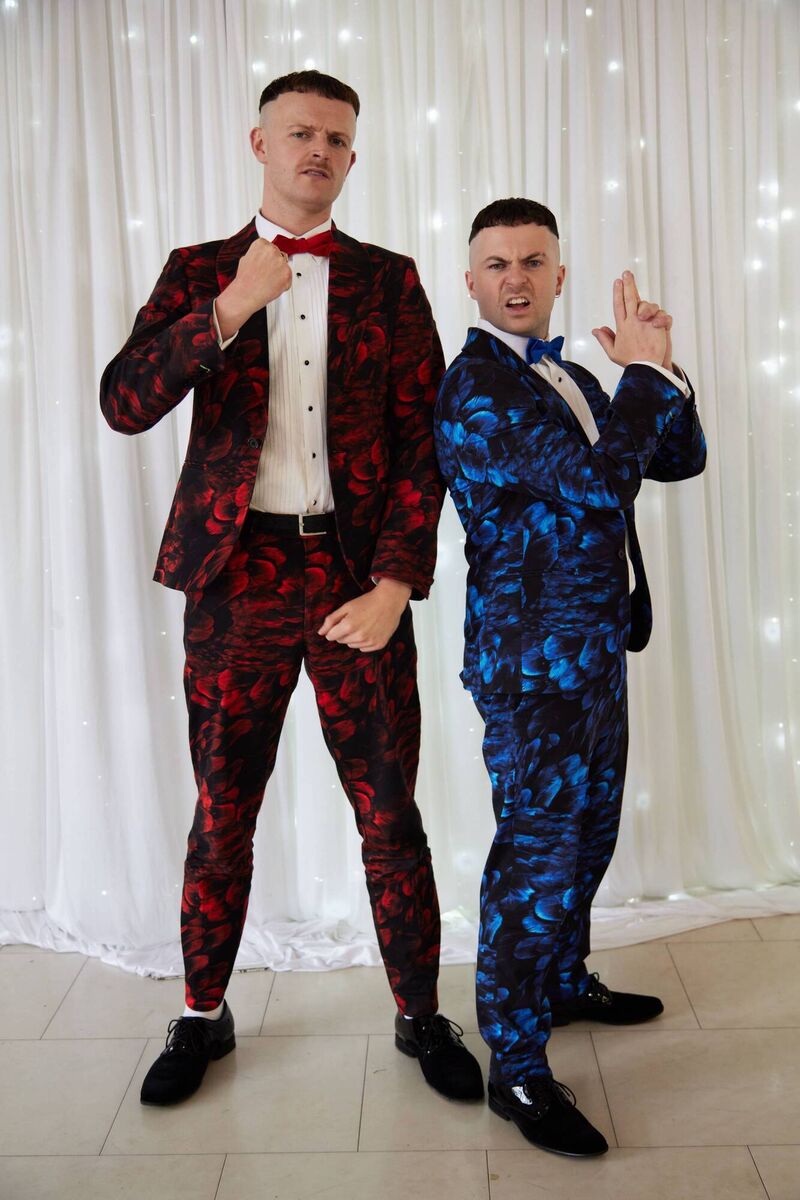
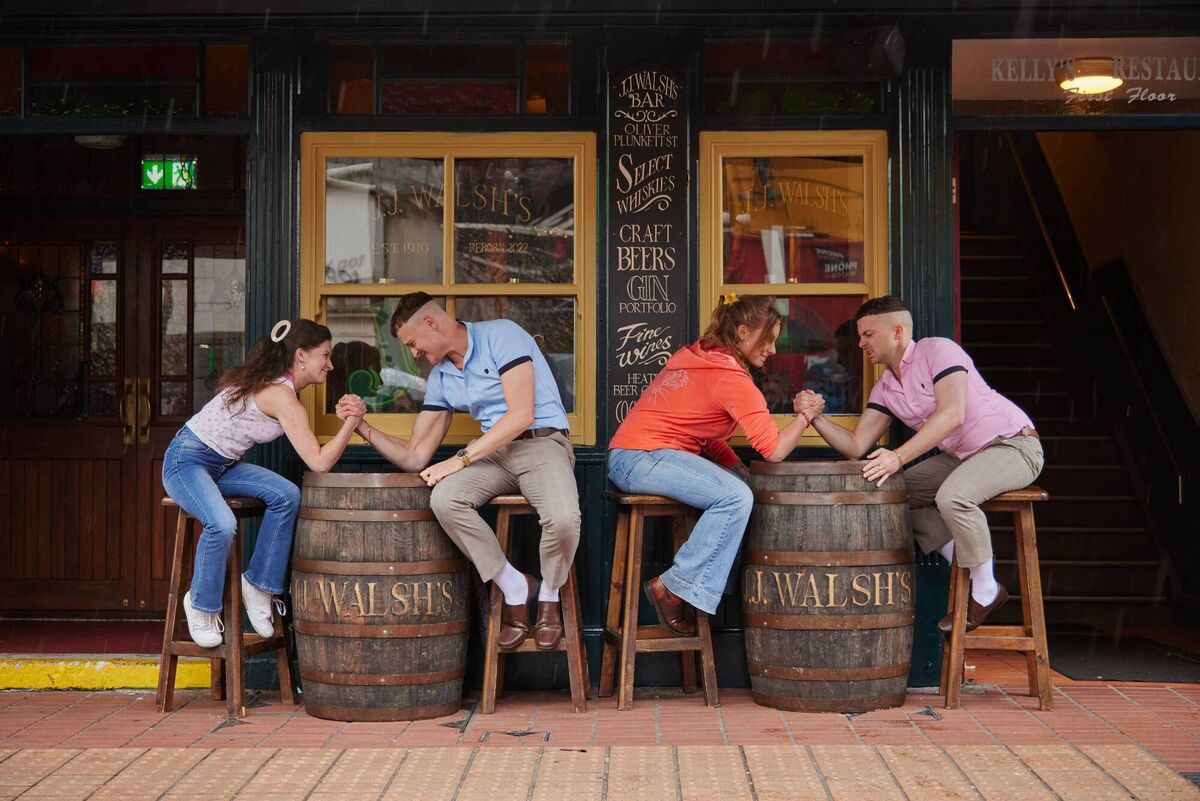
But they’re not just let loose in the school. The whole of Cork is fair game. Their sense of ownership extends beyond the set. Chris Walley recalls filming on Oliver Plunkett St, a moment that felt, even to them, a little surreal.
“It felt kind of iconic, walking down the street shooting a scene,” he says.
“We were trying to think if anything like that had been done before. It felt special.”
The scene itself was deceptively simple, just a couple of minutes on screen, but technically demanding.
“It was all done in one take,” he says. “So there was a bit of pressure. You’re thinking, right… Better get this right.”
If the logistics were intense, the public reaction was something else entirely.
“Nobody calls us Alex and Chris,” he laughs. “It’s always, ‘Hi Conor! Howya Jock!’”
At first, the novelty draws a crowd.
“They’re very excited on day one,” he says. “But by the end of the week, it’s no big deal.”
That sense of visibility matters too, particularly for younger audiences watching it all unfold in real time. Casey is very much aware of it.
“It’s important for kids to see this stuff happening,” he says. “To see a television show being made in Cork, in Munster, to know it’s possible.”
There’s a sense, he suggests, that something is building: “With everything that’s going on, other productions, films like Christy [that Chris Walley also stars in] coming through, it feels like a really exciting time for Cork. So hopefully that continues.”
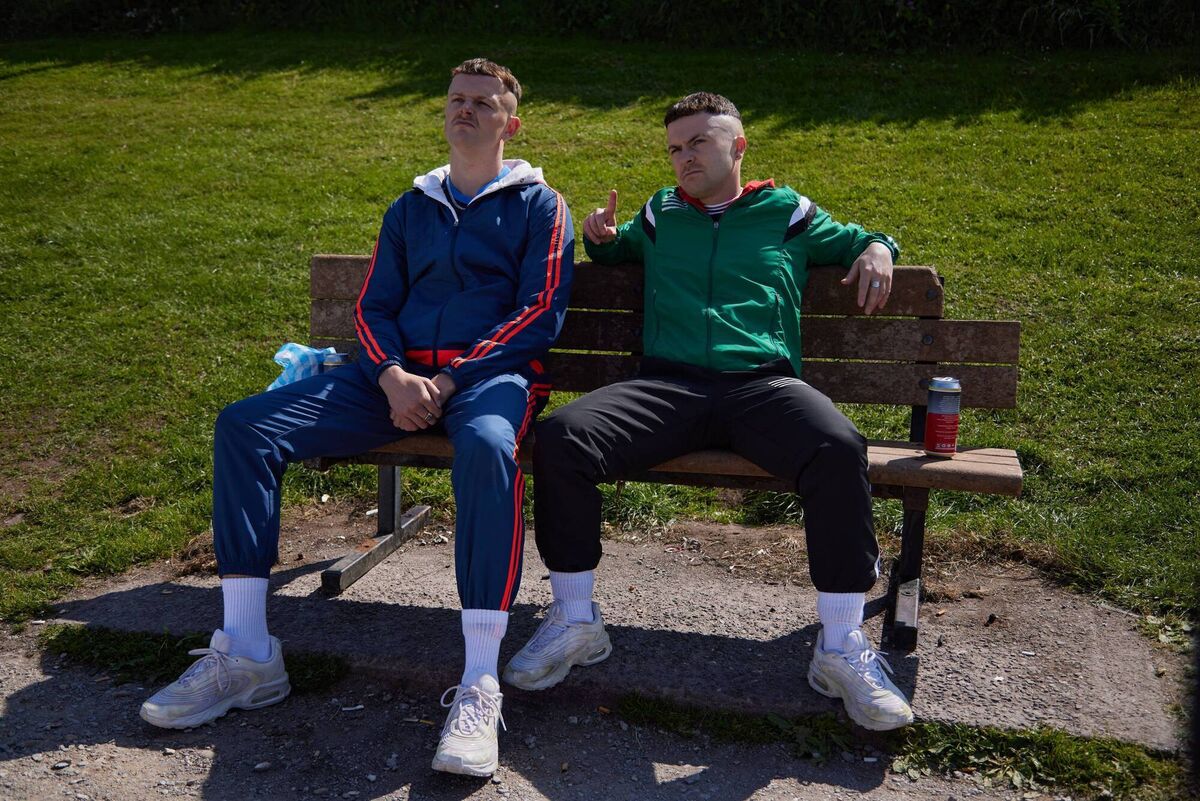
The actor’s tell me people come from all over the world to get their picture taken on THAT bench in Bell’s Field.
For Isaac, the filming around Cork is all part of the fun.
“The response is always lovely. There’s a real sense of community around the show. People don’t disturb the set, they’re just curious.”
It’s a long way from where her character started.
“I go from schoolgirl to bride in a very short time,” she says. “I’m 24 and getting married.”
They all pause to reflect on how far the show has come.
“We’ve different generations watching now,” Casey says. “You’ve got kids coming to it fresh, and then the ones who’ve stuck with it, maybe slightly more mature than when they started.”
PJ Gallagher, who, between you and me, wins the person you’d most want to go for a pint with competition, chimes in. He has such a warm, welcoming, enthusiastic energy about him, and is resplendent in full wedding garb as the father of the bride, the uptight Principal Walsh.
“I worked out I’ve been going to this school more years in a row than I have my own school,” he says.
“There’s a bit of a coming of age going on in this episode and this series. People are doing more adult things like getting married.”
This episode seems to really resonate with the cast. A wedding, after all, is a different kind of marker, one that everyone I speak to today seems to be aware of.
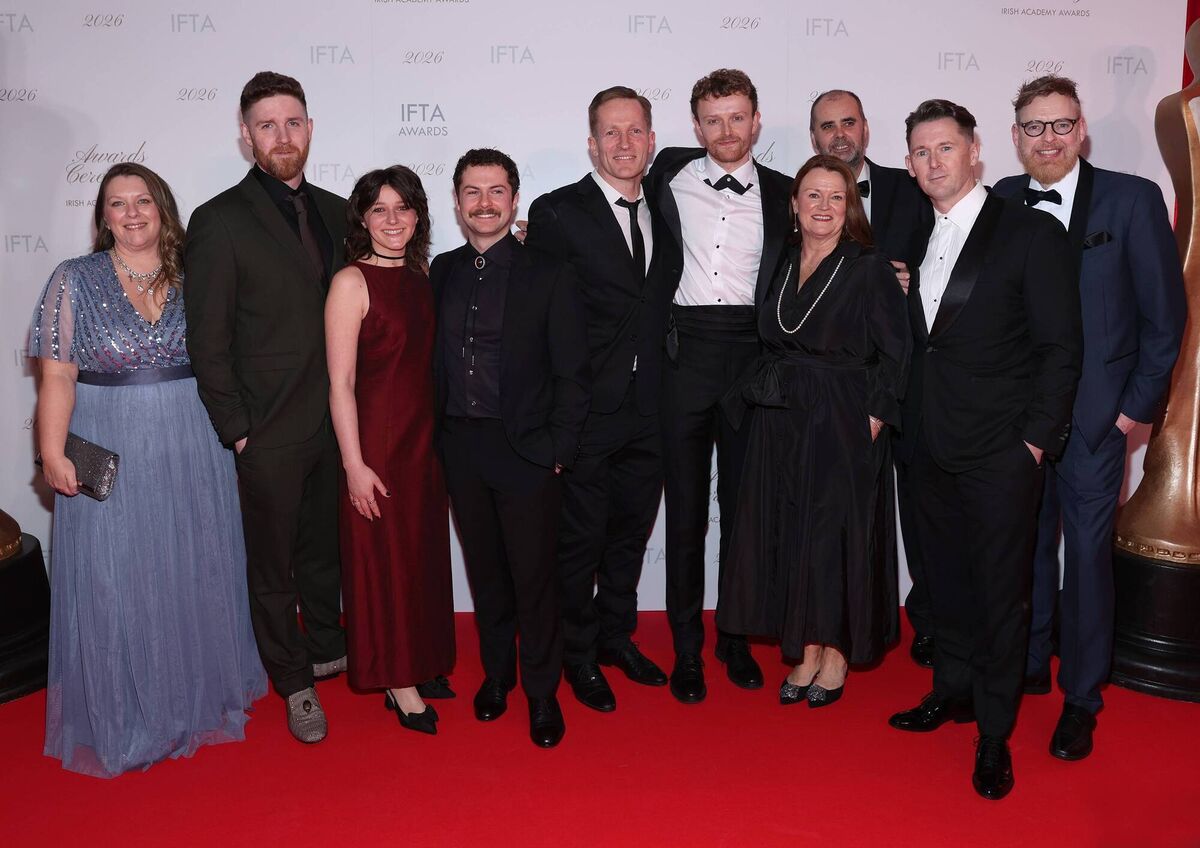
Peter Foott’s creation has won multiple awards, including a Bafta and Iftas, and has been the springboard for launching the careers of our two anti-heroes, both of whom have worked on multiple projects — with Walley winning an IFTA award for Supporting Actor in a Drama for his role as Jock at the 2026 awards and the Laurence Olivier Award for Best Actor in a Supporting Role in in 2019.
Alex Murphy is also in demand on stage, TV, and film. You might have recognised him in , and he played Eddy Power in last year. But is the project that started it all, and the one I think that still feels like home.
It’s nearing the end of my day on set, and it’s been a privilege to see it all happen in real time.
I get to see a portrait of a cast and creative team who know exactly what Conor and Jock’s world means to Cork, to Irish comedy, and to the huge community of viewers who see something of their own youth in its mayhem and heart.
As I step out into the afternoon, the spell lingers, but by the time I get to my car, the school is once again just a school. But inside its walls, it’s exciting to think of season five taking shape, the team stitching together universe with the same raucous humour and unmistakable Rebel County spirit that has carried the show far beyond the city limits.
If the mood on set is anything to go by, this next chapter won’t just delight long-time fans; it will remind them why they fell for it in the first place. The Young Offenders isn’t just returning, it’s growing up... just not too much.
- Stream all six episodes of season five of ‘The Young Offenders’ from April 3 on the RTÉ Player