Book review: Exploring the nature of meaning

Mary Costello’s latest novel offers a thoughtful portrait of the drift of life, the perils of the unconscious, and the mysteries of the self
Book review: Exploring the nature of meaning

Author Mary Costello offers convincing, subtle portraits of Irish life in the 1980s and ’90s.

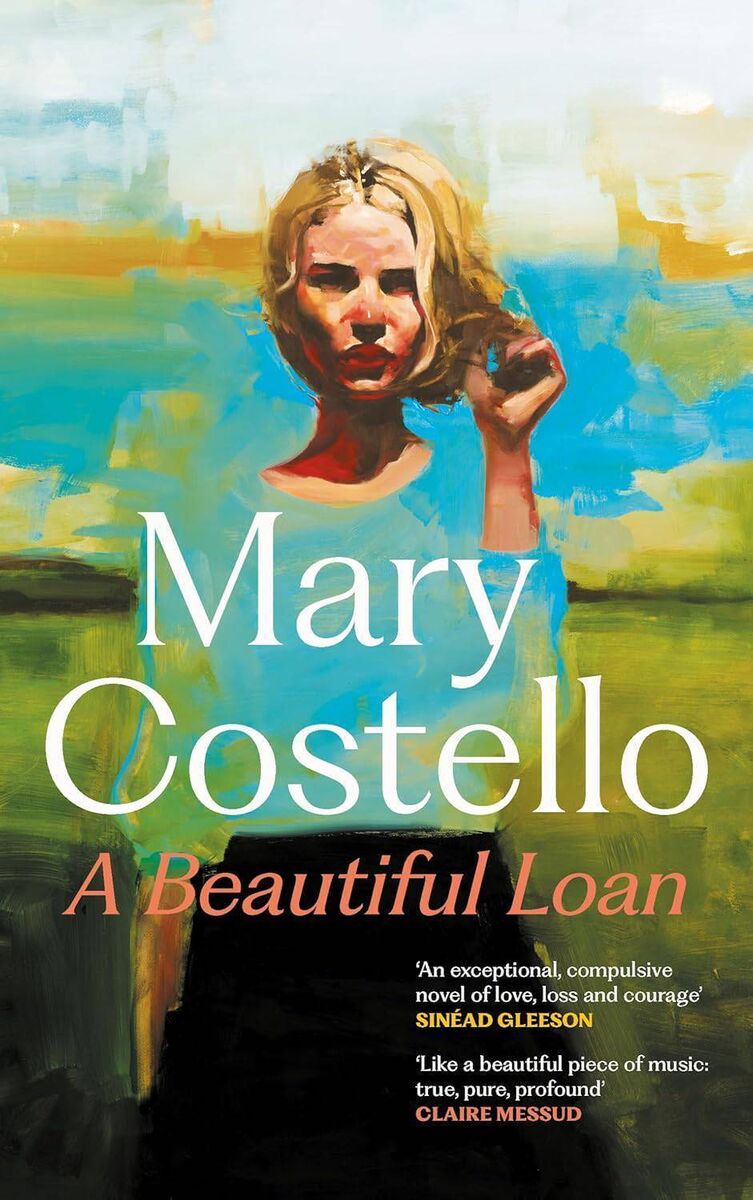
  • A Beautiful Loan
  • By Mary Costello
  • Canongate, €16.99

In Mary Costello’s latest novel A Beautiful Loan, 45-year-old Anna Hughes tells us that she has been “trying to account for certain events in her life” from the mid-1980s to the end of the 2000s. 

This interrogation, we are told, involves her trying to understand the “miasma of thought, of appetites and instincts, the little tremors of fear or shame”.
Anna’s ultimate aim is to explain how “we do what we do, or tolerate what we tolerate, or love who we love”. 

When the novel opens, Anna is a 19-year-old teacher from the west of Ireland living in Phibsborough who falls in love with Peter Gallagher, a much older and experienced sailor turned accountant from the Donegal Gaeltacht.

The first part of the novel, told with deft mastery of foreshadowing and implication, charts Anna and Peter’s doomed courtship, marriage, and attempts to become parents. 

The dynamic of their relationship, shaped by love, lust, insecurity, and infidelity, is expertly depicted by Costello, who offers convincing, subtle portraits of Irish life in the 1980s and ’90s.

At the centre of Anna’s turmoil is Peter’s growing emotional and physical distance; his apparent mystery, at first attractive, becomes his cruellest characteristic.

Anna is intellectually curious. She reads Milan Kundera’s The Unbearable Lightness of Being, and has a working knowledge of Joyce, TS Eliot, and Andre Gidé. 

She reads the psychology of Carl Jung, absorbing his ideas of the unconscious, dreams, and the I Ching.

She becomes, however, most obsessed with the French Algerian writer and philosopher of the absurd, Albert Camus. 

Along with reading his books, she spends hours looking at “photo after photo” of the car crash in which Camus was killed, searching in his life, work, and death parallels with her own life.

Costello is a marvellous writer of the impulses of inner life that reveal who we are to ourselves: When thinking about Camus, Anna feels “a kind of vertigo, a falling towards the man”.

Yet Anna’s lack of self-confidence, however, means she has difficulty in generating her own clear idea of life. She admits that she is “easily swayed by other people’s ideas and opinions”.

In part two, the novel continues to explore the nature of love, desire, and meaning.

Anna enters a relationship with Karim, an Algerian Muslim software engineer living and working in Celtic Tiger Dublin. 

Karim initially appears sensitive, caring, and kind, though on meeting him, Anna frets her erudition will discourage his interest.

Anna, who is clearly cerebrally superior to Peter and Karim, offers retrospective psychological reasons for falling for such humdrum, limited men. 

Onto Peter, who appears to enjoy little beyond hiking and traditional music, she “unconsciously projected the positive characteristics” of her father. 

Karim, for his part, seems to have few interests outside of Islam and the gym (her initial attraction to him is linked to a dream).

At times, Anna demonstrates exceptional self-awareness, speculating “would I love Karim now if I had not first loved Camus?”; in both Karim and Camus she finds “the kind of innocence and earnestness” she sees in her father.

Significantly, Karim’s religion opens up a new possibility for self-discovery. Anna, who is a “God-minded person”, discovers Islam and then secretly converts. 

Various conflicts develop out of Karim’s increasingly dogmatic interpretation of the Quran, though the latter parts of the story become somewhat bogged down by Anna’s struggle with the demands of Islamic life.

Nonetheless, Costello writes with great clarity and precision, and A Beautiful Loan offers a thoughtful portrait of the drift of life, the perils of the unconscious, and the mysteries of the self.


x

BOOKS & MORE

Check out our Books Hub where you will find the latest news, reviews, features, opinions and analysis on all things books from the Irish Examiner's team of specialist writers, columnists and contributors.


More in this section

Scene & Heard

Newsletter

Music, film art, culture, books and more from Munster and beyond.......curated weekly by the Irish Examiner Arts Editor.

Cookie Policy Privacy Policy Brand Safety FAQ Help Contact Us Terms and Conditions

© Examiner Echo Group Limited