'The music speaks for itself': How Bad Bunny and Kneecap are reclaiming native languages
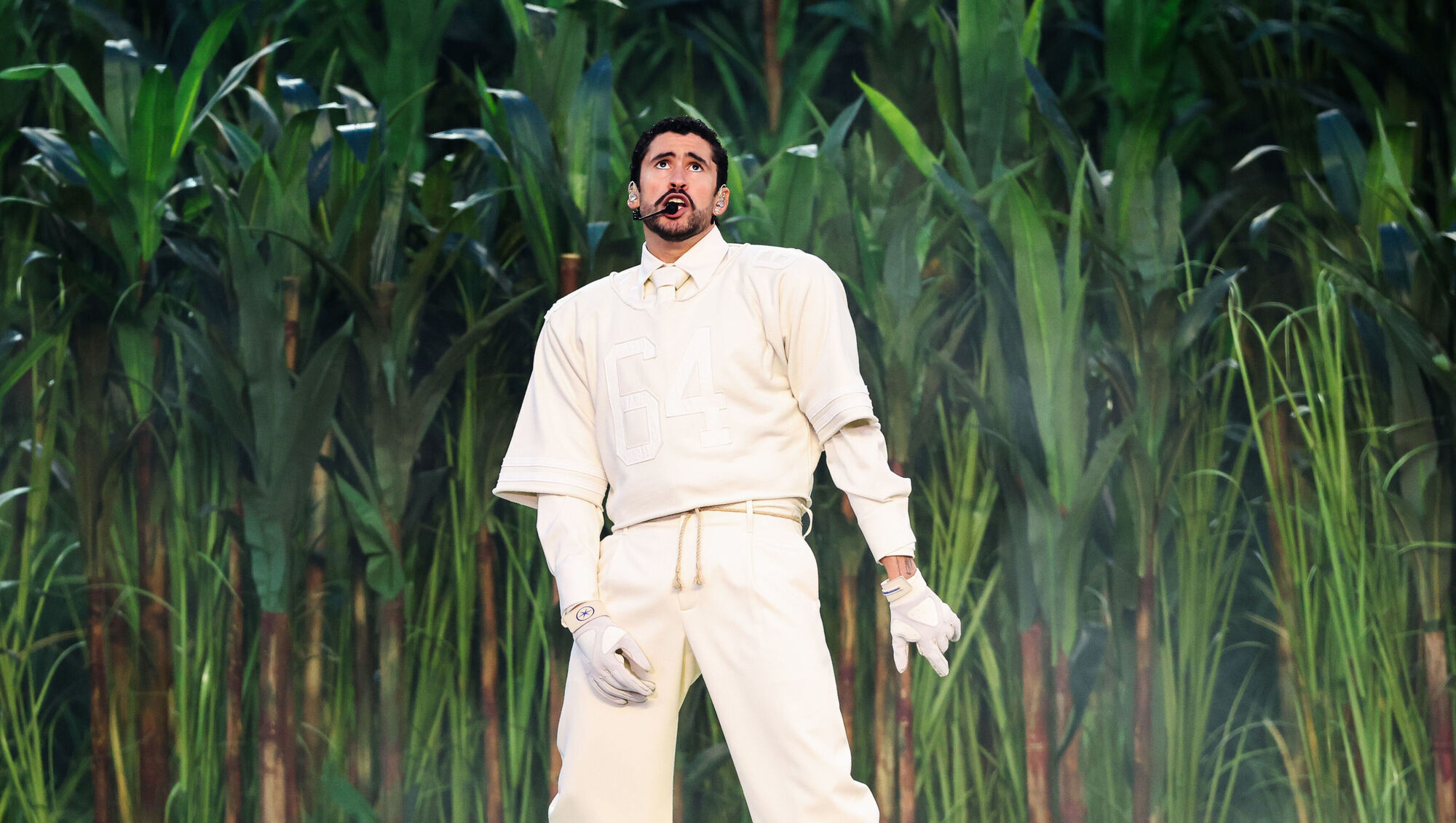
Bad Bunny performing during the Apple Music halftime show at Super Bowl LX at Levi Stadium, Santa Clara, California. Picture: Kindell Buchanan/PA
When Bad Bunny, real name Benito Antonio Martínez Ocasio, first arrived on the Super Bowl stage, wearing a silver trenchcoat and a matching do-rag, the year was 2020, and he was appearing as a special guest of Shakira, one of the halftime show’s two headliners.
“Viva la raza!” he exclaimed at the time, echoing the rally cry of Texas-born professional wrestler Eddie Guerrero, before leaving the stage with neither fanfare nor heated political debate. Fast forward six years, he stood as both the halftime headliner and, arguably, the event’s main attraction, with some 130m viewers tuning in to watch the Puerto Rican star perform entirely in Spanish on America’s biggest Sunday, as ICE agents stood guard.
US president Donald Trump complained, "Nobody understands a word this guy is saying".
Those whose first tongue isn’t English are familiar with these kinds of jabs, it is because of them that the term ‘foreigner’ has migrated from adjective to euphemism: someone simply born elsewhere to someone different, intimidating, othered.
As a Puerto Rican, Bad Bunny is wholly American, despite that being another term that’s changed meaning in recent years. His stance echoes a well-used Māori proverb, Ko taku reo taku ohooho, ko taku reo taku mapihi mauria, one that loosely describes how the Māori language is a window to the Māori worldview, or Māori soul. It’s a familiar phrase for New Zealand singer-songwriter Marlon Williams, who released his first Māori language album in April of last year. Ahead of its release, Williams told that the experience brought him closer to his heritage, despite initially feeling wary of recording in Māori.
“I think it’s common for a lot of Māori who don’t grow up speaking it fluently to feel a sense of shame and hesitation when coming to it later in life,” he explains. “And obviously even more so when trying to create something new.”
The same can be echoed here in Ireland, despite the Kneecap effect drawing in some one million Gaeilge learners at any given time, according to Duolingo.
The drive behind learning minority languages in 2026 is, lest we forget, a fairly modern phenomenon — I remember, as a college student of Luath and NuaGhaeilge in 2012, being asked: “What are you going to do with that, be a weather woman?” — but what unites both is a battle for connection and a desire for revisionism, particularly given that the Irish language was once infamously outlawed.
In Belfast, the Irish language was long discouraged and restricted if not outright illegal in certain official settings. As a result, music in Gaeilge evolved from a simple pastime into a vital medium through which artists could express their identity and help sustain the language.
“What is really noticeable about the Irish language artists I am aware of is that Irish becomes a bridge between cultures, rather than a defensive retreat into some purist notion of Irishness,” Dr Aoileann Ní Éigeartaigh, a lecturer in Literature and Cultural Studies at Dundalk Institute of Technology, says.
“There is no attempt to use the Irish language to exclude other cultures. On the contrary, the language becomes the starting point to a wider conversation about interculturalism in the contemporary world.
"I know Kneecap have been very vocal about differentiating between their resistance to the British state and their exclusion of any community within Northern Irish society."
Ní Éigeartaigh, who recently published a chapter on Irish language rap in The Language of Music: Minority Languages in Popular Music, also points to Ennis producer and vocalist Ushmush, who "combines Irish language lyrics and trad music with African and Caribbean reggae, so when you are listening to his songs, you are hearing the connections he is making between Ireland and other countries that have experienced similar colonial and postcolonial histories".
Dublin rapper Selló, meanwhile, "engages with both his Irish and Nigerian cultures by punctuating his mainly English language raps with words and phrases from both".
"At a time when divisive ideas about culture and identity are rife, these musicians remind us that all cultures are porous and change over time and that this is how they stay relevant and reflective of society," she says.
She also posits that minority languages "can tap into an older, maybe less regulated culture, and can channel the feelings of frustration and alienation a lot of people are experiencing towards the relentless dumbing down and homogenisation of mass-produced culture,”
“AI will never recreate the anarchic humour that can result from an Irish language word or phrase being inserted into a lyric in such a way that it changes the whole literal meaning of what is being said," she continues. "Or the sheer exuberance of rhymes that can appear when words from different languages are sandwiched together."
It is regularly argued that politics will always play some part in an artist’s decision to sing in a minority language. This is despite some insisting that there is nothing more to it than personal ease.
"It comes naturally,” Kneecap’s Móglaí Bap once told the BBC. “We grew up speaking Irish as a first language... it wasn't necessarily that we chose the language because of its niche qualities.”
According to the 2022 Census, 71,968 people in Ireland speak Irish daily, excluding the education system, representing about 3.8% of the 1.87 million people who can speak the language. A music executive looking at those statistics — and seeking a commercial hit — might have been inclined to bypass a group like Kneecap. Would they have been wrong?
For the fourth time in 2025, Bad Bunny was crowned the most-streamed artist on Spotify globally, proving that singing in one's native tongue doesn't automatically restrict you to connecting with those who speak the language. That same year, Spanish artist Rosalía released , a record spanning 13 languages — it debuted at No 4 on the Billboard 200.
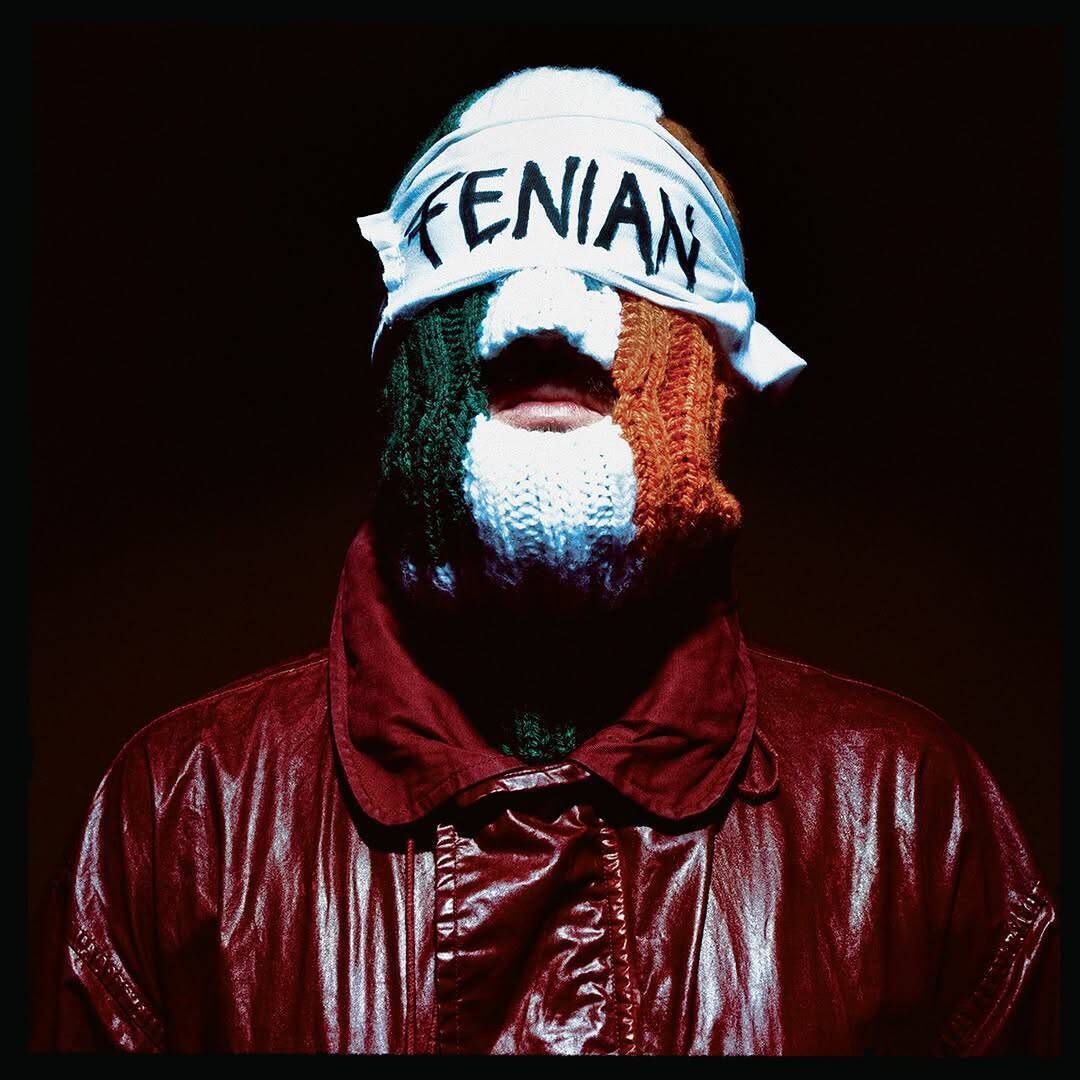
Kneecap's record was both critically and commercially successful, with crowds of non-Gaeilge speaking fans showing up to support the hip-hop trio at some of Europe's biggest festivals, including Glastonbury and Primavera. The record was even reviewed by Anthony Fantano, widely considered the internet's most influential music critic. On April 24, the trio will release their new LP Fenian, which they have posited as "a considered response to those that tried to silence us".
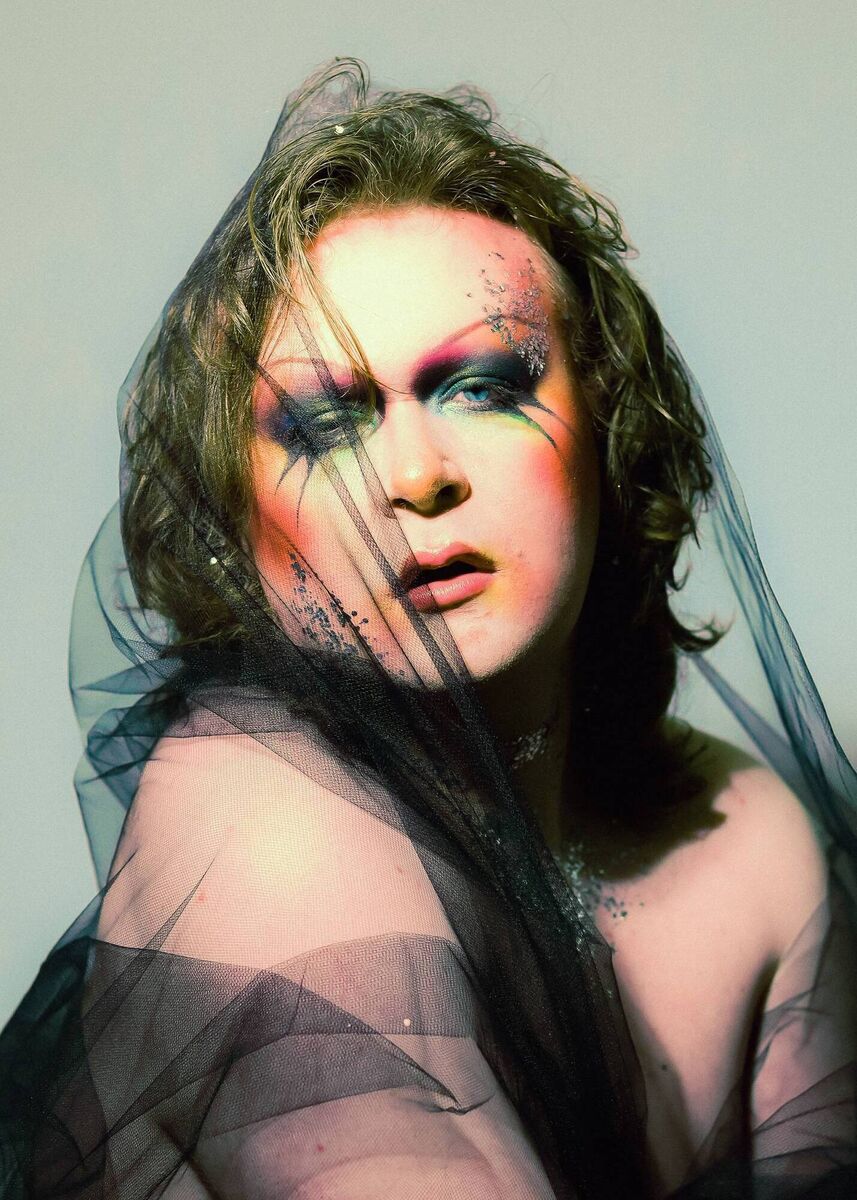
SexyTadhg, the boundary-pushing Carlow artist whose fusion of trad, jazz, pop and cabaret has made them a firm favourite on Ireland's festival scene, says music is "a universal language in itself”.
The bilingual performer says: "if the music is doing its job, it can make anybody feel anything."
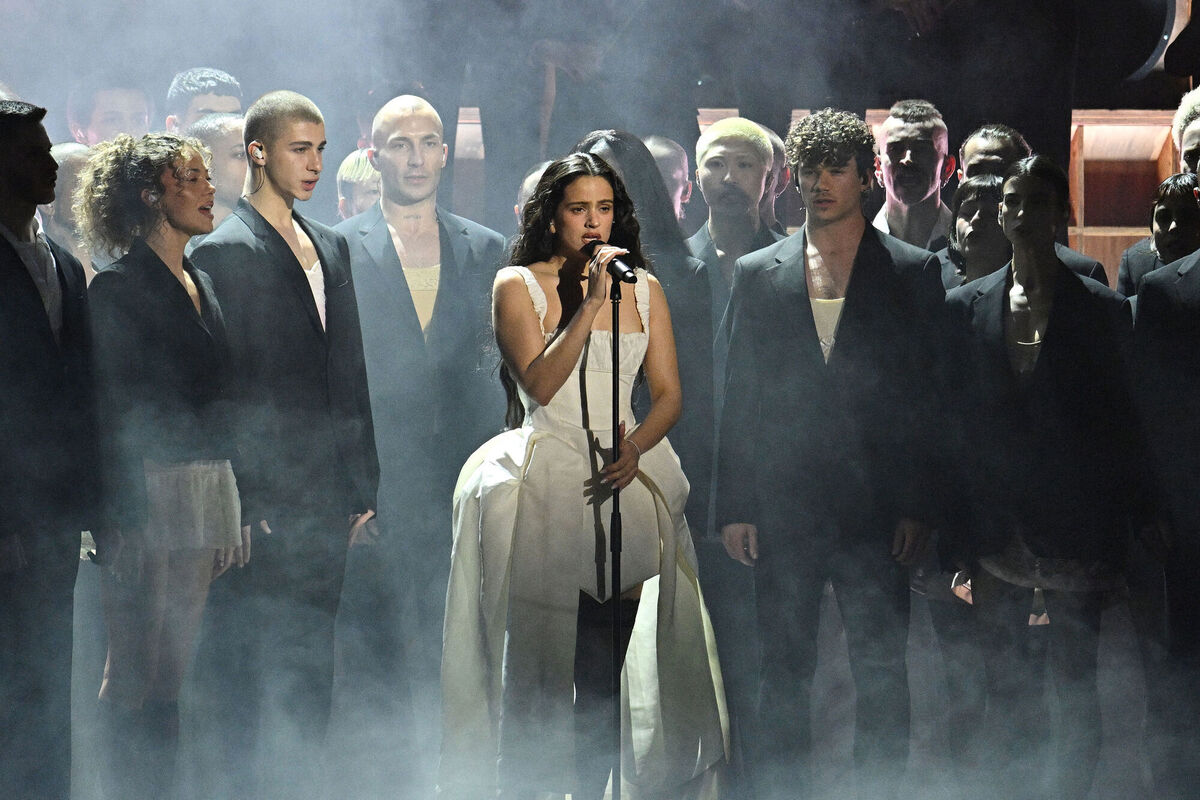
"I don’t speak Spanish, but I love Rosalía and Bad Bunny and reggaeton… The music speaks for itself.”
For the longest time, English was considered the lingua franca of pop music. However, that dial is turning towards the inclusive, eroding the hegemony of English-language pop and other genres. That’s happening for a number of reasons. Chief among them? Money. Generous investment in the likes of Seoul and Medellín has created local artists with international appeal, while the West continues to slash arts funding. (Even the recent and well-received Basic Income for the Arts has raised concerns regarding its sustainability, exclusion of disabled artists' allowances, and potential elitism.)
It's possible that artists are also becoming more aware of the benefits of singing in one's own language.
“Music therapy research provides evidence for the positive impact of singing in one’s own language," as music therapist Jessica Harris explains.
"Research from the University of Limerick mapping singing-for-health groups across Ireland shows that group singing boosts wellbeing through enjoyment, personal growth, and social connection.
"When performed in Irish, as in sean-nós singing, it reconnects people with ancestral memory, affirms identity, and helps repair cultural trauma, offering a sense of continuity and shared narrative with past generations.”
Neuroscientist Daniel Levitin writes in his work that music itself is a product of cultural evolution, shaped to foster social cohesion and communicate emotion. Singing in our heritage language, he insists, taps both this deep biological imprint and our cultural memory, with cognitive and neurological studies further showing that singing activates multiple brain networks at once — language, emotion, memory, and reward — making it both a mental and embodied experience.
“In this way, singing in Irish not only uplifts the spirit but reinforces identity, strengthens community bonds, and helps heal wounds of cultural suppression,” Harris continues.
As we enter one of Ireland’s most important cultural seasons, an t-Earrach, we do so in a world remade — a world where one of our brightest pop stars is Puerto Rican, where last year’s best-selling single spun out from a Korean drinking game, and where, by all accounts, more people are showing an interest in speaking Irish beyond the classroom than perhaps ever before.
It posits the question: would singing as Gaeilge truly bar the gates to international superstardom in 2026 — or might it be the very thing that throws them wide open?