Blue Blouses: The Irish women who flirted with fascism in the 1930s
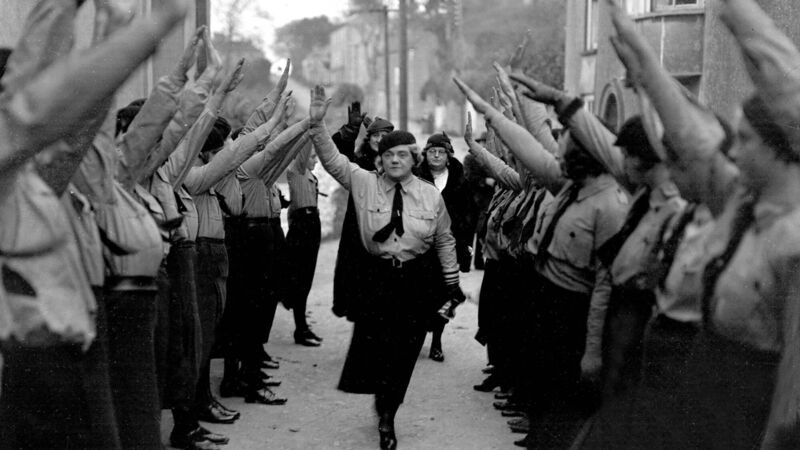
Mamie O'Neill takes the salute at Kinsale, Co Cork, in 1933. Mná na Léinte Gorma is on TG4 on Wednesday. Picture: Irish Examiner Archive
There’s something alluring about a uniform. The Cork-based film production company, Bo Media, has uncovered a fascinating, untold story about the “Blue Blouses”, the women’s wing of Eoin O’Duffy’s “Blueshirts”, Ireland’s fascist movement in the 1930s.
Ordinary, respectable Irish women – including Bridget Redmond, who wore her blue blouse in Seanad Éireann – were drawn in their thousands to wearing the uniform, which included a black beret and tie.
“At that time, people were playing with fascism,” says Patrick O’Shea, director of the TG4 film . “It was a shiny new penny. There must have been a very powerful feeling of being together dressed in uniform, walking down the street together, a sense of belonging, of power. They even brought their kids into it. There's a photograph in the documentary of a bunch of kids in West Cork, boys and girls, between the ages of seven and 12, all wearing the uniform.
“I was surprised how easily these people adopted fascist symbolism and actions – marching together in groups; the right-hand salute; adopting the ‘Hoch O’Duffy!’ call, which was their imitation of ‘Heil Hitler!’. But we have to remember they did not have those images or knowledge of mass killings [from the Holocaust] in the early 1930s. This was about nationalism and conservative Catholicism.”
The first branch of the “Blue Blouses" was set up in Tooms, Co Cork, in July 1933. About 20 women signed up. Within a year, it was the biggest women’s political organisation in the country, with 12,000 members, larger, for example, than the Irish Countrywomen’s Association. Its members were effective at fundraising and organising dances and marches.
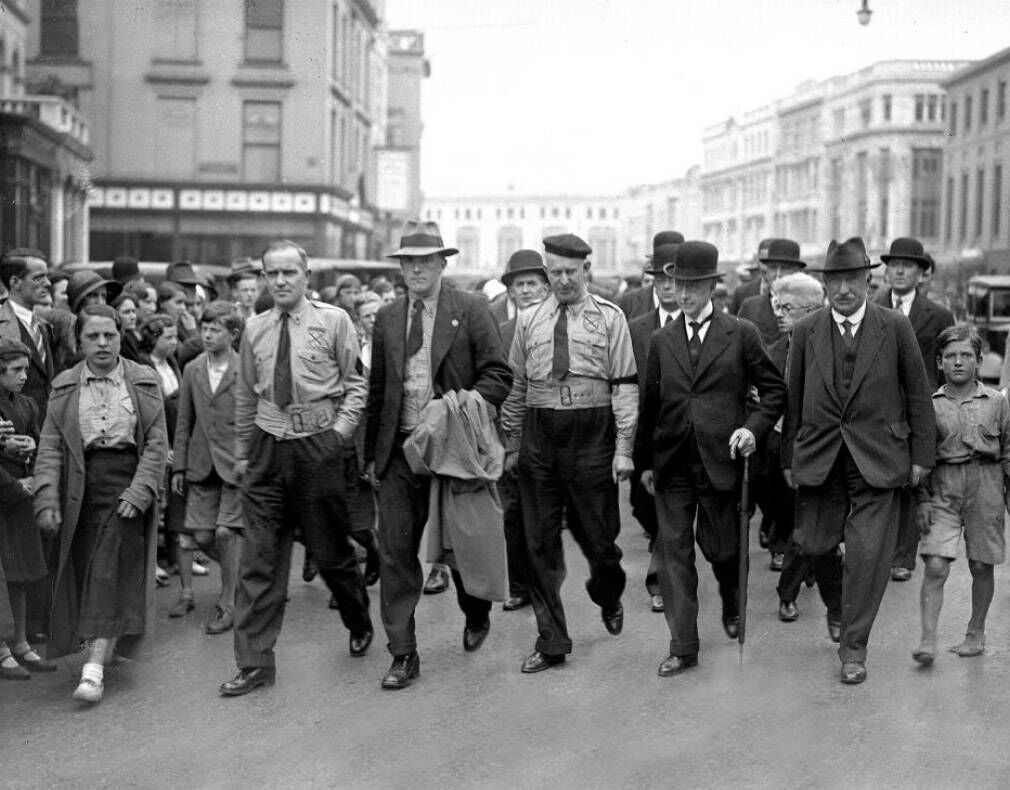
A lot of the motivation was social – being a Blueshirt, or a Blue Blouse, was something to do, a chance to meet like-minded people, and to fall in love. Membership also came with danger. Ireland was a tinderbox at the time – there were violent clashes on the streets. People tried to tear the blouses off them, resurrecting memories of IRA violence towards women who “kept company” with British security forces during the War of Independence.
“When de Valera came into power in 1932, he released IRA prisoners, who Cumann na nGaedheal had locked up,” says O’Shea. “They were very angry. They had been in jail for a while. A lot of their comrades were executed. They wanted revenge. It was a carryover from the civil war. When they were released from prison, the first clashes started between the Blueshirts and the IRA on the streets.
“There was street fighting with hurleys, sticks, rocks, every now and then someone would bring a gun. There was a famous quote from an IRA man: ‘No free speech for traitors.’ That was the mantra – the Blueshirts were traitors to the Irish Republic. Anytime a prominent [opposition] politician stepped up on a podium, the IRA were there to shout the politician down.” The Blueshirts came together to protect political meetings. That escalated into running battles on the streets.
“There’s a brilliant quote in the archives where an IRA fella said, ‘We were hiding on the side street waiting for the Blueshirts and their politicians to walk down the street in Mallow to take their place at the podium. At our moment of ambush, we charged and ran after them down a side street, where the Blueshirts had another 40-50 men waiting. We had been tricked.’ A battle ensued.”
The Blue Blouses had some formidable women in their ranks, including Kathleen Browne, whose family lived in a castle in Co Wexford dating back to the 13th century. She was a senator, a practicing farmer and was a notable conservationist, who played a key role in conserving the Great Saltee Island as a bird sanctuary.
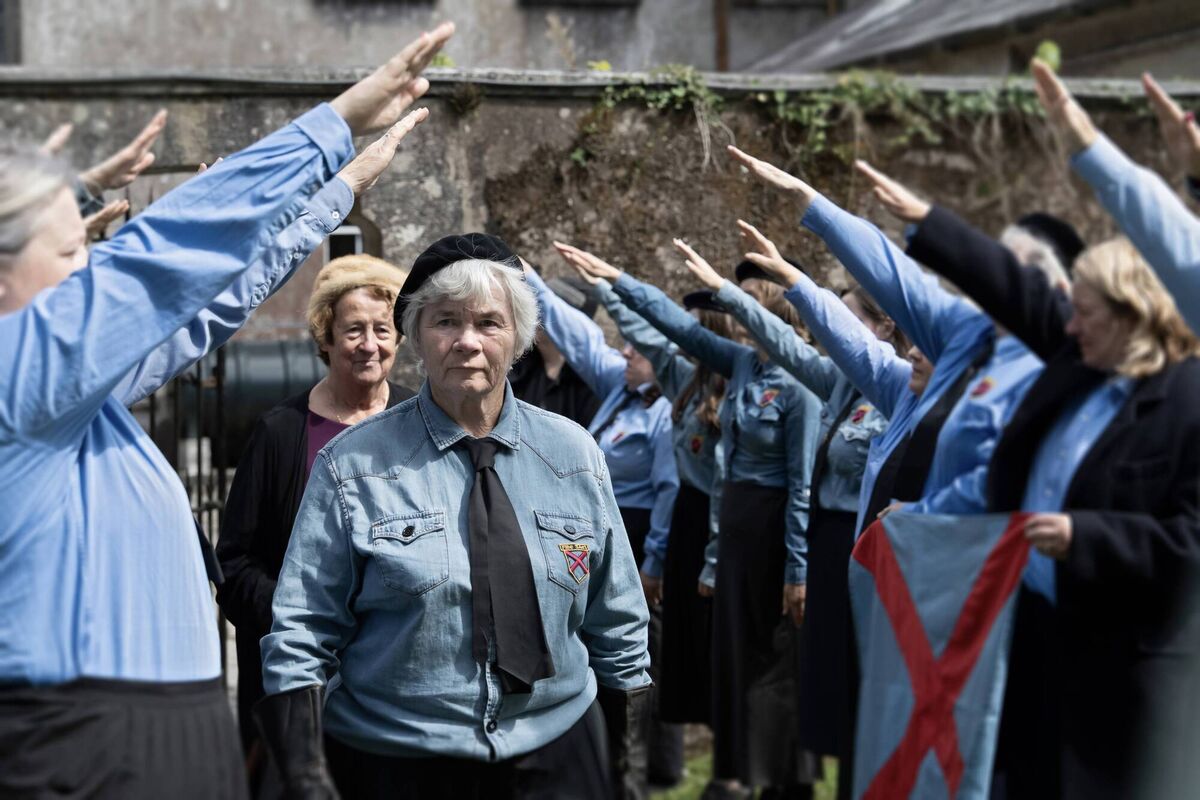
Perhaps the most colourful Blue Blouse was Mamie O’Neill, who was known as “Mrs General O’Neill”. She was born in Australia. Her father fled to New Zealand aged 15, on the run because of his Fenian activities. She trained as a nurse, married and when her husband died she “returned” to Ireland, her homeland. In 1924, she married Eamonn O’Neill, a TD from Kinsale, Co Cork.
In August 1934, there was a notorious clash at Marsh’s Yard in Copley Street in Cork city. Around 3,000 protestors gathered to protest a cattle auction. The police opened fire, killing a 22-year-old protestor named Michael Lynch.
“The Blueshirts shouldn’t have been there in the first place, but the guards, the Broy Harriers, shouldn't have been firing into the crowd,” says O’Shea. “Six of them opened fire and emptied their rifles. They were looking for blood. Mamie O’Neill put herself in the line of fire to try and save the life of a young fella who was shot, showing her own bravery and grit.
“After the Second World War, she was linked with the Red Cross, and she brought a lot of refugee orphans to Kinsale. She put them up in her own house. It shows another side to her that wasn’t a fascist leader.”
- is broadcast at 9,30pm, Wednesday, March 4, on TG4. It will then be available on the TG4 Player
Eoin O’Duffy was born in 1890. He grew up near Castleblaney, Co Monaghan. He joined the Irish Volunteers in 1917. During the War of Independence, he was one of Michael Collins’ most effective and ruthless commanders. In 1922, he became chief of staff of the IRA, and later that year was appointed as the Irish Free State’s Garda Commissioner.
Shortly after Éamon de Valera’s Fianna Fáil party took power in 1932, O’Duffy was sacked. In July 1933, he took control of the Army Comrades Association (ACA), nicknamed the Blueshirts, and within a few weeks he became the first leader of Fine Gael, which was a merger of WT Cosgrave’s Cumann na nGaedheal, the ACA and James Dillon’s National Centre Party.
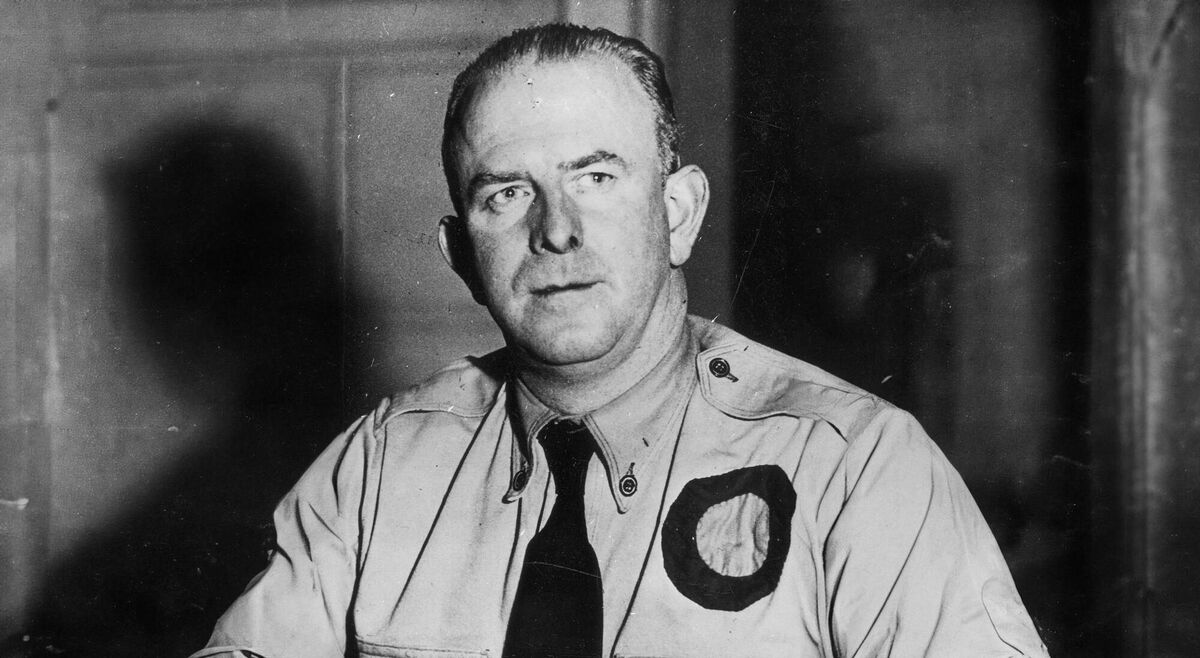
“Eoin O’Duffy is a complex character,” says Patrick O’Shea, director of “For all his talents, he was super flawed. He made so many mistakes. He got by with a lot of bravado. He had such a high notion of himself that it got him so far. He once said, ‘In Europe at the moment, the three most important figures are Adolf Hitler, Benito Mussolini and me.’
“Everyone knows that Ireland was very conservative at the time and the wider world was too. Yet at a time in Ireland when the church and the GAA did not want women doing unwomanly things like racing a bike and going on cycling trips, in the Blueshirts, women were allowed to take part in camogie and in boxing competitions. He was forward-thinking in many ways, but on top of that he spoke some crazy, violent, aggressive rhetoric.
“At one Béal na mBláth commemoration, he said that ‘Éamon de Valera was jealous of a good farming country boy like Michael Collins because he himself was just the bastard of a Spanish Jew’ and ‘if we have to, we will resort to violence to protect our way of seeing the country’. There's no doubt about it that O’Duffy – and other Blueshirt leaders, Ernest Blythe and Richard Mulcahy – were fascist leaning.”