Duelling piano concert inspired by code drawn up in Clonmel in 1777

Rhona Clarke’s new work draws on the historical legacy of the Code Duello, an 18th century duelling code drawn up in Tipperary, writes Colette Sheridan
Duelling piano concert inspired by code drawn up in Clonmel in 1777

Rhona Clarke: 'In the new work, the opposing sides are represented not only by the two pianos, but also the musical past and present, set against one another.'

The world premiere of acclaimed composer Rhona Clarke’s new commission takes place at Finding a Voice Festival 2026 in Clonmel. 

In keeping with the location of this festival – which celebrates women composers across history to today — Clarke’s piece, entitled Duel!, is inspired by the historic Code Duello, the eighteenth century duelling code drawn up in the Tipperary town at the Summer Assizes of 1777. (The Assizes refer to high stake court sessions.)

This two-piano concert will be presented by leading pianists, Mary Dullea and Isabelle O’Connell, as part of the ninth edition of the festival. Duel! was commissioned by Róisin Maher who founded the festival with her sister Clíona Maher in 2017.

Dubliner Clarke, a member of Aosdána, a graduate of UCD and a postgraduate of Queen’s University, Belfast, explains that there are 25 rules in the Code Duello. 

It was a highly ritualised set of rules governing affairs of honour, transforming personal insult into a formalised and often fatal performance. Steeped in ideas of honour, reputation and social power, the Code Duello would go on to shape duels across Ireland and beyond, including America.

The 18th-century duelling code was drawn up in Clonmel in 1777. Picture: iStock

Approaching the theme with a contemporary lens, Clarke’s new work draws on the historical legacy of the Code Duello, responding to the drama, tension and ceremonial violence embedded in it.

“In the new work, the opposing sides are represented not only by the two pianos, but also the musical past and present, set against one another. By allowing these worlds to co-exist and clash, the piece reflects how civility and brutality once sat comfortably together.”

18th-century duelling

Clarke adds that pistols were becoming more commonplace than swords in the late 18th century. 

“Obviously pistols were more deadly. There could be a duel as a result of slighting someone, or maybe causing offence to a female member of a gentleman’s family. It could be over financial matters, money owed, or the many different things that still cause arguments today.”

Each duellist appointed a ‘second’ to manage the arrangements. The seconds agreed on the location, distance, time and date of the duel. They also inspected the weapons, overseeing the loading of guns. 

There could be a large audience for this so-called gentlemanly way of dealing with disputes. There would be doctors present, hoping to save a life. While a duel often resulted in death, nobody was prosecuted as the whole procedure was considered a gentleman’s agreement.

'Duel!' music

The music is a theme with five variations, based on a song by Henry Purcell that would have been familiar to the gentlemen of the late 18th century from The Beggar’s Opera, entitled Virgins are the Fairest Flower in its Lustre.

Clarke, whose instrument is the piano, didn’t set out to be a composer. “I had been teaching for a couple of years. Because of that, I wasn’t able to pursue the piano at the level I had been at because at the end of the teaching day, I didn’t have enough time. You need to practise every day.”

She tentatively put pen to paper and started composing. 

The very first thing I composed won a prize at the Feis Ceoil in 1982. That was encouraging. It set me on a course. 

Over a lengthy career, Clarke’s output includes choral, chamber, orchestral and electronic works. She has received commissions from RTÉ, The Cork International Choral Festival, Concorde, Music Network and the National Concert Hall, and more.

Clarke says the audience for Duel! will find it very accessible. “You don’t have to know anything about music to listen to it. It’s easy on the ear to absorb and a little bit more challenging in parts.”

  • Duel! takes place at Old St Mary’s Church in Clonmel on March 7

Other highlights

Hildegard Transfigured will bring the visionary sound world of Hildegard of Bingen into the present through the mesmerising vocal blend of Voice Trio with live visuals by Innerstrings, offering an immersive experience to launch the festival.
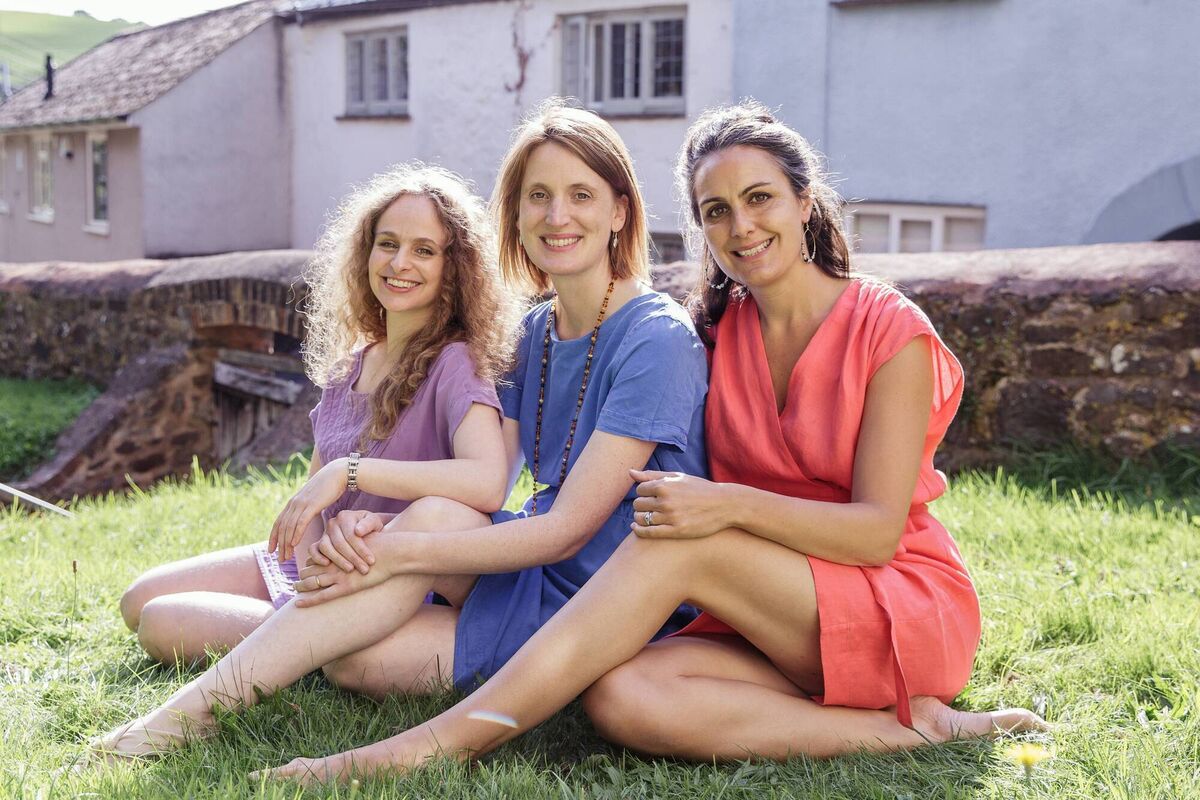
Voice Trio will perform at Finding a Voice, Clonmel. 

A free concert will mark the launch of award-winning Irish pianist Máire Carroll’s recording of Caterina Schembri’s solo piano suite, A birch forest seen, imagined and remembered on the Ergodos record label.

The festival’s chamber music collaboration with the Nationa String Quartet Foundation brings the acclaimed Banbha Quartet to Clonmel in a programme spanning Romantic gems to bold contemporary writing as part of their spring tour.

The jazz and improvised music strand features violist-composer Joanna Mattrey with Battle Ready II and acclaimed vocalist Christine Tobin performing Pseudologica Fantastico, bringing adventurous, boundary-pushing performances to Clonmel with the Improvised Music Company and BAN BAM.

x

More in this section

Scene & Heard

Newsletter

Music, film art, culture, books and more from Munster and beyond.......curated weekly by the Irish Examiner Arts Editor.

Cookie Policy Privacy Policy Brand Safety FAQ Help Contact Us Terms and Conditions

© Examiner Echo Group Limited