Tommy Tiernan Show recap: Michael Palin on grief, comedy and travelling the world
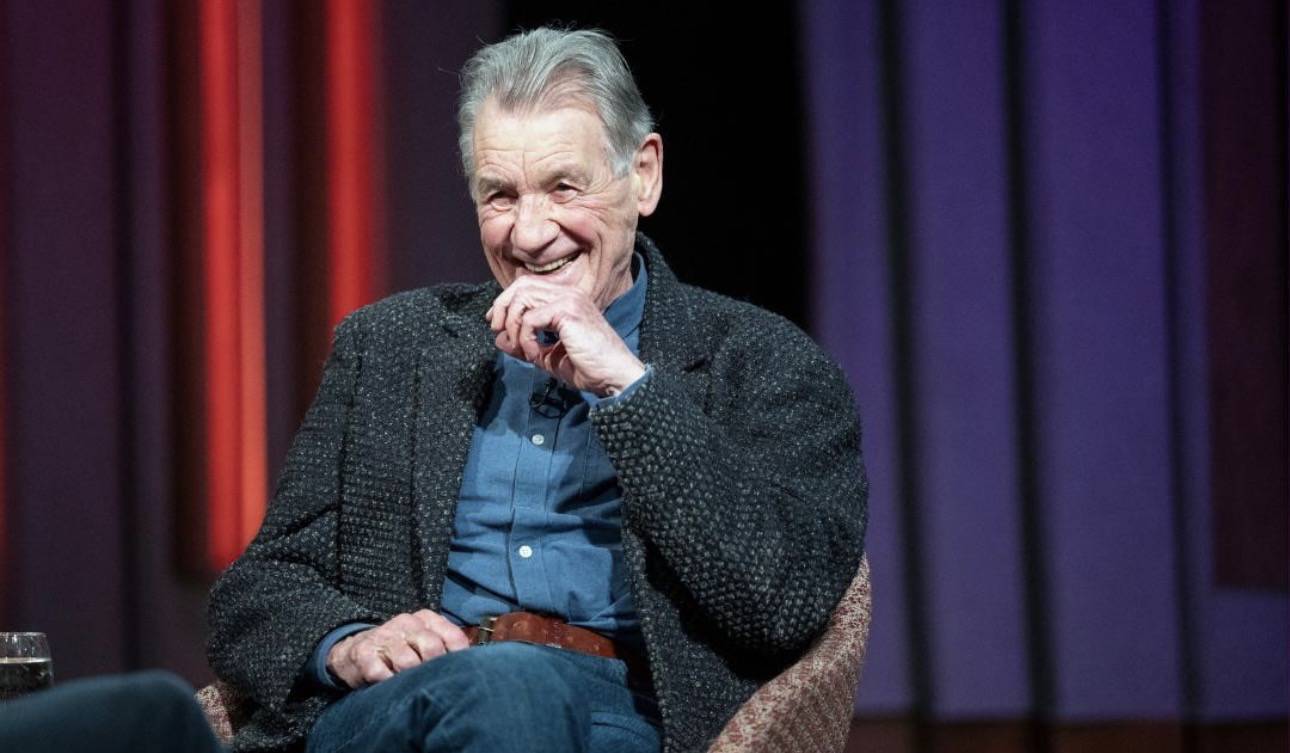
Michael Palin on the Tommy Tiernan Show. Picture: RTÉ/Tommy Tiernan Show.
Season 10 of returned on Saturday night, exploring everything from a career in comedy to concerns of overdiagnosis and psychosomatics in the health system.
Tiernan’s guests on Saturday night included actor, comedian and writer Michael Palin, neurologist and writer Dr Suzanne O’Sullivan, and actor and writer Thommas Kane Byrne.
Actor, comedian and writer Michael Palin was first to join Tiernan in-studio, reflecting on his career in comedy, losing his wife, and plans for the future.
The 82-year-old discussed his upbringing in Sheffield, where his father, an engineer, who he said lived with a stammer, which Palin said had a significant impact on his career in comedy, particularly in creating characters with speech impediments.
He also discussed his father's grueling work in the steel industry and how it affected his confidence and stammer.
Palin shared his transition from comedy to travel documentaries, driven by his love for geography.
“I never got bored of doing comedy and yet there are lots of other things in the back of my mind that I love to do and I always loved travelling,” he said.
He said his travels never cancelled out comedy and likened travelling to comedy.
“I think you need to have a strong sense of comedy to travel well,” he said, explaining how both come hand-in-hand.
“[When travelling] you’re trying to communicate to people a connection, and I think that’s why comedy works so well,” he continued.
He also touched on his 50-year marriage, the loss of his wife, and the challenges of aging.
He went on to talk about his late wife, Helen, and described the grief of losing her.
“It’s really hard. I mean, obviously, it's hard because that person is not there. Although Helen was quite ill towards the end of her life. You know, she wasn't, was in pain a lot and all that,” he said.
“I suppose it's the feeling that a half of your life, which you've just taken for granted, you can't really relive or talk about again. I mean, there's nobody else I can talk to and share things with that I would have done with Helen over well, we knew each other 60 years, something like that, so there's an awful lot for shorthand in a relationship like that. Not big things you talk about and all that, but we shared so much, and I felt, yeah, I think the word is bereft.”
He humorously described his daily routine, including wearing striped pajama bottoms to bed.
Concluding his chat with Tiernan, he remarked how enjoyable the interview was , saying: “ Tiernan’s second guest of the night was neurologist and writer Dr Suzanne O’Sullivan who delved into the potential harms of over-diagnosis and over-labeling, especially in the context of mental health and neurodiversity in teenagers, advocating for a more nuanced and case-by-case approach to diagnosis, and focusing on helping individuals grow and develop their strengths rather than labeling their weaknesses.
O’Sullivan began by discussing peoples’ relationships with their bodies and how people can often convince themselves they have symptoms of a disease that they may not have.
“The difficulty is, when you turn a person into a patient, they potentially start behaving like a patient. So you can really change a person's relationship with their body,” she said.
“You can change how efficient the body is if you begin focusing on it in terms of thinking that it's biologically abnormal in some way. So scientists and doctors have gone out of the way to find things in more atypical and milder forms. And it all sounds terribly sensible.
"It seems to make sense that if you, if you find diseases and illnesses at earlier stages and treat people, that you will create healthier populations. But I think what people don't realise is that science is so good now, science is so good now that we can find diseases, illnesses, disorders at stages when they never would have progressed.
“So we're finding things that never needed to be treated, and we're treating them as if, you know, every abnormal cell that looks like it may be cancerous, we're treating as if it will ultimately become a malignant cancer. Every person who has difficulties in school, we’re treating them as if they potentially have a mental health problem, rather than going through ordinary struggles.
“So my concern about finding diseases at earlier and early stages, and advising people of them, and also labelling struggles as medical, is that you turn that attention inwards, so that you pathologise things that are normal and potentially stop people functioning normally because they are so worried about their health and so focused on their bodies.”
She went on to delve deeper on the impact of labeling, such as autism and ADHD, on individuals' self-perception and identity, addressing the rise in diagnoses, noting that autism rates have increased from 1 in 2,500 to 1 in 20 in the US.
O’Sullivan debated with Tiernan the use of stimulants for ADHD, suggesting they should be a last resort and emphasising the need for psychosocial solutions over medication.
She spoke about the short-term effects of stimulants and their lack of long-term solutions, compared stimulant use to the temporary effects of alcohol and emphasised the need for psychosocial solutions, and the need for better understanding and support for neurodivergent individuals.
Actor and writer Thommas Kane Byrne was Tiernan’s final guest of the night, discussing his acting career, and his dedication as artistic director of Breadline, a theater company focused on making theater accessible to working-class youths.
Speaking about the challenges of keeping a theater company afloat, he said: “It's very hard. Like, don't get me wrong, the Arts Council are amazing, and we're very lucky to have some state funding, but I've been more busy with acting at the minute, like, theater wise.”
Kane Byrne spoke about his acting journey, starting from Bull Alley and the Gaiety School of Acting, and his early work, including the St. Mary's Mansions trilogy, highlighting the challenges of portraying inner-city life without reinforcing stereotypes, such as in the play , where a character shoplifts to fund his fashion education.
He also touched on their recent acting roles, including and his upcoming role in and the
He discussed his approach to characterisation, emphasising the importance of voice in creating a character and explaining how finding the right voice for a character influences the overall portrayal of that character.
He and Tiernan both shared some laughter while they showed some examples of some deep-voiced character, with Kane Byrne portraying a character named Budsy in
The wrapped up with a performance from Dublin singer Malina Malone who sang