Book review: Ending leaves reader wanting more

'Picket Line: The Lost Novella' is a work from very long ago about a strike by honeydew melon pickers in south Texas’ Rio Grande Valley
Book review: Ending leaves reader wanting more

Elmore Leonard: Work has aged well but 'Picket Line' isn’t his best. File picture: Paul Sancya/ AP

  • Picket Line: The Lost Novella 
  • Elmore Leonard 
  • Penguin, €12.99 

Given that Elmore Leonard died 13 years ago, the appearance of a new book bearing his name is an unlikely boon to his enormous readership. 

But, just like when a record company suddenly discovers unreleased out-takes by your favourite band from the 1980s, there is some inevitable trepidation. 

You worry if there was a reason why this material never saw the light of day back when the author was alive. On this occasion, such concerns about a posthumous cash-in are misplaced.
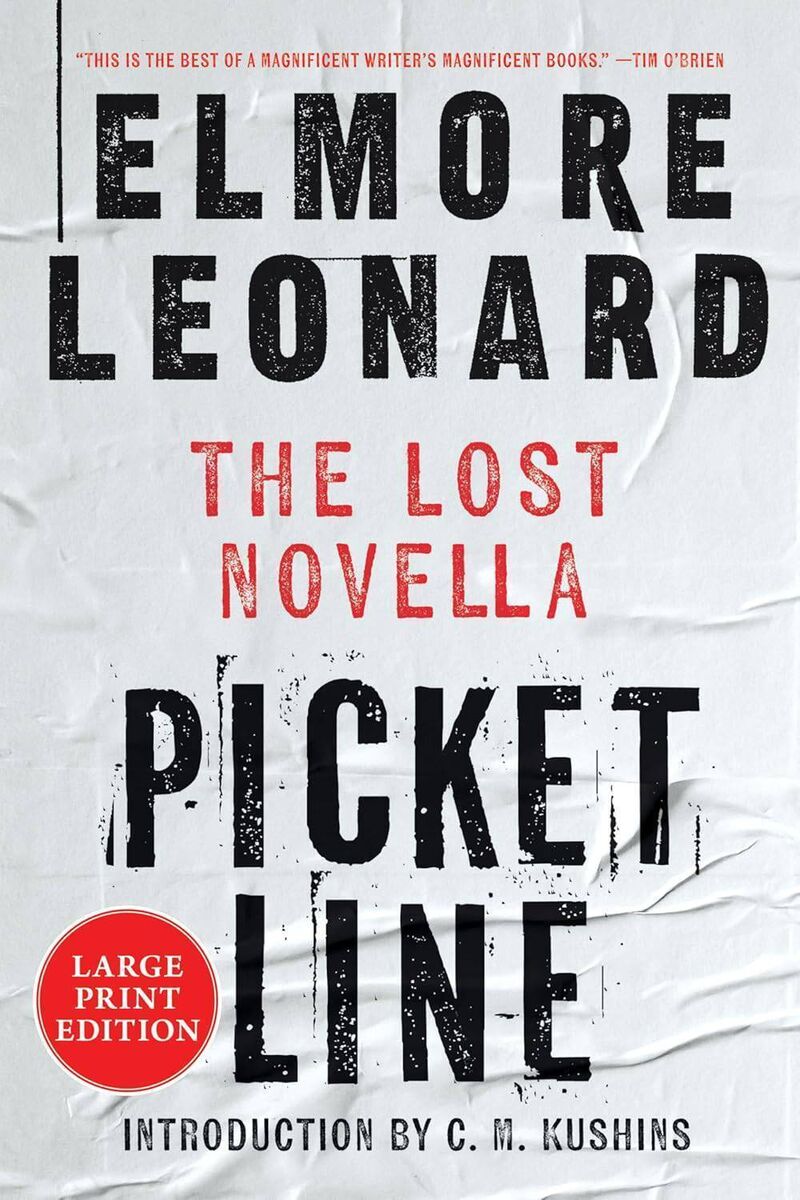
As the title Picket Line: The Lost Novella suggests, this is a work from very long ago about a strike by honeydew melon pickers in south Texas’ Rio Grande Valley. 

It has aged well, holds up to greater scrutiny and deserves to take its place in the sprawling Leonard canon. 

Not his best work by any means but a curious and rather interesting turn. 

Since more than half a century has elapsed since it was first written, it might legitimately be described as a period piece.

The struggles of underpaid, poorly treated, racially discriminated-against farm labourers, many of them Latinos and migrants, were very much in vogue in 1970 when Leonard turned his attention to the subject. 

The social justice campaign of Cesar Chavez and others of his ilk in that era garnered constant headlines back then and the civil rights leader was supposedly the inspiration for the Vincent Mora character in this book. 

Of course, this stuff is unfortunately topical again due to the callous treatment of this generation of fruit-pickers and agricultural workers by the current American regime.

At just over 100 pages, Picket Line is a quick study, consisting of short chapters with trademark punchy and crisp prose. 

Written from several different points of view, including the strike leader, a police officer, and a college student scab, it’s structured in a way that betrays how it was originally supposed to be a screenplay. 

Ironically, it doesn’t quite have the so-sharp-you-could-cut-yourself-on-every-page dialogue Leonard perfected in the prime of his career. 

An attribute that meant so many of his novels were ready-made for the Hollywood treatment they subsequently received.

Picket Line also finds Leonard at his most overtly literary,” writes CM Kushins, biographer of the author, in his introduction, “substituting the threat of crime or menace for the suspense of human drama; faith, racism and views of the social outsider governed by not one but two patriarchal forces — in this case both the corrupt Bravo County troopers and the operators of Stanzik Farms — would all be right at home within the works of John Steinbeck.”

For Leonard completists, this is a welcome arrival and a must have after all these years. 

A compelling tale told well, it’s probably not the book you gift to somebody in order to turn them on to the man Time magazine once labelled “the Dickens of Detroit”. 

For those of us who savour every drop of his output, from the early western novels to the Raylan Givens romps that gave the world the criminally under-rated low-key television masterpiece Justified, this is a revealing glimpse of the writer growing and evolving on the page. 

Not yet what he became, just offering flashes of future prowess that ultimately leave the reader wanting more.

On that note, the ending comes far too quickly and is ultimately unsatisfactory. 

A situation made all the worse by the final few pages seeming to build towards some sort of climax involving the strike organiser and one of his cohorts who prefers direct violent action to passive picketing.

For all that, some new Leonard is always better than none.

BOOKS & MORE

Check out our Books Hub where you will find the latest news, reviews, features, opinions and analysis on all things books from the Irish Examiner's team of specialist writers, columnists and contributors.


More in this section

Scene & Heard

Newsletter

Music, film art, culture, books and more from Munster and beyond.......curated weekly by the Irish Examiner Arts Editor.

Cookie Policy Privacy Policy Brand Safety FAQ Help Contact Us Terms and Conditions

© Examiner Echo Group Limited