Book review: Fresh look at old battle scars
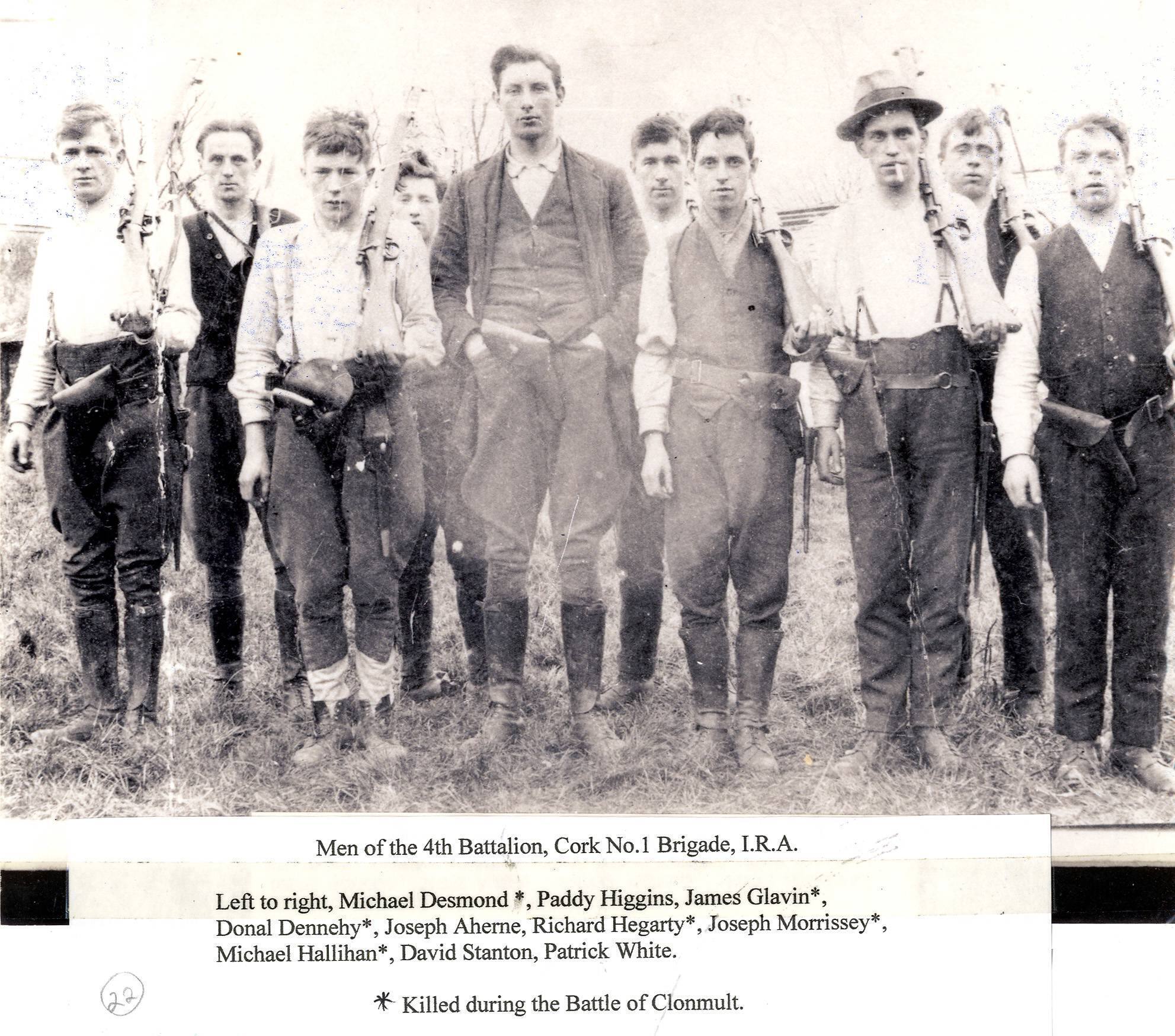
'The War of Independence in East Cork' makes an important contribution to the understanding of what occurred in East Cork during the 1919 to 1921 period
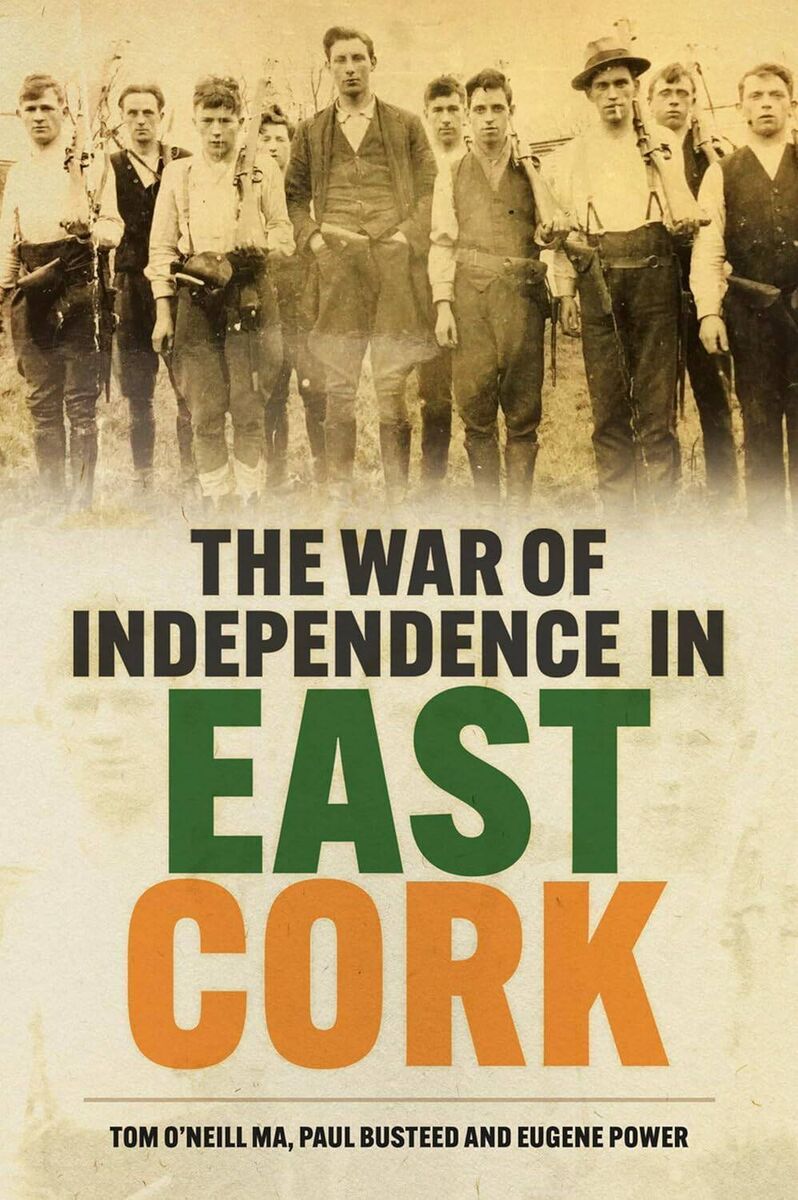
Men of the 4th Battalion, Cork No 1 Brigade, many of whom died at the Battle of Clonmult.

Men of the 4th Battalion, Cork No 1 Brigade, many of whom died at the Battle of Clonmult.

  • The War of Independence in East Cork 
  • Tom O’Neill MA, Paul Busteed and Eugene Power 
  • The History Press, £20.99

Up until the early 1970s, the events of the War of Independence were accessible to almost everyone who might be interested.
Even those who were too young to have first-hand experience of the 1918 to 1921 period could get reliable, if not entirely accurate, second-hand accounts from family, relatives, or neighbours.

A century later, verbal accounts of that time are at best third-hand and more often than not, are closer to legend than fact. 

This gradual deterioration of oral accounts is both natural and inevitable.

That is why a new book, The War of Independence in East Cork makes an important contribution to the understanding of what occurred in East Cork during the 1919 to 1921 period. 

The authors Tom O’Neill, Paul Busteed, and Eugene Power have compiled a compendium of accurate and referenced accounts of almost all of the actions carried out in East Cork during the War of Independence.

The book opens with an explanation of the structure of the Republican forces in Cork. 

Early in 1919 the IRA decided that Cork was too large to be controlled by the 1st Cork Brigade.

The IRA decided to divide the county into three brigades in order to make the best of the available resources.

The 1st Cork Brigade’s area stretched from Ballingeary in the west to Youghal in the east and included Cork City. 

The 2nd Cork Brigade covered the North Cork region including Fermoy, Mallow, and Duhallow. The 3rd Cork Brigade covered all of West Cork.

Each of the brigades was in turn divided into battalions, and the battalions were divided into companies. 

The 4th Battalion of the 1st Brigade covered East Cork; an area which conforms roughly with the current Imokilly GAA division. 

This battalion was divided into 17 companies, each with its own specific area.

For example, the A Company was based in Cobh, B Company was based in Midleton, and so on. 

The attacks which took place in East Cork involved the soldiers of the 4th Battalion.

Having defined the 4th Battalion, the remainder of the book gives a detailed and chronological account of the battalion’s actions in East Cork.

The accounts begin with two attempted raids on Ballyquirke Aerodrome near Killeagh in 1919. B

oth were called-off at the last minute; the correct decision as it became clear that the men involved while enthusiastic, were not yet properly prepared for action.

At the beginning of 1920, the 4th Battalion carried out a series of raids on RIC stations in East Cork.

 It becomes clear from reading the accounts of these attacks, that those involved had benefitted from training and experiences in the field since 1919. 

The first raid was on Carrigtwohill RIC station in January, followed by Castlemartyr in February, and Cloyne in April.

It would be wrong to assume the 4th Brigade had the backing of the entire community. 

Following the raid on Castlemartyr RIC Barracks, the local parish priest, Fr Murphy, broke from the Bishop’s Lenten Pastoral to refer to the attack on the barracks as a “criminal outrage” and to condemned the attacks “on [RIC] men who have sworn to do their duty”.

There can be little doubt that the nadir of the 4th Battalion’s history occurred one year later at Clonmult. Twelve members of the battalion died that day. 

There were also two further deaths from executions after a trial by military court. 

This section of the book draws heavily on the thorough research of co-author Tom O’Neill’s 2019 book, The Battle of Clonmult.

The war in East Cork finished with the truce in July 1921. The book relies on the facts as recorded at that time and does not express an opinion.

Everyone who lives in the 4th Battalion area should have a copy of this book in their house.

Different interpretations may emerge from reading this book, but all will be based on fact and not legend. That is the most important aspect of this excellent book.

BOOKS & MORE

Check out our Books Hub where you will find the latest news, reviews, features, opinions and analysis on all things books from the Irish Examiner's team of specialist writers, columnists and contributors.
More in this section

Scene & Heard

Newsletter

From music and film to books and visual art, explore the best of culture in Munster and beyond. Selected by our Arts Editor and delivered weekly.

Cookie Policy Privacy Policy Brand Safety FAQ Help Contact Us Terms and Conditions

© Examiner Echo Group Limited