‘My fear isn’t past — it’s present’: Aida Austin on life with her daughter’s intractable epilepsy
Aida Austin’s childhood summers were spent in West Cork, where her parents had a “tiny, ropey old cottage”.
Her dad, a Dubliner, was a teacher, so come end of term, the whole family — Austin has five siblings — would pile into the car and take the Innisfallen ferry from the UK to Cork, happily foregoing London life for summer in the Rebel County.
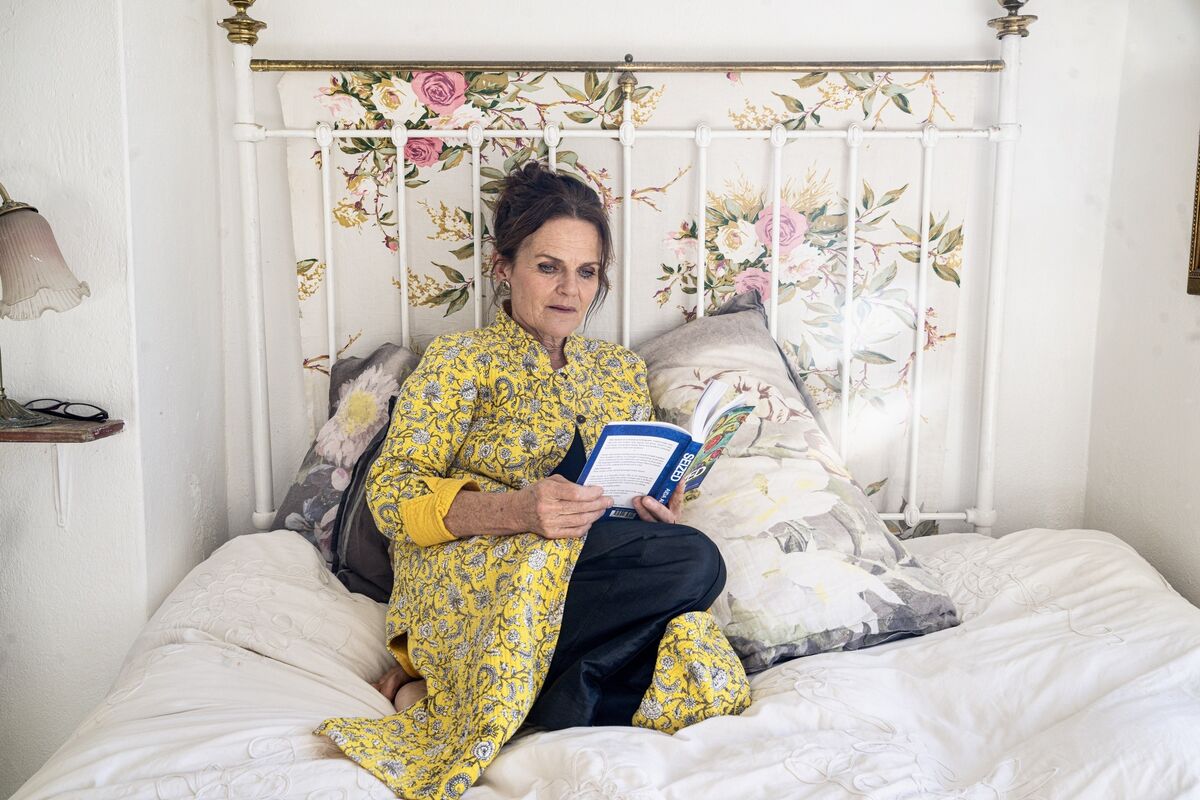
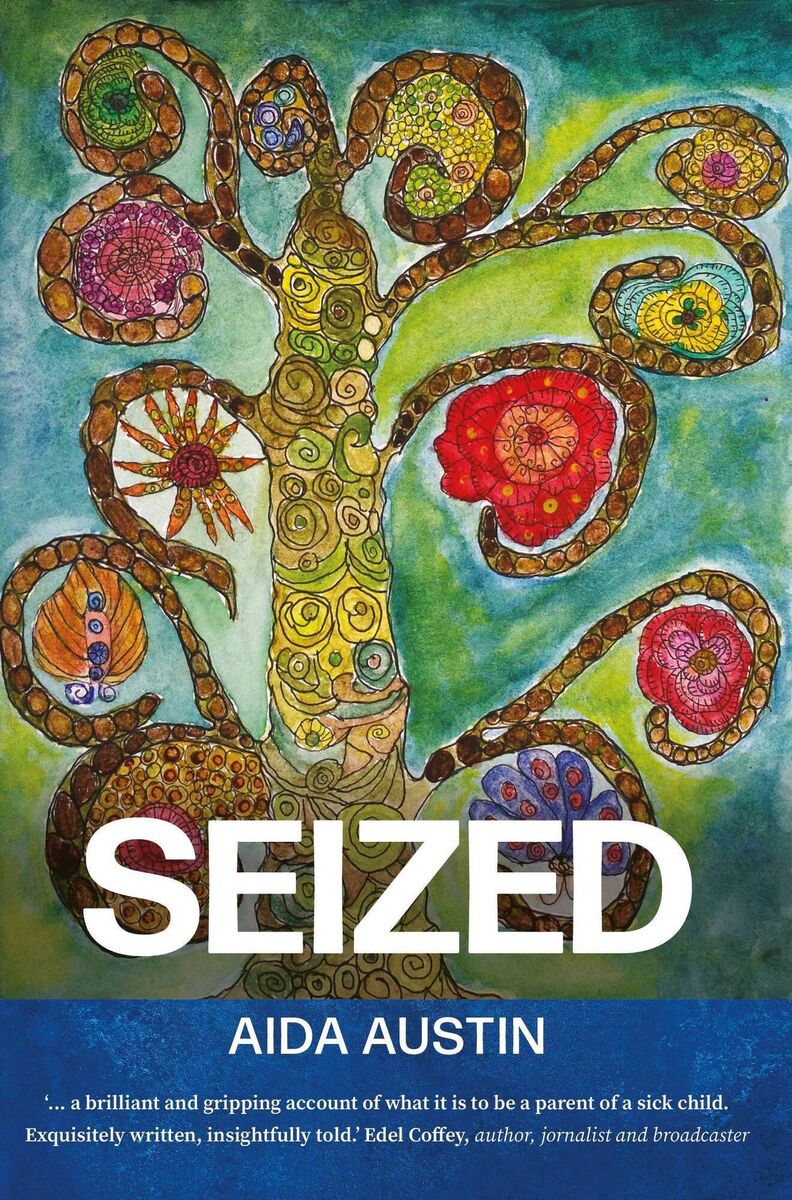
- , a memoir by Aida Austin, is available to purchase from:
- Instagram: @aidaaustinart
- etsy.com
- It is also available to buy in in Kerr’s bookshop in Clonakilty, and at the Examiner shop on Oliver Plunkett St, Cork
Seizures are immune to perspective.
Perspective is a form of abstraction, which requires distance and distance requires a universe. But there is no universe when my daughter is having a seizure, which means there is no distance. So I cannot choose a perspective. This has to wait till afterwards, when the universe comes back.
When my daughter has a seizure there is just her and harm and me.
It is dawn when my sleep is disturbed by a light touch of psychological terror.
There it is: the sound of a mouse running over a tambourine. I open my eyes.
There it is again, louder now, more like someone is playing tiny finger cymbals behind my daughter’s bedroom door. This sound is the pretty tinkling of her old brass bedstead. A little bit of terror goes a long way - neuromuscular readiness springs me to the side of her bed, where I find her asleep.
Her respiratory waves are smooth but slightly shallow, and the air around her is ruffled, as if she has just shifted position in her sleep.
I watch her for a while as her breathing settles and deepens.
Loveliness lends itself to us when we sleep. This innocent activity reduces us all to the sweetness of infancy. She is sleeping now like a milk-drunk baby in the bed that she was born in, lying on her side, turned away from me with her face in shadow and her back curved gently like a teacup handle.
She stirs, rolling onto her back and as she turns, I catch a faint trace of soap and coconut in the whisked-up air, along with something warmer and homelier - the pheromonal essence of sleep.
Her breathing becomes steady and deepens again. She has one arm flung loosely above her head, palm upwards.
The air is perfectly still.
The world is still here.
I look at her wrist and remember her plump baby ones with creases so deep that her hands looked clicked-on, like Lego. I remember how she slept back then when sleep was innocent and did not weaken her to prey; the way she would roll drowsily into my arms and wake, then sleep again with a murmur or soft wriggle, that was all.
I notice my favourite pillow case, its print, a large charcoal sketch of an urn and roses, is faded now with washing. Her left foot, exposed, is resting on it.
The world is still here when I spot a molecular shiver in her foot.
Caught now in the split-second moment between immobilizing dread and galvanising terror, I watch the tremor rise up the right distal limb to the ipsilateral face. Her eyes open unnaturally wide and unseeing.
Their blue irises deviate suddenly and the world vanishes.
She begins to vibrate.
The oscillation is tight and even: a billion bees buzzing silently underneath her skin. Gathering momentum, becoming looser and more chaotic, it gains traction on her limbs and now, the bed.
The brass bedstead rattles, rattling the air.
She is going.
I clear the area around her of anything hard or sharp, then take my daughter’s hand in mine and stroke her forearm as it stiffens.
I need her to know I’m going with her.
Right on the tipping point of her abduction, my eyes close involuntarily for a second, shutting out its brutality. When I open them, she has gone, her left hand still in mine.
There is a cold, black hole in the world where she used to be and there is a cold black hole in me.
My daughter is not dead. She is not awake. She is not asleep.
Snow White did it well. When she lay in her glass coffin not dead, not awake, not asleep, she was still as stone. There was no aimless force, no injury. Everything remained intact. Glass. Tongue. Teeth. Snow White’s limbo-void was tranquil and serene. In it, she was as elegant and silent as a wildflower.
In my daughter’s limbo-void, there is no peace. Just a violation.
Here in front of me, is the desecration of a soft and girlish bed.
I sit, holding her hand. In the end, it all comes down to being powerless. It is this that does you in. This violation can only be witnessed. It can only be sat out.
When keeping her hand enclosed in mine becomes too difficult, I change my point of contact to her stomach, limb or hair - to any part of her.
I cannot stop her being taken and I cannot stop her being gone but I can refuse to let her disappear beyond the reach of my touch - or voice. So I talk to her. Sometimes I sing. I sing “Jamaica Farewell” by Harry Belafonte, the same song I used to sing to her in seizures when she was little. The same the song my father used to sing to me when I was young.
In this way, I bind her to me. I stroke her. I speak to her. I say, “it’s all ok."
I sing sounds of laughter everywhere and the dancing girls swing to and fro, meanwhile my fear leaps past the fear of a bitten tongue or other injury to the last fear along the line: the cold and sweaty one that centres on her breath. Could it be that this time, she won’t come back? Might this cold, black hole in the world that she left behind be always here? Might it always be in me?
I kneel on the bed, leaning over her to check the colour of her lips, singing ackee, rice, saltfish are nice and the rum is fine any time of year.
Her lips are pink, not dusky. They stay pink.
Afterwards, the world comes back but it does not come back all at once.
A seizure takes the person, leaving just the skin behind like a hollowed-out fruit. It takes a while for the person to fill up the skin again. To become whole.
First, the shaking loses strength and speed. Then comes the battle for breath, her mouth, a wild operculum over frantic lungs. Like a gale has been stuffed inside her lungs and she is trying to get it out.
The bed stops rattling.
Finally, she sleeps and there is peace again. But peace can be a wild thing sometimes. When sleep lowers seizure threshold, no part of it is safe.
The faultline runs the length of sleep, undermining its architecture, weakening every point, turning each breath into a brink.
Is this smooth, deep breath that she is taking now simply a breath, honest and true? Or is it a hiatus between one seizure and the next - is it a counterfeit, a lie?
There is a brief series of myoclonic twitches in her shoulder and her hand.
As she opens her eyes, I flinch.
Slowly, she focuses on me. I can see that she can see me. We see each other: those breaths just now, that interval of peace, was not a temporary truce. My daughter is back. The peace that arrives now is not wild. It rolls in flat and cold and has a particular weight, like sea mist when it barrels in from the horizon, covering the sun.
The violence begins and ends in silence and extraordinary sadness. In the slipstream of a seizure, language breaks its back.
Her mouth opens and closes soundlessly. I watch her gulp like a fish in the bottom of a boat.
“Don’t panic, love,” I say, “don’t try to talk. Your speech will come back soon.” Once, after a seizure, when her speech went missing for too long and my assurances failed to soothe her - and me - I went downstairs to find paper and a pen. On it, panicked, she wrote: “when?” Today, she mouths it.
“Soon,” I say, “very soon, I promise, love.” We wait. I talk from time to time - small bits of calming rubbish here and there to alleviate her terror - and mine - that speech might be stolen forever, for there are no limits to the scope of fear when you meet the unknown.
I push her hair back out of her eyes and ask her if she would like some water.
She nods, then sits up, pulling her T-shirt down from where it has risen up and leans back against the bedstead.
I fetch her a glass of water from downstairs.
She drinks it.
I sit on the bed, my hand resting on her foot.
Absentmindedly, I stroke the front of it.
I look down at it then up at her.
“Hey there Bigfoot,” I say.
Then she does something so normal that it is strange and shocking: she smiles.
Pulling her foot away, she says, “Stop, Mum,” and the universe comes back.
“Size six is biiiiiig,” I say.
“Mum, stop.” “No one will marry you, not with those feet.” “Mum, seriously.” “And hammer-toes. You got those from Grandad.” “You know I hate my fucking feet.” “Language, love.” “Sorry.” “At least you haven’t got my bunion,” I say.
We say nothing for a while.
“I feel weird,” she says, “I think I had a seizure. Did I?”
“Just a small one, love,” I say.