Taking the pressure off the points race: Tramore Road music and arts courses in Cork
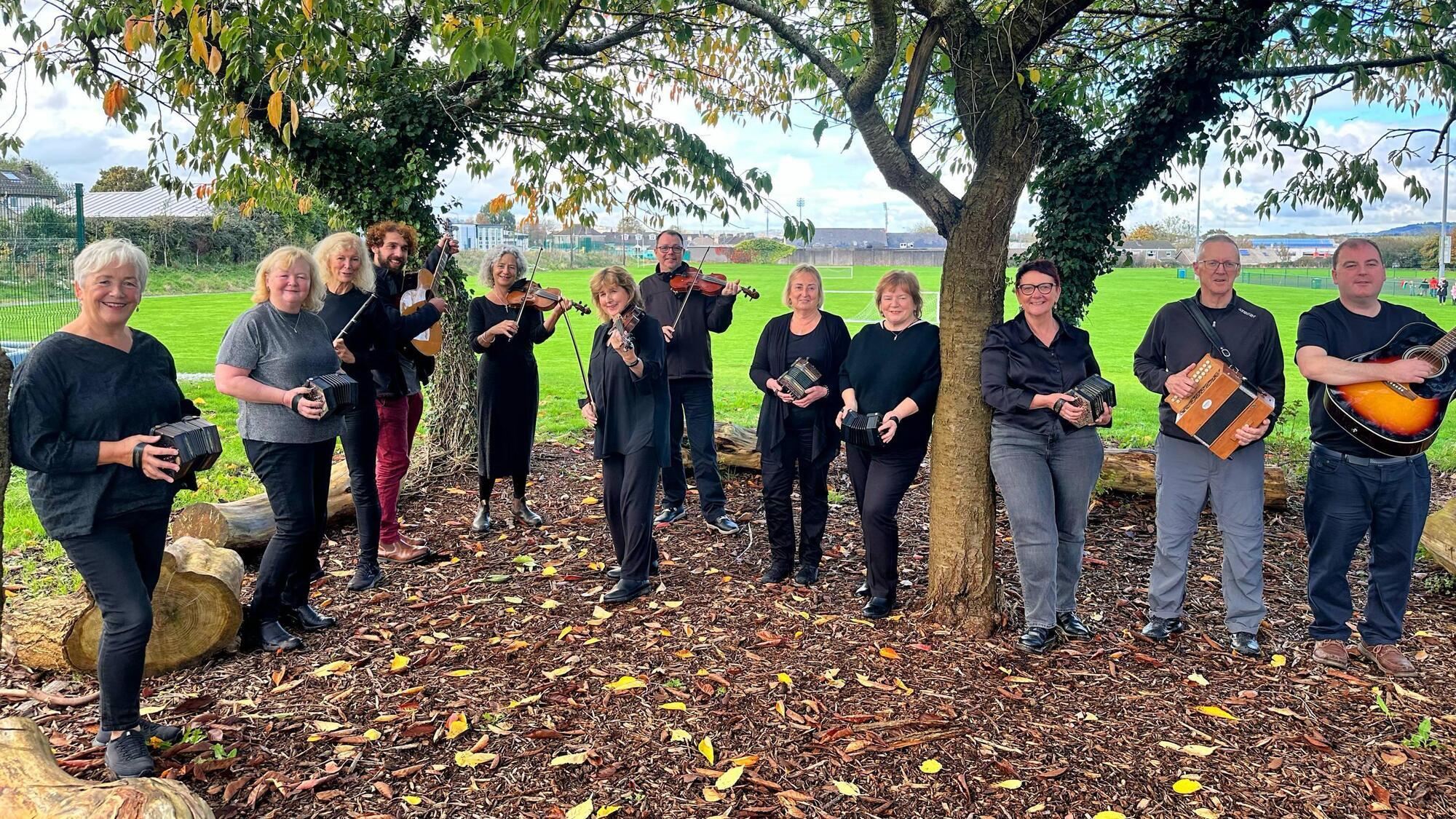
Irish Traditional Music course students at Cork College of FET’s Tramore Road Campus.
“When students are doing their Leaving Cert they’ve a focus on points because that’s what the narrative is the whole way - they have to get great points, they have to go on to university, and they have to do a degree,” says musician Conor Arkins.
There are alternative routes to learning, however, which Arkins, Irish Traditional Music course director at Cork College of FET’s Tramore Road Campus, says take the “pressure off the points race” and make further education in performing arts accessible to all.
Experiential learning is central to its Performing Arts Department programmes where, as with the college’s other post-Leaving Certificate courses, €50 registration is the only charge for students.
“We have a problem in this country about being obsessed with having to do a level eight degree when you’re 18, and what kind of a pensionable job you’re going to have,” says Clare multi-instrumentalist Arkins. “It’s not a logical thing for an 18-year-old who doesn’t know what they want to do.
“Our students would come from diverse backgrounds and we’re trying to make it accessible to all, so having no fees means the door is open to everyone who’d like to attend.”
Many Tramore Road programmes allow students to progress through the Higher Education Links Scheme to courses at universities such as UCC or MTU, while its advanced acting level 6 programme links to a degree course at Sunderland University, other acting students progressing to Trinity College’s Lir Academy.
“A lot of our students, across the college, come in and maybe they didn’t get their first choice in whatever they wanted to do in college. They do a year with us and sometimes they stay for a second year on a second course,” says Arkins. “Some people leave after level five; they leave after the level six, some go on to higher ed, and others go straight into industry.”
The full-time QQI Level 5 course in Irish Traditional Music, now in its third year, is not directed solely at Leaving Certificate students, however. “We’ve had a lot of retired people doing the course and we have a younger mix that have applied this year – school-leavers and people in their 20s,” says Arkins.
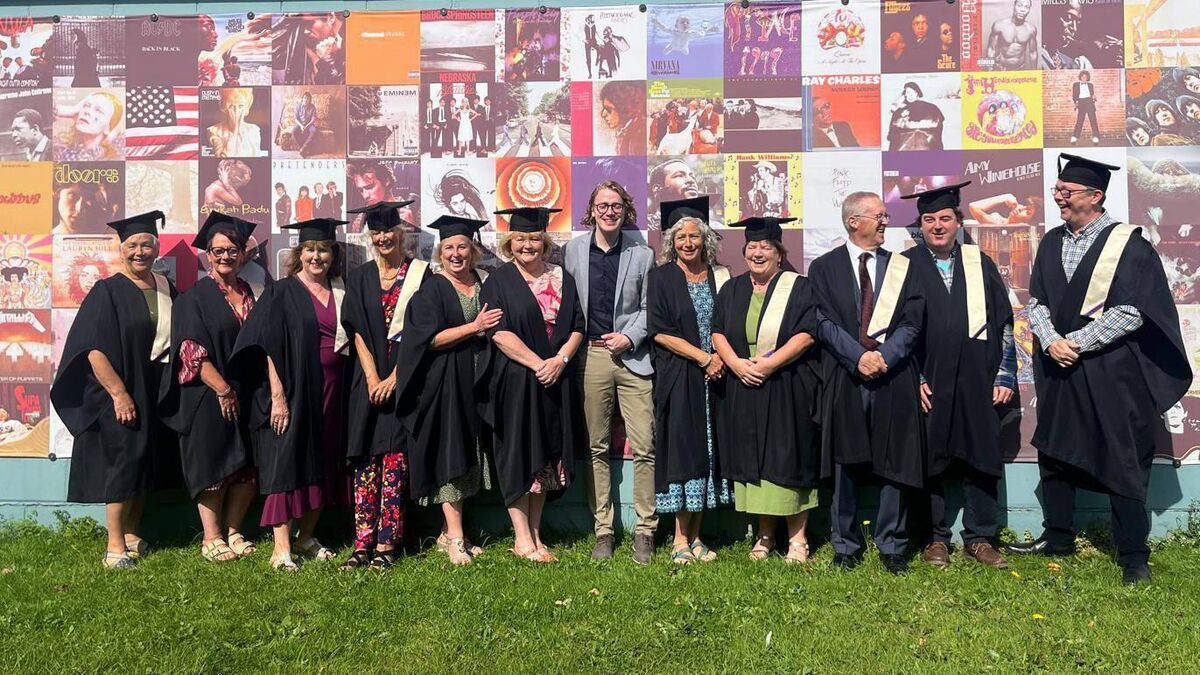
That age diversity has been one of course’s strengths, adds Tramore Road Campus principal Liz Moynihan. “It’s all ages, and you’ve a lovely dynamic then in the class because you’ve somebody just out of Leaving Cert and you might have someone in their 30s and someone in their 50s.
“I might have thought in my own head that it mightn’t work, but it really does,” she says. “When you get 20 of different ages, the older ones enjoy the fun and the craic of the younger ones, and the younger ones enjoy the wisdom of the older ones.”
The one-year traditional music course elements are practical and “like most further education courses, based on experiential learning”, says Arkins. “The premise behind that is that you’re ‘doing’ the whole time. It’s always project-based and there’s a goal at the end.
“You’re doing components in music theory and practice, music performance, music industry studies, ethnomusicology, Irish music, work experience, and communications, and instead of doing assessments and assignments for all seven of them, we tie them in. Last year [students] had to run a session series, communicate with artists and venues, so the music industry side of it and communications were linked.”
Participants have ensemble performance opportunities, plus weekly one-to-one lessons with tutors such as Lisa O’Sullivan (fiddle), Brian Ó Broin (guitar/whistle), Karl Nesbitt (bodhrán), and Liam Fitzgibbon (harp/pipes).
Workshops are led by the likes of Joanne Quirke, Therese McInerney, and Iona Ritchie, with guest lecturers including Paul Clesham and Aoife Granville.
A week in Sitges, Spain, performing at Artscope’s Creative Connexions Ireland Festival was a bonus for a group of last year’s students, and for many, building confidence to play in trad sessions has been an achievement as important as gaining QQI qualifications.
“It’s been a real social scene for them, and we also go to a concert every Wednesday. Some are playing an awful lot more in sessions and [the course] gave them a kind of kick; some have gone on to UCC to study the BA,” says UCC music graduate Arkins, who recently released albums with both Clesham and Taobh na Mara Céilí Band, and completed a research Masters on the fiddle music of Bobby Casey.
Students can apply this month, direct to Tramore Road Campus for courses including Traditional Irish Music, acting, radio and podcasting, music management and sound, and dance.
“We’d be urging students not to think Leaving Cert points are the be-all and end-all,” says Arkins.
“There’s zero points required,” adds Moynihan. “It’s for all ages, really good value, and we are the centre of excellence for performing arts in Cork ETB. Apply online, you’ll be called for an interview; you do your audition, get offered your place, and take it from there. For €50 you’ve a full-time course for a year.”
- See: tramoreroadcampus.ie