Book review: Downfall of last shah of Iran

One of the often-universal themes in this wonderful book is how autocracies that outstay their welcome are often replaced by usurpers far worse than they were
An estimated 400,000 demonstrators against shah Mohammad Reza Pahlavi filled the campus of Tehran University carrying huge portraits of Ayatollah Ruholla Khomeini and other opposition leaders on January 13, 1979.

An estimated 400,000 demonstrators against shah Mohammad Reza Pahlavi filled the campus of Tehran University carrying huge portraits of Ayatollah Ruholla Khomeini and other opposition leaders on January 13, 1979.

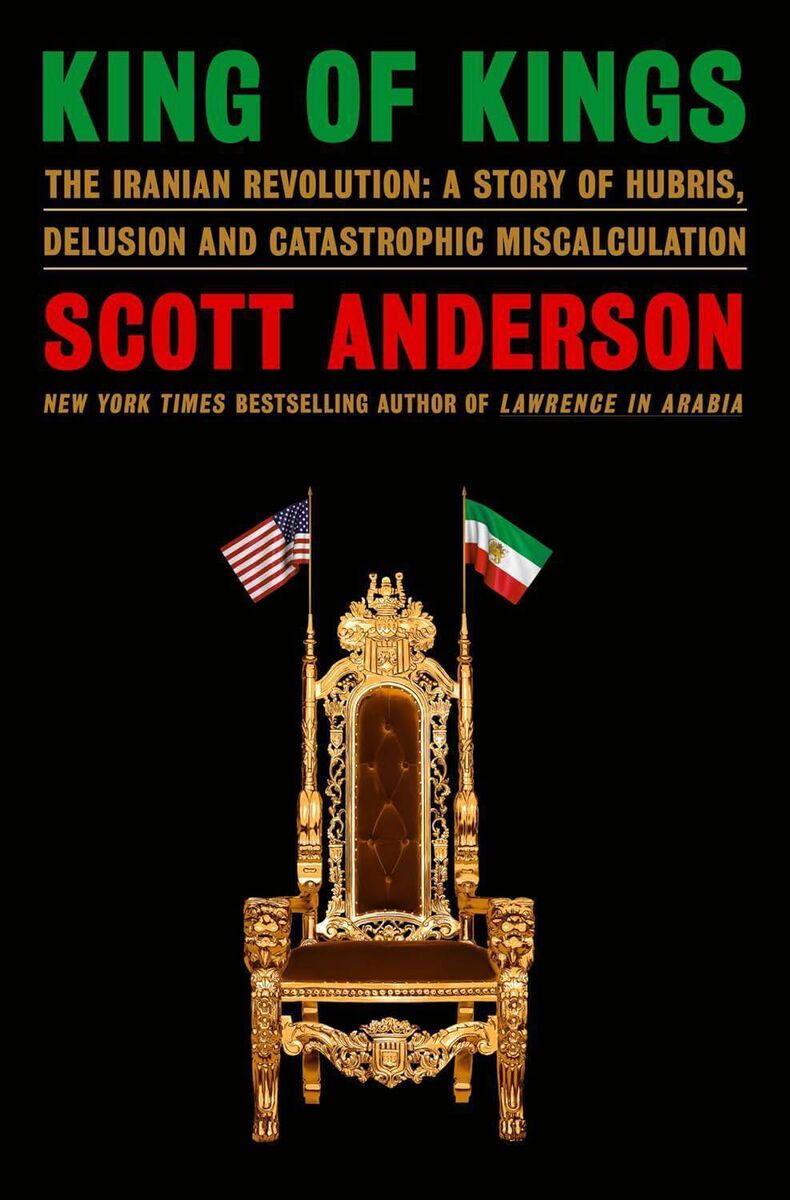
  • King of Kings: The Iranian Revolution: A Story of Hubris, Delusion and Catastrophic Miscalculation 
  • Scott Anderson 
  • Doubleday, €35.00 

Written with the galloping pace of a cliff-edge political thriller and the intimacy of a memoir, Scott Anderson’s King of Kings is a wonderful, engaging history. 

It is a tremendous summation of the clichés that can attend the end, benign or otherwise, of a regime that imagined itself loved and secure. 

It is also a warning to those prepared today to see our own times through the prism offered by a resonating episode from the past.
Mohammad Reza Pahlavi, the last shah of Iran, was, through American and British skullduggery, imposed on Iran in 1953. 

His ennoblement came after then prime minister Mohammad Mosaddegh had the temerity to champion workers’ rights and nationalise the country’s huge oil reserves, undermining the Anglo-American exploitation — piracy dressed as international business — established by Winston Churchill on the eve of the First World War. 

The British and Americans hoped he might be as assertive in protecting their interests as his father was. 

Hardly a humanitarian, army officer Reza Shah Pahlavi brought a Tehran bakers’ strike to an end by roasting the workers’ leader alive in one of his ovens. 

That kind of decisiveness was alien to his son, who was incapable of making any decision unless he could identify someone to blame should his judgement prove inappropriate. 

Time and time again, as the noose of change tightened, his prevarications lost the day and cost his festering courtiers ground.

It would be unfair to blame the King of Kings, a title he generously assumed in 1967, for the challenges facing his utterly corrupt country. 

He was supported by an American diplomatic service utterly delusional and imperceptive. 

The US ambassador for a lot of the Shah’s reign — William Sullivan — was more interested in sustaining the lucrative circle of buying Iranian oil and encouraging the inept and insecure Shah to use a vast proportion of those revenues to buy arms from America. 

So detached was the American legation that fewer than a dozen of the hundreds stationed in the country could speak Farsi. 

This vulnerability was exacerbated by a communications process more like one from 1825.

One of the often-universal themes in this wonderful book is how autocracies that outstay their welcome are often replaced by usurpers far worse than they were. 

Just as Russia’s and China’s pressure-cooker revolutions unseated rotten dynasties but replaced them with even more malignant administrations, Iran’s determination to depose the Shah mixed nationalism and a medieval religious fanaticism in the person of the vile, hateful Ayatollah Ruhollah Khomeini. 

The legacy of that calamitous intervention remains centre stage in our volatile world.

Anderson is a wonderful writer, one who winnows substance from the imagined in a way that must remind all politicians that the opportunity to resolve critical issues is not open-ended. 

Whether our housing crisis can gather the velocity that turned Iran rogue is an open question but it is also an increasingly pressing one. 

How reassuring it would be if Anderson’s warning had the impact it deserves.

BOOKS & MORE

Check out our Books Hub where you will find the latest news, reviews, features, opinions and analysis on all things books from the Irish Examiner's team of specialist writers, columnists and contributors.

More in this section

Scene & Heard

Newsletter

From music and film to books and visual art, explore the best of culture in Munster and beyond. Selected by our Arts Editor and delivered weekly.

Cookie Policy Privacy Policy Brand Safety FAQ Help Contact Us Terms and Conditions

© Examiner Echo Group Limited