Austria celebrate their third victory in the Eurovision Song Contest

Austria's JJ celebrates his win in the Eurovision Song Contest 2025 in Basel, Switzerland. Picture: Andres Poveda
Austria have won the Eurovision Song Contest, held on Saturday night in Basel, Switzerland, with the song , an operatic pop-ballad featuring a techno-pumped crescendo, performed by 24-year-old Vienna singer JJ.
The 69th edition of the contest will be remembered for delivering arguably the tensest voting sequence in its history after Israel, who won the public televote, led the overall scoring until Austria’s final tally was revealed.
Austria finished fourth in the televote, but had banked the top score from the jury vote, and so claimed victory with an overall total of 436 points, 79 ahead of Israel.
Israel’s participation in the contest had ramped-up in protest and controversy since the Gaza war, with several EBU members, including RTÉ, calling for a review of the country’s inclusion.
They were represented in the final by singer Yuval Raphael, a survivor of the October 7 Nova music festival attacks, with the song which was met with a mix of applause, jeers and an attempted protest in the hall.
It received 10 points from the Irish televote and 12 from the UK.
Sweden, the hot favourites before the event, had been poised to beat the jointly-held record with Ireland of seven Eurovision victories.
However their song , a comedic homage to Nordic sauna culture came home just fourth.
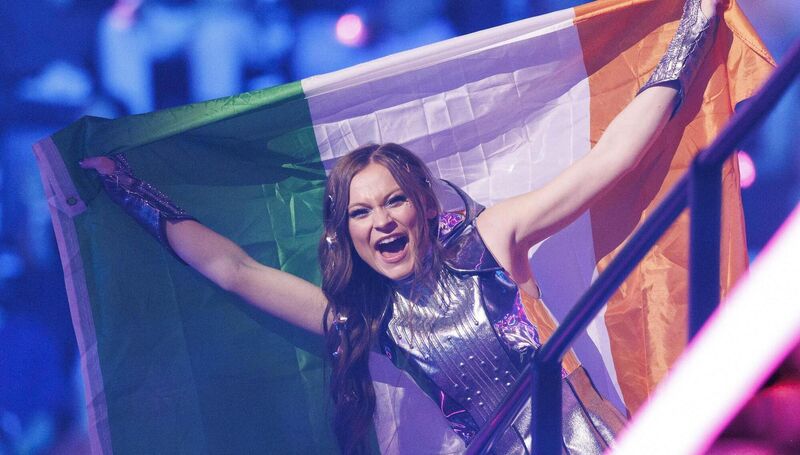
Ireland did not participate in the grand final after entry Laika Party, performed by Norwegian singer and TikToker, Emmy, failed to qualify from its semi-final on Thursday night; figures released following the grand final on Saturday revealed that song placed just 13th within its heat of 16 runners.
True to Eurovision tradition, the final served up its annual smorgasbord of musical eccentricity: Estonia’s novelty act Tommy Cash featured a fake stage invasion during his song Espresso macchiato while fan-favourite Finland saw singer Erika Vikman mount a giant, pyrotechnic-spewing microphone during her sex-positive anthem Ich komme.
However, it was Canadian superstar Céline Dion who had been predicted to steal the Eurovision spotlight.
There had been well-considered noise circulating in Basel all weekend that the singer would make a rare appearance for the final; she had represented Switzerland for their last victory, held in Dublin in 1988, with the song .
However those rumours didn’t realise with the eventual interval proving an anticlimactic mélange of Swiss Eurovision stars and a balloon-burst segment of host Michelle Hunziker playing the alpenhorn.
Austria now celebrate their third victory in the contest as the EBU nurses an operational hangover following Israel’s latest close encounter with Eurovision victory.
For RTÉ, the soul-searching will continue as the country’s 21st century reputation as Eurovision also-runs (though bucked by Bambi Thug in 2024) splutters on.
Our bubble gum Scandi track, themed on Soviet-era animal testing, didn’t resonate with the European audience, nor indeed our own, with the song failing to hit Ireland’s Official Top 100 chart last week.
Perhaps, more a case of wasted opportunity than .