Asif Kapadia on his new film 2073: 'Is all this s**t actually happening?'

Asif Kapadia, director of 2073. Picture: courtesy of Asif Kapadia
His documentary features including Senna and Diego Maradona have made him one of the screen’s most prolific filmmakers. Now Asif Kapadia is breaking new ground with his latest film 2073 - a trip to a dystopian future that looks at the biggest challenges endangering our present, from climate to politics to tech.
Kapadia blends documentary storytelling with sci-fi drama - casting Samantha Morton as his leading star - in a film that aims to tackle how our present-day world threatens our future.
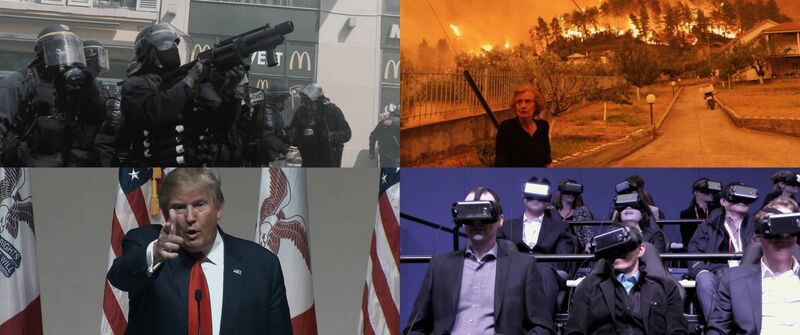
The film is set in 2073, where many of the worst fears of modern life have been realised. Militarised police and drones operate under orange skies on wrecked streets. Humans including Morton’s survivor hide underground, while the film is interconnected with contemporary footage of today’s global crises of authoritarianism, unchecked big tech, inequality, and the global climate crisis.
“I think the primary reason for making this was to figure out: am I going mad? Is all this shit actually happening?” says Kapadia. “It was really like that, it was: why is no one stopping this? Why is no one saying anything?” As part of the unearthing of the film, he spoke with scores of people who could provide information and context about our contemporary world.
“I really like journalists. I really like experts. [I thought] I’m going to speak to these people and ask them: What do you think is going on in your country and in your specialism? I interviewed about 80 people all over the world, people who are experts in AI, people who are experts in surveillance, people who were interested in the breakdown of democracy, climate activists.
“I took all of these interviews and said, I'm going to figure out a way to put this all into a movie, because I think it's all linked. Normally, you get a film about the climate, it's just dealing with that, or you get a film about one bad actor in one part of the world,” he says, adding that he wanted to understand what was happening on a global scale.
“You can't deal with anything in the UK or in Ireland, if you don't understand the US, if you don't understand what's going on in Russia, you don't understand what's happening with surveillance or technology.
"Who are these tech bros? Now we know because they're everywhere. When I started the film, most people didn't know who Peter Thiel was. People thought Musk was quite amusing, and they liked his cars. And now he's literally, every day, getting involved in our politics.
“That was the idea: let me talk to people who know what they're talking about. And in my job as a filmmaker, how can I visualise this and put it in a short form where I connect the dots and present it to an audience. I thought, I’m going to try to find a way to emotionally affect an audience, because that’s what cinema can do. That’s what my job is as a filmmaker.”
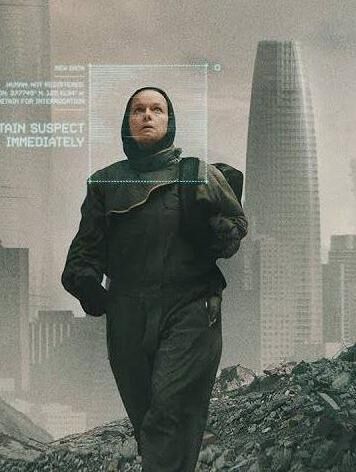
Though Kapadia is best known for his sterling documentary work, he started his career in drama. His early fiction films included period adventure The Warrior and Far North, starring Michelle Yeoh and Sean Bean.
2073, he says, presented an opportunity to blend both forms of storytelling. “My first few films were drama films. I made Senna, and that led to Amy, which then led to Diego Maradona. So I found myself making docs and being known for docs, but in my head, I'm still a drama director.
“With this film, because I don't have a central character, it's quite intense. I wanted it to be a bit of a punch in the gut for the audience. You need somewhere to go back to recover in between the doc sequences, which are quite hard-hitting essay films, information, very fast cut.
“I wanted a character that you could come back to. I wanted a voiceover. Then I looked for brilliant actors I really love that might respond, that might be interested in the subject matter, and also an actor who has been on the screen for a long time that I could use them as archive. Samantha covers all of these bases, and she's also played someone in Minority Report who could foresee the future.”
Kapadia has become known as a documentary filmmaker for a reason. His 2010 film, Senna, charted the extraordinary life and untimely death of the Brazilian Formula One champion, putting viewers front and centre in a spellbinding piece of filmmaking.
2015’s Amy was a smart blend of personal testimonials and archival footage which proved to be a powerful portrait of British singer Amy Winehouse. Constructed from hundreds of hours of previously unseen footage, 2019’s Diego Maradona brought scope and depth to the story of a very famous yet complex sporting icon. Kapadia says he loves telling a mix of stories.
“I'm a sports nut. I cover a lot of bases. I love world cinema. I've travelled a lot, so I like making films in different languages and different cultures. I love sport. I love politics, music. My thing is, I like to mix it up because I get bored.
“First and foremost it's a gut instinct, because they take so long to make,” he adds of his documentary filmmaking. “I'm quite slow at making films. I like the fact that I take my time because I want it to be a definitive film, if I can, of every subject I make a film about."
Kapadia says he enjoyed the idea that his subjects tended to be antiheroes. "People did not universally love Senna before we made a film. People were not complimentary about Amy Winehouse before we made a film. People in the UK, particularly people in England, hated Maradona because they thought he was a cheat. I love that these characters were sort of anti establishment.
“I would say that there's a bit of a link, which I only realised quite late in the day, to 2073: I'm making films that are (featuring) journalists who are against the establishment. They're fighting power, but essentially taking on much more powerful systems, not always winning, but they try at least. And so the idea of finding characters that have an edge, in a way, people who are not universally loved, people who are complex, the more complex, the better. I love the complexity of real people.”
- You can watch 2073 on Altitude.film and other digital platforms. For more information on the film, upcoming screenings and its contributors, see 2073.film