TV review: Jerry Springer documentary goes behind the onstage brawls
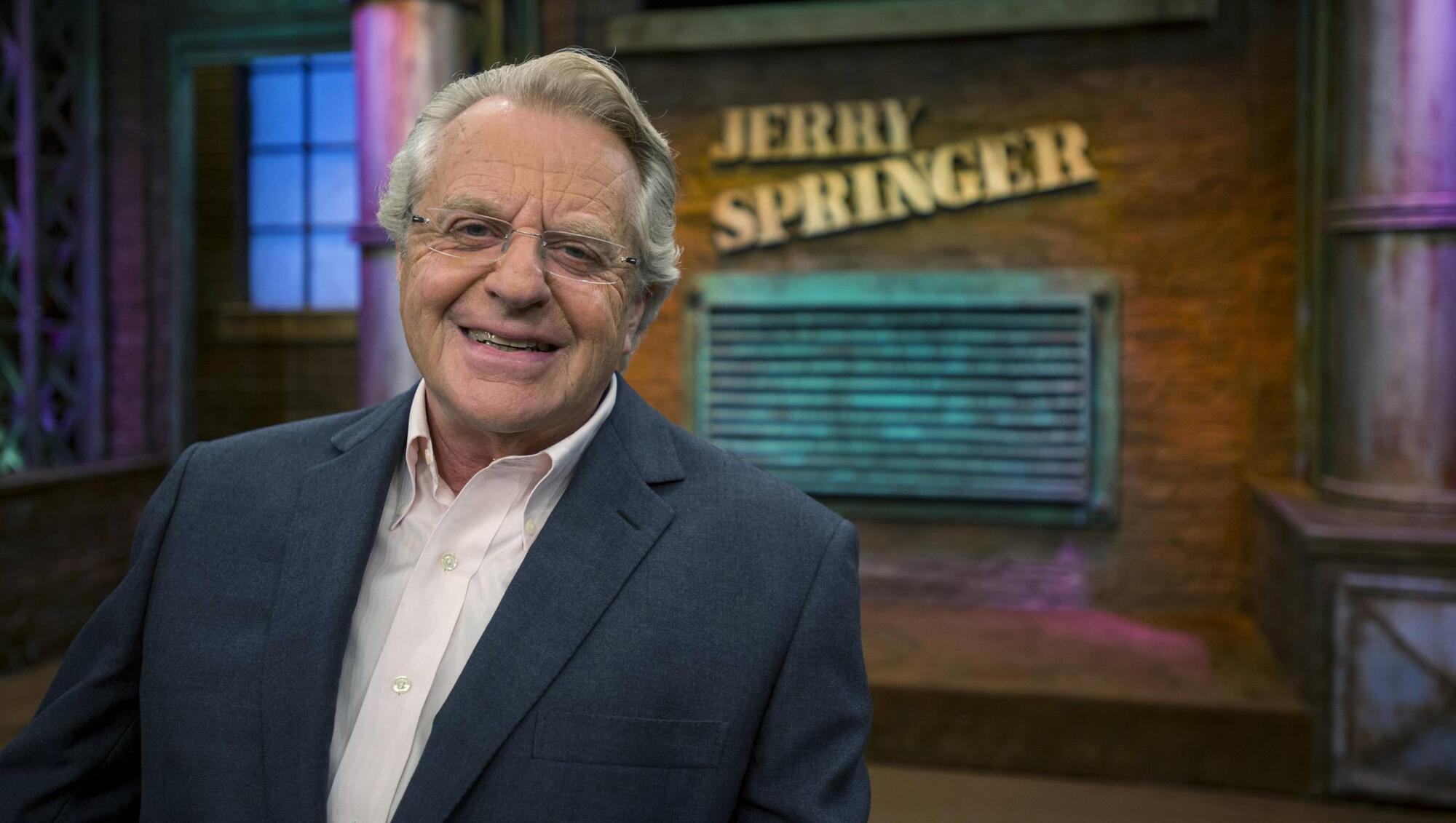
The late Jerry Springer, on stage set in Stamford, CT, Tuesday October 4, 2016. (Photo by Howard Simmons/NY Daily News Archive via Getty Images)
I never knew Jerry Springer was Mayor of Cincinnati. Or that this icon of daytime TV started life as a dull chat show which was about to be cancelled before it pivoted to featuring a man who married a Shetland pony.
There’s that, and lots more, in
Richard Dominick is the secret sauce. The man who wrote crazy headlines for tabloids was hired as executive producer and set about persuading Jerry to let his hair down and do a two in the morning kind of show.
Dominick’s idea was that it should be ‘interesting with the sound off’. He also told the stage manager to get the audience chanting ‘Jerry’ when the host came out.
Springer died in 2023 so we don’t get to hear his side, but it’s enjoyable watching Dominick blowing his own trumpet. (That sounds like a slot on the show, says you.)
But Springer was the key to the show’s appeal. He was calm and a bit aloof, in contrast to the guests and the whooped-up audience.
It wasn’t all men who slept with their mother-in-laws. One show here starts with Jerry offering to reform a member of the Ku Klux Klan.
The guy comes out and starts chanting about Jews and African-American ‘slaves’, throwing Nazi salutes at the audience.
Jerry then brings out a Jewish man and his bodyguards and we have a brawl on stage.
The ratings were ‘insane’ and Richard Dominick saw the future.
As someone says here, it became a talk show with very little talking. Now it was fighting and shouting. And everyone loved it.
Wrestling with civilians. It met some ‘down with this sort of thing’ protests, which only added to the allure.
The conscience of this documentary is a producer called Toby Yoshimura, a bright guy with an eye for the freaky stories that would keep people watching.
He relays how producers gave guests the limousine with expensive hotel experience, filling them with drink before bringing them into the studio, coaching them all the way to make sure they went ballistic in front of Jerry.
It’s not all light entertainment. Some guests felt that Jerry would help them sort out their issues.
The show makers were interested in ratings. So there was plenty of exploitation.
But no one kidnapped guests and brought them on stage – they rang in and offered up their private lives in return for fame and notoriety.
Both sides are offered here. Entertainment or exploitation.
There is a dramatic twist at the end of the first of two episodes that might sway your opinion. Either way, this documentary is a superb watch.