Book review: Ambitious but uncertain volume lacks insight into a significant talent
While 'A Life in Music' is a fine reference book, Mícheál Ó Súilleabháin’s work deserves more than mere hagiography
Book review: Ambitious but uncertain volume lacks insight into a significant talent

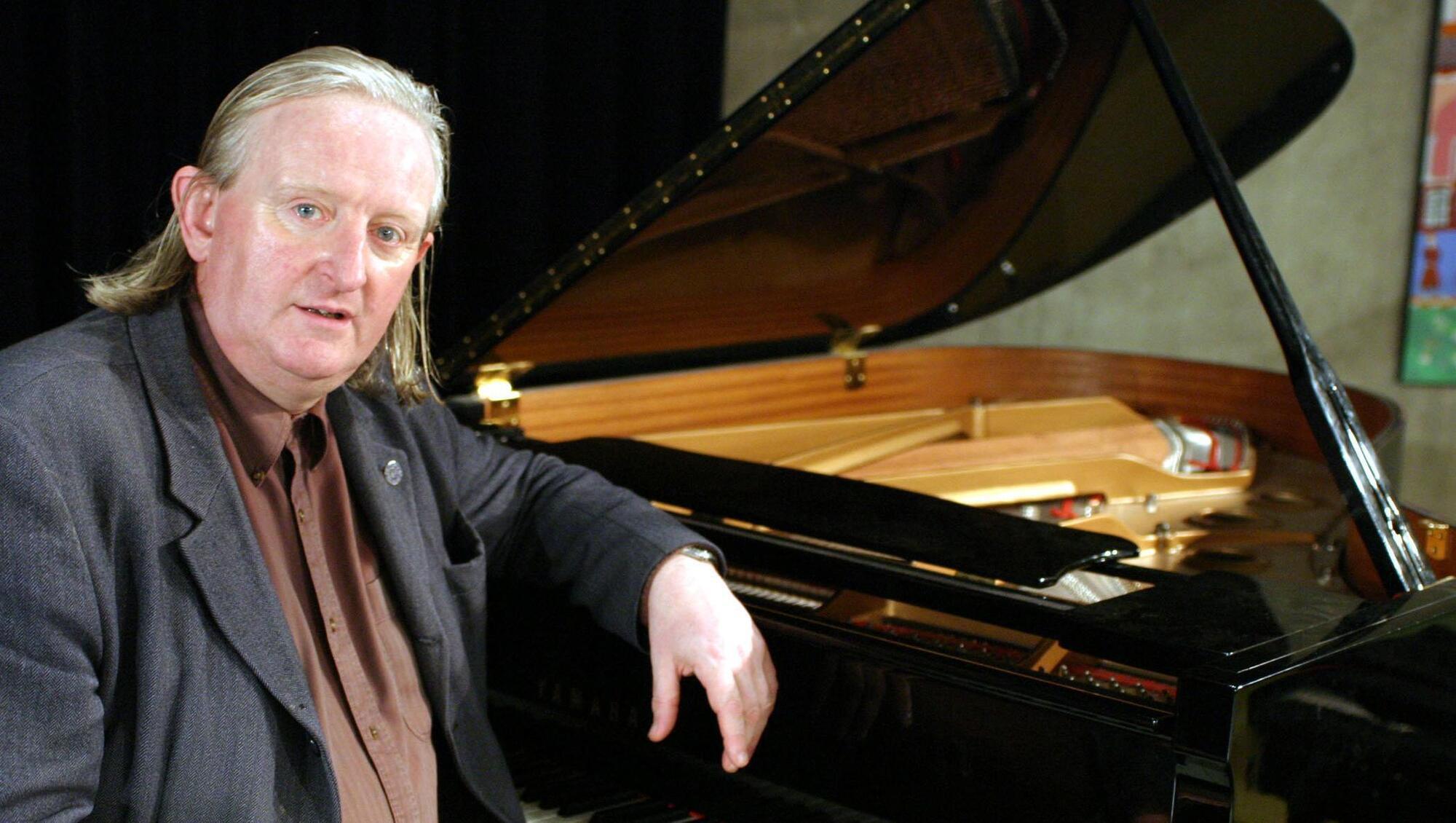
Mícheál Ó Súilleabháin was one of an influential number who brought Irish traditional music in from the cold. File picture: Sean Curtin/ Press 22

  • Mícheál Ó Súilleabháin: A Life in Music 
  • Cork University Press, €59.00 
  • Edited by Helen Phelan, Marie McCarthy and Nicholas Carolan 

Raised in Clonmel during the 1950s as Michael O’Sullivan, Mícheál Ó Súilleabháin is one of the most significant figures in the development of modern Irish music. 

As a writer, scholar, and composer, he was one of an influential number who brought Irish traditional music in from the cold. 

According to the fiddle player from West Clare, Martin Hayes, he did so at a time — the 1990s — when the future of that music ‘seemed very uncertain’.

Ó Súilleabháin’s work is marked by a constant restlessness: from behind the piano, he potently fused traditional Irish and classical music and defied convention consistently. 

There are elements of jazz, popular music, and even electronica coursing through much of his catalogue — the best known of which are the albums The Dolphin’s Way and Oileán/Island — but which extends as far back as his debut elpee in the mid-1970s and also includes the 1995 Eurovision interval piece, ‘Lumen’.

In one of the sharper essays here, the radio producer Aodhán Ó Dubhghaill recalls a line Ó Súilleabháin once gave to another fiddler, Paddy Glackin: 

I came to traditional music and found myself with the wrong instrument … so what I’m playing is a working out of that.

His first album for the Gael Linn label in 1976 was released in the same year as punk rock exploded in Britain. With Ó Súilleabháin tackling Irish traditional tunes on a series of keyboards, there are shades of punk’s urgency marbled through much of that work.

Not that the reader gets any sense of that from A Life in Music which, at over 500 pages, is everything that its subject’s canon never was: over-earnest, overly-reverential, and far too stuffy.

In an over-long series of largely first-person reminiscences from family, friends, and fellow artists, Ó Súilleabháin’s career is examined here under three distinct headings: musician, educator, and cultural mediator. 

But many of the essays are overly polite and careful. Others are just irrelevant. 

Indeed it takes almost one hundred pages before Toner Quinn, in the collection’s stand-out contribution, strikes the first dissonant note.

Assessing Ó Súilleabháin’s critical standing, Quinn suggests that although ‘his compositional work is undeniably an influence on many levels’, that this is ‘perhaps not an obvious or widely acknowledged one’.

To this end, Quinn cites some of the critical reaction to that work, much of which is unflattering. 

One critic claimed Ó Súilleabháin’s work made the concept of original composition in Ireland ‘a meaningless term; another, in a complete survey of twentieth century Irish composition, made no mention of him at all’.

How Ó Súilleabháin reacted to this kind of criticism, or whether or not he reacted to it at all, is left unexplored. 

What we do know is that he continued to innovate and explore widely: he just carried on regardless and collaborated widely and prodiguously.

A couple of casual asides elsewhere hint at a complex and dogged character who straddled the line between confidence and arrogance with the same abandon as he so frequently fused styles. 

Nuala O’Connor, a film-maker who worked with Ó Súilleabháin on two excellent television music strands in the 1990s, reveals that, in respect of editorial control, ‘he told me quite early on in the course of our work that he realised he would have to cede some control and that he was prepared to do this’.

In a similar breath the Belfast-born cellist, Neil Martin, one of Ó Súilleabháin’s many collaborators, alludes to an energy that was boundless. 

Martin claims his subject surgically mapped out his days, assigning time in his diary to even the duration of his phone calls.

Unfortunately, insights like this are scattered far too thinly across what is an ambitious but uncertain volume. 

But while A Life in Music is a fine reference book, Mícheál Ó Súilleabháin’s work deserves more than mere hagiography.

BOOKS & MORE

Check out our Books Hub where you will find the latest news, reviews, features, opinions and analysis on all things books from the Irish Examiner's team of specialist writers, columnists and contributors.

More in this section

Scene & Heard

Newsletter

Music, film art, culture, books and more from Munster and beyond.......curated weekly by the Irish Examiner Arts Editor.

Cookie Policy Privacy Policy Brand Safety FAQ Help Contact Us Terms and Conditions

© Examiner Echo Group Limited